


 Katso seinällä
 Lähetä
 Jaa
Jaa
 Tarkemmat tiedot
 Opas
Opas

 Lataa kuva
 Samanlaisia kohteita
 Röntgenkuvaus
 Diaesitys
 Tilastot
Tree Form
 Oil On Canvas
- WallArt
- Surrealism
 1941
1941 39.0 x 31.0 cm
 Leeds Art Gallery
 Lue lisää
Tällä sivulla esitettyä taideteosta suojaa tekijänoikeuslaki, mikä tarkoittaa, ettemme voi laillisesti luoda tai myydä täsmälleen samanlaista jäljennöstä. Tämä suoja toteutetaan kansainvälisten sopimusten, kuten esimerkiksi Berne-konventio ja kansallisilla laeilla, mukaan lukien niillä määritellyt Yhdysvaltain tekijänoikeuslaki – Luku 17. Kaikki oikeudet pidätetään. Luvaton kopiointi tai jäljittely on kielletty.
Tämä menetelmä noudattaa täysin tekijänoikeussäännöksiä, sillä se ei sisällä suojatun taideteoksen kopioimista tai jäljentämistä. Sen sijaan kyseessä on luova uudelleentulkinta – uusi maalaus, joka ammentaa vaikutteita alkuperäisestä, mutta ei ole sen identtinen kopio.
Giclée- ja taideprintit
Museolaatuisia giclée- tai kankaitaulun tulosteita nopealla tuotannolla ja joustavilla viimeistelyvaihtoehdoilla. ( Tilaa käsinmaalattu jäljennös Siirry digitaaliseen kuvaan)




P118B €10

P118H €10

P118W €10

P438Z €10

P508JH €12

P508YH €12

P805H €10

P805Z €10

P919BZ €10

P919G €10

P919XJ €10

P959ZH €10

P968JZ €12

W106C €8

W218G €10

W218JH €8

W218Y €10

W307PJ €10

W316G €10

W316PJ €8

W316Y €10

W398PJ €8

W4111J €10

W500HY €15

W500JH €15

W692G €12

W849H €8

W940BG €15

W953PJ €8




Valitse valmiista mitoistamme sellaiset, jotka vastaavat teoksen alkuperäisiä mittasuhteita.

Kirjoita tarvitsemasi leveys ja korkeus, jotta tuloste sopii kehyskokoon tai seinällesi. Tulostetta voidaan vain leikata, sitä ei voi koskaan tehdä suuremmaksi kuin alkuperäinen kuva, joten eri muotoinen koko aiheuttaa osan kuvasta katoamisen. Lähetämme sinulle digitaalisen mallikuvan hyväksyttäväksi ennen kuin aloitamme tulostuksen. Tällä sivulla näkyvä kuva ei näytä lopullista leikkausta — vain mallikuva näyttää sen.
Maailmanlaajuinen toimitus () 2 viikossa tavallisen 4–5 viikon sijaan. (23 lokakuu)

Ilmainen pikatoimitus ympäri maailman

Korkealaatuinen pellavakangas

Kattava kuljetusvakuutus

Tulliveron palautustakuu

Takuu täydellisestä värien vastaavuudesta

100 päivän palautusoikeus valmistusvirhetapauksissa

100% rahat takaisin -takuu

Määräalennus saatavilla
 Lasivaihtoehto on saatavilla vain alle 110 cm kokoisille teoksille

Tree Form
Giclée- ja taideprintit
Replikaatin koko
-


Kokonaishinta
€ 54
A Descent into the Organic: Unveiling Graham Vivian Sutherland's "Tree Form"
Graham Vivian Sutherland’s 1941 painting, “Tree Form,” isn’t merely a depiction of a tree; it’s an immersion in primal emotion and a profound exploration of the natural world filtered through the lens of Surrealism. This arresting work, housed within a relatively modest 39 x 31 cm canvas, immediately commands attention with its unsettling yet captivating composition – a colossal, textured creature emerging from a void of deep indigo. It’s a piece that lingers in the mind long after viewing, prompting questions about instinct, vulnerability, and the hidden depths beneath the surface of our perception.
Sutherland, a master of translating the English landscape into intensely personal visions, was deeply influenced by the European avant-garde movements of his time. He wasn’t simply replicating what he saw; he was distilling it – stripping away the familiar and revealing something far more potent. The painting's roots lie in Sutherland’s lifelong fascination with Pembrokeshire, a rugged coastal region in Wales that provided him with an endless source of inspiration. This particular piece embodies his signature style: a masterful blend of meticulous observation and dreamlike abstraction. The work reflects the post-war mood of uncertainty and introspection, mirroring a generation grappling with the aftermath of conflict and searching for new ways to understand themselves and their world.
Decoding Texture and Form: A Study in Impasto
Technically, “Tree Form” is a testament to Sutherland’s remarkable skill. The dominant technique is oil paint applied with a generous hand, utilizing thick impasto – building up layers of pigment to create an incredibly tactile surface. The raised areas, the recessed pools, and the swirling patterns within the creature's scales aren’t merely decorative; they are integral to the painting’s emotional impact. The artist deliberately avoids precise detail, opting instead for a gestural approach that conveys movement and energy. Notice how the brushstrokes themselves seem to writhe and pulsate, mirroring the unsettling quality of the subject.
The color palette is predominantly dark – deep blues, greens, and violets dominate, punctuated by flashes of gold and teal. These colors aren’t used in a harmonious way; they clash and contrast, contributing to the painting's sense of unease. The limited use of brighter hues—particularly the gold—suggests a glimmer of hope or perhaps even a primal instinct struggling to emerge from the darkness. The flattened perspective further enhances this feeling of claustrophobia, drawing the viewer directly into the creature’s shadowed realm.
Symbolism and the Primal Within
While rooted in observation, “Tree Form” transcends simple representation. The central figure – a vaguely reptilian or amphibian form – is open to multiple interpretations. Some scholars suggest it represents the primal instincts that lie dormant within us all, a reminder of our connection to the natural world and its often-unpredictable forces. Others see it as an embodiment of vulnerability, a creature both powerful and exposed. The swirling patterns within its scales could be interpreted as symbols of chaos or perhaps even the interconnectedness of all things.
The painting’s overall mood is undeniably unsettling, yet simultaneously compelling. It evokes feelings of unease, curiosity, and a profound sense of mystery. Sutherland wasn't interested in providing easy answers; he was inviting us to confront our own anxieties and explore the darker corners of the human psyche. “Tree Form” remains a powerful testament to the artist’s ability to transform observation into a deeply personal and emotionally resonant experience.
Kysymykset ja vastaukset
Kuka on teoksen "Tree Form" tekijä ja mihin taidesuuntaukseen se kuuluu?
Teoksen "Tree Form" takana ovat Graham Vivian Sutherland ja Surrealism-suuntaus.
Onko Graham Vivian Sutherland:n "Tree Form" pysty-, vaaka- vai neliökompositio?
Teoksen "Tree Form" formaatti on Portrait. Tämä on hyödyllinen tieto, kun suunnittelet jäljennöksen sijoituspaikkaa.
Mikä koko ja suuntaus ovat suositeltavia teoksen Graham Vivian Sutherland:n "Tree Form" tulosteelle?
Koko Medium, Portrait suuntaus: tämä on teokselle Graham Vivian Sutherland:n "Tree Form" suositeltu tulostusasetus.
Samankaltaisia teoksia


Taiteilijan elämäkerta
Graham Vivian Sutherlandin visionääriset maisemat
Brittiläisen modernismin jättiläinen Graham Vivian Sutherland hallitsi harvinaisen kyvyn muuttaa luonnon tutut muodot joksikin syvästi levottomaksi ja hengelliseksi. Lontoossa, Streathamissa vuonna 1903 syntynyt Sutherlandin elämäntie oli jatkuvaa metamorfoosia. Vaikka hänen varhaisia vuosia leimasi klassinen koulutus Epsom Collegessa, hänen todellinen kutsumuksensa löytyi kaukaa perheensä oikeudellisista piireistä. Ensimmäinen askel tekniseen maailmaan Midland Railway Locomotive Works -tehtaalla opettajana antoi hänelle tarkkuuden pohjan, joka näkyi myöhemmin hänen monimutkaisissa grafiikoissaan ja tekstuuripitoisissa öljyvärimaalauksissaan. Siirtyessään Goldsmithsin taidekouluun Sutherland alkoi irtautua perinteisestä esittämisestä ja hakeutui kaiverrusten ja etsausten herättämään voimaan.
Taiteilijan varhainen estetiikka juurtui syvälle Samuel Palmerin romantiikkaan, mutta hän kieltäytyi jäämästä menneisyyden vankiksi. Sen sijaan Sutherland toimi siltana englantilaisen pastoraalisen perinteen ja eurooppalaisten avantgarde-liikkeiden radikaalin energian välillä. Omaksumalla surrealismin unenomaisen logiikan ja ekspressionismin raa'an tunteellisuuden, hän kehitti visuaalisen kielen, joka pystyi vangitsemaan sekä fyysisen maiseman että psykologisen tilan. Hänen varhaiset grafiikkansa, joille oli ominaista mystiikka ja orgaaninen muoto, loivat perustan uralle, jota määritti luonnon "oudon" olemuksen pakkomielle – teemasta, josta tuli hänen pysyvin perintönsä.
Luonnon varjo ja sotavuodet
1940-luku merkitsi käännekohtaa Sutherlandin kehityksessä, kun hänen keskittymisensä siirtyi grafiikan herkistä tekniikoista öljymaalauksen voimakkaaseen, impasto-tyyliseen pintaan. Tänä aikana Pembrokeshiren karut ja tuulen piiskaamat maisemat tulivat hänen ensisijaiseksi muusaksi. Teoksissa, kuten Thorn Tree, voi todistaa taiteilijan mestaruuden kasvitieteellisen todellisuuden ja surrealistisen vääristymän yhdistämisessä. Hän ei maalannut vain puita; hän maalasi jännityksen, kamppailun ja elämän luurankomaisen arkkitehtuurin. Tämä ajanjakso toi hänet kohti abstraktimpaa, mutta syvän symbolista tapaa nähdä maailma, jossa piikit, juuret ja kiertyneet oksat toimivat metaforina ihmisen haavoittuvuudelle ja kestävyydelle.
Toinen maailmansota toi työhönsä uuden, synkemmän ulottuvuuden. Toimiessaan virallisena sotataiteilijana Sutherland käänsi katseensa Britannian kotirintaman teollisiin ja usein painajaismaisiin näkymiin. Tämän aikakauden maalaukset, kuten Flying Bomb Depot The Cauden, ovat tunnelman mestariteoksia. Raskaiden tekstuurien ja väripaletin kautta, joka herättää sekä rappeutumisen että kauhun tunteita, hän vangitsi sotavuosien sisätilojen aavemaisen autiuden. Nämä teokset eivät olleet pelkkää dokumentointia; ne olivat psykologisia muotokuvia ahdistuksesta ja tuhon uhkasta kärsivästä ajasta, heijastaen sodan murtamaa todellisuutta.
Symbolismin ja suuruuden perintö
Sotien jälkeisinä vuosina Sutherlandin työ nousi uusiin hengellisiin ja julkisiin ulottuvuuksiin. Hän alkoi yhdistää uskonnollista symboliikkaa orgaanisiin motiiveihinsa, luoden voimakkaan synteesin pyhän ja luonnollisen välille. Tämä huipentui yhteen hänen monumentaalisimmista saavutuksistaan: uuden Coventryn katedraalin valtavan keskimmäisen seinävaatteen suunnitteluun, nimeltään Christ in Glory in the Tetramorph. Teos, joka hyödynsi hänen kykyään hallita muotoa ja väriä suurella mittakaavalla, seisoo todistuksena hänen roolistaan sodanjälkeisen Britannian kulttuurisessa jälleenrakennuksessa.
Hedelmällisen uransa aikana Sutherlandin monipuolisuus antoi hänelle mahdollisuuden jättää pysyvän jäljen useille eri aloille:
Lopulta Graham Sutherland säilyy 20. vuosisadan taiteen kulmakivenä, koska hän uskalsi katsoa maiseman pinnan alle. Hän löysi surrealismin todellisuudesta ja jumaluuden orgaanisuudesta. Hänen perintönsä ei löydy vain museoista, vaan tavasta, jolla koemme ympäröivän maailman piilotetun, usein rosoisen kauneuden – maailman, jossa jokainen piikki kantaa tarinaa ja jokainen varjo sisältää mysteerin.

Graham Vivian Sutherland
1903 - 1980 , Iso-Britannia
Tietoa taiteilijasta
- Artistic Movement Or Style: Surrealism
- Artists Or Movements Influenced By This Artist: ['Paul Nash']
- Artists Who Influenced This Artist:
- Samuel Palmer
- F.L. Griggs
- Date Of Birth: August 24, 1903
- Date Of Death: February 17, 1980
- Full Name: Graham Vivian Sutherland
- Nationality: British
- Notable Artworks:
- Flying Bomb Depot
- Entrance to a Lane
- Place Of Birth: London, England
Aiheeseen liittyvät artikkelit

Top 10 Taideteosta Liukuvärissä: Sinisen Sävyt Kodin Sisustuksessa
Uppoudu 10 tunnetuimman taideteoksen maailmaan, joita hallitsee liukuväri! Tutustu impressionismin ja postimpressionismin mestareihin sekä sinisen sävyjen merkitykseen. Löydä inspiraatiota kotiisi ArtsDot.com:ista – laadukkaat taidevedokset ja kuratoidut sisustusratkaisut odottavat! Tutustu kokoelm

Geometrisen abstraktion mestariteokset: Taidetta kotiin ArtsDotilta
Tutustu geometrisen abstraktion 10 mestariteokseen! Piet Mondrian, Kandinsky ja muut taiteilijat muovasivat modernin taiteen historiaa. Löydä inspiraatiota kotiisi ArtsDotilta – laadukkaat taideprintit ja sisustusehdotukset odottavat. Tutki kokoelma verkossa!

Wassily Kandinskin 25 mestariteosta: Värien ja muodon syvä maailma | ArtsDot
Tutustu Wassily Kandinskin 25 vaikuttavinta teosta! Uppoudu abstraktin taiteen maailmaan, värien symboliikkaan ja modernin ekspressionismin historiaan. Löydä inspiraatiota kodin sisustukseen ArtsDot.com:ista – laadukkaat taideprintit ja reproduktiot.
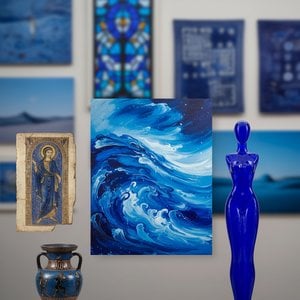
The Allure of Azure: Exploring the Symbolic & Aesthetic Depths of Blue in Art History
Explore the rich history of blue in art! Discover its symbolism, from ancient pigments to modern masterpieces by Kandinsky & Seurat. Uncover the psychological impact and cultural meanings behind this captivating hue.

Abstraktin ekspressionismin mestariteokset: Taidetta ja inspiraatiota kotiisi
Tutustu abstraktin ekspressionismin 10 mestariteokseen! Jackson Pollock, Mark Rothko ja muut taiteilijat inspiroivat tunteellisuudellaan. Löydä upeita taidemaalauksia kotiisi ArtsDot.comista – museolaatuista laatua ja sisustusehdotuksia.

