


 Katso seinällä
 Lähetä
 Jaa
Jaa
 Tarkemmat tiedot
 Opas
Opas

 Lataa kuva
 Samanlaisia kohteita
 Röntgenkuvaus
 Diaesitys
 Tilastot
Annunciation


 Lue lisää
Käsinmaalattu öljyvärinen jäljennös
Käsinmaalattu öljyväri kankaalle haluamassasi koossa ja kehyksissä, taiteilijoidemme valmistamana tilauksesta. ( Vaihda tulosteeseen Siirry digitaaliseen kuvaan)




P118B €10

P118H €10

P118W €10

P438Z €10

P508JH €12

P508YH €12

P805H €10

P805Z €10

P919BZ €10

P919G €10

P919XJ €10

P959ZH €10

P968JZ €12

W106C €8

W218G €10

W218JH €8

W218Y €10

W307PJ €10

W316G €10

W316PJ €8

W316Y €10

W398PJ €8

W4111J €10

W500HY €15

W500JH €15

W692G €12

W849H €8

W940BG €15

W953PJ €8




Valitse valmiista mitoistamme sellaiset, jotka vastaavat teoksen alkuperäisiä mittasuhteita.

Kirjoita tarvitsemasi leveys ja korkeus, jotta teos sopii kehyskehyksiisi tai seinällesi. Koska kyseessä on käsinmaalattu teos, taiteilija voi maalata hieman enemmän kuvan ympärille tai rajata sitä hieman, jos haluat eri muotoisen koon — valinta on sinun. Lähetämme sinulle digitaalisen mallikuvan hyväksyttäväksi ennen kuin maalaus alkaa. Tällä sivulla näkyvä kuva ei vastaa lopullista tulosta — vain mallikuva näyttää sen.
Tilauksen jälkeen ArtsDot.com -tiimi lähettää asiakkaalle sähköpostitse ohjeet ja esikatselukuvan.
Maailmanlaajuinen toimitus () 3–4 viikossa tavallisen 5 viikon sijaan. (23 lokakuu). Laadusta ei tingitä.

Ilmainen pikatoimitus ympäri maailman

Korkealaatuinen pellavakangas

Kattava kuljetusvakuutus

Tulliveron palautustakuu

Takuu täydellisestä värien vastaavuudesta

100 päivän palautusoikeus valmistusvirhetapauksissa

100% rahat takaisin -takuu

Määräalennus saatavilla
 Lasivaihtoehto on saatavilla vain alle 110 cm kokoisille teoksille

Annunciation
Reproduktiotapa
Replikaatin koko
-


Kokonaishinta
€ 231
A Divine Encounter in Fresco
In the hallowed stillness of Santa Maria sopra Minerva in Rome, a profound theological drama unfolds upon the walls. Filippino Lippi’s Annunciation is not merely a painting; it is a window into a moment where the celestial and the terrestrial collide. Completed in 1489, during the luminous height of the Medici era, this masterpiece captures the precise instant the Archangel Gabriel delivers his divine message to the Virgin Mary. The scene is bathed in a sense of sacred gravity, inviting the viewer to witness a dialogue of faith that has resonated through the centuries. As one gazes upon the fresco, the architectural grandeur of Florentine-style columns and arches creates a stage of immense dignity, framing a narrative that feels both intimately human and cosmically significant.
The composition is a masterclass in High Renaissance equilibrium. At the heart of this sacred space stands Mary, her presence anchored by the weight of her blue robes, which provide a striking, soulful contrast to the warm, earthy tones of the surrounding architecture. She is depicted with a serene, contemplative grace, her attention captured by the angelic visitor. Gabriel, descending with a gesture of reverence and reassurance, brings with him the symbolic lily—a delicate emblem of purity and divine grace that pierts the solemnity of the scene with its ethereal lightness. The artist’s use of perspective draws the eye deep into the painted space, making the viewer feel less like an observer and more like a silent participant in this miraculous visitation.
Mastery of Technique and Symbolism
Lippi’s technical prowess is evident in the meticulous way he employs the fresco technique to achieve depth and luminosity. The interplay of light and shadow across the architectural elements suggests a tangible, three-dimensional reality, a hallmark of the Renaissance pursuit of naturalism. Every detail, from the intricate folds of the drapery to the scholarly figure seated at a desk in the background, is rendered with an exacting precision that speaks to the artist's devotion. This secondary figure, engaged in quiet intellectual discourse, adds a layer of humanistic depth to the work, suggesting that the divine announcement is not just a religious event, but one that invites profound meditation and scholarly reflection.
For the discerning collector or interior designer, this artwork offers more than mere decoration; it provides an atmosphere of timeless elegance and spiritual introspection. The palette, dominated by rich ochres, deep blues, and soft terracottas, possesses a sophisticated warmth that can anchor a room with a sense of history and prestige. Whether displayed as a focal point in a grand library or as a contemplative piece in a private sanctuary, a high-quality reproduction of this fresco brings the intellectual rigor and emotional depth of the Italian Renaissance into the modern home. It is an invitation to surround oneself with beauty that transcends the ephemeral, celebrating a legacy of artistic innovation and enduring faith.
Kysymykset ja vastaukset
Missä ja mihin tarkoitukseen "Annunciation" suositellaan?
Suositellut käyttötavat (Accent) ja tilat (Living Room) ovat kaksi suositusta teokselle Filippino Lippi:n "Annunciation".
Ovatko teoksen Filippino Lippi:n "Annunciation" värit kylläisiä vai hillittyjä?
Teoksen "Annunciation" väripaletti on kylläisyydeltään Subtle Color.
Minkälainen teos "Annunciation" on?
Teos Filippino Lippi:n "Annunciation" on luokiteltu tyypiksi WallArt. Luokitus kertoo, minkä tyyppinen alkuperäisteos on kyseessä.
Samankaltaisia teoksia


Taiteilijan elämäkerta
Varhaiset Vuodet ja Koulutus
Filippino Lippi syntyi huhtikuussa 1457 Praton kaupungissa Italiassa, taiteilijaperheeseen. Hänen isänsä oli tunnettu maalarimestari Fra Filippo Lippi, jonka laitonta poikaa Filippinoa pidettiin lahjakkaana jo nuorena. Varhainen koulutus isän ateljeessa loi pohjan hänen myöhemmälle taiteelliselle uralleen. Isän kuoleman jälkeen vuonna 1469 Filippino jatkoi opintojaan Firenzessä, missä hän perehtyi syvällisemmin renessanssin taiteeseen ja tekniikoihin. Hänen nuoruutensa töissään näkyy vielä isänsä vaikutus, mutta jo varhaisissa Madonnoissa voi havaita Filippinon oman tyylinsä alkua. Hän sai aluksi tunnustusta nimellä "amico di Sandro", mikä viittaa hänen yhteyksiinsä Sandro Botticellin piiriin ja tämän vaikutukseen hänen taiteeseensa.Taiteellinen Ura ja Kehitys
Filippinon ura kehittyi vaiheittain vuosien 1475–1504 aikana. Varhaisella kaudellaan (1475-1480) hän keskittyi uskonnollisiin aiheisiin, erityisesti Madonnoihin, jotka olivat tyyliltään vielä hieman karkeita ja epävarmoja. 1480-luvulla hänen taiteensa alkoi saada selkeämmän henkilökohtaisen ilmaisun, mikä näkyy esimerkiksi *Tobiaan matkat* -teoksessa. Vuosien 1485–1504 aikana Filippino saavutti täydellisen hallinnan korkean renessanssin tyylissä, ja hänen mestariteoksensa, kuten *Kristuksen ilmestys Neitsyt Marialle*, ovat osoitus hänen taidostaan. Hän oli taitava yhdistämään erilaisia tekniikoita ja vaikutteita luodakseen ainutlaatuisen visuaalisen kielen.Tärkeimmät Teokset ja Yhteistyö
Filippino Lippi osallistui useisiin merkittäviin taiteellisiin projekteihin Firenzessä ja sen ympäristössä. Hän teki yhteistyötä Peruginon, Ghirlandaion ja Botticellin kanssa Lorenzo de' Medicin huvilan freskojen parissa. Lisäksi hän suoritti Masaccion aloittaman koristelun Brancacci-kappelissa yhdessä Masolinon kanssa. Hänen tunnetuimpia teoksiaan ovat *Neitsyt Marian kruunaus*, *Tobias ja enkeli*, *Pyhä Hieronymus* sekä *Kohtaus Pyhän Tuomaan Akvinolaisen elämästä*. Nämä työt osoittavat hänen monipuolisuutensa ja kyvynsä käsitellä erilaisia aiheita ja tekniikoita.Vaikutteet ja Taiteellinen Tyyli
Filippinon taiteeseen vaikuttivat merkittävästi Sandro Botticelli ja Fra Filippo Lippi, hänen isänsä. Hänen tyylilleen ovat tunnusomaisia elävä muoto ja viiva, lämmin värimaailma, yksityiskohtaiset maisemat sekä ilmeikkäät hahmot. Hän yhdisti perspektiivigeometrian intiimeihin sisätiloihin luoden ainutlaatuisen tunnelman teoksiinsa. Roomalaisen antiikin tutkimukset hänen Rooman-aikanaan vaikuttivat myös hänen työhönsä, ja hän alkoi sisällyttää antiikin estetiikkaa taiteeseensa. Hänen maalauksissaan on usein nähtävissä klassisia elementtejä ja viittauksia muinaiseen mytologiaan.Historiallinen Merkitys ja Perintö
Filippino Lippi oli johtava florenttilainen freskomaalausten perinteiden edustaja. Hänen vaikutuksensa korkean renessanssin taiteeseen on kiistaton. Hänen teoksiaan löytyy museoista ympäri maailmaa, mukaan lukien Uffizin galleriasta Firenzessä. Filippino tunnetaan siitä, että hän yhdisti varhaisemmat renessanssityylit ja uuden korkean renessanssin estetiikan luoden ainutlaatuisen taiteellisen ilmaisun. Hänen työnsä ovat edelleen inspiraation lähde taiteilijoille ja tutkijoille ympäri maailmaa, ja hän on yksi Italian renessanssin merkittävimmistä mestareista.
Filippino Lippi
1457 - 1504 , Italia
Tietoa taiteilijasta
- Artistic Movement Or Style: High Renaissance
- Artists Or Movements Influenced By This Artist: ['Raffaellino del Garbo']
- Artists Who Influenced This Artist:
- Fra Filippo Lippi
- Sandro Botticelli
- Date Of Birth: Huhtikuu 1457
- Date Of Death: Huhtikuu 1504
- Full Name: Filippino Lippi
- Nationality: Italialainen
- Notable Artworks:
- Neitsyen kruunaus
- Tobias ja enkeli
- Pyhä Hieronymus
- Place Of Birth (City And Country): Prato, Italia
Aiheeseen liittyvät artikkelit

Dante Gabriel Rossettin 25 mestariteosta: Taidetta ja inspiraatiota kotiisi | ArtsDot
Tutustu Dante Gabriel Rossettin 25 lumoavinta mestariteosta! Uppoudu viktoriaanisen ajan symbolismiin ja Pre-Raphaelite taiteen maailmaan. Löydä inspiraatiota sisustukseesi ja hanki korkealaatuisia taideprinttejä ArtsDot.comista. Tutki kokoelma verkossa!
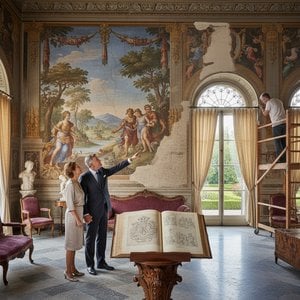
Fresko perinnön vartijana: Maalaa sukuhistoriasi seinille
Elävöitä sukuhistoriasi upeilla freskoilla! Opas seinämaalausten suunnitteluun, symboliikkaan ja toteutukseen. Inspiraatiota ja vinkkejä perintösi vaalimiseen.

The Enduring Legacy of Fresco Painting: Techniques, History & Contemporary Relevance
Explore the rich history & enduring artistry of fresco painting – from Giotto to Michelangelo! Discover techniques, conservation efforts, & modern applications. Learn how ArtsDot brings this timeless art form to your home.

Taide, joka elää kanssasi: Räätälöidyn sisäfreskon emotionaalinen voima
Tutustu freskon emotionaaliseen voimaan ja sen kykyyn kertoa tarinoita kodissasi. Räätälöidyt seinämaalaukset luovat ainutlaatuisen tunnelman. Lue asiantuntija-artikkelimme!

The Enduring Legacy of Fresco: Technique, History & Artistic Expression Across Cultures
Explore the rich history & enduring legacy of fresco painting! Discover ancient techniques, Giotto's masterpieces, and modern applications. Expert insights for art lovers & professionals.
