


 Esikatselu
 Jaa
Jaa Jaa
Jaa
 Tarkemmat tiedot

 Lataa
Lataa
 Samanlaisia
 Röntgenkuva
 Diaesitys
Warm Fruit
 Expressionism
 1934
1934 50.0 x 72.0 cm
 Näytä lisää
Käsinmaalattu öljykopio
Käsinmaalattu öljyväri kankaalle haluamassasi koossa ja kehyksissä, taiteilijoidemme valmistamana tilauksesta. ( Osta printti Osta kuva)




































Valitse valmiista mitoistamme sellaiset, jotka vastaavat teoksen alkuperäisiä mittasuhteita.

Voit syöttää omat mitat sopimaan tiettyyn kehykseen tai tilaan. Jos valitsemasi koko ei vastaa alkuperäisen kuvan mittasuhteita, rajaamme taideteoksen tai jatkamme maalausta käsin maalatuilla elementeillä. Digitaalinen esikatselu lähetetään hyväksyttäväksi ennen tuotannon aloittamista.
Huomioithan, että näytöllä oleva esikatselu ei vastaa todellista rajausta tai jatkamista. Vain digitaalinen mallikuva näyttää lopullisen sommittelun tarkasti.
Vaikka mittatilaustyöt ovat mahdollisia, suosittelemme valitsemaan mitan ennalta määritetystä listasta alkuperäisten mittasuhteiden säilyttämiseksi.
Tilauksen jälkeen ArtsDot.com -tiimi lähettää asiakkaalle ohjeet ja esikatselukuvan.
Maailmanlaajuinen toimitus () 3–4 viikossa tavallisen 5 viikon sijaan. (16 elokuu). Laadusta ei tingitä.

Ilmainen pikatoimitus ympäri maailman

Korkealaatuinen pellavakangas

Kattava kuljetusvakuutus

Tulliveron palautustakuu

Täydellinen värien vastaavuustakuu

60 päivän palautusoikeus (vain valmistusvirheet)

100% rahat takaisin -takuu

Määräalennus tarjous
 Lasivaihtoehto on saatavilla vain alle 110 cm kokoisina teoksina

Warm Fruit
Reproduktiotekniikka
Replikaatin koko
-


Kokonaishinta
$ 263
Samankaltaisia teoksia


Taiteilijan elämäkerta
Eugenie Baizerman: A Visionary of Color and Emotion
Eugenie Baizerman (1899-1949) remains a captivating, yet somewhat elusive figure in 20th-century American art. Born in Warsaw to Polish-Jewish parents amidst the turbulent backdrop of early 20th-century Europe, her life and artistic journey were profoundly shaped by displacement, loss, and an unwavering dedication to exploring the expressive potential of color. Despite a relatively short career punctuated by infrequent exhibitions, Baizerman’s work—characterized by bold hues, dynamic brushstrokes, and a hauntingly intimate portrayal of human figures—has garnered increasing recognition as a significant voice within Abstract Impressionism and a testament to the power of subjective experience.
Baizerman's early artistic training began in Odessa, Russia, where she studied at the Grekov Odessa Art School. The family’s relocation to New York City in 1914 provided access to American art institutions like the National Academy of Design and the Educational Alliance, further shaping her evolving style. It was during this period that she met Saul Baizerman, a sculptor with whom she shared both a life partnership and an artistic sensibility. Their collaboration—though largely unspoken—influenced each other’s work, creating a unique dialogue between two distinct creative voices.
The Language of Color
Baizerman's artistic philosophy centered on the transformative power of color. Rejecting the purely representational approach prevalent in much of early 20th-century art, she embraced color not merely as a reflection of reality but as an independent language—capable of conveying emotion, atmosphere, and psychological depth. Influenced by the Impressionists’ emphasis on light and color, Baizerman pushed beyond mere observation, utilizing vibrant, often contrasting hues to evoke specific moods and sensations. Her palette was remarkably nuanced, demonstrating an extraordinary ability to discern and translate subtle variations in tone – as evidenced by Saul Baizerman's meticulous analysis of 826 color gradations within a single painting.
Her technique involved broad, gestural brushstrokes that created a sense of movement and energy. These dynamic marks, combined with her bold color choices, resulted in paintings that pulsate with life—a far cry from the muted tones often associated with early 20th-century art. She frequently depicted figures – often portraits of her husband, Saul – fragmented and abstracted, their forms dissolving into washes of color, suggesting a deeper exploration of inner states rather than literal representation.
Key Works and Artistic Development
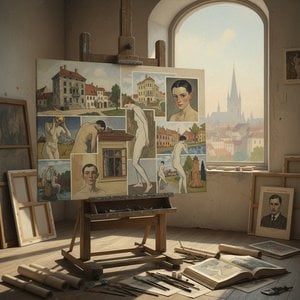
Several paintings stand out as particularly revealing of Baizerman’s artistic vision. “Warm Fruit” (1934), for example, is a striking example of her ability to imbue seemingly simple subjects with profound emotional resonance. The painting's dark palette and fragmented forms evoke a sense of melancholy and introspection, while the vibrant splashes of color suggest an underlying current of hope. “Desert Hills (Tucson Etude 17)” showcases her exploration of landscape through color and form, capturing the essence of the Southwestern desert with a masterful use of light and shadow. “Three Figures” exemplifies her interest in portraying human relationships through abstracted forms and expressive color.
Throughout her career, Baizerman’s style evolved subtly, reflecting her ongoing experimentation with color and composition. Her work during the late 1940s, particularly those created shortly before her death in 1949, demonstrate a heightened sense of urgency and emotional intensity—a poignant reflection of the tumultuous times she lived through.
Legacy and Recognition
Despite facing challenges related to limited exhibition opportunities during her lifetime, Eugenie Baizerman’s work has gained increasing recognition in recent decades. The Krasner Gallery held a posthumous show in 1964, followed by a retrospective at the Zabriskie Gallery in 2000, solidifying her place within the canon of American art. Her paintings are now included in the collections of prestigious institutions such as the Metropolitan Museum of Art, the Whitney Museum of American Art, and MoMA – testament to the enduring power and beauty of her vision.
Baizerman’s legacy lies not only in her distinctive artistic style but also in her courageous exploration of color as a means of expressing profound human emotions. She remains an important figure for artists seeking to push beyond traditional boundaries and embrace the expressive potential of their chosen medium, demonstrating that art can be both visually stunning and deeply psychologically resonant.

eugenie baizerman
1899 - 1949
Pikatiedot
- Artistic Movement Or Style: Abstract Impressionism
- Artists Or Movements Influenced By This Artist: ['Modern Art USA']
- Artists Who Influenced This Artist: ['Impressionism']
- Date Of Birth: October 14, 1899
- Date Of Death: December 30, 1949
- Full Name: Eugenie Silverman Baizerman
- Nationality: American
- Notable Artworks:
- Warm Fruit
- Desert Hills
- Three Figures
- Place Of Birth: Warsaw, Poland
Liittyvät artikkelit

Mustavalkoisen ja harmaan sävyjen taika: Minimalismin vaikutus valoon, pintoihin ja moderniin sisustukseen
Tutustu minimalismin taikaan! Oppaat valon, pintojen ja abstraktin taiteen yhdistämiseen modernissa sisustuksessa. Inspiraatiota ja laadukkaita ratkaisuja ArtsDot.comista.

Mustan sävyt taiteessa: 10 mestariteosta ja niiden tarinat – ArtsDot.com
Tutustu 10 tunnetuimpaan mustasävyiseen maalaukseen! Rembrandtista Goya’han – taiteen historiaa ja inspiraatiota kotiisi. Laadukkaat öljyvärimaalaukset ArtsDot.com:ssa. Löydä mestariteokset verkosta!

Saksan ekspressionismin 10 mestariteosta: Taidetta ja tunnetta kotiisi
Uppoudu Saksan ekspressionismin maailmaan! Tutustu 10 mestariteokseen – Kirchnerin voimakkaista väreistä Munchin tunteisiin. Löydä taidemaalauksien tarinat ja inspiroi sisustusta ArtsDot.com:ssa. Explore the full collection online!

Mustan sävyt taiteessa: 10 kuuluisinta mestariteosta ja niiden tarinat
Tutustu 10 kuuluisimpaan maalaukseen, joita hallitsee syvä musta sävy. Rembrandtista Manetiin – taidemaalareiden tarinat ja mestariteosten merkitys. Löydä inspiraatiota sisustukseesi ArtsDot.com:sta! Tutki kokoelma verkossa.
Egon Schielen 25 mestariteosta: Voimakas tunne ja taiteellinen syvyys seinillesi | ArtsDot
Tutustu Egon Schielen 25 vaikuttavinta teosta! Uppoudu ekspressionismin maailmaan, ihmiskuvauksen syvyyteen ja tunteelliseen taiteeseen. Löydä inspiraatiota sisustukseen ja korkealaatuiset taideprintit ArtsDot.com-sivustolta. Tutki kokoelma verkossa!

