

 Esikatselu
 Jaa teos
 Jaa
Jaa
 Tiedot
 Opas
Opas

 Lataa kuva
 Samanlaisia kohteita
 Röntgenkuvaus
 Diaesitys
 Kysymykset ja vastaukset
 Tilastot
Kärsimyskyyntä puutarhassa


 Lue lisää
Giclée- ja taideprintit
Museolaatuisia giclée- tai kankaitaulun tulosteita nopealla tuotannolla ja joustavilla viimeistelyvaihtoehdoilla. ( Osta käsinmaalattu taideteos Siirry digitaaliseen kuvaan)




P118B €10

P118H €10

P118W €10

P438Z €10

P508JH €12

P508YH €12

P805H €10

P805Z €10

P919BZ €10

P919G €10

P919XJ €10

P959ZH €10

P968JZ €12

W106C €8

W218G €10

W218JH €8

W218Y €10

W307PJ €10

W316G €10

W316PJ €8

W316Y €10

W398PJ €8

W4111J €10

W500HY €15

W500JH €15

W692G €12

W849H €8

W940BG €15

W953PJ €8




Valitse valmiista mitoistamme sellaiset, jotka vastaavat teoksen alkuperäisiä mittasuhteita.

Syötä tarvitsemasi leveys ja korkeus, jotta tuloste sopii kehyksiisi tai seinällesi. Tulostetta voidaan vain leikata, sitä ei voida koskaan suurentaa alkuperäistä kuvaa suuremmaksi, joten eri muotoinen koko aiheuttaa osan kuvasta katoamisen. Lähetämme sinulle digitaalisen mallikuvan hyväksyttäväksi ennen kuin aloitamme tulostuksen. Tällä sivulla näkyvä kuva ei näytä lopullista rajausta — vain mallikuva näyttää sen.
Maailmanlaajuinen toimitus () 2 viikossa tavallisen 4–5 viikon sijaan. (3 marraskuu)

Ilmainen pikatoimitus ympäri maailman

Korkealaatuinen pellavakangas

Kattava kuljetusvakuutus

Tulliveron palautustakuu

Takuu täydellisestä värien vastaavuudesta

100 päivän palautusoikeus (vain valmistusvirheet)

100% rahat takaisin -takuu

Määräalennus tarjolla
 Lasivaihtoehto on saatavilla vain alle 110 cm kokoisille teoksille

Kärsimyskyyntä puutarhassa
Giclée- ja taideprintit
Replikaatin koko
-


Kokonaishinta
€ 56
The Agony in the Garden: A Masterpiece of Baroque Drama
Giovanni Bellini’nin “Gardenin Acıması”, 1459-1465 yılları arasında tamamlanmış olup, Venetiyen Rönesansı içindeki olağanüstü bir başarı ve Kuzey Avrupa sanat tarihinin temel taşıdır. Sadece İsa'nın Nidel Avivası öncesindeki tutuklamasının biblik bir betimlemesi olmanın ötesinde, insan duygularının ve ruhsal düşüncelerin derinlemesine keşfini, tempera boyasıyla meşe ağacına uygulanan ustalıkla işlenmiş bir eserdir. Eserin devam eden çekiciliği, Bellinin ışık ve rengi ustalıkla kullanarak gerginlik ve yaklaşan felaketi önceden haber veren bir atmosfer yaratmasından kaynaklanmaktadır.Erken Venetiyen Etkisi: Mantegna'nın Gölgesi
Bellini’nin sanatsal yolculuğu, insanlığın yükselen hümanist ruhu içinde Venedik’te başladı; Andrea Mantegna gibi sanatçılardan etkiler aldı – aynı Venetiyen ressam, titiz detaylara ve dramatik perspektif kullanımına Bellini'nin yaklaşımını derinden etkiledi. “Gardenin Acıması” gibi eserlerde olduğu gibi, Bellini mevcut stil eğilimlerine karşı bilinçli bir şekilde durdu, idealize edilmiş güzelliğe göre daha nüanslı bir duygusal temsili tercih etti. Eserin kompozisyonu bu dikkatli seçimi yansıtır – sadece görsel zevk almak yerine düşünmeyi uyarmak için tasarlanmış, ustaca düzenlenmiş bir sahne.Kompozisyon ve Sembolizm: Bir Acıların Manzarası
Sahne, Bellini’nin dönemine ait Venedik şehir ortamını yansıtan üç tepenin hakim olduğu karanlık bir manzarada gelişir. Merkezde İsa Mesih, kayalara oturmuş – Golgotha'ya açık bir gönderme – ve etrafında uyuyan öğrenciler Peter, James ve John yer alır. Bu figürlerin konumu çok önemlidir; onlar tanrısal yargılamanın önünde insanlığın kırılganlığını ve umutsuzluğunu temsil ederler. İsa’nın başının üzerinde, acıyı ve fedakarlığı sembolize eden bir kadeh tutan melek yükselir. İsa'nın sağında, ihaneti ve yaklaşan felaketi temsil eden Roma askerleri ile birlikte Yahuda yer alır. Meleğin İsa’ya doğru diyagonal çizgisi, bu kaçınılmazlık hissini güçlendirir.Teknik: Tempera’nın Zarif Parlaklığı
Bellini, Quattrocento döneminde Venedik sanatçıları tarafından tercih edilen, ışığı ve dayanıklılığıyla bilinen tempera boyasını meşe ağacına uyguladı. Yağlı boyalar gibi, tempera pigmentleri birbirine karışmaz, dokulu bir yüzey oluşturur ve bu da eserin ifade gücünü artırır. Bellini, ince renk katlarını hazırlayıcı bir alt çizim üzerine dikkatli bir şekilde uygulayarak, özellikle melek tarafından tutulan kendeden yayılan ve İsa’nın yüzünü aydınlatan parlak ışıkta belirgin olan olağanüstü derinlik ve tonal varyasyonlar elde etti. Bu zarif parlaklık, hem ciddiyetin dini hem de derin acıyı ileterek eserin duygusal gücüne önemli ölçüde katkıda bulunur.Varlık: Rönesans ve Barok Dramın Öncüsü
“Gardenin Acıması”, Bellini’nin sanatsal vizyonunu ve dini deneyimin içindeki psikolojik karmaşıklıkları yakalama yeteneğini sergileyen, Rönesans ile Barok dönemleri arasında köprü kuran önemli bir eser olarak kabul edilir. Eserin etkisi, sanatçılar dramatik ışıklandırma ve ifade dolu jestlerle benzer duyguları uyandırmaya çalışarak sonraki Barok resimlerde görülebilir. Bugün, Londra Ulusal Galerisinde övünçle sergilenen “Gardenin Acıması”, sanatsal değeri ve yüzyıllar boyunca evrensel inanç, acı ve kurtuluş temalarını iletme yeteneği için hala hayranlık uyandırmaktadır – zamansız bir başyapıt.Kysymykset ja vastaukset
Kuinka suosittu "Kärsimyskyyntä puutarhassa" on Baroque-suuntauksessa?
Baroque-suuntauksen sisällä teoksella "Kärsimyskyyntä puutarhassa" on Ikoninen suosio.
Mitkä värit ja mikä hallitseva sävy määrittelevät teoksen "Kärsimyskyyntä puutarhassa"?
"Kärsimyskyyntä puutarhassa"-teokselle ominainen Maanläheinen väripaletti saa pääroolin Selaadoni (#bab5b9)-värin johdolla.
Mitä El Greco:n "Kärsimyskyyntä puutarhassa" tuo sisustukseen?
Dramaattinen-tunnelmansa ansiosta "Kärsimyskyyntä puutarhassa" sopii erinomaisesti tilaan Olohuone.
Samankaltaisia teoksia


Taiteilijan elämäkerta
Doménikos Theotokópoulos, called El Greco
Doménikos Theotokópoulos, known to the world as El Greco – “the Greek” – was a painter whose life and work defied easy categorization. Born in Crete, Greece (1541), his artistic journey took him through Venice and Rome before finding its ultimate expression in the spiritual heartland of Spain: Toledo. El Greco wasn’t merely a product of these places; he synthesized their influences into something wholly unique, a style that anticipated the emotional intensity of Expressionism and the fragmented forms of Cubism centuries later. His early training within the Byzantine tradition instilled in him a meticulous attention to detail and a profound understanding of religious iconography. This foundation, however, wouldn’t confine him. He signed his works in Greek, often appending “Krḗs” – Cretan – as a proud declaration of his origins, even as he ventured into new artistic territories. The seeds of his distinctive style were sown not just in technique but also in the fervent religious climate of his homeland and the rich tapestry of Venetian art.Early Life and Artistic Training
Doménikos Theotokópoulos was born in Fodele (modern Candia), Crete, then under Venetian rule – a location steeped in Byzantine heritage. His father, Nikolaos Zacharias Kantakopoulos, was a wealthy merchant and administrator, providing him with a privileged upbringing that fostered his intellectual curiosity and nurtured his artistic inclinations from a young age. Unlike many artists of his time who pursued formal training in Florence or Rome, El Greco’s initial education took place primarily within the Cretan Orthodox Church tradition. He studied under Zacharias Konstantinos Kontoglou, a renowned icon painter who instilled in him a deep appreciation for Byzantine iconography and compositional principles—a legacy that would profoundly shape his artistic vision. This meticulous attention to detail and unwavering devotion to religious symbolism became hallmarks of his oeuvre throughout his career.Venetian Influence: Embracing Innovation
Around 1567, El Greco embarked on a transformative journey to Venice – a city renowned for its vibrant artistic scene and the patronage of wealthy merchants and aristocrats. Immediately immersed in the milieu of Venetian masters like Titian, Tintoretto, and Veronese, he absorbed their mastery of color, composition, and dramatic lighting. He learned to loosen his brushwork, embracing the sensual qualities of oil paint and experimenting with innovative techniques that departed from traditional Byzantine conventions. This Venetian influence is vividly evident in early works such as *Saint Sebastian* (1600), where anatomical detail blends seamlessly with an almost theatrical use of light and shadow—a testament to El Greco’s willingness to push boundaries and explore new artistic horizons. The Venetian experience broadened his stylistic repertoire, preparing him for the challenges posed by the competitive Roman art world.Roman Years: Seeking Recognition Amidst Mannerism
El Greco's arrival in Rome around 1570 coincided with the ascendancy of Mannerism – a style characterized by elongated figures, distorted perspectives, and sophisticated compositions that prioritized elegance and intellectual contemplation over naturalistic representation. While he demonstrated considerable talent and garnered admiration from some influential patrons—including Cardinal Giovanni Battista Castelli—El Greco struggled to gain widespread recognition in Rome’s artistic circles. The Roman art world was dominated by established artists who adhered to classical ideals of beauty and proportion, making it difficult for El Greco's unconventional style to find acceptance among the elite aesthetes of the era. Despite these setbacks, he continued to refine his technique and explore new expressive possibilities—a characteristic that would define his artistic trajectory throughout his Roman years.Toledo: Spiritual Synthesis and Artistic Zenith
By 1577, El Greco relocated to Toledo – a city undergoing a fervent religious revival during the Counter-Reformation and home to numerous churches and monasteries eager to commission monumental artworks for devotional purposes. This move proved decisive in establishing El Greco’s artistic reputation and securing him access to influential patrons—most notably King Philip II, who recognized his singular talent and commissioned several ambitious projects that cemented his place among Spain's greatest artists. In Toledo, El Greco achieved his artistic zenith, producing masterpieces that epitomized his distinctive style—characterized by elongated figures imbued with spiritual fervor, dramatic lighting that evoked profound emotion, and vibrant colors that conveyed a sense of otherworldly beauty. His most celebrated works include *The Burial of the Count of Orgaz*, *View of Toledo*, *The Opening of the Fifth Seal*, and *Saint Sebastian*, each representing a culmination of his artistic explorations and embodying the spiritual ethos of his time. El Greco’s legacy extends far beyond his own lifetime, inspiring artists across centuries with his visionary style and unwavering devotion to religious expression—a testament to the enduring power of art to transcend temporal boundaries and communicate universal truths.
El Greco
1541 - 1614 , Kreikka
Pähkinänkuoressa
- Artistic Movement Or Style: Mannerismi ja Barroko
- Artists Or Movements Influenced By This Artist:
- Expressionismi
- Cubismi
- Artists Who Influenced This Artist:
- Titian
- Tintoretto
- Date Of Birth: 1541 Kreeta
- Date Of Death: 1614
- Full Name: Doménikos Theotokópoulos
- Nationality: Kreikkalainen
- Notable Artworks:
- Pyhä Mauricuksen marttyyrit
- Laokoön
- El Espolio
- St. Sebastian
- Place Of Birth: Kreeta, Greece
Aiheeseen liittyvät artikkelit
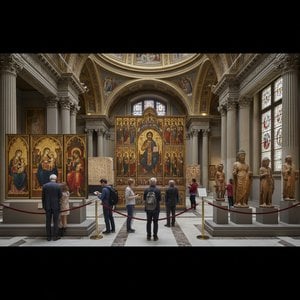
Sacred Narratives Embodied: A Comprehensive Exploration of Religious Iconography in Art History
Explore the rich history of religious iconography in art! Discover symbolism, movements & masterpieces from Byzantine to Renaissance periods. Expert insights for collectors and enthusiasts at ArtsDot.

Barokin mestariteokset: Taidetta ja loistoa kotiisi – ArtsDot.com
Uppoudu barokin loistokkuuteen! Tutustu Caravaggion, Rembrandtin ja Vermeerin kaltaisten mestareiden tunnetuimpiin teoksiin. Taidehistoriaa kotiisi – löydä upeat taidetulosteet ja canvas-taulut ArtsDot.comista.

El Greco: Spirituality, Style & Innovation – A Renaissance Master's Legacy
Explore the captivating world of El Greco! Discover his unique style, spiritual intensity, and lasting impact on art history. Learn about this Renaissance master's life, iconic paintings & legacy.

The Dramatic Flourish: Exploring the Baroque Movement's Enduring Legacy in Art History
Explore the dramatic world of Baroque art! Discover iconic artists like Caravaggio & Rubens, defining techniques, and its lasting impact on art history. Expert insights for collectors & enthusiasts at ArtsDot.

El Grecon 25 mestariteosta: Taidetta, historiaa ja inspiraatiota kotiisi
Tutustu El Grecon 25 vaikuttavimpaan mestariteokseen! Uppoudu espanjalaisen renessanssin ja manierismin maailmaan. Taidehistoriaa, uskonnollisia maalauksia ja inspiraatiota kotiisi – löydä upeat taidevedokset ArtsDot.comista.


