
- Etusivu

- Öljymaalausjäljennös
- edward arthur walton
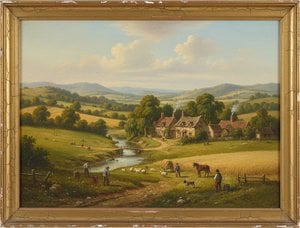
- En Plein Air

 Tilaa painos
 Jaa
Jaa Jaa
Jaa
 Details

 Lataa
Lataa
 Samanlaisia
 X-Ray
X-Ray Diaesitys
En Plein Air


Käsinmaalattu öljykopio
Käsinmaalattu öljyväri kankaalle haluamassasi koossa ja kehyksissä, taiteilijoidemme valmistamana tilauksesta.




































 Lue lisää
Valitse valmiista mitoistamme sellaiset, jotka vastaavat teoksen alkuperäisiä mittasuhteita.

Voit syöttää omat mitat sopimaan tiettyyn kehykseen tai tilaan. Jos valitsemasi koko ei vastaa alkuperäisen kuvan mittasuhteita, rajaamme taideteoksen tai jatkamme maalausta käsin maalatuilla elementeillä. Digitaalinen esikatselu lähetetään hyväksyttäväksi ennen tuotannon aloittamista.
Huomioithan, että näytöllä oleva esikatselu ei vastaa todellista rajausta tai jatkamista. Vain digitaalinen mallikuva näyttää lopullisen sommittelun tarkasti.
Vaikka mittatilaustyöt ovat mahdollisia, suosittelemme valitsemaan mitan ennalta määritetystä listasta alkuperäisten mittasuhteiden säilyttämiseksi.
Tilauksen jälkeen ArtsDot.com -tiimi lähettää asiakkaalle ohjeet ja esikatselukuvan.
Maailmanlaajuinen toimitus () 3–4 viikossa tavallisen 5 viikon sijaan. (1 heinäkuu). Laadusta ei tingitä.

Ilmainen pikatoimitus ympäri maailman

Korkealaatuinen pellavakangas

Kattava kuljetusvakuutus

Tulliveron palautustakuu

Täydellinen värien vastaavuustakuu

60 päivän palautusoikeus (vain valmistusvirheet)

100% rahat takaisin -takuu

Määräalennus tarjous
 Lasivaihtoehto on saatavilla vain alle 110 cm kokoisina teoksina

En Plein Air
Reproduktiotekniikka
Replikaatin koko
-


Kokonaishinta
-
Samankaltaisia teoksia


Taiteilijan elämäkerta
Walter Richard Sickert: A Shadowy Figure of London’s Modernist Scene
Walter Richard Sickert, born in Germany in 1860 and tragically passing away in 1942, remains a captivatingly enigmatic figure within the annals of British art. More than just an artist, he was a keen observer of urban life, a master of capturing fleeting moments, and a pivotal influence on the development of modern British painting. His work, often characterized by its smoky atmosphere, intimate portraits, and fascination with the underbelly of London’s social scene, continues to intrigue and challenge viewers today. He wasn't simply documenting reality; he was constructing it – a world filtered through his unique perspective and imbued with a subtle sense of melancholy and observation.Early Life and Influences: A European Education
Sickert’s early life, though rooted in Germany, shaped his artistic sensibilities profoundly. He spent his formative years in Munich, where he received a rigorous academic training in drawing and painting – a foundation that would later inform his meticulous technique. However, a sense of restlessness and a desire for a more vibrant and unconventional artistic environment led him to London in 1884. This move proved transformative. The bustling metropolis offered a stark contrast to the formal art schools he’d attended, exposing him to a diverse range of subjects – from street life and theatre performers to prostitutes and dockworkers. These encounters became central to his artistic vision, providing him with a wealth of material for his paintings and prints. Crucially, he was influenced by the Impressionists, particularly Monet and Degas, but quickly developed a distinct style that moved beyond mere replication of light and color. He sought to capture not just what *looked* like something, but also the feeling and atmosphere surrounding it.The Camden Town Group and a New Artistic Direction
Sickert’s arrival in London coincided with the emergence of a new artistic circle known as the Camden Town Group – a loosely affiliated collective of artists who rejected the academic traditions of the Royal Academy and sought to create a more accessible and expressive form of art. This group, which included Walter Russell, William Landseer Duffield, and John Angliss, embraced a gritty realism that focused on the everyday lives of London’s working class. Sickert became a key figure within this movement, contributing significantly to its aesthetic and intellectual direction. He was particularly interested in portraying the darker side of urban life – the poverty, squalor, and moral decay that lurked beneath the veneer of Victorian respectability. His paintings often depicted scenes of gambling dens, music halls, and opium dens, offering a starkly unflattering portrait of London society. The group’s rejection of idealized beauty in favor of honest representation was revolutionary for its time.Technique and Style: Smoke, Shadow, and Intimacy
Sickert's artistic style is immediately recognizable by its distinctive use of color and atmosphere. He favored a palette dominated by muted browns, greys, and blacks – colors that he skillfully manipulated to create a sense of smoke-filled interiors and shadowy streets. His brushwork was often loose and expressive, conveying movement and emotion rather than precise detail. He employed a technique known as “tonal painting,” where he built up layers of color to create subtle gradations of light and shadow. This approach allowed him to capture the fleeting effects of light and atmosphere with remarkable sensitivity. Furthermore, Sickert was a master of capturing human psychology through his portraits. He didn’t simply paint faces; he painted personalities – revealing the inner lives and hidden emotions of his subjects. His ability to convey a sense of vulnerability and melancholy in his portraits is particularly striking.Legacy and Historical Significance
Despite facing criticism during his lifetime for his subject matter and unconventional style, Walter Richard Sickert’s influence on British art is undeniable. He paved the way for later generations of artists who sought to explore the darker aspects of urban life and challenge traditional artistic conventions. His work anticipates elements of Expressionism and Surrealism, demonstrating a remarkable prescience. His paintings continue to be exhibited in major museums around the world, and his legacy as one of Britain’s most important modernists is firmly established. The persistent rumors surrounding his possible involvement in the Jack the Ripper murders only add to the mystique surrounding this complex and fascinating artist – a shadowy figure who captured the spirit of a rapidly changing London. His art serves as a poignant reminder that beauty can be found even in the most unexpected places, and that truth often lies hidden beneath the surface.
edward arthur walton
1860 - 1922 , United Kingdom
Pikatiedot
- Artistic Movement Or Style: British Impressionism
- Artists Or Movements Influenced By This Artist: ['Post-Impressionism']
- Artists Who Influenced This Artist: ['Impressionists']
- Date Of Birth: May 31, 1860
- Date Of Death: January 22, 1942
- Full Name: Walter Richard Sickert
- Nationality: British
- Notable Artworks:
- Brighton Pierrots
- London Group
- Camden Town Group
- Place Of Birth: Berlin, Germany
Liittyvät artikkelit

Capturing Fleeting Light: A Comprehensive Exploration of Impressionistic Landscape Painting
Explore the captivating world of Impressionistic landscape painting! Discover techniques, key artists like Monet & Renoir, and its lasting influence on art history. A comprehensive guide for enthusiasts.


Cultivating Visions: A Historical Journey Through Rural Landscapes in Art
Explore the rich history of rural landscape painting with ArtsDot. Discover Impressionist masterpieces, key artists & movements. Find your perfect serene artwork and bring nature's beauty home.

Evoking Arcadia: A Historical & Aesthetic Exploration of Rural Landscape Art
Explore the rich history of pastoral landscape art, from classical Arcadia to Impressionism & beyond. Discover key artists, movements, and how to collect serene rural scenes for your home. Expert insights at ArtsDot.
Evocations of Rural Life: A Historical Journey Through Landscape Painting
Explore the rich history of rural life in painting! Discover Impressionist masterpieces, Italian Macchiaioli scenes & the enduring appeal of pastoral landscapes. Find your perfect artwork at ArtsDot.

Edward Wilkins Waite: A Victorian Vision of Surrey's Serene Landscapes & Artistic Legacy
Explore the serene landscapes of Edward Wilkins Waite (1854-1924), a prolific Victorian painter celebrated for his depictions of Surrey's countryside. Discover his artistic influences, career highlights & collecting guide.

