 Esikatselu
 Jaa
Jaa Jaa
Jaa
 Tarkemmat tiedot

 Lataa
Lataa
 Samanlaisia
 Röntgenkuva
 Diaesitys
untitled (237)

 Näytä lisää
Giclée-printit ja taideprintit
Museolaatuisia giclée- tai kankaitaulun tulosteita nopealla tuotannolla ja joustavilla viimeistelyvaihtoehdoilla. ( Osta käsintehty maalaus Osta kuva)




P118B $10

P118H $10

P118W $10

P438Z $10

P508JH $12

P508YH $12

P805H $10

P805Z $10

P919BZ $10

P919G $10

P919XJ $10

P959ZH $10

P968JZ $12

W106C $8

W218G $10

W218JH $8

W218Y $10

W307PJ $10

W316G $10

W316PJ $8

W316Y $10

W398PJ $8

W4111J $10

W500HY $15

W500JH $15

W692G $12

W849H $8

W940BG $15

W953PJ $8




Valitse valmiista mitoistamme sellaiset, jotka vastaavat teoksen alkuperäisiä mittasuhteita.

Voit syöttää omat mitat sopiaksesi tiettyyn kehykseen tai tilaan. Jos valittu koko ei vastaa alkuperäisen kuvan mittasuhteita, rajaamme teosta tai laajennamme kuvaa peilatulla tai yhtenäisellä reunalla. Digitaalinen mallikuva lähetetään hyväksyttäväksi ennen tuotannon aloittamista.
Huomaathan, että näytöllä näkyvä esikatselu ei vastaa lopullista rajausta tai laajennusta. Vain mallikuva näyttää lopullisen sommittelun tarkasti.
Vaikka räätälöityjä kokoja on saatavilla, suosittelemme valitsemaan mitat valmiista listasta alkuperäisten mittasuhteiden säilyttämiseksi.
Toimitus maailmanlaajuisesti () kahdessa viikossa tavallisen 4–5 viikon sijaan. (16 elokuu)

Ilmainen pikatoimitus ympäri maailman

Korkealaatuinen pellavakangas

Kattava kuljetusvakuutus

Tulliveron palautustakuu

Täydellinen värien vastaavuustakuu

60 päivän palautusoikeus (vain valmistusvirheet)

100% rahat takaisin -takuu

Määräalennus tarjous
 Lasivaihtoehto on saatavilla vain alle 110 cm kokoisina teoksina

untitled (237)
Giclée-printit ja taideprintit
Replikaatin koko
-


Kokonaishinta
$ 62
Teoksen kuvaus
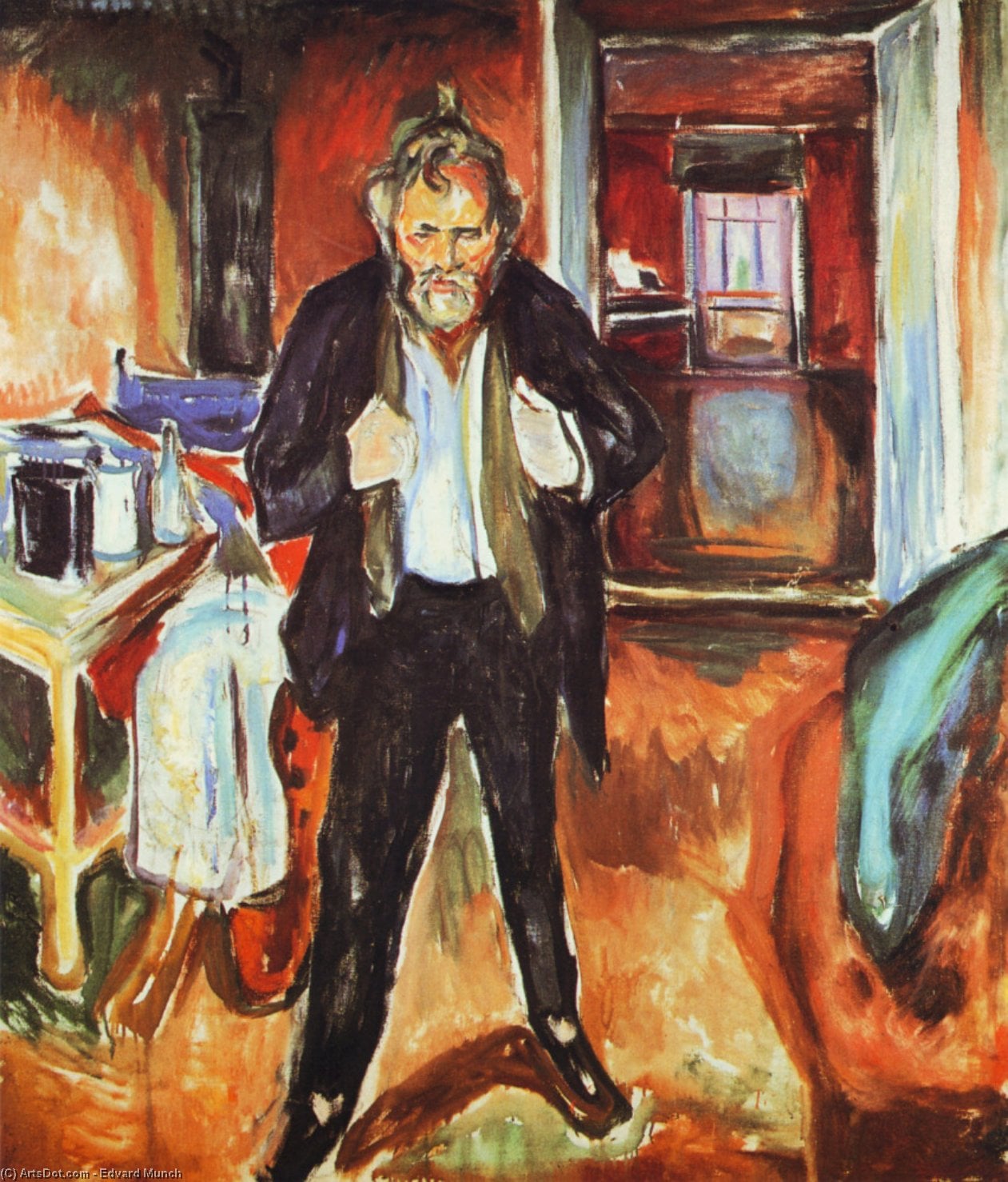
The Haunting Echo of Loss: An Exploration of Edvard Munch’s “Untitled (237)”
Edvard Munch’s “Untitled (237),” a stark black and white study of a solitary figure enveloped in shadow, isn't merely a portrait; it’s a visceral embodiment of the anxieties that defined the artist’s life and, by extension, much of the modern experience. Created around 1894 – a period marked by profound personal grief and artistic experimentation – this seemingly simple composition pulsates with an unsettling intensity, drawing the viewer into a realm of psychological distress. The figure, rendered in Munch's signature expressive style, stands rigidly within a confined space, his hands clasped tightly to his chest as if shielding himself from an unseen horror. The muted palette and deliberate lack of detail amplify the sense of isolation and despair, mirroring the artist’s own struggles with mortality, illness, and the pervasive feeling of alienation that haunted him throughout his life.
Expressionist Roots: Symbolism and the Inner Landscape
“Untitled (237)” firmly establishes itself within the burgeoning Expressionist movement, a radical shift in artistic practice that prioritized subjective experience over objective representation. Munch, alongside artists like Kirchner and Heckel, sought to convey not just what he *saw*, but what he *felt* – specifically, the raw emotions of fear, anxiety, and grief. The painting’s power lies in its ability to bypass rational thought and directly tap into primal anxieties. Notice the deliberate distortion of form; the figure isn't realistically portrayed, but rather sculpted by an internal torment. The two windows offer a glimpse of external reality, yet they fail to provide solace or escape, instead serving as reminders of the world outside – a world that feels distant and inaccessible from this state of profound introspection.
Munch’s artistic lineage is complex, drawing inspiration from Symbolism's emphasis on evocative imagery and psychological themes. However, unlike the often-dreamlike quality of Symbolist works, “Untitled (237)” possesses a stark, almost brutal honesty. The painting echoes the influence of artists like Rembrandt and Caravaggio, particularly in its use of dramatic chiaroscuro – the intense contrast between light and shadow – which further intensifies the sense of drama and psychological tension.
A Biography of Pain: Munch’s Personal Demons
To fully appreciate “Untitled (237),” it's crucial to understand the deeply personal context in which it was created. Edvard Munch’s life was marked by a series of devastating losses, beginning with the deaths of his mother and sister from tuberculosis at a young age. These experiences profoundly shaped his artistic vision, fueling a lifelong preoccupation with themes of mortality, sickness, and the fragility of human existence. The painting can be interpreted as a direct reflection of this inner turmoil – a visual manifestation of the grief, fear, and loneliness that consumed him. His father’s strict religious beliefs and own struggles with mental illness further contributed to a sense of dread that permeated Munch’s world, shaping not only his personal life but also the symbolic language of his paintings.
Research into Munch's biography reveals a man perpetually grappling with existential questions. The painting isn’t simply a depiction of sadness; it’s an exploration of the very nature of human suffering and the struggle to find meaning in a world riddled with pain and uncertainty. The figure’s posture – rigid, almost supplicating – suggests a desperate attempt to hold onto something, anything, amidst the overwhelming sense of despair.
Capturing Emotion: Technique and Reproduction
ArtsDot's meticulous hand-painted reproductions strive to faithfully capture the essence of Munch’s original work. Utilizing traditional oil painting techniques, our artisans painstakingly recreate the subtle nuances of tone, texture, and light that define “Untitled (237).” The stark contrast between black and white emphasizes the emotional intensity of the scene, while the deliberate brushstrokes convey a sense of urgency and raw emotion. When selecting a reproduction, consider the level of detail and the artist’s interpretation – ArtsDot offers options ranging from faithful reproductions to interpretations that subtly enhance the painting's impact. Whether displayed in a modern gallery or a private residence, this artwork serves as a powerful reminder of the enduring relevance of Munch’s exploration of the human psyche.
Samankaltaisia teoksia


Taiteilijan elämäkerta
Varjoisasta Lapsuudesta Modernin Ahdistuksen Ilmaisijaksi: Edvard Munchin Elämä ja Taide
Edvard Munch, vuonna 1863 Norjan karussa maisemassa syntynyt taiteilija, nousi tunnetuksi modernin ajan ahdistuksen ja emotionaalisen myllerryksen symbolina. Hänen elämänsä oli syvästi leimattu menetyksestä ja läpitunkevan melankolian tunteesta, mikä toimi hänen voimakkaan ilmaisullisen taiteensa lähteenä. Lapsuusvuodet varjostivat varhaiset kuolemat – äiti ja sisko menehtyivät tuberkuloosiin – ja Munchille kehittyi painava huoli kuolevaisuudesta, sairaudesta ja ihmiselämän hauraudesta. Nämä kokemukset eivät olleet pelkkiä elämäkertatietoja; ne muodostivat hänen taiteellisen visionsa ytimen, ruokkien lakkaamatonta pyrkimystä tutkia sisäistä maisemaa täynnä pelkoa, surua ja kaipuuta. Isän tiukat uskonnolliset vakaumukset ja Munchin omat mielenterveyskamppailut lisäsivät synkkyyden tunnetta hänen maailmassaan, muokaten paitsi henkilökohtaista elämäänsä myös maalaustensa symbolikieltä. Hän ei pelkästään kuvannut kohtauksia; hän ulkoisti sisäisen tilan, kääntäen psyykkistä ahdinkoa visuaaliseen muotoon.
Ilmaisun Synty: Vaikutteet ja Taiteellinen Kehitys
Munchin taiteellinen matka alkoi muodollisella koulutuksella Kristianian (Oslo) kuninkaallisessa taide- ja suunnittelukoulussa, mutta todellisen luovuuden kipinän sytytti kohtaaminen boheemien piirien kanssa sekä Hans Jægerin nihilistinen filosofia. Jæger rohkaisi Munchia hylkäämään tavanomaiset akateemiset tyylit ja sukeltamaan sen sijaan oman subjektiivisen kokemusmaailmansa syvyyksiin, konsepti, jota hän kutsui ”sielun maalaukseksi”. Tämä ratkaiseva käänne merkitsi Munchin omaleimaisen tyylin alkua – tyyliä, jolle oli tunnusomaista raaka tunteellisuus, vääristyneet muodot ja luonnonmukaisen esityksen hylkääminen. Matkat Pariisiin 1890-luvulla altistivat hänet kukoistavalle postimpressionismille, jossa hän imi vaikutteita Paul Gauguinin, Vincent van Goghin ja Henri de Toulouse-Lautrecin taiteilijoista. Näiden mestareiden rohkea värien käyttö, ilmeikäs siveltötyöskentely ja psykologinen intensiteetti resonoi syvästi Munchin omien taiteellisten pyrkimysten kanssa. Hän ei pelkästään jäljitellyt heidän tekniikoitaan; hän syntetisoi ne ainutlaatuiseksi kieleksi, joka kykeni välittämään ihmisen syvimmät ja levottomimmat tunteet. Aika Berliinissä osoittautui myös ratkaisevaksi, tuoden hänet kosketuksiin näytelmäkirjailija August Strindbergin kanssa, jonka psykologisten teemojen tutkiminen ruokki entisestään Munchin taiteellisia pyrkimyksiä.
Ikoniset Visioita: Keskeiset Teokset ja Niiden Symbolinen Paino
Munchin tuotanto on täynnä kuvia, jotka ovat juurtuneet kollektiiviseen tietoisuuteen. Huuto, ehkä hänen tunnetuin teoksensa, ylittää maalauksen aseman ja nousee universaaliksi eksistentiaalisen ahdistuksen symboliksi. Pyörteilevä, liekehtivä maisema ja hahmon vääristynyt kasvot ilmentävät alkukantaista huutoa maailmankaikkeuden välinpitämättömyyttä vastaan. Madonna, kiistanalainen ja syvästi henkilökohtainen teos, tutkii seksuaalisuutta, äitiyttä ja kuolevaisuutta häiritsevällä avoimuudella. Toistuvat motiivit, kuten Sairas lapsi – inspiroitunut sisarensa Sophien menetyksestä – muistuttavat koskettavasti Munchin lapsuuden traumaa ja kuoleman jatkuvaa uhkaa. Melankolia I & II, voimakkaat kuvaukset syvästä surusta ja eristäytymisestä, paljastavat haavoittuvuutta, joka on sekä henkilökohtaista että yleismaailmallisesti samaistuttavaa. Nämä teokset eivät ole pelkästään ulkoisen todellisuuden esityksiä; ne ovat ikkunoita taiteilijan sieluun, tarjoten katsojille häikäilemättömän vilkauksen ihmismielen synkimpiin sopukoihin. Munch ei pyrkinyt luomaan kauniita kuvia; hän halusi välittää totuuden – vaikka se olisikin tuskallista ja levotonta.
Kestävä Perintö: Historiallinen Merkitys ja Vaikutus
Edvard Munchin panos modernille taiteelle on mittaamaton. Hän seisoo keskeisenä hahmona ekspressionismin kehityksessä, tasoittaen tietä taiteilijoille, jotka priorisoivat subjektiivista tunnetta objektiivisen esityksen sijaan. Hänen häikäilemätön tutkimus universaaleista ihmiskokemuksista – rakkaudesta menetykseen, ahdistukseen ja kuolemaan – resonoi edelleen nykyajan yleisöjen kanssa, vahvistaen hänen paikkansa yhtenä vaikutusvaltaisimmista ja kestävämmistä hahmoista taidehistoriassa. Hänen työnsä vaikutti syvästi myöhempiin sukupolviin taiteilijoita, inspiroiden liikkeitä kuten saksalainen ekspressionismi ja sen jälkeen. Hän uskalsi kohdata ihmisen olemuksen synkimmät puolet, haastaen tavanomaiset käsitykset kauneudesta ja taiteellisesta esittämisestä. Vaikka hän saavutti mainetta ja tunnustusta – huipentuen Munch-museon perustamiseen Oslossa – hänen henkilökohtainen elämänsä pysyi myrskyisänä, leimattuna mielenterveyden epävakauden ja eristäytymisen jaksoilla. Silti hän jatkoi luomista, jättäen jälkeensä teoskokonaisuuden, joka edelleen provosoi, haastaa ja inspiroi. Munchin perintö ei perustu pelkästään maalauksiin; se koskee rohkeutta kohdata ihmisen olemassaolon monimutkaisuutta ja kääntää nämä kokemukset taiteeksi, joka puhuttelee syvimpiä osiamme.

Edvard Munch
1863 - 1944 , Ruotsi
Pikatiedot
- Artistic Movement Or Style: Ilmaisullisuus
- Artists Or Movements Influenced By This Artist: ['Saksa ekspressionismi']
- Artists Who Influenced This Artist:
- Paul Gauguin
- Van Gogh
- Date Of Birth: 12. joulukuuta 1863
- Date Of Death: 23. tammikuuta 1944
- Full Name: Edvard Munch
- Nationality: Norjalainen
- Notable Artworks:
- Huuto
- Madonna
- Sairas lapsi
- Place Of Birth: Ådalsbruk, Ruotsi
Liittyvät artikkelit

Edvard Munchin 25 mestariteosta: Taidetta ja tunteita kotiisi | ArtsDot
Tutustu Edvard Munchin 25 mestariteokseen ja uppoudu ekspressionismin tunteisiin. Taidehistoriaa, maalauksien tarinoita ja inspiraatiota sisustukseen ArtsDotilta. Löydä kaikki taideteokset verkossa!

Valkean mestariteoksia: Top 10 kuuluisinta maalausta ja niiden tarinat – ArtsDot.com
Tutustu 10 kuuluisimpaan valkoiseen maalauteen – Monet'sta Rothkoon. Inspiroivat tarinat, taidehistoriaa ja tekniikoita. Löydä täydellinen sisustustaulu ArtsDot.com:ista! Tutki kokoelma verkossa.

Edvard Munch: Anxiety, Modernity & the Dawn of Expressionism
Explore the profound world of Edvard Munch, pioneer of Expressionism. Discover the origins of 'The Scream' & his haunting depictions of anxiety, mortality, and love. Expert analysis & high-quality reproductions at ArtsDot.

Top 10 Ekspressionismin Mestarityötä: Taidetta ja Tunnelmaa Kotiisi
Tutustu 10 ekspressionismin mestariteokseen! Munchin Huuto, Kandinskyn värit ja Die Brücken taidemaalarit. Taidetta kotiisi – löydä inspiraatiota ja korkealaatuiset taidevedokset ArtsDot.com:ista.

Mustan sävyt taiteessa: 10 kuuluisinta mestariteosta ja niiden tarinat
Tutustu 10 kuuluisimpaan mustasävyiseen mestariteokseen! Rembrandtista Manetiin, syvenny taiteen historiaan ja synkkiin tunnetiloihin. Laadukkaat taidevedokset sisustukseesi ArtsDot.com:ssa. Tutustu kokoelmaamme verkossa!