

 Esikatselu
 Jaa teos
 Jaa
Jaa
 Tiedot
 Opas
Opas

 Lataa kuva
 Samanlaisia kohteita
 Röntgenkuvaus
 Diaesitys
 Kysymykset ja vastaukset
 Tilastot
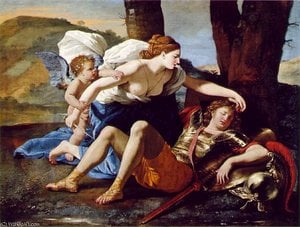
Rinaldo in Armida


 Lue lisää
Saat tulostusvalmiin tiedoston, jonka laatu ylittää verkkonäkymän huomattavasti. Jokainen myymämme digitaalinen kuva on peräisin arkistomme korkearesoluutioisesta mestariteoksesta — yleensä 5 000–15 000 pikselin levyisenä — joten voit tulostaa suuria kokoja, rajata tiukasti tai toistaa hienovaraiset yksityiskohdat luottavaisin mielin.
Mikään tiedosto ei lähde studiostamme muuttamatta. Digitaalinen asiantuntija vertaa värejä alkuperäiseen maalaukseen ja korjaa niitä tarvittaessa, minkä jälkeen hän parantaa kuvan selkeyttä ja yksityiskohtia ammattimaisilla retusointityökaluilla — säilyttäen aina uskollisena taiteilijan siveltimenjäljen ja tyylin. Lopputuloksena on kuva, joka näyttää maalaukselta, eikä suodatetulta skannaukselta.
Hyväksyt työn ennen valmistumistaan: asiantuntijamme lähettää kuvan tarkistettavaksi sähköpostitse 72 tunnin kuluessa. Etkö ole tyytyväinen? Pyydä parannuksia tai korjauksia, tai pyydä hyvitystä, mikäli laatu ei vastaa odotuksia.
Tämä on laatua, johon kustantamot, design-studiot, galleriat ja painotalot luottavat.
Digitaalinen kuva
Lataa korkearesoluutioinen tiedosto henkilökohtaiseen näyttelyyn, tulostamiseen ja luoviin projekteihin. ( Vaihda tulosteeseen Osta käsinmaalattu taideteos)
Sisältyy jokaiseen digitaalisen kuvan tilaukseen
Asiantunteva digitaalinen toimitus, laatu taattu
Kun valitset ArtsDot.com-palvelun, et saa vain kuvaa – saat ammattimaisesti viimeistellyn digitaalisen taideteoksen, joka on luotu tarkkuudella ja jonka takaa tulee tyytyväisyystakuu. Tässä on kaikki, mitä tilauksesi sisältää, automaattisesti:

Nopea sähköpostitoimitus
Saat korkearesoluutioisen digitaalisen kuvatiedostosi sähköpostiisi 72 tunnin kuluessa tilauksesta – valmiina käytettäväksi välittömästi.

Tekoälyllä parannettu digitaalinen tiedosto
Teoksesi on optimoitu ammattimaisesti edistyneiden tekoälytyökalujen ja manuaalisen jälkikäsittelyn avulla, mikä takaa maksimaalisen yksityiskohtaisuuden, selkeyden ja väritarkkuuden.

Ilmainen uudelleenlähetys elinikäisesti
Oletko vahingossa poistanut tai kadottanut tiedostosi? Ei hätää – lähetämme sen sinulle uudelleen milloin tahansa täysin maksutta.

Ei tuontimaksuja – koskaan
Nauti taiteestasi välittömästi ilman tullimaksuja, veroja tai toimituskuluja – digitaaliset lataukset ovat aina verovapaita.

Värintoiston tarkkuustakuu
Varmistamme, että digitaalinen kuvasi vastaa alkuperäisiä värejä mahdollisimman tarkasti käyttämällä ammattilaistason työkaluja ja värinhallintaa.

100 päivän tyytyväisyystakuu
Jos et ole tyytyväinen digitaaliseen kuvaasi, muokkaamme sitä tai palautamme 100% hinnan 100 päivän kuluessa – kysymystä ei esitetä.

100% Rahat takaisin -takuu
Et ole tyytyväinen? Saat täyden hyvityksen 100 päivän kuluessa digitaalisen tiedostosi vastaanottamisesta – kysymystä ei esitetä.

Määräalennukset
Osta 3 kuvaa, säästä 10% - Osta 5, säästä 15% - Osta 10+, säästä 20%. Erinomainen valinta luoviin projekteihin, gallerioille ja toimistoille.
A Garden of Seduction and Shadow
The scene unfolds within a lush, outdoor sanctuary where the air feels heavy with the scent of damp earth and blooming flora. At the heart of this verdant enclosure, a man and a woman lie in a moment of quiet intimacy. He rests upon the ground, his body surrendered to the stillness, while she sits beside him, her presence a soft weight against his side. Their hands are joined, fingers interlaced in a silent pact of connection. They do not look at one another; instead, their gazes are pulled toward something unseen at the periphery of the frame. Around them, the garden is populated by several figures, some standing in the distance and others gathered near the center, their forms partially obscured by the dense foliage and the play of light.
The composition is anchored by a tension between the living and the skeletal. Amidst the soft textures of the garden, the hard, pale shapes of skulls are scattered, resting near the figures like forgotten mementos of mortality. This juxtaposition creates a quiet friction between the warmth of the lovers and the cold reality of the earth.
The Language of Venetian Light
Domenico Tintoretto works with a precision that favors the psychological over the theatrical. His brush captures the subtle shifts in skin tone and the heavy drape of fabric with a meticulous hand. The light does not merely illuminate; it pierces through the shadows to define the contours of the human form, a technique learned from the dramatic traditions of Venice. The oil on canvas reveals a sophisticated handling of texture, from the smoothness of a cheek to the rough bark of the background trees.
- The use of chiaroscuro to define the depth of the garden.
- A focus on anatomical precision in the intertwined hands.
- The integration of symbolic objects within a naturalistic landscape.
- A palette that balances the greens of the garden with the pale tones of the skulls.
A Study in Poised Elegance
This work belongs to the second half of the 16th century, a period where the grand energy of the Venetian school began to settle into a more refined, observant grace. The painting draws its narrative from the epic themes of the era, specifically the story of Rinaldo and Armida. Here, the focus is not on the heat of battle, but on the stillness of the enchanted garden. The artist moves away from overwhelming scale to find meaning in the small, the intimate, and the quiet. It is a study of a moment caught between the pulse of life and the silence of the grave.
The shadows hold the secrets of the garden.
Kysymykset ja vastaukset
Onko teokselle Domenico Tintoretto:n "Rinaldo in Armida" opasta?
Opas teokseen "Rinaldo in Armida" on teoksen Opas -sivu – tulostettava tietolomake, joka sisältää teoksen kuvatekstin, tekijätiedot ja tunnistetaulukon (taiteilija, päivämäärät, tekniikka, alkuperäinen koko, kokoelma).
Miten teoksen "Rinaldo in Armida" aihe liittyy Domenico Tintoretto'n tavallisiin teemoihin?
Domenico Tintoretto:n tunnettujen teemojen – jacopo tintoretto's influence, mannerist tradition, gerusalemme liberata by tasso, venetian renaissance style, secular and religious themes – joukossa "Rinaldo in Armida" tuo oman painopisteensä aiheeseen man, woman, trees, garden, skulls, people, outdoor setting.
Mihin taidesuuntaukseen ja mihin aikakauteen Domenico Tintoretto:n "Rinaldo in Armida" kuuluu?
Teoksessa Domenico Tintoretto:n "Rinaldo in Armida" Mannerism-suuntaus ja Renaissance-aikakausi kohtaavat.
Samankaltaisia teoksia




Taiteilijan esittely
The Shadow of a Master: The Life and Legacy of Domenico Robusti
In the golden, sun-drenched era of the Venetian Renaissance, names often echoed through the marble halls of history with a thunderous intensity. Yet, within the orbit of the legendary Jacopo Tintoretto, there existed a more subtle, quiet brilliance. Domenico Robusti, often whispered about in the annals of art history as a figure existing in the soft glow of his father’s monumental shadow, carved out a space for himself that was uniquely his own. Born in Venice around 1560, Domenico grew up amidst the scent of oil paints and the dramatic tension of his father's workshop. While he is frequently linked to the grand, theatrical compositions of the Tintoretto lineage, his true artistry lay in a more intimate, refined approach to the canvas—a departure from the flamboyant energy of his predecessor toward something far more poised and psychologically observant.
The formative years of Domenico Robústi were undoubtedly shaped by the revolutionary techniques flowing through his family home. To study under Tintoretto was to learn the language of chiaroscuro, to understand how light could pierce through darkness to reveal the soul of a subject, and to master the complex geometry of perspective. However, where the elder Robusti sought to overwhelm the viewer with movement and scale, Domenico found beauty in the stillness. His development as an artist was marked by a transition from mere stylistic imitation to a sophisticated mastery of portraiture and decorative elegance. He possessed a rare ability to capture the dignity of the Venetian nobility, translating their social stature into subtle facial expressions and meticulous anatomical precision.
A Mastery of Portraiture and Devotional Grace
Domenico’s body of work serves as a window into the social fabric of 16th-century Venice. His portraits were not merely records of likeness but were profound studies in character. Through his brush, figures such as Mario Barbarigo and Francesco Maria Veneto were rendered with a grace that balanced the weight of their titles with a palpable human vulnerability. This period of his career highlights a significant achievement: the ability to marry the grand Mannerist tradition with an understated elegance that would become his hallmark. His compositions often utilized rich, textured backgrounds—a skill likely honed through collaborative efforts within the family workshop—to frame his subjects in a way that felt both timeless and deeply rooted in the Venetian landscape.
Beyond the secular realm of portraiture, Domenico’s talent extended into the deeply spiritual. His religious works, such as the poignant Tancred Baptizing Clorinda, demonstrate a profound capacity for conveying solemn piety and emotional depth. In these pieces, one can observe the lingering influence of his father's dramatic lighting, yet it is tempered by a gentler, more contemplative touch. Similarly, in works like Annunciation and Three Avogadri, he navigated the complexities of religious symbolism and intricate composition, proving that he could handle the heavy theological themes of the era with a sophisticated, Mannerist flair. His ability to weave together the sacred and the human allowed him to contribute significantly to the devotional art that defined the Venetian spirit.
Historical Significance and Artistic Resonance
The historical significance of Domenico Robusti lies in his role as a bridge between the high drama of the late Renaissance and the more refined, poised sensibilities of the following era. While he may not have sought the same level of fame as the giants of his age, his contributions to the Venetian school are undeniable. He provided a necessary counterpoint to the overwhelming theatricality of the period, offering instead a vision of beauty found in detail, texture, and psychological nuance. His work remains a vital testament to the enduring legacy of the Robusti name and the intricate layers of influence that shaped the artistic identity of Venice.
To study Domenico is to appreciate the quiet strength of an artist who found his voice not by shouting over the masters, but by speaking with a clarity and elegance that demanded its own kind of reverence. His life and art remind us that even in the presence of legends, there is profound beauty to be found in the subtle strokes of a master's hand.

Domenico Tintoretto
1560 - 1635 , Italy
Pähkinänkuoressa
- Full Name: Domenico Robusti
- Nationality: Italian
- Date Of Birth: 1560
- Date Of Death: 1635
- Place Of Birth: Venice, Italy
- Notable Artworks:
- Annunciation and Three Avogadri
- Portrait of Mario Barbarigo
- Portrait of a Man
- Artistic Movement Or Style: Mannerism
- Artists Who Influenced This Artist: ['Tintoretto']
- Artists Or Movements Influenced By This Artist: ['Jacopo Robusti']