
- Etusivu

- Tuloste kankaalle
- Cornelis Van Poelenburgh
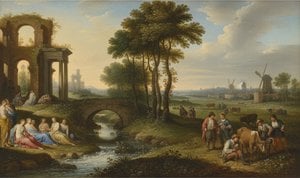
- Landscape with Diana and Callisto

 Tilaa maalaus
 Jaa
Jaa Jaa
Jaa
 Tiedot

 Lataa
Lataa
 Samanlaisia
 X-lähikuva
 Diaesitys
Landscape with Diana and Callisto
 Oil On Canvas
- WallArt
- Baroque
 54.0 x 82.0 cm
 Ermitažin museo
 Näytä lisää
Giclée-printit ja taideprintit
Museolaatuisia giclée- tai kankaitaulun tulosteita nopealla tuotannolla ja joustavilla viimeistelyvaihtoehdoilla.




P118B $10

P118H $10

P118W $10

P438Z $10

P508JH $12

P508YH $12

P805H $10

P805Z $10

P919BZ $10

P919G $10

P919XJ $10

P959ZH $10

P968JZ $12

W106C $8

W218G $10

W218JH $8

W218Y $10

W307PJ $10

W316G $10

W316PJ $8

W316Y $10

W398PJ $8

W4111J $10

W500HY $15

W500JH $15

W692G $12

W849H $8

W940BG $15

W953PJ $8




Valitse valmiista mitoistamme sellaiset, jotka vastaavat teoksen alkuperäisiä mittasuhteita.

Voit syöttää omat mitat sopiaksesi tiettyyn kehykseen tai tilaan. Jos valittu koko ei vastaa alkuperäisen kuvan mittasuhteita, rajaamme teosta tai laajennamme kuvaa peilatulla tai yhtenäisellä reunalla. Digitaalinen mallikuva lähetetään hyväksyttäväksi ennen tuotannon aloittamista.
Huomaathan, että näytöllä näkyvä esikatselu ei vastaa lopullista rajausta tai laajennusta. Vain mallikuva näyttää lopullisen sommittelun tarkasti.
Vaikka räätälöityjä kokoja on saatavilla, suosittelemme valitsemaan mitat valmiista listasta alkuperäisten mittasuhteiden säilyttämiseksi.
Toimitus maailmanlaajuisesti () kahdessa viikossa tavallisen 4–5 viikon sijaan. (2 heinäkuu)

Ilmainen pikatoimitus ympäri maailman

Korkealaatuinen pellavakangas

Kattava kuljetusvakuutus

Tulliveron palautustakuu

Täydellinen värien vastaavuustakuu

60 päivän palautusoikeus (vain valmistusvirheet)

100% rahat takaisin -takuu

Määräalennus tarjous
 Lasivaihtoehto on saatavilla vain alle 110 cm kokoisina teoksina

Landscape with Diana and Callisto
Giclée-printit ja taideprintit
Replikaatin koko
-


Kokonaishinta
-
Teoksen kuvaus
Landscape with Diana and Callisto – A Baroque Masterpiece
Cornelis van Poelenburch’s “Landscape with Diana and Callisto,” painted circa 1630, stands as a testament to the burgeoning artistic fervor of the Dutch Golden Age and embodies the stylistic hallmarks of its era. More than just a depiction of a serene Italian hillside—though undeniably inspired by the picturesque landscapes favored during van Poelenburch’s formative years in Rome—the painting delves into profound mythological themes, exploring notions of divine retribution and human vulnerability within a meticulously crafted visual framework.Composition and Technique: Embracing Dynamic Movement
The artwork's composition is remarkably balanced, prioritizing a central group of figures – Diana and Callisto – nestled amongst rocky outcrops that dominate the mid-ground. These figures are positioned strategically to draw the viewer’s gaze upwards towards a hazy horizon line, creating an illusion of depth that anchors the scene in its surroundings. Van Poelenburch skillfully employs linear perspective, subtly diminishing size as objects recede into the distance, reinforcing this sense of spatial realism. Furthermore, he utilizes layering and blending techniques with oil paint on canvas—a technique common for his time—to achieve smooth transitions between colors and tones. Visible brushstrokes contribute to textural richness, particularly in the depiction of foliage and rock surfaces, hinting at the artist’s dedication to capturing natural detail.Historical Context: Roman Influence and Mythological Narrative
Van Poelenburch's journey to Rome profoundly impacted his artistic sensibilities, aligning him with a cohort of painters who sought inspiration from classical traditions. Like many artists of his generation, he embraced the Italianate landscape style—characterized by idealized vistas populated by diminutive figures enacting biblical or mythological narratives—demonstrating an awareness of artistic precedents and a desire to elevate his work beyond mere topographical representation. The scene portrays Diana, goddess of the hunt, confronting Callisto, Zeus’s wife who was seduced by Jupiter and subsequently impregnated – a tale rife with symbolism concerning divine justice and mortal transgression.Symbolism: Reflections on Time and Divine Judgment
The inclusion of ruined architectural structures—likely Roman columns—adds another layer of significance to the composition. These remnants serve as visual reminders of past glories, symbolizing the inevitable decay of civilizations and prompting contemplation about mortality. The figures’ expressions convey a palpable sense of vulnerability alongside serene observation, suggesting an emotional resonance that transcends the narrative itself. Diana's gaze is directed towards Callisto, embodying divine scrutiny and hinting at the consequences of defying celestial law.Emotional Impact: Tranquility Amidst Dramatic Narrative
Ultimately, “Landscape with Diana and Callisto” succeeds in conveying a captivating blend of tranquility and drama. Despite the weighty mythological subject matter—the confrontation between goddess and mortal—the painting’s muted color palette and diffused lighting evoke a feeling of contemplative stillness. It invites viewers to immerse themselves in the beauty of the Italian landscape while simultaneously pondering the timeless themes of morality, retribution, and human experience – qualities that continue to resonate with audiences today.Samankaltaisia teoksia


Taiteilijan elämäkerta
Varhaiset elämänvaiheet ja koulutus
Cornelis van Poelenburgh, merkittävä hollantilainen maisemamaalari, syntyi Utrechtissä, Alankomaissa vuonna 1594. Hän aloitti koulutuksensa tunnetun taiteilijan Abraham Bloemaertin johdolla. Tämä perustavanlaatuinen koulutus loi pohjan van Poelenburghille tulevaisuuden menestykselle.Taiteellinen ura ja vaikutteet
Van Poelenburghin matkat Roomaan 1600-luvun alussa vaikuttivat merkittävästi hänen teoksiinsa, tehden hänestä johtavan edustajan ensimmäisestä sukupolvesta hollantilaisia maisemamaalareita, jotka olivat aktiivisia Italiassa. Hänen pienoiskokoiset maalauksensa, joissa usein esiintyy italialaisvaikutteisia maisemia pienillä hahmoilla, jotka elävöittävät Raamatun tai mytologiset kohtaukset, korostivat hänen ainutlaatuista tyyliään. Huomionarvoisia teoksia:- Satyrit salaahtelemassa nimfiä (1627 jälkeen), tyypillinen esimerkki van Poelenburghin teoksesta, jossa esiintyy arhaisia maisemia uimilla hahmoja. (Katso ArtsDotsta)
- Gummenien neuvosto (n. 1630), maalaus, joka esittelee van Poelenburghin idealisoitua kumpuilevaa maisemaa ja Roomaa muistuttavia jumalattaria, joka on nyt Mauritshuisissa (Hagentamassa, Alankomaat). (Katso ArtsDotsta)
Perintö ja myöhempi elämä
Van Poelenburghin teokset olivat erittäin arvostettuja hänen aikalaistensa keskuudessa, mukaan lukien Tuscaniin kruununprinssi ja hollantilainen staatholder. Hän palasi myöhemmin Utrechtiin, missä hän kuoli vuonna 1667, vain muutaman vuoden kuluttua vanhan opettajansa Abraham Bloemaertin jälkeen. Tärkeimmät kohdat:- Syntynyt Utrechtissä, Alankomaissa vuonna 1594
- Koulutettu Abraham Bloemaertin johdolla
- Vaikuttunut ajastaan Roomassa
- Tunnettu pienoiskokoisista italialaisvaikutteisista maisemista hahmoilla
- Kuollut Utrechtissä vuonna 1667 Katso Cornelis van Poelenburghin teokset ArtsDotsta Lue lisää Cornelis van Poelenburghista Wikipediassa

Cornelis Van Poelenburgh
1594 - 1667 , Alankomaat
Pikatiedot
- Artistic Movement Or Style: Hollantilaismaisema, Roomaaninen
- Artists Or Movements Influenced By This Artist: ['Claude Lorraine']
- Artists Who Influenced This Artist: ['Abraham Bloemaert']
- Date Of Birth: 1594, Utrecht, Alankomaat
- Date Of Death: 1667, Utrecht, Alankomaat
- Full Name: Cornelis van Poelenburgh
- Nationality: Hollantilainen
- Notable Artworks:
- Satyrs spying on nymphs
- Council of the gods
- Place Of Birth: Utrecht, Alankomaat
Liittyvät artikkelit
Cornelis van Poelenburch: Bridging Mannerism & the Dutch Baroque Landscape
Discover Cornelis van Poelenburch, a pivotal Dutch Baroque landscape painter bridging Mannerism & Italianate styles. Explore his life, key works, and lasting influence on 17th-century art with ArtsDot.

The Dramatic Vista: Exploring Emotion, Power & Technique in Baroque Landscape Painting
Explore the dramatic power of Baroque landscape painting! Discover Rembrandt, Vermeer & Caravaggio's techniques, symbolism & lasting influence. Expert insights for art lovers & collectors at ArtsDot.

Victor Vasnetsov: Myth, Nationalism & the Revival of Russian Fairy Tale Painting
Explore the captivating world of Victor Vasnetsov, a co-founder of Russian folklorist painting. Discover his iconic works, influence on national identity, and lasting legacy in this expert guide.

Echoes of Olympus: Mythological Narratives in Western Art Through the Ages
Explore the captivating history of mythological narratives in Western art! From ancient Greece to modern masterpieces, discover iconic artworks & symbolism. Expert analysis and high-quality reproductions at ArtsDot.

The Visceral Stage: Exploring Dramatic Narratives & Emotional Intensity in Baroque Art
Explore the dramatic world of Baroque art! Discover iconic masters like Caravaggio & Rembrandt, their techniques, and the movement's lasting impact. Expert insights for collectors & enthusiasts at ArtsDot.

