


 Katso seinällä
 Lähetä
 Jaa
Jaa
 Tarkemmat tiedot
 Opas
Opas

 Lataa kuva
 Samanlaisia kohteita
 Röntgenkuvaus
 Diaesitys
 Tilastot
Polygon
 Geometric Abstraction
 1938
1938- Modern
 44.0 x 45.0 cm
 McNay Art Museum
 Lue lisää
Tällä sivulla esitettyä taideteosta suojaa tekijänoikeuslaki, mikä tarkoittaa, ettemme voi laillisesti luoda tai myydä täsmälleen samanlaista jäljennöstä. Tämä suoja toteutetaan kansainvälisten sopimusten, kuten esimerkiksi Berne-konventio ja kansallisilla laeilla, mukaan lukien niillä määritellyt Yhdysvaltain tekijänoikeuslaki – Luku 17. Kaikki oikeudet pidätetään. Luvaton kopiointi tai jäljittely on kielletty.
Kunnioittavana ja laillisena vaihtoehtona tarjoamme alkuperäisestä inspiroituneita, yksilöllisiä ja käsinmaalattuja taideteoksia. Taitavat ja ammattimaiset taiteilijamme tutkivat huolellisesti alkuperäisen teoksen tyyliä, tunnelmaa ja taiteellista ydintä luodakseen uuden, ainutlaatuisen teoksen, joka herättää saman tunteen – säilyttäen samalla oman itsenäisen alkuperäisyytensä.
Tämä menetelmä noudattaa täysin tekijänoikeussäännöksiä, sillä se ei sisällä suojatun taideteoksen kopioimista tai jäljentämistä. Sen sijaan kyseessä on luova uudelleentulkinta – uusi maalaus, joka ammentaa vaikutteita alkuperäisestä, mutta ei ole sen identtinen kopio.
Käsinmaalattu öljyvärinen jäljennös
Käsinmaalattu öljyväri kankaalle haluamassasi koossa ja kehyksissä, taiteilijoidemme valmistamana tilauksesta. ( Vaihda tulosteeseen Siirry digitaaliseen kuvaan)




































Valitse valmiista mitoistamme sellaiset, jotka vastaavat teoksen alkuperäisiä mittasuhteita.

Kirjoita tarvitsemasi leveys ja korkeus, jotta teos sopii kehyskehyksiisi tai seinällesi. Koska kyseessä on käsinmaalattu teos, taiteilija voi maalata hieman enemmän kuvan ympärille tai rajata sitä hieman, jos haluat eri muotoisen koon — valinta on sinun. Lähetämme sinulle digitaalisen mallikuvan hyväksyttäväksi ennen kuin maalaus alkaa. Tällä sivulla näkyvä kuva ei vastaa lopullista tulosta — vain mallikuva näyttää sen.
Tilauksen jälkeen ArtsDot.com -tiimi lähettää asiakkaalle sähköpostitse ohjeet ja esikatselukuvan.
Maailmanlaajuinen toimitus () 3–4 viikossa tavallisen 5 viikon sijaan. (21 lokakuu). Laadusta ei tingitä.

Ilmainen pikatoimitus ympäri maailman

Korkealaatuinen pellavakangas

Kattava kuljetusvakuutus

Tulliveron palautustakuu

Takuu täydellisestä värien vastaavuudesta

100 päivän palautusoikeus valmistusvirhetapauksissa

100% rahat takaisin -takuu

Määräalennus saatavilla
 Lasivaihtoehto on saatavilla vain alle 110 cm kokoisille teoksille

Polygon
Reproduktiotapa
Replikaatin koko
-


Kokonaishinta
€ 230
The Geometry of Silence: A Study in Abstract Form
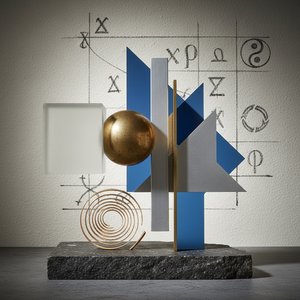
In the quiet, contemplative realm of geometric abstraction, Charles Shaw’s Polygon stands as a profound testament to the power of simplified form. Created in 1938, this evocative piece invites the viewer into a world where the chaos of the external universe is distilled into a rhythmic arrangement of shapes. The composition is anchored by a deliberate interplay between triangles and circles, set against a textured backdrop that suggests the organic warmth of wood. While the original visual experience may be captured in monochrome, the structural integrity of the work remains unshakable, offering a masterclass in balance and spatial tension. Each element—from the primary geometric anchors to the smaller, scattered circular motifs—functions as a note in a silent, visual symphony, guiding the eye through a carefully choreographed dance of light and shadow.
The technique employed by Shaw reflects his deep-seated transition from the literary observations of the Jazz Age to the disciplined rigor of American abstraction. In Polygon, we see the influence of his training at the Art Students League, where the precision of line meets a painterly sensitivity to texture. The way the shapes interact with the underlying surface creates a sense of depth that transcends the two-dimensional plane; it is as if the geometry is not merely painted onto the canvas, but emerging from within the very grain of the medium itself. This fusion of mathematical precision and organic texture provides a tactile quality that makes the work feel both intellectually structured and emotionally grounded.
A Legacy of Modernist Vision
To understand Polygon is to understand the evolution of American Modernism. As a pioneer who moved from the social satires of New York’s literary circles toward the pure exploration of shape, Shaw brought a unique poetic sensibility to his abstract works. This piece, dating from the late 1930s, captures a moment in art history when artists were seeking a new language to express the complexities of a changing world—a language stripped of narrative clutter and focused on the essential truths of form and proportion. For the collector or the interior designer, this work offers more than mere decoration; it provides a sophisticated focal point that embodies the intellectual elegance of the pre-war era.
Integrating a high-quality reproduction of Polygon into a contemporary space allows for a seamless blend of historical depth and modern aesthetic. Its minimalist composition makes it an ideal companion for mid-century modern interiors, industrial lofts, or even highly curated minimalist galleries. The piece possesses a rare ability to command attention through its subtle complexity, acting as a meditative anchor in any room. Whether viewed as a study in mathematical harmony or as an emotional exploration of space, Shaw’s Polygon remains a timeless masterpiece, offering an enduring sense of calm and structural beauty to those who appreciate the profound impact of the abstract.
Kysymykset ja vastaukset
Onko Charles Shaw:n "Polygon" suositeltava lahja, ja kenelle?
"Polygon" on suositeltava lahja Corporate Gift, kun tarkoituksena on Geometry.
Kuinka voimakkaita ovat teoksen "Polygon" värit?
Teoksessa Charles Shaw:n "Polygon" on Subtle Color kylläisyys ja Balanced voimakkuus.
Voinko katsoa teosta "Polygon" koko näytön diashow'na?
Diaporama on saatavilla: Charles Shaw:n "Polygon" -teoksen Diaesitys -sivu.
Samankaltaisia teoksia


Taiteilijan elämäkerta
The Architect of Abstraction: The Life and Vision of Charles Green Shaw
In the vibrant, pulse-quickening atmosphere of 1920s New York, where the jazz age roared through smoky cafés and theatrical halls, a unique creative spirit began to emerge. Charles Green Shaw was not merely an observer of this era but a chronicler of its wit and social complexity. Before he became a titan of American geometric abstraction, Shaw established himself as a sharp-witted writer and illustrator, lending his pen to prestigious publications such as The New Yorker, Vanity Fair, and Smart Set. His early literary career allowed him to navigate the intellectual currents of Manhattan, documenting the theatrical world with a precision that would later translate into his meticulous approach to canvas and form.
While his initial inclinations were rooted in the written word and the social satire of the urban landscape, a profound artistic metamorphosis was simmering beneath the surface. His formal training at the Art Students League, particularly under the guidance of Thomas Hart Benton in 1927, provided the structural discipline necessary to transition from prose to paint. This period of study, supplemented by private lessons with the legendary George Luks, instilled in Shaw a deep respect for observation and the fundamental mechanics of composition. Yet, it was his transformative journey through Europe between 1930 and 1933 that would forever alter his artistic trajectory.
A Journey Through Form and Geometry
Traveling through Italy, France, and Spain, Shaw encountered the burgeoning movements of Modernism that were reshaping the global art landscape. The influence of Piet Mondrian and Josef Albers became palpable in his evolving technique, as he moved away from representational narratives toward a profound exploration of geometric abstraction. He began to embrace a language of polygons and intersecting planes, creating small, meticulously crafted works that possessed an almost architectural weight. These canvases often seemed to echo the soaring, structural grandeur of the New York skyscrapers he knew so well, distilling the chaotic energy of the metropolis into a rhythmic, balanced arrangement of shapes.
This period marked the birth of his most celebrated stylistic contributions, where the boundaries between organic life and mathematical precision began to blur. His work often navigated the delicate space between Concretionism and a more biomorphic abstraction, a tension that gave his paintings a breathing, vital quality despite their rigid geometric foundations. Through his mastery of color and form, Shaw achieved a sense of "plasticity" within the polygon, making each shape feel as though it possessed its own internal volume and light.
Legacy and the Geometry of Silence
As his career progressed into the mid-20th century, Shaw’s work became a cornerstone of the American Abstract Artists movement. His ability to synthesize the structural rigor of the Bauhaus with a uniquely American sensibility ensured his place in the pantheon of modern masters. His paintings, characterized by their contemplative depth and rhythmic precision, found permanent homes in the world's most esteemed institutions, including:
- The Metropolitan Museum of Art
- The Museum of Modern Art (MoMA)
- The Smithsonian American Art Museum
- The Whitney Museum of American Art
- The Art Institute of Chicago
Beyond the technical brilliance of his 'Plastic Polygon' series, Shaw’s historical significance lies in his role as a bridge between the social realism of his contemporaries and the pure abstraction that would define much of post-war art. He transformed the visual noise of the modern age into a "geometry of silence," inviting viewers to find peace within the structured interplay of triangles, circles, and light. Today, Charles Green Shaw remains a pivotal figure whose work continues to resonate as a testament to the power of distilled form and the enduring beauty of the abstract intellect.

Charles Shaw
1892 - 1974
Tietoa taiteilijasta
- Full Name: Charles Green Shaw
- Nationality: American
- Date Of Birth: 1892
- Date Of Death: 1974
- Notable Artworks:
- Plastic Polygon
- Space Curve
- Artistic Movement Or Style: Geometric Abstraction, Concretionism
- Artists Who Influenced This Artist: ['Thomas Hart Benton']
- Artists Or Movements Influenced By This Artist: ['Minimal Art']
Aiheeseen liittyvät artikkelit

Beyond Form & Color: Geometric Abstraction's Enduring Legacy in Art History
Explore the captivating world of geometric abstraction! Discover its origins, key artists like Malevich & Mondrian, and why this movement remains highly valued by art collectors today. Expert insights at ArtsDot.
Beyond Form: Exploring the Philosophical Foundations of Geometric Abstraction
Explore the philosophical roots & artistic evolution of geometric abstraction with ArtsDot. Discover Mondrian, Malevich, De Stijl & more. Expert insights for collectors and art enthusiasts.

Wassily Kandinskin 25 mestariteosta: Värien ja muodon syvä maailma | ArtsDot
Tutustu Wassily Kandinskin 25 vaikuttavinta teosta! Uppoudu abstraktin taiteen maailmaan, värien symboliikkaan ja modernin ekspressionismin historiaan. Löydä inspiraatiota kodin sisustukseen ArtsDot.com:ista – laadukkaat taideprintit ja reproduktiot.

Beyond Form & Color: Geometric Abstraction's Evolution in 20th/21st Century Art
Explore the evolution of geometric abstraction from Cubism to contemporary art. Discover key artists like Malevich & Mondrian, investment insights, and expert collecting advice at ArtsDot.

Geometrisen abstraktion mestariteokset: Taidetta kotiin ArtsDotilta
Tutustu geometrisen abstraktion 10 mestariteokseen! Piet Mondrian, Kandinsky ja muut taiteilijat muovasivat modernin taiteen historiaa. Löydä inspiraatiota kotiisi ArtsDotilta – laadukkaat taideprintit ja sisustusehdotukset odottavat. Tutki kokoelma verkossa!