


 Katso seinällä
 Lähetä
 Jaa
Jaa
 Tarkemmat tiedot
 Opas
Opas

 Lataa kuva
 Samanlaisia kohteita
 Röntgenkuvaus
 Diaesitys
 Tilastot
Kuvaamaton


 Lue lisää
Tällä sivulla esitettyä taideteosta suojaa tekijänoikeuslaki, mikä tarkoittaa, ettemme voi laillisesti luoda tai myydä täsmälleen samanlaista jäljennöstä. Tämä suoja toteutetaan kansainvälisten sopimusten, kuten esimerkiksi Berne-konventio ja kansallisilla laeilla, mukaan lukien niillä määritellyt Yhdysvaltain tekijänoikeuslaki – Luku 17. Kaikki oikeudet pidätetään. Luvaton kopiointi tai jäljittely on kielletty.
Tämä menetelmä noudattaa täysin tekijänoikeussäännöksiä, sillä se ei sisällä suojatun taideteoksen kopioimista tai jäljentämistä. Sen sijaan kyseessä on luova uudelleentulkinta – uusi maalaus, joka ammentaa vaikutteita alkuperäisestä, mutta ei ole sen identtinen kopio.
Giclée- ja taideprintit
Museolaatuisia giclée- tai kankaitaulun tulosteita nopealla tuotannolla ja joustavilla viimeistelyvaihtoehdoilla. ( Tilaa käsinmaalattu jäljennös Siirry digitaaliseen kuvaan)




P118B €10

P118H €10

P118W €10

P438Z €10

P508JH €12

P508YH €12

P805H €10

P805Z €10

P919BZ €10

P919G €10

P919XJ €10

P959ZH €10

P968JZ €12

W106C €8

W218G €10

W218JH €8

W218Y €10

W307PJ €10

W316G €10

W316PJ €8

W316Y €10

W398PJ €8

W4111J €10

W500HY €15

W500JH €15

W692G €12

W849H €8

W940BG €15

W953PJ €8




Valitse valmiista mitoistamme sellaiset, jotka vastaavat teoksen alkuperäisiä mittasuhteita.

Voit syöttää omat mitat sopiaksesi tiettyyn kehykseen tai tilaan. Jos valittu koko ei vastaa alkuperäisen kuvan mittasuhteita, rajaamme teosta tai laajennamme kuvaa peilatulla tai yhtenäisellä reunalla. Digitaalinen mallikuva lähetetään hyväksyttäväksi ennen tuotannon aloittamista.
Huomaathan, että näytöllä näkyvä esikatselu ei vastaa lopullista rajausta tai laajennusta. Vain mallikuva näyttää lopullisen sommittelun tarkasti.
Vaikka räätälöityjä kokoja on saatavilla, suosittelemme valitsemaan mitat valmiista listasta alkuperäisten mittasuhteiden säilyttämiseksi.
Maailmanlaajuinen toimitus () 2 viikossa tavallisen 4–5 viikon sijaan. (11 lokakuu)

Ilmainen pikatoimitus ympäri maailman

Korkealaatuinen pellavakangas

Kattava kuljetusvakuutus

Tulliveron palautustakuu

Takuu täydellisestä värien vastaavuudesta

100 päivän palautusoikeus valmistusvirhetapauksissa

100% rahat takaisin -takuu

Määräalennus saatavilla
 Lasivaihtoehto on saatavilla vain alle 110 cm kokoisille teoksille

Kuvaamaton
Giclée- ja taideprintit
Replikaatin koko
-


Kokonaishinta
€ 53
Carlos Mérida: Geometric Harmony Rooted in Mayan Echoes
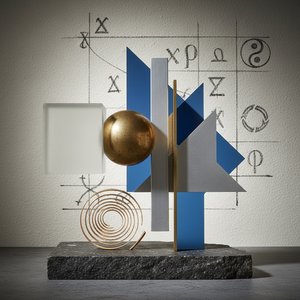
Carlos Mérida (1891–1984) stands as an undeniable cornerstone of Latin American modernism, a figure who bravely navigated the intersection between European avant-garde experimentation and the profound spiritual heritage of his Guatemalan homeland. His artistic journey wasn’t merely about stylistic imitation; it was a deliberate quest for a distinctly “American” voice—one that simultaneously honored the legacy of ancient Mayan civilization and embraced the revolutionary currents sweeping through twentieth-century art movements like Cubism and Constructivism. This duality is powerfully embodied in works from his pivotal 1950s, where Mérida achieved remarkable success blending these influences into an unforgettable visual experience.- The Essence of Geometric Abstraction: Mérida’s signature style revolved around a masterful manipulation of geometric forms—primarily grids and tessellated surfaces—populated by bold hues of grey, black, and beige. Rejecting representational imagery altogether, he prioritized the exploration of spatial relationships and visual harmony. This approach aligns seamlessly with Constructivist principles, emphasizing rational organization and stripping away superfluous detail to reveal fundamental truths about composition.
- Influence of Mayan Tradition: The subtle yet pervasive presence of Mayan motifs—particularly tessellations reminiscent of Maya stone carvings—underscores Mérida’s deep connection to Mesoamerican culture. These patterns aren't merely decorative; they symbolize order, repetition, and the cyclical nature of time – concepts central to Mayan cosmology.
- Cubist Echoes: While rejecting Cubism’s fragmentation as a stylistic goal, Mérida absorbed its conceptual framework—the idea that multiple perspectives could coexist simultaneously within a single image. This influence is evident in the overlapping planes and angular edges characteristic of his compositions.
Technique and Material Considerations
Mérida’s meticulous technique involved layering acrylic or oil paints onto textured paper, creating a palpable surface quality that enhances the artwork's visual impact. The careful application of pigment—often utilizing glazing techniques—allowed for nuanced tonal variations and subtle shifts in color saturation. This deliberate process reflects a commitment to craftsmanship and contributes significantly to the overall aesthetic experience. The choice of paper itself – often subtly textured – adds another layer of complexity, grounding the abstract forms within a tactile dimension.Symbolism Beyond Form
Despite its apparent simplicity, Mérida’s art is laden with symbolic resonance. The dominant hues—grey, black, and beige—represent austerity and contemplation, mirroring the spiritual traditions of Mayan culture. Furthermore, the rhythmic repetition of geometric shapes conveys a sense of meditative calm – inviting viewers to engage in an introspective dialogue with the artwork itself. Mérida's aim wasn’t merely to depict visual patterns; he sought to communicate profound ideas about existence and perception.Emotional Impact: A Quiet Revelation
Ultimately, Mérida’s paintings offer a powerful emotional experience—one characterized by understated beauty and contemplative stillness. They transcend mere decoration, prompting viewers to consider the fundamental questions of order, harmony, and spiritual awareness. Like Joan Miró's seminal works, Mérida’s art speaks to an inner realm, inviting contemplation and fostering a connection with timeless artistic principles. Reproductions of “Untitled” can bring this serene aesthetic into any interior space, serving as a reminder of the enduring power of geometric abstraction rooted in cultural heritage.Kysymykset ja vastaukset
Mitkä ovat teoksen "Kuvaamaton" jäljennösoikeudet Inter-American Development Bank-museossa?
Teoksen Carlos Mérida:n "Kuvaamaton" tekijänoikeustilanne on selvä: teos on on edelleen tekijänoikeuden suojaama. Sen sijainti museossa Inter-American Development Bank ei muuta tätä tilaa.
Kuinka vanha Carlos Mérida oli, kun "Kuvaamaton" luotiin?
Carlos Mérida loi teoksen "Kuvaamaton" ollessaan 59 vuotias. Taiteilija on syntynyt vuonna 1891 ja teos on ajoitettu vuodelle 1950.
Mikä on teoksen Carlos Mérida:n "Kuvaamaton" valmistumisvuosi?
Teos Carlos Mérida:n "Kuvaamaton" on valmistunut vuonna 1950.
Mikä on teoksen Carlos Mérida:n "Kuvaamaton" valmistumisvuosi ja tyylisuunta?
"Kuvaamaton" on luotu vuonna 1950 Geometric Abstraction-suuntauksen teoksena. Päivämäärä ja tyylisuunta ankkuroivat teoksen taidehistoriaan.
Mihin huoneeseen Carlos Mérida:n "Kuvaamaton" suositellaan?
Carlos Mérida:n "Kuvaamaton" on suositeltava Hotellin aula-tilaan. Tämä suositus perustuu teoksen aiheeseen, väreihin ja tunnelmaan.
Kuka on luonut "Kuvaamaton"?
"Kuvaamaton" on Carlos Mérida:n luoma teos. Tällä sivulla olevat tiedot kuvaavat Carlos Mérida:n alkuperäistä työtä.
Millaista kylläisyyttä ja intensiteettiä Carlos Mérida:n "Kuvaamaton" edustaa?
Teoksessa Carlos Mérida:n "Kuvaamaton" on Vaimea kylläisyys ja Tasapainoinen voimakkuus.
Samankaltaisia teoksia


Aiheeseen liittyvät artikkelit
Beyond Form: Exploring the Philosophical Foundations of Geometric Abstraction
Explore the philosophical roots & artistic evolution of geometric abstraction with ArtsDot. Discover Mondrian, Malevich, De Stijl & more. Expert insights for collectors and art enthusiasts.

Beyond Form & Color: Geometric Abstraction's Evolution in 20th/21st Century Art
Explore the evolution of geometric abstraction from Cubism to contemporary art. Discover key artists like Malevich & Mondrian, investment insights, and expert collecting advice at ArtsDot.

Wassily Kandinskin 25 mestariteosta: Värien ja muodon syvä maailma | ArtsDot
Tutustu Wassily Kandinskin 25 vaikuttavinta teosta! Uppoudu abstraktin taiteen maailmaan, värien symboliikkaan ja modernin ekspressionismin historiaan. Löydä inspiraatiota kodin sisustukseen ArtsDot.com:ista – laadukkaat taideprintit ja reproduktiot.

Beyond Form & Color: Geometric Abstraction's Enduring Legacy in Art History
Explore the captivating world of geometric abstraction! Discover its origins, key artists like Malevich & Mondrian, and why this movement remains highly valued by art collectors today. Expert insights at ArtsDot.

Geometrisen abstraktion mestariteokset: Taidetta kotiin ArtsDotilta
Tutustu geometrisen abstraktion 10 mestariteokseen! Piet Mondrian, Kandinsky ja muut taiteilijat muovasivat modernin taiteen historiaa. Löydä inspiraatiota kotiisi ArtsDotilta – laadukkaat taideprintit ja sisustusehdotukset odottavat. Tutki kokoelma verkossa!
