

- 160.0 x 70.0 cm


The picture follows your choices: , .
Keräilykohteen kuvaus
Tutki Agnès Vardan ikonista 'Papatutopia'-installaatiota – belgialaisen elokuvaohjaajan uraauurtavaa taidetta ja dokumentaarisen kuvanveiston mestaruutta Venetsian Biennialessa vuonna 2003.
 Lue lisää
Taiteilijan elämäkerta
Explore the groundbreaking work of Agnès Varda (formerly Arlette Varda), a pioneer of French New Wave cinema & photography. Discover her unique blend of documentary, art, and social commentary.
Käsinmaalattu öljyvärinen jäljennös
Käsinmaalattu öljyväri kankaalle haluamassasi koossa ja kehyksissä, taiteilijoidemme valmistamana tilauksesta. ( Vaihda tulosteeseen Siirry digitaaliseen kuvaan)
Tämä teos on tekijänoikeuden suojaama
Tällä sivulla esitettyä taideteosta suojaa tekijänoikeuslaki, mikä tarkoittaa, ettemme voi laillisesti luoda tai myydä täsmälleen samanlaista jäljennöstä. Tämä suoja toteutetaan kansainvälisten sopimusten, kuten esimerkiksi Berne-konventio ja kansallisilla laeilla, mukaan lukien niillä määritellyt Yhdysvaltain tekijänoikeuslaki – Luku 17. Kaikki oikeudet pidätetään. Luvaton kopiointi tai jäljittely on kielletty.
Kunnioittavana ja laillisena vaihtoehtona tarjoamme alkuperäisestä inspiroituneita, yksilöllisiä ja käsinmaalattuja taideteoksia. Taitavat ja ammattimaiset taiteilijamme tutkivat huolellisesti alkuperäisen teoksen tyyliä, tunnelmaa ja taiteellista ydintä luodakseen uuden, ainutlaatuisen teoksen, joka herättää saman tunteen – säilyttäen samalla oman itsenäisen alkuperäisyytensä.
Tämä menetelmä noudattaa täysin tekijänoikeussäännöksiä, sillä se ei sisällä suojatun taideteoksen kopioimista tai jäljentämistä. Sen sijaan kyseessä on luova uudelleentulkinta – uusi maalaus, joka ammentaa vaikutteita alkuperäisestä, mutta ei ole sen identtinen kopio.
More about this painting
 Esikatselu
 Jaa teos
 Jaa
Jaa
 Tiedot
 Opas
Opas

 Lataa kuva
 Samanlaisia kohteita
 Röntgenkuvaus
 Diaesitys
 Q&A
Q&A Tilastot
Order your painting in four simple steps
Take your time. You can change any answer; the price in your order card follows each choice.
1 Step one of four
Which size would you like?
These sizes keep the proportions of the original painting. The drawing shows your choice on a wall, above a two-metre sofa.
Or give your own measurements
Valitse valmiista mitoistamme sellaiset, jotka vastaavat teoksen alkuperäisiä mittasuhteita.

Kirjoita tarvitsemasi leveys ja korkeus, jotta teos sopii kehyksiisi tai seinällesi. Koska kyseessä on käsinmaalattu teos, taiteilija voi maalata hieman enemmän kuvan ympärille tai rajata sitä hieman, jos haluat eri muotoisen koon — valinta on sinun. Lähetämme sinulle digitaalisen mallikuvan hyväksyttäväksi ennen kuin maalaus alkaa. Tällä sivulla näkyvä kuva ei vastaa lopullista tulosta — vain mallikuva näyttää sen.
2 Step two of four
How should it be prepared: rolled, stretched or framed?
The prices below are for the size you chose in step one.
Choose the edges of the stretched canvas
Choose your frame

White €1

Blurside €1

Extended €1

P118B €10

P118H €10

P118W €10

P438Z €10

P508JH €12

P508YH €12

P805H €10

P805Z €10

P919BZ €10

P919G €10

P919XJ €10

P959ZH €10

P968JZ €12

W106C €8

W218G €10

W218JH €8

W218Y €10

W307PJ €10

W316G €10

W316PJ €8

W316Y €10

W398PJ €8

W4111J €10

W500HY €15

W500JH €15

W692G €12

W849H €8

W940BG €15

W953PJ €8

H24-GOLD €30

H24-SILVER €30

H36-GOLD €45

H36-SILVER €45
Kehystetty
Moulding: . Overall size with the frame: .
3 Step three of four
Would you like anything changed in the painting?
Most people answer no. Because each painting is made by hand, our artist can also adapt it for you.
After order, ArtsDot.com team will email client for instructions and provide a mockup preview
4 Step four of four
A few finishing options
All of them are optional. The answers already selected cost nothing extra.
Who paints it?
Maailmanlaajuinen toimitus () 3–4 viikossa tavallisen 5 viikon sijaan. (3 marraskuu). Laadusta ei tingitä.
A nameplate, as in a museum?
Kaiverretun pronssilaatan tiedot
This elegant plaque features the artist's name and the title of the artwork, finely engraved for a timeless presentation.
It is made from bronze with a refined, elegant finish. The text is precisely laser-engraved for a sharp and permanent result. Measuring 9x2 cm, the plaque is compact yet easy to read. It's built to be durable and scratch-resistant, offering a professional, museum-quality look. Mounting is simple thanks to the included adhesive backing.
Läpinäkyvän akryylilaatan tiedot
The plaque includes essential engraved details such as the artist's name, the title of the artwork, the date it was created, the type of media used-like oil on canvas or watercolor-a brief description of the piece, and a QR code that links to the complete artwork information.
It is crafted from clear acrylic, offering a sleek, modern appearance. The text is UV-engraved in black to ensure strong visual contrast. With a size of 10x15 cm, it ensures optimal readability. It comes equipped with two metal hooks for secure wall mounting. The plaque is designed to be weather-resistant, making it suitable for various environments, and it includes interactive features that work seamlessly with smartphone scanning.
Mustan akryylilaatan tiedot
This elegant plaque includes engraved information such as the artist's name, the title of the artwork, the date it was created, the type of media used (like oil on canvas or watercolor), a short description of the artwork, and a QR code for quick access to more information.
The plaque itself is made from refined black acrylic with a premium finish. The text is laser-engraved in white for high contrast and readability. Its size is 10x15 cm, designed to be easy to read. It comes with two metal hooks for professional mounting. The design is sleek and fits any interior style. It is also weather-resistant and durable, with built-in digital integration for mobile compatibility.
A protective varnish?
When do you need it?
✓ Check and order
Your painting, as you ordered it

Papatutopia
Reproduktiotekniikka
Replikaatin koko
-

Kokenut huipputaiteilija
Lisää yksityiskohtia, hienostuneisuutta ja enemmän aikaa tuotantoon
-

Reproduktion kehystysvaihtoehdot
-
-
Teoksille tai reproduktioille, joiden mikä tahansa sivu on suurempi kuin 105 cm (noin 41 tuumaa), kehys toimitetaan osina purettuna sarjana. Tämä menetelmä varmistaa turvallisen toimituksen ja ehkäisee vaurioita kuljetuksen aikana.
Vaatii ammattimaista kokoamista – kyseessä ei ole tee-se-itse-tuote.
Sarja on koottava ja kangas kiristettävä kokeneen kehystysammattilaisen toimesta käyttäen puuliimaa (ei sisälly pakkaukseen), kangaspinnetteitä ja puristimia, jotta kehyksen kulmat pysyvät suorina liiman kuivuessa. Virheellinen kokoaminen tai epätasainen kankaan kiristys voi vaurioittaa teosta pysyvästi, eikä tällaiset vauriot ala takuun piiriin.
 Teoksille tai reproduktioille, joiden mikä tahansa sivu on suurempi kuin 105 cm (noin 41 tuumaa), kehys toimitetaan osina purettuna sarjana. Tämä menetelmä varmistaa turvallisen toimituksen ja ehkäisee vaurioita kuljetuksen aikana.
Kaikki massiivipuupalat sisältyvät, tarkasti mittojen mukaan leikattuina.
Kootaan mukana tulevilla ruuveilla sekä kulmaliitoksia varten tarvittavalla puuliimalla, jota ei toimiteta, joten se on hankittava kehystäjältä.
Vaatii ammattilaisvälineitä, jotka eivät sisälly pakkaukseen: kankaan venytyspihdit (kiristin) ja puristimet, joilla pidetään kehyksen puut suorassa liiman kuivuessa.
Tärkeää:
Kulmaliitoksissa tarvitaan puuliimaa, kehyksien osat on pidettävä puristimilla, kunnes liima on täysin kuivunut, ja koottuun kehykseen jännitettävän kankaan kiristämiseen tarvitaan kangaspenssipihti. Mikään näistä ei sisälly pakkaukseen. Suosittelemme varmistamaan kokeneen kehystäjän saatavuuden ennen tämän kokoisen kehyksen tilaamista.

Nimilaatta
-
-

Suojalakkaus
Kiiltävä lakka (syventää värejä, suojaa valolta ja kosteudelta)
-

Mukauta taideteokseni
Esimerkkejä muokattavista asioista: Vaihda kasvot asiakkaan omaan valokuvaan; Lisää lemmikki (esim. vaihda kissa koiraan); Lisää taustalle piilotettu viesti; Muuta taustan maisemaa tai elementtejä.
-

Pikatoimitus
Maailmanlaajuinen toimitus () 3–4 viikossa tavallisen 5 viikon sijaan. (3 marraskuu). Laadusta ei tingitä.
-
Pikatoimitus
Maailmanlaajuinen toimitus () 5 viikon kuluessa. (10 marraskuu).
Sisältyy hintaan
Kokonaishinta
€ 278
Lasivaihtoehto on saatavilla vain alle 110 cm kokoisille teoksille
Included with every order
- Ilmainen pikatoimitus ympäri maailman
- Korkealaatuinen pellavakangas
- Kattava kuljetusvakuutus
- Tulliveron palautustakuu
- Takuu täydellisestä värien vastaavuudesta
- 100 päivän palautusoikeus (vain valmistusvirheet)
- 100% rahat takaisin -takuu
- Määräalennus tarjolla


The Potato Costume – A Reflection of Resilience and Playful Observation
Arlette Varda’s “The Potato Costume,” created in 2003, transcends mere visual representation; it embodies a profound ethos of artistic engagement rooted in meticulous detail and imbued with an unmistakable spirit of humanist curiosity. Captured within the serene setting of Hauterives, France – where Varda established her Ciné-Tamaris studio – this photograph isn’t simply documenting an artwork; it's presenting it as part of a larger narrative about finding beauty and meaning in everyday life.
- Composition & Perspective: The image employs a carefully considered one-point perspective, guiding the viewer’s gaze towards a central potato costume positioned prominently on the right side. Surrounding objects—a navy coat, hat, framed portrait, clocks, and a tie—establish depth and contribute to a balanced visual composition that speaks to Varda's fascination with spatial relationships.
- Color Palette & Texture: Dominated by cool blues and beige tones, the palette reflects the quiet dignity of the interior space. The earthy browns of the potato costume contrast subtly with the golden hues of the clocks and portrait frame, highlighting Varda’s sensitivity to color harmonies. Textures vary across the scene—smooth walls juxtaposed with the rough surface of the costume—creating a tactile experience that mirrors the artist's approach to capturing reality.
- Style & Technique: Shot with natural light conditions – a deliberate choice reflecting Varda’s documentary tradition – the photograph eschews excessive retouching, prioritizing an honest portrayal of the artwork and its environment. This observational style underscores Varda’s belief that “the heart” resides in capturing authentic moments and experiences.
- Symbolism & Emotional Impact: The potato costume itself serves as a potent symbol—a humble yet transformative object representing resilience, renewal, and the artist's commitment to finding joy in unexpected places. As Varda eloquently stated, "I want the heart." This sentiment encapsulates her artistic vision: to illuminate the human condition through attentive observation and playful engagement with the world around us.
Historical Context & Influences
Born in Ixelles, Belgium, Agnès Varda emerged as a pivotal figure in French New Wave cinema—a movement characterized by its rejection of conventional filmmaking techniques and its exploration of social realities. Heavily influenced by filmmakers like René Clair and Jean Renoir, Varda championed a humanist aesthetic that prioritized spontaneity and emotional truthfulness. Her pioneering work challenged cinematic conventions while simultaneously honoring the traditions of documentary filmmaking.
The Artist’s Vision – “La Même Gestuelle Modeste”
Varda's artistic philosophy centered on "la même gestuelle modeste"—the same modest gesture—a concept she championed throughout her career. This approach involved embracing chance and serendipity, recognizing that beauty and insight could be found in seemingly insignificant details. Like Joan Retallack’s poetic wager, Varda sought to capture the essence of experience through careful observation and a willingness to engage with the world on its own terms.
A Legacy of Compassion & Playful Curiosity
“The Potato Costume” exemplifies Varda's enduring legacy—a testament to her unwavering belief in the transformative power of art and her profound empathy for humanity. Her work continues to inspire artists and audiences alike, reminding us that true creativity lies in embracing vulnerability, fostering connection, and celebrating the beauty inherent in everyday life.
Kysymykset ja vastaukset
Onko Arlette Varda:n "Papatutopia" yksi kysytyimmistä French New Wave -tyylin teoksista?
"Papatutopia" on luokiteltu Tunnustettu tasolle luettelon French New Wave teosten joukossa.
Millaista väriharmoniaa Arlette Varda:n "Papatutopia" edustaa?
Teoksen Arlette Varda:n "Papatutopia" värit ilmentävät Epäsointuva väripaletti harmoniaa. Harmonia kuvaa sitä, miten värit suhteutuvat toisiinsa.
Mihin tilaan Arlette Varda:n "Papatutopia" sopii parhaiten?
"Papatutopia"-teoksen reproduktio sopii hyvin Olohuone-tilaan.
Samankaltaisia teoksia


Arlette Varda
1928 - 2019, Belgium
Taiteilijan elämäkerta
Agnès Varda: A Pioneer of the French New Wave
Arlette Varda, later known and celebrated as Agnès Varda, was a singular figure in 20th-century cinema – a Belgian-born French filmmaker, screenwriter, and photographer whose work fundamentally reshaped how movies were made and viewed. Born on May 30, 1928, in Ixelles, Brussels, to Christiane Pasquet and Eugène Jean Varda (a Greek refugee), her early life was steeped in the cultural crossroads of Europe. This heritage – a French mother with roots in Sète and a father tracing his lineage back through Ottoman Asia Minor – profoundly influenced her artistic sensibility, informing a deep appreciation for both urban and rural landscapes, and a keen awareness of social realities. Varda’s journey into art began not with film but with photography; she honed her skills as a still photographer, capturing the everyday lives of families and documenting events before dedicating herself to the moving image. This initial experience proved invaluable, instilling in her an observational eye and a respect for authentic representation – qualities that would become hallmarks of her distinctive cinematic style.Early Years & Photographic Beginnings
Varda’s formal artistic training laid the groundwork for her future success. She studied art history at the École du Louvre and photography at the École des Beaux-Arts, developing a sophisticated understanding of composition, form, and visual storytelling. Crucially, she also attended the Lycée et Collège Victor-Duruy, earning a bachelor’s degree in literature and psychology – disciplines that would later inform her nuanced portrayals of human relationships and psychological states. Her early career as a stage photographer for the Théâtre National Populaire provided an essential apprenticeship, exposing her to theatrical performance and demanding a collaborative approach to visual creation. It was during this period that she began to develop her own unique style, moving beyond mere documentation to explore questions of meaning and form through carefully constructed images. She described her initial foray into photography as “asking questions with composition, form, and meaning,” a philosophy that would permeate her entire cinematic oeuvre.The Birth of the New Wave & Unconventional Techniques
Varda’s emergence coincided with the burgeoning French New Wave movement in the 1950s, and she quickly became one of its most vital voices. Rejecting the polished aesthetics and studio-bound productions of traditional cinema, Varda embraced a radically different approach. She championed location shooting – often in unglamorous urban environments or remote rural areas – and utilized non-professional actors, bringing a sense of realism and immediacy to her films that was unprecedented at the time. This deliberate choice challenged established conventions and reflected a desire to capture authentic experiences rather than staged performances. Her early work, such as *La Pointe Courte* (1955), demonstrated this innovative spirit, employing a documentary-like style with handheld cameras and natural lighting, creating a sense of intimacy and immediacy rarely seen in French cinema. Her films frequently explored themes of female experience, social injustice, and the complexities of human relationships, often through a feminist lens.Notable Works & Lasting Influence
Varda’s filmography is remarkably diverse, encompassing both narrative features and experimental documentaries. *Cléo from 5 to 7* (1962), a poignant portrait of a pop singer grappling with mortality, remains one of her most celebrated works, lauded for its innovative use of time and space. *Vagabond* (1985) is a powerful meditation on homelessness and the search for identity, while *Kung Fu Hooligans* (1976) offered a playful critique of consumer culture. However, it’s her later films that perhaps best exemplify her evolving artistic vision. *Les Cent et une nuits de Simon Cinéma* (1995), a loving tribute to the art of cinema, and *Visages Villages* (2017), a visually stunning exploration of rural France, cemented her legacy as a filmmaker deeply committed to capturing the beauty and complexity of everyday life. Her work was consistently praised for its honesty, empathy, and refusal to adhere to conventional cinematic norms.A Legacy of Innovation & Social Commentary
Arlette Varda’s influence extends far beyond her individual films. She helped to establish a new aesthetic vocabulary for cinema, prioritizing observation, spontaneity, and the voices of ordinary people. Her commitment to social justice is evident in many of her works, particularly those that address issues of gender inequality, poverty, and displacement. Varda's later years saw her continue to push boundaries, experimenting with new technologies and approaches while retaining a deep respect for her artistic roots. She was awarded the Academy Award for Best Documentary Feature for *Visages Villages* in 2018, a testament to her enduring impact on cinema and art. Agnès Varda died on March 29, 2019, leaving behind a rich and influential body of work that continues to inspire filmmakers and audiences alike. Her legacy is not simply one of groundbreaking technique but also of a profound commitment to seeing the world with fresh eyes and telling stories that matter.
Aiheeseen liittyvät artikkelit
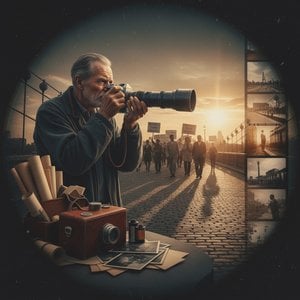
Witnessing History Through Lens & Light: Documentary Photography's Enduring Legacy
Explore the powerful history of documentary photography – from its origins to contemporary masters like Gordon Parks & W. Eugene Smith. Discover how this art form shapes our understanding of society and witness pivotal moments in time.

Charles Le Brun: Master of French Baroque Classicism & His Enduring Legacy
Explore the life & art of Charles Le Brun, master of French Baroque Classicism. Discover his royal commissions, influence on Versailles, and enduring legacy through detailed analysis & stunning artworks.

Simon Vouet: A Baroque Master's Journey from Italian Influence to French Classicism
Explore the life & art of Simon Vouet, a pivotal French Baroque painter who introduced Italian styles to France. Discover his masterpieces and lasting influence on 17th-century art.