

 Esikatselu
 Jaa teos
 Jaa
Jaa
 Tiedot
 Opas
Opas

 Lataa kuva
 Samanlaisia kohteita
 Röntgenkuvaus
 Diaesitys
 Kysymykset ja vastaukset
 Tilastot
Self-Portrait in Profile


 Lue lisää
Giclée- ja taideprintit
Museolaatuisia giclée- tai kankaitaulun tulosteita nopealla tuotannolla ja joustavilla viimeistelyvaihtoehdoilla. ( Osta käsinmaalattu taideteos Siirry digitaaliseen kuvaan)




P118B €10

P118H €10

P118W €10

P438Z €10

P508JH €12

P508YH €12

P805H €10

P805Z €10

P919BZ €10

P919G €10

P919XJ €10

P959ZH €10

P968JZ €12

W106C €8

W218G €10

W218JH €8

W218Y €10

W307PJ €10

W316G €10

W316PJ €8

W316Y €10

W398PJ €8

W4111J €10

W500HY €15

W500JH €15

W692G €12

W849H €8

W940BG €15

W953PJ €8




Valitse valmiista mitoistamme sellaiset, jotka vastaavat teoksen alkuperäisiä mittasuhteita.

Syötä tarvitsemasi leveys ja korkeus, jotta tuloste sopii kehyksiisi tai seinällesi. Tulostetta voidaan vain leikata, sitä ei voida koskaan suurentaa alkuperäistä kuvaa suuremmaksi, joten eri muotoinen koko aiheuttaa osan kuvasta katoamisen. Lähetämme sinulle digitaalisen mallikuvan hyväksyttäväksi ennen kuin aloitamme tulostuksen. Tällä sivulla näkyvä kuva ei näytä lopullista rajausta — vain mallikuva näyttää sen.
Maailmanlaajuinen toimitus () 2 viikossa tavallisen 4–5 viikon sijaan. (4 marraskuu)

Ilmainen pikatoimitus ympäri maailman

Korkealaatuinen pellavakangas

Kattava kuljetusvakuutus

Tulliveron palautustakuu

Takuu täydellisestä värien vastaavuudesta

100 päivän palautusoikeus (vain valmistusvirheet)

100% rahat takaisin -takuu

Määräalennus tarjolla
 Lasivaihtoehto on saatavilla vain alle 110 cm kokoisille teoksille

Self-Portrait in Profile
Giclée- ja taideprintit
Replikaatin koko
-


Kokonaishinta
€ 56
A Gaze Through Time: The Introspective Soul of Annibale Carracci
In the quiet intensity of Annibale Carracci’s Self-Portrait in Profile, we encounter more than just a likeness; we witness the birth of a new era in Italian art. Painted around 1590, this evocative work serves as a profound window into the mind of an artist who sought to bridge the gap between the idealized perfection of the High Renaissance and the raw, breathing naturalism of the Baroque. As the viewer meets his steady, contemplative gaze, there is an immediate sense of intimacy, as if we have stumbled upon a private moment of reflection within the bustling studios of Bologna.
The composition is masterfully stripped of all unnecessary distraction. Carracci presents himself in profile, a choice that evokes the dignity of classical coinage and Renaissance medals, yet he avoids the coldness often associated with such formal poses. Set against a textured, deep red wall, the single figure emerges with a striking presence. This deliberate simplicity directs our entire focus toward the artist’s face—the subtle curve of his nose, the thoughtful set of his brow, and the well-groomed beard that lends him an air of distinguished wisdom. The crimson backdrop does more than provide contrast; it creates a warm, enveloping atmosphere that pushes the subject forward, making the portrait feel remarkably immediate and alive.
The Mastery of Light and Naturalism
Technically, the painting is a triumph of oil on canvas, showcasing Carracci’s exceptional ability to manipulate light and shadow. He employs subtle gradations of tone to sculpt the anatomy of his own face, creating an illusionistic depth that makes the skin appear supple and the features palpable. The white, ruffled sleeves of his shirt catch the light, providing a brilliant counterpoint to the darker, more somber tones of his hair and the background. This interplay of luminosity and shadow—a precursor to the dramatic chiaroscuro that would define the Baroque period—imbues the work with a sense of three-dimensional reality.
Beyond the technical prowess, there is a deep symbolic resonance within this self-examination. During a time when the Mannerist style favored artificiality and elongated, distorted forms, Carracci used his own image to champion humanism. By rendering himself with such anatomical honesty and psychological depth, he asserted that true beauty lies in the truthful observation of nature. The portrait is an embodiment of the Accademia degli Incamminati's mission: to move away from mere imitation and toward a more profound engagement with the human condition.
An Inspiration for the Modern Collector
For the discerning collector or interior designer, Self-Portrait in Profile offers a rare opportunity to possess a piece of art history that is both intellectually stimulating and aesthetically timeless. Its sophisticated color palette—dominated by rich reds, creamy whites, and earthy shadows—allows it to integrate seamlessly into diverse environments, from the stately grandeur of a traditional library to the curated minimalism of a contemporary gallery space.
Choosing a high-quality reproduction of this masterpiece means bringing more than just decoration into a room; it means inviting a sense of quiet contemplation and historical weight. The painting’s emotional impact lies in its ability to command attention through stillness rather than noise, making it an ideal focal point for spaces designed for thought, study, and refined elegance. It remains a powerful testament to the enduring legacy of the Carracci family and the transformative power of the artist's gaze.
Kysymykset ja vastaukset
Mistä voin ladata teoksen Annibale Carracci:n "Self-Portrait in Profile"?
Teoksen Annibale Carracci:n "Self-Portrait in Profile" kuvan voi ladata teoksen Lataa digitaalinen kuva -sivulta: korkearesoluutioinen digitaalinen kuvalataus.
Miten voin esikatsella teoksen Annibale Carracci:n "Self-Portrait in Profile" reproduktiota?
Voit esikatsella teosta Annibale Carracci:n "Self-Portrait in Profile" sivulla Esikatselu tilassa.
Onko teoksen Annibale Carracci:n "Self-Portrait in Profile" kuva vapaasti käytettävissä?
Tekijänoikeuksien osalta teos "Self-Portrait in Profile" on vapaasti käytettävissä – tekijänoikeussuoja on päättynyt.
Samankaltaisia teoksia


Taiteilijan elämäkerta
Early Life and the Bolognese Roots
Annibale Carracci, syntynyt Bolodnássa 3. marraskuuta 1560, kuului taiteelliseen perheeseen, jonka juuret ulottuivat syvälle taiteen historiaan. Hänen varhaiset opinnoilleen oli todennäköisesti määrätty ympäristö hänen oman perheensä työpajassa, joka loi pohjan uralle, joka muokkaisi Italian maalaustraditioita merkittävästi. Bolodná oli tuohon aikaan vilkas keskuksena ajattelulle ja taiteelle, mutta se tuntui samalla kaukaiselta keskeltä Rooman ja Venetsian hallitsevista virtauksista. Tämä tunne paikallisesta eristyneisyydestä sai nuorten taiteilijoiden – Annibalin, hänen veljensä Agostinin ja suhteensa Ludovicon – ryhmän etsimään uutta polkua, joka perustuisi renessanssin mestareiden inspirointiin samalla kun he omaksuivat luonnollisempaa lähestymistapaa.
Vuonna 1582 tämä pyrkimys toteutui *Accademia degli Incamminati* -taidekoulun perustamisena, joka tunnettiin aluksi nimellä *Academy of the Desirous*. Tämä ei ollut pelkästään studio; se oli innovaation kehto, tila, jossa keskityttiin tiukkaan elämänsä piirtämiseen, vilkkaaseen keskusteluun ja yhteiseen taiteelliseen pyrkimykseen. Koulun nimi itse – "Progressives" – heijasti tarkoitusta: ylittää Mannerismiin liittyvät tyylilliset monimutkaisuudet ja luoda uusi, perustuen vahvemmin klassisen renessanssin ihanteisiin. *Incamminati* muuttui malliksi taidekouluille ympäri Eurooppaa, korostaen elävästä piirustuksesta lähtevää koulutusta taiteellisen harjoittelun kulmakivenä.
A Synthesis of Styles and Influences
Carraccin taiteellinen visio ei syntynyt tyhjästä; se oli huolellisesti suunniteltu syvän vuorovaikutuksen pohjalta menneiden mestareiden perinnöistä. Hänellä oli poikkeuksellinen kyky yhdistää erilaisia vaikutteita, luoden tyylin, joka tuntui sekä vahvasti juurtuneelta perinteeseen että huomattavan omaperäiseltä. Hänet inspiroivat Rafaelin ja Andrea del Sarton selkeät viivat ja rakenteellinen tasapaino, pyrkien jäljittelemään heidän eleganssiaan ja harmoniaansa. Samalla hän tunnusti venetsiläisten maalaajien, kuten Titiuksen, tuomat värien ja tunnelman voiman, mikä lisäsi omaa työtään eloisuuteen ja tunteelliseen syvyyteen.
Correggion vaikutus oli erityisen merkittävä, joka näkyi Carraccin dynaamisissa komposiitioissa ja illuusiotekniikoissaan – erityisesti freskoissaan. Hän ei vain kopioinut näitä mestareita; hän omaksui vahvuuksiaan ja muovasi ne uuteen muotoon. Tämä eklektinen yhdistelmä tuli Bolognan koulun tunnusmerkiksi, merkittävä osa barokkiajan taidetta, joka korosti sekä klassisia ihanteita että luonnollisen havainnon.
The Roman Triumph: Palazzo Farnese and Beyond
Rooman koristamisen kutsu *Palazzo Farneseen* sisään oli Annibale Carraccin uran käännekohta. Tämä monumentaalinen tilatyömääräys – laaja freskosarja myyttisiä kohtauksia – tarjosi hänelle ennennäkemättömän mahdollisuuden esitellä taiteellista osaamistaan ja vakiinnuttaa mainettaan suurella mittakaavalla. *Triumph of Bacchus and Ariadne*, todennäköisesti hänen mestariteoksensa, on henkeäsalpaava esitys illuusionomaisesta tekniikasta, dynaamisesta komposiitiosta ja eloisista väreistä. Freskojen vaikutelma sulkee taideteoksen ja todellisuuden rajat, kutsuen katsojan myyttisen loiston maailmaan.
Yhdessä *Triumphin* kanssa Carracci suoritti myös *The Loves of the Gods* Palazzo Farneseen sisällä, tutkien myyttisiä teemoja ja rakkautta yhdistävän klassisen idealismin ja tarkkanäköisen havainnon sekoituksella. Nämä työt eivät olleet pelkästään koristeellisia; ne olivat lausunto taiteen voimasta kohottaa ihmiskunnan henkeä ja juhlia luonnon kauneutta. Hänen menestyksensä Rooman tasolla vahvisti hänen asemaansa ajan johtavista taiteilijoista, houkutellen virran tilauksia ja inspiroiden seuraavan sukupolven taiteilijoita.
Legacy and Historical Significance
Annibale Carraccin vaikutus taiteen historiaan on mittaamaton. Hänellä oli keskeinen rooli renessanssin ja barokkiajan välisen siltojen rakentamisessa, poistuen Mannerismin tyylillisten monimutkaisuuksista kohti dynaamisempaa ja tunteellisempaa estetiikkaa. Hänen luonnollisuuden korostuksensa – ihmisten kuvaaminen anatomisesti tarkasti ja psykologisesti syvällisesti – loi pohjan Caravaggion kaltaisille taiteilijoille, jotka mullistivat italialaista maalausta dramaattisella valon ja varjon käytöllä.
Accademia degli Incamminati, jonka Carracci ja hänen kollegansa perustivat, toimi mallina taidekouluille ympäri Eurooppaa, edistäen taiteellista koulutusta elävän piirustuksen perusteella ja klassisten periaatteiden mukaisesti. Hänen freskonsa Palazzo Farneseen sisällä ovat edelleen ikonisia esimerkkejä barokkiajan illuusionomaisesta tekniikasta ja taiteellisesta loistosta, inspiroimassa edelleen ihailua vuosisatojen jälkeen. Carraccien perintö elää ei vain hänen upeissa maalauksissaan vaan myös periaatteiden, joita hän puolusti: havainnon korostaminen, perinteiden kunnioittaminen ja taiteen voima maailman muuttamisessa.

Annibale Carracci
1560 - 1609 , Italia
Pähkinänkuoressa
- Artistic Movement Or Style: Barokki
- Artists Or Movements Influenced By This Artist:
- Caravaggio
- Bolognesen Koulu
- Artists Who Influenced This Artist:
- Raphael
- Andrea del Sarto
- Date Of Birth: 3. marraskuuta 1560
- Date Of Death: 15. heinäkuuta 1609
- Full Name: Annibale Carracci
- Nationality: Italian
- Notable Artworks:
- Triumph Bacchus
- Lovat
- Palazzo Farnese
- Place Of Birth: Bologna, Italia
Aiheeseen liittyvät artikkelit

The Inner Landscape: Exploring Themes of Introspection in Visual Art Across Movements & Eras
Explore the captivating world of introspective art! Discover how artists across eras – from Rembrandt to Kahlo – used self-portraiture to reveal their inner worlds and emotional depths. A journey through art history & psychology.
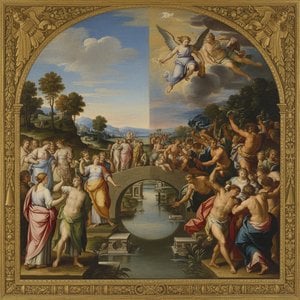
Annibale Carracci: Bridging Renaissance Ideals & Baroque Innovation
Explore the life & art of Annibale Carracci, a pivotal figure bridging Renaissance ideals with Baroque innovation. Discover his masterpieces and lasting influence on Italian painting.

The Echo of Self: Reflectivity as a Core Theme in Art History & Contemporary Practice
Explore the rich history of self-representation in art, from Renaissance masters to modern innovators. Discover how artists use portraiture to reveal identity, emotion & the depths of the human psyche. Expert insights for collectors.

Reflecting the Self: A History of Portraiture & Psychological Insight
Explore the fascinating history of self-portraiture from Renaissance masters like Dürer & Rembrandt to modern interpretations. Discover the psychological insights and artistic techniques behind these iconic works. Expert analysis for art enthusiasts.

Crimson Threads of Narrative: Exploring Symbolism & Representation in Artworks Featuring the Red Dress
Explore the rich symbolism of the red dress in art history! From ancient power displays to iconic portraits like Cézanne’s 'Madame Cezanne', discover the cultural and artistic significance behind this captivating color. Expert analysis & insights.


