

 Esikatselu
 Jaa teos
 Jaa
Jaa
 Tiedot
 Opas
Opas

 Lataa kuva
 Samanlaisia kohteita
 Röntgenkuvaus
 Diaesitys
 Kysymykset ja vastaukset
 Tilastot
Rose


 Lue lisää
Giclée- ja taideprintit
Museolaatuisia giclée- tai kankaitaulun tulosteita nopealla tuotannolla ja joustavilla viimeistelyvaihtoehdoilla. ( Osta käsinmaalattu taideteos Siirry digitaaliseen kuvaan)




P118B €10

P118H €10

P118W €10

P438Z €10

P508JH €12

P508YH €12

P805H €10

P805Z €10

P919BZ €10

P919G €10

P919XJ €10

P959ZH €10

P968JZ €12

W106C €8

W218G €10

W218JH €8

W218Y €10

W307PJ €10

W316G €10

W316PJ €8

W316Y €10

W398PJ €8

W4111J €10

W500HY €15

W500JH €15

W692G €12

W849H €8

W940BG €15

W953PJ €8




Valitse valmiista mitoistamme sellaiset, jotka vastaavat teoksen alkuperäisiä mittasuhteita.

Syötä tarvitsemasi leveys ja korkeus, jotta tuloste sopii kehyksiisi tai seinällesi. Tulostetta voidaan vain leikata, sitä ei voida koskaan suurentaa alkuperäistä kuvaa suuremmaksi, joten eri muotoinen koko aiheuttaa osan kuvasta katoamisen. Lähetämme sinulle digitaalisen mallikuvan hyväksyttäväksi ennen kuin aloitamme tulostuksen. Tällä sivulla näkyvä kuva ei näytä lopullista rajausta — vain mallikuva näyttää sen.
Maailmanlaajuinen toimitus () 2 viikossa tavallisen 4–5 viikon sijaan. (6 marraskuu)

Ilmainen pikatoimitus ympäri maailman

Korkealaatuinen pellavakangas

Kattava kuljetusvakuutus

Tulliveron palautustakuu

Takuu täydellisestä värien vastaavuudesta

100 päivän palautusoikeus (vain valmistusvirheet)

100% rahat takaisin -takuu

Määräalennus tarjolla
 Lasivaihtoehto on saatavilla vain alle 110 cm kokoisille teoksille

Rose
Giclée- ja taideprintit
Replikaatin koko
-


Kokonaishinta
€ 56
Alphonse Mucha’s ‘Rose’: A Symphony of Art Nouveau
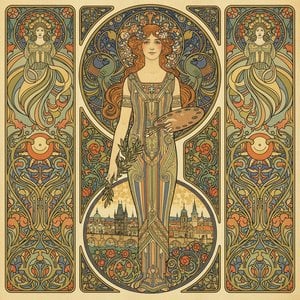
“Rose,” created by Alphonse Mucha, is more than just a depiction of a flower; it's a masterful encapsulation of the Art Nouveau movement – a testament to flowing lines, organic forms, and an almost reverent appreciation for nature. This iconic image, brimming with delicate detail and imbued with a sense of serene beauty, perfectly exemplifies Mucha’s distinctive style and his profound influence on decorative arts at the turn of the 20th century.
The artwork immediately draws the eye to the central figure – a woman rendered in a pose of graceful contemplation. Her flowing robes, intricately patterned with floral motifs, mirror the swirling curves that dominate the composition. Mucha’s genius lies in his ability to seamlessly blend the human form with the natural world, creating an image that feels both ethereal and grounded. The roses themselves aren't merely decorative elements; they are symbols of love, beauty, and fertility – core themes within Art Nouveau’s exploration of feminine ideals.
A Celebration of Line and Color
Mucha’s technique is characterized by a meticulous attention to detail and an extraordinary command of line. The flowing, curvilinear lines that define the woman's hair, dress, and the surrounding floral elements create a dynamic sense of movement and elegance – a hallmark of Art Nouveau. The color palette, dominated by warm, muted tones – creams, golds, peaches, and soft pinks – contributes significantly to the artwork’s overall mood. The subtle gradient effect, with lighter hues at the top transitioning to darker shades towards the bottom, adds depth and dimension, enhancing the illusion of a three-dimensional space.
Symbolism and Emotional Resonance
Beyond its aesthetic qualities, “Rose” is rich in symbolic meaning. Mucha frequently featured idealized women within decorative settings, often intertwined with natural elements to represent harmony between humanity and nature. The rose itself carries layers of symbolism – representing love, romance, beauty, and the ephemeral nature of life. The flattened perspective and lack of strong shadows contribute to a sense of dreamlike serenity, inviting the viewer into a world of delicate beauty and quiet contemplation. It’s an image designed not just to be looked at, but to be felt—a visual poem evoking feelings of peace, grace, and timeless elegance.
A Reproduction Worth Cherishing
This hand-painted reproduction captures the essence of Mucha's original masterpiece, allowing you to bring this iconic work of Art Nouveau into your home or office. Each detail – from the velvety texture of the roses to the intricate patterns in the woman’s dress – is meticulously recreated, ensuring a faithful representation of Mucha’s artistic vision. Whether as a statement piece for your living room or a thoughtful gift, this reproduction offers a lasting connection to one of the most influential and beloved artists of the Art Nouveau era.
Kysymykset ja vastaukset
Onko teos "Rose" saatavilla taidepainoksena?
Voit tilata teoksen Alphonse Mucha:n "Rose" painoksena suoraan sen Taidevedos -sivulta: taideteosvedos puuvillakangas- tai arkistoluokan kankaalle painettuna.
Millaista tunnelmaa Alphonse Mucha:n "Rose" välittää Art Nouveau-suuntauksessa?
"Rose" välittää Romantic tunnetilan Art Nouveau-tyylisuunnan sisällä.
Mistä voin löytää tilastoja teoksesta Alphonse Mucha:n "Rose"?
Teokselle "Rose" on olemassa Tilastot -sivu. Se esittää teoksen ja taiteilijan muiden teosten kuukausittaiset vierailumäärät maakohtaisesti ja kielittäin eriteltynä.
Samankaltaisia teoksia


Taiteilijan elämäkerta
Early Life and Artistic Beginnings
Alphonse Maria Mucha syntyi 24. heinäkuuta 1860 pienessä Ivančicen kylässä, joka sijaitsee nykyisen Tšekin maakunnassa, lähellä Moravian alueen sydämessä. Hänen perheensä oli hyvin köyhä; isänsä Ondřej oli tuomioistuimen kirstuhenkilö, ja äitinsä Amálie oli myllärin tytär. Alphonse oli kuuden lapsen vanhin, ja kaikki heidän niminsä alkoivat kirjaimella "A". Jo nuorena Alphonse osoitti lahjakkuutta piirtämisessä; paikallinen kauppias ylisti hänen töitään ja antoi hänelle lahjaksi paperia, joka oli tuohon aikaan harvinainen ylellisyys. Hänellä oli myös intohimo musiikkiin: hän oli barokkiajan lauluääni ja viulunsoittaja. Alphonse halusi jatkaa opintojaan, mutta hänen perheensä ei pystynyt rahoittamaan niitä, sillä heillä oli jo velvollisuuksia kolmen sisaruksensa koulutuksen tukemisessa. Hän päätti kuitenkin omatoimisesti kehittää taitojaan ja pyrki ammattimaiseksi taiteilijaksi.Parisissa ja Art Nouveau:n Nousu
Alphonse muutti Pariisiin vuonna 1887, jossa hän jatkoi opintojaan Académie Julianillaan ja Académie Colarossi’llaan sekä tuotti aikakauslehtien ja mainosten kuvituksia. Satunnainen sattuma johti siihen, että hän törmäsi printtitalossa, jossa oli äkillinen tarve uudelle julisteelle näyttelijän Sarah Bernhardtin esitykseen Théâtre de la Renaissance Boulevard Saint-Martinin varrella vuonna 1894. Alphonse suostui tekemään litografisen julisteen kahden viikon sisällä, ja 1. tammikuuta 1895 Bernhardtin esityksen juliste oli valmis. Se teki Muchasta heti tunnetun Pariisissa, ja kaupunkilaiset olivat niin lumoutuneita siitä, että he yrittivät leikata julisteita alas kotiinsa. Alphonse alkoi saada uusia tilauksia, ja hänen tyylinsä, jota myöhemmin kutsuttiin Art Nouveau -tyyliksi, levisi nopeasti ympäri Eurooppaa. Hän osallistui Universal Exhibitioniin vuonna 1900, jossa hän koristeli Bosnian ja Hertsegovinan paviljonkia ja teki yhteistyötä Itävallan pavillonissa.Sarah Bernhardtin kanssa ja "Le Pater"
Muchan ura kukoisti Sarah Bernhardtin kanssa, jonka kanssa hän työskenteli vuosina 1894–1906. Hän suunnitteli julisteita ja asuja näyttelijälle useisiin esityksiin. Alphonse teki myös monia muita julisteita ja aikakauslehtikuvaajia sekä suunnittelutyötä koruille, matkapaloille, tapeteille ja teatteriympäristöille. Hänen tunnetuin teoksensa on "Le Pater" (1907), joka oli hänen mielensä mukaan tärkein tulos. Se on suuri symbolistinen maalauksia sarja, jossa Alphonse kuvaa slaavien historiaa ja päämääriä. Hän maalasi 20 monumentaalista kuvaa vuosina 1912–1926.Slaavilainen eepos ja perintö
Alphonse Muchan tyyli oli vaikutteita Tšekin taiteellisista traditioista sekä modernista eurooppalaisesta taidesuunnasta. Hänen ainutlaatuinen tyylinsä loi tien tuleville taiteilijoille Art Nouveau - ja Secessionism -liikkeissä. Hän inspiroi muita taiteilijoita, kuten Evaa Prokopcován. Alphonse Mucha kuoli 14. heinäkuuta 1939 Prahassa, Tšekkoslovakiassa. Hänen työnsä on edelleen suosittu ja hänen vaikutuksensa näkyy monissa suunnittelutyyleissä ja estetiikassa.Alphonse Muchan pääteokset
- The Slavonic Uprising - Esittelee yhdistelmän perinteisiä tšekiläisiä motiiveja ja modernia Art Nouveau -estetiikkaa.
- Salon des Cent
- Maalauksia, jotka pohjautuvat Gustave Moreaun teoksiin The Daughters of Tespio sekä Piero Dorazion teokseen La Ribambelle des Gobelins.
- Kuvituksia Sir Hubert von Herkomerin teoksesta Young Farmers Breaking Flax.
Lisätietoja
- Syntymäpäivä: 24. heinäkuuta 1860
- Kuolinpäivä: 14. heinäkuuta 1939
- Syntymäpaikka: Ivančice, Moravia (Tšekki)
- Sijainti: Praha, Tšekkoslovakia

Alphonse Mucha
1860 - 1939 , Tšekki
Pähkinänkuoressa
- Artistic Movement Or Style: Art Nouveau
- Artists Or Movements Influenced By This Artist: ['Prokopcová']
- Artists Who Influenced This Artist:
- Renoir
- Moreau
- Date Of Birth: 24.7.1860
- Date Of Death: 14.7.1939
- Full Name: Alphonse Maria Mucha
- Nationality: Tšekkiläinen
- Notable Artworks:
- Slav Epic
- Gismonda
- Salon des Cent
- Place Of Birth: Ivančice, Tšekki
Aiheeseen liittyvät artikkelit

Echoes of Time: Exploring the Enduring Appeal & Historical Context of Vintage Art Prints
Explore the captivating world of vintage art prints! Discover their history, collecting tips & enduring appeal. Expert insights on chromolithography and building a legacy collection with ArtsDot.
Alphonse Mucha: A Comprehensive Exploration of Art Nouveau's Master of Decorative Symbolism
Explore the life & art of Alphonse Mucha, master of Art Nouveau! Discover his iconic posters, stunning illustrations, and the monumental Slav Epic. A comprehensive guide for collectors & enthusiasts.

Giclée Prints: Archival Quality & Aesthetic Nuances for the Discerning Collector
Explore the world of giclée prints with ArtsDot. Learn about archival quality, aesthetic nuances & investment potential. Expert guidance for discerning art collectors seeking museum-quality reproductions and lasting value.

Art Noveau'n 10 mestariteosta: Taidetta ja inspiraatiota kotiin | ArtsDot.fi
Tutustu Art Noveau'n 10 mestariteokseen! Uppoudu jugendtyylin maailmaan Alphonse Muchan, Gustav Klimtin ja muiden ikonisten taiteilijoiden teosten kautta. Löydä inspiraatiota kotiisi ja tutki laadukkaat taideprintit ArtsDot.com-sivustolta.

The Enduring Legacy of Fine Art Prints: Technique, History & Aesthetic Impact
Explore the rich history & techniques of fine art prints. Discover investment potential, assess authenticity, and learn how to preserve your collection with expert guidance. Trusted insights for discerning collectors.