


 Katso seinällä
 Lähetä
 Jaa
Jaa
 Tarkemmat tiedot
 Opas
Opas

 Lataa kuva
 Samanlaisia kohteita
 Röntgenkuvaus
 Diaesitys
 Tilastot
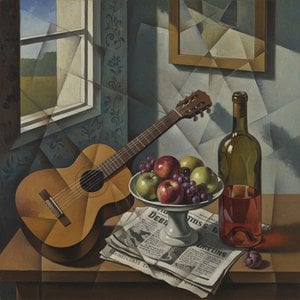
Number 28 (Still Life)


 Lue lisää
Käsinmaalattu öljyvärinen jäljennös
Käsinmaalattu öljyväri kankaalle haluamassasi koossa ja kehyksissä, taiteilijoidemme valmistamana tilauksesta. ( Vaihda tulosteeseen Siirry digitaaliseen kuvaan)




































Valitse valmiista mitoistamme sellaiset, jotka vastaavat teoksen alkuperäisiä mittasuhteita.

Voit syöttää omat mitat sopimaan tiettyyn kehykseen tai tilaan. Jos valitsemasi koko ei vastaa alkuperäisen kuvan mittasuhteita, rajaamme taideteoksen tai jatkamme maalausta käsin maalatuilla elementeillä. Digitaalinen esikatselu lähetetään hyväksyttäväksi ennen tuotannon aloittamista.
Huomioithan, että näytöllä oleva esikatselu ei vastaa todellista rajausta tai jatkamista. Vain digitaalinen mallikuva näyttää lopullisen sommittelun tarkasti.
Vaikka mittatilaustyöt ovat mahdollisia, suosittelemme valitsemaan mitan ennalta määritetystä listasta alkuperäisten mittasuhteiden säilyttämiseksi.
Tilauksen jälkeen ArtsDot.com -tiimi lähettää asiakkaalle sähköpostitse ohjeet ja esikatselukuvan.
Maailmanlaajuinen toimitus () 3–4 viikossa tavallisen 5 viikon sijaan. (22 syyskuu). Laadusta ei tingitä.

Ilmainen pikatoimitus ympäri maailman

Korkealaatuinen pellavakangas

Kattava kuljetusvakuutus

Tulliveron palautustakuu

Takuu täydellisestä värien vastaavuudesta

100 päivän palautusoikeus valmistusvirhetapauksissa

100% rahat takaisin -takuu

Määräalennus saatavilla
 Lasivaihtoehto on saatavilla vain alle 110 cm kokoisille teoksille

Number 28 (Still Life)
Reproduktiotapa
Replikaatin koko
-


Kokonaishinta
$ 263
Samankaltaisia teoksia


Taiteilijan elämäkerta
Albert Eugene Gallatin: A Pioneer of American Modern Art
Early Life and Family Background
- Born: Villanova, Pennsylvania, 1881.
- Gallatin came from a wealthy and socially prominent family. His great-grandfather was Albert Gallatin, a Swiss-American ethnologist, linguist, politician, and diplomat who served as the United States Secretary of the Treasury.
- He developed an early interest in art and literature, beginning to collect works by artists like Max Beerbohm and James McNeill Whistler while still a teenager.
Artistic Development and Influences
- Initially drawn to the decorative qualities of Beardsley and Whistler’s work, Gallatin focused on elegance of line and aesthetic value over narrative content.
- Around 1910, his interests shifted towards American artists associated with the Ashcan School – Everett Shinn, William Glackens, Ernest Lawson, and John Sloan.
- He was also influenced by artists like John Marin and Boardman Robinson.
- Gallatin’s exposure to European modernism, particularly Cubism, proved pivotal in shaping his artistic vision.
Artistic Style and Key Works
- Park Avenue Cubism: Gallatin developed a distinctive style often referred to as “Park Avenue Cubism,” characterized by geometric forms, muted tones, and a sophisticated aesthetic.
- Notable works include "Compostion Painting" and "Number 28 (Still Life)", exemplifying his Synthetic Cubist approach.
- He also created “Map of the Indian tribes of North America”, showcasing diverse artistic interests.
- Gallatin’s paintings often reflect a balance between abstraction and recognizable forms, demonstrating his unique interpretation of Cubism.
Contributions to the American Art Scene
- Collector & Writer: Gallatin was not only an artist but also a prolific writer and collector. He authored numerous articles and monographs on modern art, advocating for its acceptance and understanding.
- Gallery of Living Art: In 1936, he founded the Gallery of Living Art at New York University (NYU), providing a platform for showcasing contemporary American artists and fostering dialogue about abstract art.
- He actively promoted the work of emerging artists and played a crucial role in establishing a vibrant modern art community in New York City.
Legacy and Historical Significance
- Donations to Museums: Gallatin’s extensive collection of modern art was generously donated to the Philadelphia Museum of Art and the Museum of Modern Art (MoMA) in New York, enriching their holdings and contributing to the preservation of artistic heritage.
- He is remembered as a visionary figure who championed abstract art at a time when it faced resistance and skepticism.
- His contributions helped pave the way for the acceptance and appreciation of modern art in America, leaving an enduring impact on the world of contemporary art.
- Gallatin died in New York City in 1952, leaving behind a legacy as one of the great figures in early 20th-century American culture.

Albert Eugene Gallatin
1881 - 1952 , United States of America
Tietoa taiteilijasta
- Birth Date: 1881
- Birth Place: Villanova, United States of America
- Death Date: 1952
- Movement:
- Cubism
- Abstract Art
- Nonobjective Art
- Name: Albert Eugene Gallatin
- Nationality: American
- Notable Works:
- Compostion Painting
- Map of the Indian tribes of North America
- Number 28 (Still Life)
Aiheeseen liittyvät artikkelit

Paul Cézannen 25 mestariteosta: Taidetta kotiisi – ArtsDot.com
Tutustu Paul Cézannen 25 vaikuttavinta mestariteosta! Postimpressionismin huipputeoksia, still life -maalauksia ja ikonisia maisemia. Löydä taiteen tarinat ja inspiroi kotisi sisustusta ArtsDot.com:ssa. Tutki kokoelma verkossa!

Georges Braquen 25 mestariteosta: Taidetta kotiin ArtsDotilta
Tutustu Georges Braquen 25 mestariteokseen ja kubismin lumoihin! Taidehistoriaa, värejä ja inspiraatiota kotiisi. Laadukkaat taulut ArtsDotilta – löydä täydellinen seinätaulu nyt!

Deconstructing Reality: A Comprehensive Exploration of Synthetic Cubism's Evolution & Impact
Explore the revolutionary world of Synthetic Cubism! Discover its origins, key artists like Picasso & Braque, techniques, and lasting impact on modern art. A comprehensive guide for enthusiasts.

Deconstructing Reality: Cubism's Revolutionary Impact on 20th-Century Art
Explore the revolutionary world of Cubism with ArtsDot. Discover Picasso & Braque's groundbreaking techniques, its philosophical roots, and lasting impact on modern art. Expert insights for collectors.
Deconstructing Reality: A Comprehensive Exploration of Cubist Still Life
Explore the revolutionary world of Cubist Still Life with ArtsDot. Discover Picasso & Braque's groundbreaking techniques, its philosophical roots, and lasting impact on modern art. Expert insights for collectors.