


 Esikatselu
 Jaa
Jaa Jaa
Jaa
 Tarkemmat tiedot

 Lataa
Lataa
 Samanlaisia
 Röntgenkuva
 Diaesitys
 Tilastot
Sukkaa kutova tyttö


 Näytä lisää
Giclée-printit ja taideprintit
Museolaatuisia giclée- tai kankaitaulun tulosteita nopealla tuotannolla ja joustavilla viimeistelyvaihtoehdoilla. ( Osta käsintehty maalaus Siirry digitaaliseen kuvaan)




P118B $10

P118H $10

P118W $10

P438Z $10

P508JH $12

P508YH $12

P805H $10

P805Z $10

P919BZ $10

P919G $10

P919XJ $10

P959ZH $10

P968JZ $12

W106C $8

W218G $10

W218JH $8

W218Y $10

W307PJ $10

W316G $10

W316PJ $8

W316Y $10

W398PJ $8

W4111J $10

W500HY $15

W500JH $15

W692G $12

W849H $8

W940BG $15

W953PJ $8




Valitse valmiista mitoistamme sellaiset, jotka vastaavat teoksen alkuperäisiä mittasuhteita.

Voit syöttää omat mitat sopiaksesi tiettyyn kehykseen tai tilaan. Jos valittu koko ei vastaa alkuperäisen kuvan mittasuhteita, rajaamme teosta tai laajennamme kuvaa peilatulla tai yhtenäisellä reunalla. Digitaalinen mallikuva lähetetään hyväksyttäväksi ennen tuotannon aloittamista.
Huomaathan, että näytöllä näkyvä esikatselu ei vastaa lopullista rajausta tai laajennusta. Vain mallikuva näyttää lopullisen sommittelun tarkasti.
Vaikka räätälöityjä kokoja on saatavilla, suosittelemme valitsemaan mitat valmiista listasta alkuperäisten mittasuhteiden säilyttämiseksi.
Toimitus maailmanlaajuisesti () kahdessa viikossa tavallisen 4–5 viikon sijaan. (10 syyskuu)

Ilmainen pikatoimitus ympäri maailman

Korkealaatuinen pellavakangas

Kattava kuljetusvakuutus

Tulliveron palautustakuu

Täydellinen värien vastaavuustakuu

100 päivän palautusoikeus (vain valmistusvirheet)

100% rahat takaisin -takuu

Määräalennus tarjous
 Lasivaihtoehto on saatavilla vain alle 110 cm kokoisina teoksina

Sukkaa kutova tyttö
Giclée-printit ja taideprintit
Replikaatin koko
-


Kokonaishinta
$ 62
Albert Edelfelt’s “Sukkaa kutova tyttö”: A Portrait of Rural Finland
“Sukkaa kutova tyttö” – "Girl Knitting a Sock" – is more than just a depiction of a young girl; it's a poignant window into the heart of 19th-century Finnish rural life, masterfully rendered by Albert Edelfelt. Painted in 1878, this work exemplifies Edelfelt’s pivotal shift away from grand historical narratives towards a deeply personal and naturalistic style that would ultimately define his legacy as Finland's greatest artist. The scene unfolds within the tranquil embrace of a Finnish forest, a setting meticulously observed and imbued with a quiet dignity.
The central figure, a young girl absorbed in her task of knitting a sock, dominates the composition. Her posture is relaxed yet attentive, her expression thoughtful – a subtle blend of concentration and perhaps a touch of melancholy. The artist’s skill lies not just in capturing her physical likeness but also in conveying an intangible sense of character, hinting at the hardships and quiet resilience inherent in rural existence. The presence of several other figures, subtly placed within the background, adds to the scene's realism, suggesting a bustling household or perhaps a communal gathering – a vital element of Finnish village life.
Realism and the Rise of National Identity
Edelfelt’s artistic journey was profoundly shaped by his time in Antwerp and Paris. Initially trained in the academic tradition of history painting under Jean-Léon Gerome, he quickly recognized the limitations of this style when applied to Finnish subjects. His move towards realism began with a desire to authentically portray the lives of his countrymen – a crucial step in fostering a sense of national identity during a period of increasing political and cultural awareness within Finland.
The painting’s setting, a dense Finnish forest, is not merely a backdrop; it's an integral part of the narrative. The trees, rendered with meticulous detail, evoke a sense of timelessness and connection to the land – a theme that would become increasingly important in Finnish art and literature during this era. This focus on the natural world reflects Edelfelt’s commitment to representing Finland’s unique landscape and culture to the wider world.
Technique and Composition
"Sukkaa kutova tyttö" showcases Edelfelt's mastery of oil painting techniques. The brushwork is smooth yet textured, creating a palpable sense of depth and atmosphere. He employs subtle gradations of light and shadow to model the figures and their surroundings, lending them a remarkable three-dimensionality. The composition itself is carefully balanced, with the girl occupying the central space while the surrounding elements – the trees, the rock, and the other figures – contribute to a harmonious whole.
Notice the use of color; muted greens, browns, and blues dominate the palette, reflecting the natural tones of the Finnish forest. These colors are not merely descriptive; they evoke a sense of tranquility and serenity, reinforcing the painting’s overall mood. The artist's attention to detail – from the texture of the girl’s dress to the individual strands of yarn – is remarkable, demonstrating his dedication to capturing the nuances of everyday life.
Symbolism and Emotional Impact
Beyond its realistic depiction of rural Finland, “Sukkaa kutova tyttö” carries a subtle symbolic weight. The act of knitting itself represents hard work, domesticity, and the continuation of tradition – values deeply rooted in Finnish culture. The girl’s contemplative expression suggests a connection to something larger than herself, perhaps a sense of responsibility or a yearning for a better future.
Edelfelt's ability to evoke such profound emotions through seemingly simple subject matter is a testament to his artistic genius. “Sukkaa kutova tyttö” remains a powerful and enduring image of Finland – a celebration of its people, its landscape, and its cultural heritage. A hand-painted reproduction offers an unparalleled opportunity to experience the beauty and emotional depth of this iconic work firsthand.
Samankaltaisia teoksia


![Pas Mèche [nothing Doing] — Jules Bastien-lepage, Naturalist Painting](/media/artworks/images-thumb/01/c8/01c885499ff56bb2e6383eef008f6c1b.jpg)


Taiteilijan elämäkerta
early life and education
Albert Gustaf Aristides Edelfelt, a Finnish painter who achieved international renown, was born on July 21, 1854, in Porvoo, Finland. His parents, Carl Albert Edelfelt and Alexandra Edelfelt (née Brandt), were Swedish-speaking Finns. From an early age, Edelfelt demonstrated an innate fascination with art—a passion that would propel him toward formal studies at the Drawing School of the Finnish Art Society in 1869. This formative experience laid the groundwork for his artistic journey and instilled within him a lifelong dedication to mastering his craft.artistic journey
Edelfelt’s artistic pursuits extended beyond Finland's borders, shaping him through exposure to diverse artistic traditions. He embarked on a significant educational voyage to Antwerp Academy of Art in 1873-74, where he honed his skills in history painting under the guidance of Jean-Léon Gérôme—a pivotal step in developing his stylistic sensibilities. Subsequently, he pursued further refinement at École nationale des beaux-arts in Paris (1874-78), continuing to learn from Gérôme and absorbing influences from Impressionism. A brief period spent in Saint Petersburg (1881-82) broadened his artistic horizons and introduced him to the stylistic nuances of Russian art.rise to prominence and notable works
Edelfelt’s career ascended rapidly following a triumphant performance at the Paris Universal Exposition of 1889, securing him a gold medal—a testament to his talent and dedication. Among his most celebrated paintings are “Portrait of Louis Pasteur,” which garnered him the Legion of Honor in 1886, capturing the likeness of the renowned scientist with remarkable accuracy and detail. Equally compelling is “Young Woman in Her Boudoir,” portraying femininity with grace and subtlety—a masterful depiction of light and shadow that exemplifies Edelfelt’s artistic prowess. Furthermore, “Under the Birches” stands as a poignant emblem of Finnish landscapes, conveying both beauty and melancholy through evocative brushstrokes and atmospheric perspective. And finally, "Girl from Porvoo" is an unforgettable portrait capturing the essence of youthful innocence and charm.legacy and impact
Albert Edelfelt’s contribution to Finnish art history is undeniable—he stands as one of the pioneers who ushered in a new era of realism within the nation's artistic landscape. His influence resonated deeply with younger artists like Akseli Gallen-Kallela and Gunnar Berndtson, whom he mentored during their formative years in Paris—solidifying his position as a pivotal figure in shaping Finnish art’s trajectory. Today, Edelfelt’s works are housed in prestigious museums across Europe, including Ateneum Museum in Helsinki, where they continue to inspire admiration for their artistic merit and historical significance. His legacy persists not only through the enduring beauty of his paintings but also through the lasting impact he had on subsequent generations of Finnish artists—a testament to his enduring contribution to art history.museum collections and commemoration
Edelfelt’s masterpieces are proudly displayed in Ateneum Museum, Helsinki, Finland, allowing visitors to immerse themselves in the splendor of his artistic vision. To honor his remarkable life and legacy, a €100 Albert Edelfelt commemorative coin was issued in 2004—celebrating the centenary of his birth anniversary. This symbolic gesture underscores the enduring appreciation for Edelfelt’s contribution to Finnish culture and art—a lasting reminder of his indelible mark on artistic history.
Albert Edelfelt
1854 - 1905 , Suomi
Pikatiedot
- Artistic Movement Or Style: Realismi
- Artists Or Movements Influenced By This Artist: ['Impressionismi']
- Artists Who Influenced This Artist:
- Jean-Léon Gérôme
- Akseli Gallen-Kallela
- Date Of Birth: 21 heinäkuuta 1854
- Date Of Death: 18 elokuuta 1905
- Full Name: Albert Gustaf Aristides Edelfelt
- Nationality: Suomalainen
- Notable Artworks:
- Louis Pasteurin muotokuva
- Nuori nainen boudoirissa
- Koivujen alla
- Place Of Birth: Porvoo, Suomi
Liittyvät artikkelit

10 legendaarista öljyvärimaalausta, jotka muuttivat taiteen – ArtsDot.com
Tutustu 10 legendaariseen öljyvärimaalaukseen, jotka muuttivat taiteen historiaa! Leonardo da Vinci, Van Gogh ja Monet – mestariteokset tarinoineen. Löydä inspiraatiota sisustukseesi ja korkealaatuiset taidekopiot ArtsDot.comista.
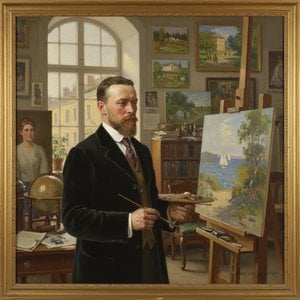
Albert Edelfelt: A Pioneer of Finnish Realism & International Impressionist Circles
Explore the life & work of Albert Edelfelt, a pioneering Finnish Realist painter who bridged Impressionism & national identity. Discover his masterpieces and lasting influence on art history.

Öljyvärimaalauksen kestävä perintö: tekniikka, historia ja nykyaikainen käytäntö
Tutustu öljyvärimaalauksen rikkaaseen historiaan, tekniikoihin ja merkittäviin mestareihin. Opi säilyttämään ja restauroimaan taidetta sekä löydä uudet innovaatiot tässä ajattomassa taidemuodossa.

The Enduring Legacy of Oil on Canvas: Technique, History & Aesthetic Impact
Explore the rich history & techniques of oil painting – from Renaissance masters to Impressionism. Discover pigments, layering methods, and why this timeless medium endures. Expert insights for artists & art enthusiasts.

Oil on Canvas: A Historical & Technical Exploration of a Timeless Artistic Medium
Explore the rich history & enduring techniques of oil painting on canvas. Discover the science behind its longevity, conservation practices, and contemporary relevance. Expert insights for art enthusiasts.
