


 Lähetä
 Jaa
Jaa
 Tarkemmat tiedot
 Opas
Opas

 Lataa kuva
 Samanlaisia kohteita
 Diaesitys
 Tilastot
Faith
 Marble
- Sculpture
- Academic Art / Neoclassicism
 Modern
 Biennale Internazionale dell'Antiquariato di Firenze
 Lue lisää
Giclée- ja taideprintit
Museolaatuisia giclée- tai kankaitaulun tulosteita nopealla tuotannolla ja joustavilla viimeistelyvaihtoehdoilla. ( Tilaa käsinmaalattu jäljennös Siirry digitaaliseen kuvaan)




































Valitse valmiista mitoistamme sellaiset, jotka vastaavat teoksen alkuperäisiä mittasuhteita.

Kirjoita tarvitsemasi leveys ja korkeus, jotta tuloste sopii kehyskokoon tai seinällesi. Tulostetta voidaan vain leikata, sitä ei voi koskaan tehdä suuremmaksi kuin alkuperäinen kuva, joten eri muotoinen koko aiheuttaa osan kuvasta katoamisen. Lähetämme sinulle digitaalisen mallikuvan hyväksyttäväksi ennen kuin aloitamme tulostuksen. Tällä sivulla näkyvä kuva ei näytä lopullista leikkausta — vain mallikuva näyttää sen.
Maailmanlaajuinen toimitus () 2 viikossa tavallisen 4–5 viikon sijaan. (27 lokakuu)

Ilmainen pikatoimitus ympäri maailman

Korkealaatuinen pellavakangas

Kattava kuljetusvakuutus

Tulliveron palautustakuu

Takuu täydellisestä värien vastaavuudesta

100 päivän palautusoikeus valmistusvirhetapauksissa

100% rahat takaisin -takuu

Määräalennus saatavilla
 Lasivaihtoehto on saatavilla vain alle 110 cm kokoisille teoksille

Faith
Giclée- ja taideprintit
Replikaatin koko
-


Kokonaishinta
€ 54
A Vision in Marble: The Ethereal Essence of Faith
In the quiet, shadowed corridors of an art gallery, where light plays delicately against deep charcoal walls, stands a masterpiece that commands a singular, breathless attention. Adolfo Wildt’s Faith is not merely a sculpture; it is a profound encounter with the sublime. Carved from marble with a precision that defies the very nature of stone, this work transcends its physical medium to capture something far more elusive. The piece emerges from the darkness, its surfaces catching the light in a way that suggests an almost supernatural translucency, a hallmark of Wildt’s unparalleled technical mastery.
The sculpture invites the viewer into a space of reverence and quiet contemplation. There is a striking tension held within the marble—a balance between the heavy, cold reality of the stone and the weightless, spiritual aspiration the subject represents. As one gazes upon the form, the interplay of light and shadow creates a sense of movement, as if the very essence of devotion is breathing through the polished surface. For the discerning collector or the interior designer seeking a centerpiece of profound character, Faith offers an unparalleled emotional depth that anchors a room with both sophistication and soul.
Technical Brilliance and the Sculptor's Touch
To understand the impact of Faith, one must appreciate the meticulous lineage of its creator. Wildt, a master who emerged from the vibrant artistic landscape of Milan, brought to this work a unique sensitivity forged during his early years as a goldsmith. This background is evident in the exquisite, fine-grained detail that adorns the sculpture, where every curve and contour has been polished to an opalescent sheen. His ability to manipulate marble to mimic the softness of skin or the delicate texture of light is nothing short of miraculous.
The technique employed here bridges the gap between classical tradition and the burgeoning modernism of his era. While the subject matter evokes the timelessness of historical religious iconography, the execution possesses a sharp, almost experimental edge. The way the light interacts with the sculpted surfaces creates a dramatic chiaroscuro effect, making the sculpture appear to shift and evolve depending on the viewer's perspective. This dynamic quality ensures that the piece remains a living presence within any curated space, offering new visual discoveries with every passing hour.
A Legacy of Devotion and Artistry
The historical context of Wildt’s work adds a layer of prestige to this magnificent sculpture. As an artist who navigated the transition from the Scapigliatura movement toward a more refined, modern aesthetic, Wildt possessed the rare ability to infuse classical forms with contemporary psychological intensity. Faith stands as a testament to this era of profound artistic transformation, embodying a period where the boundaries of sculpture were being pushed toward new heights of expression.
For those looking to integrate a piece of such historical and aesthetic significance into a collection, Faith represents more than just decoration. It is an investment in a legacy of Italian excellence. Whether placed in a private study, a grand salon, or a contemporary gallery setting, the sculpture serves as a focal point for intellectual and emotional engagement. It does not merely occupy space; it defines it, bringing with it an aura of timelessness, strength, and an unshakeable sense of peace.
Kysymykset ja vastaukset
Mihin sävyyn "Faith" kallistuu?
Teoksen Adolfi Wildt:n "Faith" hallitseva sävy on Warm Sunset Tones. Tämä sävy on paletin perussävy.
Mitä Adolfi Wildt:n "Faith" esittää ja millainen on sen tunnelma?
Adolfi Wildt:n "Faith" yhdistää classical sculpture, religious symbolism, marble art”, “gallery setting”, “human form”, “art history”, italian art”-aiheet Dramatic-tunnelmaan.
Millaista tunnelmaa Adolfi Wildt:n "Faith" -teoksen reproduktio toisi huoneeseen?
Dramatic-tunnelmansa ansiosta "Faith" sopii erinomaisesti tilaan Restaurant.
Samankaltaisia teoksia


Taiteilijan elämäkerta
Adolfo Wildt – Milanese Bridging Worlds
Adolfo Wildt, born in Milan on March 1st, 1868, to a Swiss family who had embraced Lombardy as their new home, emerged as a pivotal figure in Italian sculpture during a period of profound artistic transition. His journey was one marked by early hardship and relentless dedication, beginning not within the hallowed halls of an academy but amidst the practical demands of labor. Leaving school at the tender age of nine, Wildt’s initial forays into the working world saw him apprenticed first as a hairdresser, then as a goldsmith – experiences that instilled in him a meticulous attention to detail and a nascent understanding of form. However, it was his apprenticeship at eleven with Giuseppe Grandi, a prominent sculptor associated with the Scapigliatura movement, that truly ignited his artistic calling. Under Grandi’s tutelage, Wildt began to master the demanding art of sculpting marble, laying the foundation for a career defined by technical brilliance and emotional depth. By eighteen, his talent was already garnering recognition within Milanese artistic circles, foreshadowing the significant contributions he would make to the world of sculpture. He continued his education at the Brera Academy of Fine Arts, solidifying his theoretical knowledge alongside his burgeoning practical skills.Early Life and Apprenticeships: From Hairdressing to Marble
Wildt’s formative years were characterized by a pragmatic upbringing that contrasted sharply with the artistic ambitions of his time. Leaving formal schooling early, he pursued vocational training as a hairdresser and goldsmith – trades that honed his observational skills and instilled in him an appreciation for precision and craftsmanship. These experiences weren’t merely utilitarian; they cultivated a sensitivity to texture and surface detail that would later inform his sculptural practice. Crucially, his apprenticeship with Giuseppe Grandi proved transformative. Grandi, a sculptor deeply rooted in the Scapigliatura movement—a rebellious artistic faction rejecting academic conventions—introduced Wildt to the expressive potential of marble and fostered an understanding of how sculpture could convey emotion and psychological complexity. This mentorship established a cornerstone for Wildt’s artistic development, shaping his approach to technique and inspiring him to explore ambitious sculptural concepts.The Influence of Grandi and Scapigliatura
Giuseppe Grandi's influence extended far beyond mere instruction in sculpting marble; he instilled in Wildt a belief that art should grapple with profound existential questions. Grandi championed the Scapigliatura movement, which vehemently opposed the rigid formalism of academic sculpture and embraced emotional intensity as a primary artistic goal. This rejection of convention resonated deeply with Wildt, shaping his aesthetic sensibilities and propelling him toward experimentation—a characteristic that would define his subsequent work. The Scapigliatura’s emphasis on psychological realism and its willingness to confront uncomfortable truths provided Wildt with a conceptual framework for addressing themes of suffering, loss, and spiritual yearning – motifs that would become recurring elements in his sculptures.Recognition and Patronage: Franz Rose and Artistic Breakthrough
Wildt’s artistic promise gained immediate recognition in 1893 when he exhibited his portrait of his wife at the Permanent Society for Fine Arts in Milan. The painting's striking immediacy and emotional resonance captivated critics and collectors alike, securing its acquisition by the Galleria Nazionale d’Arte Moderna in Rome – a pivotal moment that signaled to the wider art world the burgeoning talent of this young sculptor. However, Wildt’s career truly ascended when he forged an extraordinary partnership with Franz Rose, a Prussian collector possessing discerning taste and considerable financial resources. For eighteen years, Rose served as Wildt’s benefactor, providing him with unwavering support and granting him preferential access to exhibitions—a circumstance that liberated him from commercial pressures and allowed him to immerse himself entirely in his creative endeavors. This patronage enabled Wildt to participate regularly in prestigious events across Europe – Milan, Munich, Zurich, Berlin, and Dresden – introducing his work to an international audience and establishing him as one of the most celebrated sculptors of his era.Style and Technique: Marble Translucency and Expressionist Depth
Wildt’s sculptural style distinguished itself through a remarkable blend of technical mastery and expressive depth—a combination that captivated audiences and cemented his reputation as an innovator. He achieved an unprecedented level of smoothness on marble surfaces, creating sculptures that possessed an ethereal quality – almost translucent – reflecting the influence of Auguste Rodin and Adolf von Hildebrand who were profoundly moved by Wildt’s experimental approach. Sculptors like Rodin recognized Wildt's ability to convey profound emotion through form—a characteristic that foreshadowed the rise of Expressionism in sculpture. His works explored themes of faith, sorrow, and human vulnerability with unflinching honesty, reflecting his own personal struggles and demonstrating a sensitivity to psychological nuance. Wildt’s sculptures are characterized by complex symbolism interwoven into gothic forms – a stylistic choice that underscored his commitment to confronting existential dilemmas and conveying spiritual yearning. The recurring motif of veiled faces or obscured features in his oeuvre added another layer of mystery and invited viewers to contemplate the hidden depths of human experience.Legacy and Influence: A Teacher Shaping Future Artists
Wildt’s contribution extended beyond individual masterpieces; he established a Marble School in Milan in 1921, nurturing the talents of aspiring sculptors and disseminating his knowledge of traditional techniques—a testament to his belief that artistic excellence could be cultivated through rigorous training. This school was subsequently integrated into the Brera Academy as a three-year course, ensuring that Wildt’s legacy would endure for generations to come. Among his most notable pupils were Lucio Fontana, Fausto Melotti, and Luigi Broggini – artists who would themselves become leading figures in Italian modernism—demonstrating Wildt's profound influence on the trajectory of artistic innovation. Adolfo Wildt passed away peacefully in Milan on March 12th, 1931, leaving behind a body of work that continues to inspire and challenge viewers today – a testament to his enduring contribution to the history of sculpture and Italian art.
Adolfi Wildt
1868 - 1931 , Italia
Tietoa taiteilijasta
- Artistic Movement Or Style: Romanticism, Modernism
- Artists Or Movements Influenced By This Artist:
- Lucio Fontana
- Fausto Melotti
- Artists Who Influenced This Artist:
- Giuseppe Grandi
- Federico Villa
- Date Of Birth: 1868-03-01
- Date Of Death: 1931-03-12
- Full Name: Adolfo Wildt
- Nationality: Italian
- Notable Artworks:
- Fulcieri Paulucci de’ Calboli
- Saint Lucia
- St. Francis of Assisi
- Mask of Sorrow
- Place Of Birth: Milan, Italy
Aiheeseen liittyvät artikkelit

10 legendaarista pronssiveistosta, jotka mullistivat taiteen – ArtsDot.com
Tutustu 10 legendaariseen pronssiveistokseen, jotka ovat muokanneet taiteen historiaa! Michelangelo, Rodin ja muut mestarit. Löydä inspiraatiota sisustukseesi ja tutki upeita taideteoksia ArtsDot.com-sivustolta.
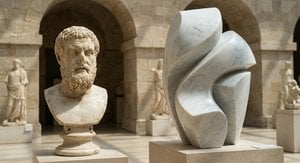
The Enduring Allure of Marble in Art History: From Classical Sculpture to Modern Abstraction
Explore the captivating history of marble sculpture from ancient Greece to modern art. Discover renowned artists like Canova & Michelangelo, carving techniques, and investment insights at ArtsDot.

The Enduring Form: Exploring Themes & Techniques in Sculpture Across Historical Periods
Explore the rich history of sculpture from ancient masterpieces to contemporary innovations. Discover key techniques, influential artists & investment potential for discerning art collectors.

The Enduring Legacy of Marble: A Comprehensive Exploration of Technique, Symbolism & Artistic Expression
Explore the rich history of marble sculpture from antiquity to the Renaissance! Discover key techniques, influential artists & enduring themes in classical art. Expert insights for collectors and enthusiasts at ArtsDot.

10 legendaarista pronssiveistosta, jotka mullistivat taiteen – ArtsDot.com
Tutustu 10 legendaariseen pronssiveistokseen, jotka ovat muuttaneet taiteen historiaa! Rodinista Michelangeloon – opi mestareiden tarinat ja löydä täydellinen taideteos kotiisi ArtsDot.com:ssa. Laadukkaat jäljennökset & sisustusideat.