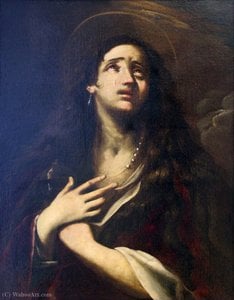
Giacinto Brandi muotokuva

Giacinto Brandin kuuluisimmat maalaukset: Kaikki 22 teosta, järjestettynä

Päivitetty lokakuu 2026 · järjestetty suosituimmuuspisteiden mukaan (jokaisen teoksen haut, vierailut ja tilaukset) · 23 teosta taiteilijalta Giacinto Brandi luettelossamme

Lyhyesti

Teos Christ buried by Joseph of Arimathea (1650) on se Giacinto Brandi maalaus, jonka useimmat tuntevat, ja sen voit nähdä museossa Nationalmuseum, Tukholma. Heti niiden jälkeen seuraavat Saint Magdalene (1656) ja Homer with Laurel Wreath and Violin (1646). Giacinto Brandiin 23 teoksesta meidän valikoimassamme nämä 22 ovat tunnetuimpia. Jokaisesta on ilmoitettu vuosi, museo sekä lyhyt kuvaus siitä, mikä tekee teoksesta erityisen.

1621 – 1691, Poli Baroque Eniten teoksia: Nationalmuseum

Giacinto Brandi -taiteilijan top 10: teokset, jotka kaikki tuntevat

1
Christ buried by Joseph of Arimathea (1650) tekijä Giacinto Brandi

Christ buried by Joseph of Arimathea

1650 · Oil On Canvas · Nationalmuseum, Tukholma

In this somber oil on canvas, we find ourselves in the quiet, heavy moments following the Crucifixion. The scene is stripped of unnecessary ornament, focusing entirely on the physical and emotional gravity of the burial. A pale, lifeless body is slumped in the foreground, its musculature defined by a harsh, directional light that cuts through the surrounding darkness. This light catches the starkness of the skin and the texture of…

Käsinmaalattu öljyreprosentio alkaen $200 29 × 35 cm Alkuperäisen kokoinen $652 116 × 142 cm Tilaa alkuperäisen kokoisena →
Tilaa tämä teos Lisää tästä teoksesta
2
Saint Magdalene (1656) tekijä Giacinto Brandi

Saint Magdalene

1656 · Oil On Canvas · Bavarian State Painting Collections, München

The figure of Saint Magdalene emerges from the shadows in this oil on canvas, a soul caught in a moment of profound spiritual intensity. Painted by Giacinto Brandi, the work captures the subject in a state of deep devotion. This portrayal of the saint reflects the dramatic sensibilities of the mid-seventeenth century, specifically dating to about 1656. The subject gazes upward, her expression and gesture speaking to a direct connection…

Käsinmaalattu öljyreprosentio alkaen $175 28 × 36 cm Alkuperäisen kokoinen $232 46 × 64 cm Tilaa alkuperäisen kokoisena →
Tee se omakses Tutustu siihen
3
Homer with Laurel Wreath and Violin (1646) tekijä Giacinto Brandi

Homer with Laurel Wreath and Violin

1646 · Oil On Canvas

The oil painting titled Homer with Laurel Wreath and Violin was executed by the artist Giacinto Brandi. This work dates to about 1646. The subject of the portrait is an elderly man characterized by a thick, textured beard. He is depicted wearing a laurel wreath upon his head. The figure is positioned in a manner that suggests he is the poet Homer.

Käsinmaalattu öljyreprosentio alkaen $175 26 × 38 cm Alkuperäisen kokoinen $355 73 × 98 cm Tilaa alkuperäisen kokoisena →
Tilaa käsinmaalattuna Lue tarina siitä
6
The Prodigal Son tekijä Giacinto Brandi

The Prodigal Son

Oil On Canvas · Museo del Prado, Madrid

A single light source pierces the darkness from the upper left, carving shapes out of the gloom. It catches the pale, weary skin of a man kneeling in regret. His body is a study in heavy folds and coarse fabric, the textures of a life spent in hardship. Above him, an elder reaches out, a gesture of sudden, quiet grace. The scene is tight, intimate, and heavy with the weight…

Käsinmaalattu öljyreprosentio alkaen $225 36 × 28 cm Alkuperäisen kokoinen $680 148 × 112 cm Tilaa alkuperäisen kokoisena →
Tilaa tämä teos Lisää tästä teoksesta
7
Shepherdess with her Sheep tekijä Giacinto Brandi

Shepherdess with her Sheep

Oil On Canvas · Hermitage-museo, Pietari

In "Shepherdess with her Sheep" by Giacinto Brandi, a young girl stands as a quiet anchor amidst a shifting landscape. Created about 1700, the work captures a moment of transition. She tends to her flock during the soft, uncertain light of dusk or dawn. The girl remains a steady presence against the movement of the animals and the sky. Her labor is quiet, a rhythmic part of the day's end.

Käsinmaalattu öljyreprosentio alkaen $200 29 × 34 cm Alkuperäisen kokoinen $757 131 × 154 cm Tilaa alkuperäisen kokoisena →
Tee se omakses Tutustu siihen

Jatka Giacinto Brandi:n tutkimista: 11 – 22

Mitä Giacinto Brandi maalasi eniten

Nämä teokset käsittelevät neljää yleisintä aihetta, joista jokaisesta on esitetty tunnetuin esimerkki.

Mistä löydät Giacinto Brandi's maalaukset

Tämän sivun teoksista eniten sisältävät 8 museota.

Museo Kaupunki Giacinto Brandi teokset Tämän listan maalaukset
Nationalmuseum, TukholmaNationalmuseum Tukholma 1 Christ buried by Joseph of Arimathea
Bavarian State Painting Collections, MünchenBavarian State Painting Collections München 1 Saint Magdalene
Musée d'art et d'histoire de Narbonne, NarbonneMusée d'art et d'histoire de Narbonne Narbonne 1 Poetry
Städel Museum, FrankfurtStädel Museum Frankfurt 1 Hermit Saint (Paul the Hermit?)
Museo del Prado, MadridMuseo del Prado Madrid 1 The Prodigal Son
Hermitage-museo, PietariHermitage-museo Pietari 1 Shepherdess with her Sheep
National Museum in Warsaw, VarsovaNational Museum in Warsaw Varsova 1 The Martyrdom of St. Sebastian.
Vatikaanin Pinakoteekka, VatikaaninkaupunkiVatikaanin Pinakoteekka Vatikaaninkaupunki 1 Kristus Getsemanein puutarhassa

Yksi kuuluisa Giacinto Brandi -teos joka vuosikymmeneltä

Teokset vuosikymmenittäin

Valitse vuosikymmen nähdäksesi sen merkittävimmän teoksen.

Giacinto Brandi -maalaukset: mitä ihmiset haluavat tietää

Mistä maalauksesta Giacinto Brandi tunnetaan parhaiten?Katso vastaus

Listan kärjessä on Christ buried by Joseph of Arimathea (1650), Nationalmuseum, Tukholma. Heti sen jälkeen tulevat Saint Magdalene (1656) ja Homer with Laurel Wreath and Violin (1646).

Kuinka vanha Giacinto Brandi oli teoksen Christ buried by Joseph of Arimathea aikaan?Katso vastaus

29 vuotta. Giacinto Brandi syntyi vuonna 1621, ja teos Christ buried by Joseph of Arimathea on peräisin vuodelta 1650.

Mitkä ovat Giacinto Brandi 10 kuuluisinta maalausta?Katso vastaus

Christ buried by Joseph of Arimathea, Saint Magdalene, Homer with Laurel Wreath and Violin, Poetry, Hermit Saint (Paul the Hermit?), The Prodigal Son, Shepherdess with her Sheep, Allegory Of Philosophy, Saint John the Baptist ja Roman Charity. Löydät kunkin teoksen vuosiluvun ja museon yllä olevasta luettelosta.

Kuinka monta Giacinto Brandi teosta on olemassa?Katso vastaus

Luettelossamme on 23 teosta taiteilijalta Giacinto Brandi, aikaväliltä 1646–1678.

Missä museoissa on Giacinto Brandi'n tunnetuimmat maalaukset?Katso vastaus

Löydät useimmat niistä Nationalmuseum (Tukholma), Bavarian State Painting Collections (München) ja Musée d'art et d'histoire de Narbonne (Narbonne). Yllä oleva museolista sisältää täydellisen erittelyn.

Milloin Giacinto Brandi'n kuuluisimmat teokset on maalattu?Katso vastaus

Ajanjaksona 1650s on merkittävämpi kuin mikään muu: 3 sivun 22 teoksesta on peräisin tuolta ajalta, joista Christ buried by Joseph of Arimathea on Christ buried by Joseph of Arimathea.

Mitkä ovat Giacinto Brandi vanhimmat ja uusimmat kuuluisat maalaukset?Katso vastaus

Vanhin teos täällä on Homer with Laurel Wreath and Violin (1646); uusin on Saint John the Baptist (1678).

Mitä Giacinto Brandi maalasi eniten?Katso vastaus

Man (3), Virgin mary (3) ja Body (2) sivun 22 teoksesta.

Mitä Giacinto Brandi yleensä käytti maalaamiseen?Katso vastaus

Oil On Canvas, käytetty 5 kappaleessa sivun 22 teoksista.

Mihin taidesuuntaukseen Giacinto Brandi liittyy?Katso vastaus

Baroque, kuten tämän sivun teoksista näkyy.

Voinko tilata Giacinto Brandi -teoksen reproduktiota kotiini?Katso vastaus

Kyllä. Jokainen tämän sivun teos on saatavilla käsinmaalatun öljyreproosion tai painoksena juuri sinulle sopivassa koossa. Avaa teoksen sivu tilataksesi sen.

Tapaa Giacinto Brandi

The Visionary Brush of Giacinto Brandi

In the grand, dramatic theater of the Italian Baroque, few artists captured the divine tension between light and shadow as effectively as Giacinto Brandi. Born in 1621 in the quiet town of Poli, Lazio, Brandi would eventually emerge as a luminous force within the artistic epicenters of Rome and Naples. His journey was not merely one of personal growth, but a profound evolution of style that bridged the gap between sculptural precision and painterly grace. Though his name may not echo with the same immediate thunder as Caravaggio or Bernini, the sheer emotional resonance of his frescoes and altarpieces speaks to a master who understood the very soul of the Counter-Reformation aesthetic.

The foundations of Brandi’s genius were laid under the watchful eye of the legendary sculptor Alessandro Algardi. It was Algardi who, with a keen eye for latent talent, recognized that while the young man possessed a grasp of form, his true destiny lay not in the chisel, but in the brush. This early exposure to sculptural principles became a hallmark of Brandi’s mature style; even in his most fluid canvases, there remains a palpable sense of weight, volume, and anatomical integrity. Following this formative period, he refined his craft within the studio of Giovanni Giacomo Sementi, where he absorbed the sophisticated stylistic currents flowing through Rome, including the elegant influences of masters like Guido Rhieni.

A Journey Through Naples and Rome

The trajectory of Brandi’s career took a transformative turn in 1638 when he traveled to Naples. This period was instrumental in shaping his artistic identity, as he immersed himself in the vibrant, often gritty, energy of the Neapolitan school. It was here that he forged one of the most significant creative alliances of the seventeenth century: his partnership with Mattia Preti. The two artists became frequent collaborators, their works often intertwining to push the boundaries of Baroque expression. Through this synergy, Brandi learned to balance the monumental scale required for large-scale commissions with a nuanced emotional depth that could move even the most stoic observer.

Upon his return to Rome in 1647, Brandi’s reputation preceded him. He moved within the highest circles of the Roman art world, eventually joining the prestigious Congregazione dei Virtuosi al Pantheon and gaining induction into the Accademia di San Luca. His work during this era reflected a sophisticated synthesis of influences, ranging from the dramatic chiaroscuro of his Neapolitan years to the more classical, balanced compositions favored in Roman academic circles. Whether executing sweeping frescoes that transformed cathedral ceilings or intimate altarpieces that invited quiet devotion, Brandi’s hand was unmistakable.

Legacy and Artistic Significance

The enduring significance of Giacinto Brandi lies in his ability to translate the spiritual fervor of his age into a visual language of breathtaking majesty. His mastery of the medium allowed him to navigate the complex demands of religious patronage, delivering works that served both as theological instruction and as awe-inspiring spectacles of beauty. His contributions to the Roman and Neapolitan landscapes remain vital touchstones for understanding the breadth of the Baroque movement.

Reflecting on his life's work, several key elements define his historical importance:

  • The Sculptural Influence: The unique ability to imbue painted figures with a three-dimensional presence, a direct legacy of his training under Algardi.
  • Collaborative Spirit: His role in the Neapolitan artistic community, particularly through his fruitful exchanges of ideas and techniques with Mattia Preti.
  • Versatility of Scale: An exceptional command over both the expansive, airy requirements of fresco painting and the focused, dramatic intensity of oil on canvas.
  • Cultural Integration: His successful navigation between the distinct artistic atmospheres of Rome and Naples, creating a cohesive stylistic bridge between the two cities.

When Brandi passed away in 1691, he left behind a visual legacy that continues to haunt and inspire. His paintings remain windows into a period of intense faith and artistic experimentation, reminding us of a time when art was the primary vessel for the sublime.