

Introduction
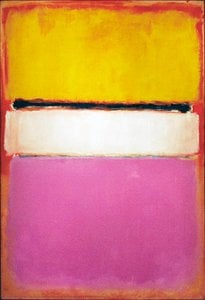
What is it about a single line, a muted color, or an empty space that can so profoundly move us? Minimalism, often perceived as stark simplicity, is in truth a distillation of essence – a quiet rebellion against the clamor of the world. It’s a pursuit of what truly matters, stripped bare and presented with unwavering clarity.
The roots of minimalist aesthetics stretch back further than many realize. While the term gained prominence in the 1960s art world, rejecting the emotional weight of Abstract Expressionism, echoes can be found in Japanese Zen Buddhism’s emphasis on ‘ma’ – negative space – and the reductive forms of early geometric abstraction like Piet Mondrian's work. The post-war era, with its anxieties and a growing desire for order, also fueled this shift towards clarity and essential form. Artists began to question representation itself, focusing instead on the materiality of the artwork and the viewer’s experience within it.
These weren’t simply exercises in emptiness; they were explorations of perception, contemplation, and the very nature of art. The works that emerged from this movement – and those that prefigured it – continue to resonate because they offer a sanctuary from visual overload. They invite us to slow down, to breathe, and to find meaning not in what is *there*, but in what is *not* there.
In the following list, we’ll journey through ten artworks that embody this ‘minimalist’ vibe or mood. Each piece, though diverse in its medium and origin, shares a common thread: a commitment to reduction, a focus on essential qualities, and an enduring power to captivate and inspire. Prepare to be transported by the beauty of less.
Black Square - Kazimir Malevich
 Black Square - Kazimir Malevich
Imagine standing before a void, not one of darkness, but of pure potential. Kazimir Malevich’s Black Square (1915) isn't simply the absence of color; it’s an assertion – a radical severing from centuries of representational painting. The surface, far from being uniform, reveals a delicate network of cracks and fissures, a testament to time and the artist’s hand.
Born amidst the upheaval of pre-revolutionary Russia, this work launched Suprematism, a movement dedicated to ‘pure feeling’ expressed through geometric form. Malevich wasn't depicting *something*; he was presenting art itself as an object of contemplation, free from the constraints of imitation. The subtle variations in tone within the black—hints of grey and brown—speak to its materiality, grounding this seemingly ethereal concept.
Black Square continues to resonate today because it offers a space for projection. It’s a visual echo of silence, inviting us to confront our own perceptions and emotions. In a world saturated with imagery, the simplicity of this piece is profoundly calming. Imagine its presence in a modern living space—a focal point that encourages reflection, a quiet counterpoint to the noise of daily life. It's a minimalist masterpiece that transcends time, reminding us of the power of less to reveal so much.
Suprematist Composition - Kazimir Malevich
 Suprematist Composition - Kazimir Malevich
There’s a quiet energy within Kazimir Malevich’s Suprematist Composition (1916) – a sense of forms liberated from gravity, floating in an infinite expanse. It's not about *what* is depicted, but the pure sensation of color and shape interacting with space. This work isn’t merely abstract; it’s a distillation of feeling, a visual echo of inner experience.
As a cornerstone of Suprematism, this composition represents Malevich’s radical break from representational art. He sought to create an entirely new artistic language, one based on geometric simplicity and ‘pure feeling.’ The precise arrangement of rectangles, squares, and lines against the off-white background isn't random; it’s a carefully orchestrated balance of tension and harmony.
What makes this piece so enduring is its ability to transcend time and context. It invites us to slow down, to contemplate the fundamental elements of art—form, color, space—and to find meaning within their interplay. At ArtsDot, we’re dedicated to preserving that emotional resonance through faithful reproductions, allowing you to experience the power of Malevich's vision in your own home. It’s a minimalist statement that speaks volumes, offering a sanctuary from the complexities of the world.
Composition with Red, Blue and Yellow - Piet Mondrian
 Composition with Red, Blue and Yellow - Piet Mondrian
There’s a stillness within Piet Mondrian’s Composition with Red, Blue and Yellow (1930) – a quiet resonance born from the precise arrangement of color and line. It's not merely an aesthetic exercise; it’s a visual distillation of harmony, a search for universal order expressed through pure abstraction.
As a cornerstone of Neoplasticism, this work embodies Mondrian’s radical simplification of form. He believed that by reducing painting to its most fundamental elements – straight lines, right angles, and primary colors – he could transcend the chaos of the external world and reveal underlying truths. The bold black grid isn't restrictive; it *creates* space, allowing the vibrant hues to breathe and interact.
What makes this piece so enduring is its timeless elegance and profound influence on visual culture. It’s a minimalist statement that continues to inspire modern design, architecture, and even our own sense of balance and well-being. Imagine its presence in a contemporary living space—a focal point that evokes clarity, calm, and a sense of intentionality. At ArtsDot, we faithfully reproduce this iconic work, allowing you to experience the power of Mondrian’s vision firsthand.
Portrait of Madame Josette Gris - Juan Gris
 Portrait of Madame Josette Gris - Juan Gris
Unveiling Juan Gris’s Portrait of Madame Josette Gris (1916) is like discovering a hidden facet of modernism – a work that transcends mere representation to become an exploration of perception itself. This isn't simply a portrait; it’s a masterful deconstruction of form, rendered in a strikingly limited palette of grays, blacks, and whites.
As a leading figure in Synthetic Cubism, Gris shattered conventional notions of perspective, fragmenting the subject into geometric planes that invite us to reconstruct the image anew. The resulting composition is both intellectually stimulating and emotionally resonant—a testament to his ability to convey depth and character through abstraction.
What sets this piece apart is its timeless elegance and subtle power. It’s a minimalist statement that continues to inspire contemporary design, lending an air of sophistication and refinement to any space. Imagine it gracing the walls of a modern luxury interior—a focal point that speaks volumes about taste, legacy, and an appreciation for enduring beauty. At ArtsDot, we faithfully reproduce this iconic work, allowing you to experience the brilliance of Gris’s vision firsthand.
Split button - claes thure oldenburg
 Split button - claes thure oldenburg
There’s a quiet audacity to Claes Oldenburg’s Split Button – an oversized, gleaming form that transforms the utterly mundane into something monumental and thought-provoking. It's not simply about *what* it is—a button—but what it represents: connection, interaction, and the playful reimagining of everyday life.
As a cornerstone of Pop Art, this sculpture challenges our perceptions of art itself. Oldenburg’s genius lies in his ability to elevate ordinary objects to iconic status, forcing us to reconsider their significance. The smooth, white surface and subtle curves invite touch, while the sheer scale demands attention.
What makes Split Button so enduring is its timeless elegance and understated power. It's a minimalist statement that continues to inspire contemporary design, lending an air of whimsy and sophistication to any space. Imagine it gracing a modern garden or public square—a focal point that sparks conversation and invites reflection. At ArtsDot, we celebrate Oldenburg’s vision, offering reproductions that capture the essence of this remarkable work.
New York City I - Piet Mondrian
 New York City I - Piet Mondrian
There’s a vibrant pulse within Piet Mondrian’s New York City I (1942) – a distillation of urban energy translated into a symphony of order and color. This isn't merely an abstract composition; it’s a poignant reflection of the artist’s evolving relationship with the city, a search for universal harmony amidst the chaos.
As a pivotal work within Mondrian’s Neoplasticist period, this painting embodies his lifelong pursuit of pure abstraction. The grid-like structure—a network of black lines defining rectangles filled with primary colors—isn't random; it’s carefully calculated balance, a visual language intended to express the underlying rhythms of life. Interestingly, the artwork was displayed upside down for decades, revealing subtle complexities within its seemingly rigid form.
What makes New York City I so enduring is its timeless elegance and understated power. It's a minimalist statement that continues to inspire modern interiors, lending an air of sophistication and calm to any space. Imagine it gracing the walls of a contemporary living room—a focal point that sparks conversation and invites reflection. At ArtsDot, we faithfully reproduce this iconic work, allowing you to experience the brilliance of Mondrian’s vision firsthand.
Rotoreliefs (Optical Discs) - Marcel Duchamp
 Rotoreliefs (Optical Discs) - Marcel Duchamp
Imagine a disc spinning on a turntable, its abstract patterns blurring into a hypnotic dance before your eyes. Marcel Duchamp’s Rotoreliefs (Optical Discs) aren't simply artworks; they are invitations to participate in the creation of perception itself.
These deceptively simple cardboard discs—painted with swirling designs and concentric circles—reveal their true potential when set in motion. As they rotate, an illusion of depth emerges, a pulsating rhythm that challenges our understanding of visual experience. Duchamp wasn’t seeking aesthetic beauty; he was conducting a scientific inquiry into how the human eye perceives movement.
What makes these pieces so enduring is their conceptual brilliance and understated elegance. They represent a pivotal moment in art history—a shift from passive observation to active engagement. Imagine the subtle energy they would bring to a modern space, sparking conversation and inviting contemplation. At ArtsDot, we celebrate Duchamp’s revolutionary spirit, offering reproductions that capture the essence of this remarkable work.
Red Painting (Brushstroke) - Roy Lichtenstein
 Red Painting (Brushstroke) - Roy Lichtenstein
There’s a surprising stillness within Roy Lichtenstein’s Red Painting (Brushstroke) (1965)—a vibrant field of red dissected into dynamic stripes, suggesting not a scene, but the very *idea* of painting itself. It's a deceptively simple composition that belies a profound engagement with artistic gesture and perception.
As a key work within Pop Art, this piece represents a playful yet critical appropriation of Abstract Expressionism. Lichtenstein doesn’t emulate Pollock’s emotional intensity; he *reproduces* the visual effect of a brushstroke, stripping it of its original context and presenting it as a graphic element.
What makes Red Painting (Brushstroke) so enduring is its ability to redefine beauty through mechanical precision. It's a minimalist statement that continues to inspire modern interiors, lending an air of sophistication and intellectual curiosity to any space. At ArtsDot, we celebrate Lichtenstein’s revolutionary spirit, offering reproductions that capture the essence of this iconic work.
Green Target - Jasper Johns
 Green Target - Jasper Johns
Unveiling Jasper Johns’s Green Target (1955) is like encountering a cipher of modernity—a deceptively simple image that belies a profound engagement with the anxieties and ambiguities of postwar America.
This work isn't merely a painting; it’s a pivotal statement within the evolving landscape of American art. The vibrant green circle, punctuated by a contrasting yellow center, evokes the familiar form of a target—yet Johns doesn’t offer us an object *to* aim at, but rather the very idea of a target, stripped bare and laid open for contemplation.
What makes Green Target so enduring is its ability to challenge our perceptions of representation and meaning. It's a minimalist statement that continues to inspire modern interiors, lending an air of sophistication and intellectual curiosity to any space. At ArtsDot, we celebrate Johns’s revolutionary spirit, offering reproductions that capture the essence of this iconic work.
Proun 19D - El Lissitzky
 Proun 19D - El Lissitzky
There’s a quiet energy within El Lissitzky’s Proun 19D (1922)—a dynamic interplay of geometric forms suspended in ochre yellow, evoking the spirit of post-revolutionary Russia and a vision for a new world order.
This work isn't merely a painting; it’s a fragment of that revolutionary vision. Lissitzky deliberately eschewed conventional materials—incorporating metal foil and sandpaper to disrupt the flatness of the canvas and invite tactile exploration. It feels less like an image and more like a spatial construction captured in two dimensions.
What makes Proun 19D so enduring is its ability to redefine space through pure abstraction. It's a minimalist statement that continues to inspire modern interiors, lending an air of sophistication and intellectual curiosity to any space. At ArtsDot, we celebrate Lissitzky’s revolutionary spirit, offering reproductions that capture the essence of this iconic work.
Conclusion
As we’ve journeyed through these ten remarkable artworks, it becomes clear that minimalism isn't simply about what is *absent* from a canvas—it’s about the profound power of suggestion, the eloquence of restraint, and the enduring human need to find beauty in simplicity. These paintings aren’t relics of the past; they are living presences, continuing to shape our perceptions of space, color, and form.
From Mondrian’s geometric harmonies to Johns’s enigmatic targets, each work invites us into a deeper dialogue with ourselves—a contemplation of what truly resonates. They remind us that art isn't confined to museums or galleries; it can be woven into the fabric of our everyday lives, enriching our homes and inspiring moments of quiet reflection.
At ArtsDot, we believe in the transformative power of art—the ability to elevate a space, evoke an emotion, and spark a conversation. We are honored to faithfully reproduce these masterpieces, allowing you to experience their brilliance firsthand and bring a touch of timeless elegance into your own world. Explore our full collection and discover the artwork that speaks to your soul.