Introduction
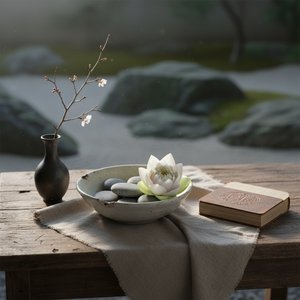
In a world often defined by relentless motion and clamor, the pursuit of tranquility feels less like a luxury and more like a fundamental human need. For centuries, artists have sought to capture this elusive state – not merely as an absence of noise, but as a positive force, a source of renewal, and a pathway to deeper understanding. This collection of ten artworks represents a journey through that exploration, spanning diverse cultures and eras, yet united by a common thread: the evocation of peace.
The concept of tranquility, while universal, has been understood and expressed in myriad ways throughout history. In Eastern traditions – particularly within Zen Buddhism and Taoism – it’s often linked to harmony with nature, meditative stillness, and the acceptance of impermanence. Landscapes became not just representations of places, but invitations to contemplation. Conversely, Western art frequently sought tranquility through idealized forms, religious devotion, or depictions of pastoral life, offering an escape from the complexities of the world. From the serene gardens painted by Chinese masters to the quiet intimacy of Dutch interiors, these works reflect a deep-seated desire for respite and balance.
What makes these artworks endure is their ability to transcend specific historical contexts and speak directly to our own experiences. They remind us that tranquility isn’t necessarily found in grand gestures or dramatic events, but often resides in the subtle details of everyday life – a gentle light filtering through leaves, the quiet companionship of loved ones, or the vastness of an open sky. They offer visual sanctuaries, spaces where we can pause, breathe, and reconnect with ourselves.
Over the following pages, we will delve into ten exceptional pieces that embody this theme. Each artwork has been chosen not only for its aesthetic beauty but also for its power to inspire a sense of calm, reflection, and – ultimately – tranquility within the viewer. Prepare to be transported to worlds where stillness reigns, and inner peace feels attainable.
Lady Standing at a Virginal (Detail) - Johannes Vermeer
 Lady Standing at a Virginal (Detail) - Johannes Vermeer
A hush descends with Johannes Vermeer’s ‘Lady Standing at a Virginal (Detail)’ – a moment suspended, bathed in the soft glow of Delft light.
Immortalized among our Top 10 artworks for its profound tranquility, this painting isn't merely a depiction of domestic life; it’s an embodiment of inner peace. Completed around 1670, Vermeer masterfully captures a woman lost in the quietude of music, her posture radiating grace and contemplation. The scene is remarkably balanced – a symphony of blues, yellows, and creams that soothe the eye and calm the spirit.
Vermeer’s genius lies in his ability to transform the ordinary into the extraordinary. Notice the delicate textures of the woman's velvet gown, the polished sheen of the virginal, and the subtle play of light on the Delftware tiles. These details aren’t accidental; they create a sense of intimacy and realism that draws us into the painting’s world.
Today, ‘Lady Standing at a Virginal’ continues to resonate with viewers seeking respite from the chaos of modern life. Its harmonious composition and serene atmosphere make it an ideal addition to any space – a visual reminder to slow down, appreciate beauty, and find stillness within. The painting's enduring appeal speaks to our universal longing for tranquility, offering a timeless sanctuary in a world that often feels overwhelming.
View of Auvers - Paul Cézanne
 View of Auvers - Paul Cézanne
A gentle stillness permeates Paul Cézanne’s ‘View of Auvers,’ a landscape not simply *seen*, but felt – a quiet resonance of the French countryside.
Included among our Top 10 artworks for its unique tranquility, this 1873 painting marks a pivotal moment in Cézanne's artistic evolution. He wasn’t striving to replicate reality, but to capture the underlying structure and emotional essence of Auvers-sur-Oise. The scene unfolds with a deliberate calmness; houses are rendered as geometric volumes, hills roll with subtle energy, and the sky breathes with layered blues and whites.
Cézanne’s technique – his ‘separating planes’ – creates an almost meditative quality. Short, broken brushstrokes build up texture and light, inviting us to linger in the scene and perceive its nuances. The muted tones and simplified forms evoke a sense of harmony and balance, far removed from the fleeting impressions of Impressionism.
Today, ‘View of Auvers’ offers a powerful antidote to modern life's frenetic pace. Its understated beauty and contemplative atmosphere make it an ideal focal point for spaces seeking serenity. The painting reminds us that tranquility can be found in simplicity – in the gentle curves of the landscape, the play of light on stone, and the quietude of nature itself. It’s a timeless invitation to pause, breathe, and reconnect with the world around us.
Flatford Mill from the lock - John Constable
 Flatford Mill from the lock - John Constable
A gentle breeze whispers across the water in John Constable’s ‘Flatford Mill from the Lock,’ a scene so intimately rendered it feels like stepping into a cherished memory.
This 1812 painting, one of our Top 10 artworks exploring tranquility, isn't merely a depiction of rural England; it’s an invitation to experience Constable’s beloved “country.” He believed true art lay in the familiar landscapes that stirred within him deep emotion, and ‘Flatford Mill’ embodies this philosophy perfectly.
Notice the soft, diffused light casting a tranquil atmosphere over the scene. The river guides your eye through the composition – past working buildings, figures engaged in daily life, and the subtle textures of thatched roofs. Constable's loose brushwork isn’t about precise replication; it’s about capturing an *impression* of the landscape, conveying its emotional resonance through color and texture.
Today, ‘Flatford Mill from the Lock’ offers a powerful sense of calm in our often-frenetic world. Its understated beauty and authentic portrayal of rural life make it an ideal addition to any space seeking serenity. It reminds us that tranquility isn't found in grand gestures but in the quiet rhythms of nature – a timeless invitation to pause, breathe, and reconnect with the simple joys of life.
Relaxing in the Garden, Argenteuil - Claude Monet
 Relaxing in the Garden, Argenteuil - Claude Monet
Bathed in the golden hues of a late afternoon sun, Claude Monet’s ‘Relaxing in the Garden, Argenteuil’ captures not just a scene, but a feeling – a fleeting moment of peace and contentment.
Included among our Top 10 artworks for its revolutionary approach to Impressionism, this 1876 painting embodies Monet's mastery of light and color. Loose, feathery brushstrokes create a vibrant tapestry of shimmering reflections and dappled shade, inviting us into the tranquil haven of an Argenteuil garden.
Notice how the central figure – a woman lost in quiet contemplation – is framed by lush greenery and punctuated by birdsong. This deliberate composition draws the eye and creates a sense of harmonious balance. Monet wasn’t striving for photographic accuracy; he sought to capture his *impression* of the scene, prioritizing atmosphere and emotion above precise representation.
Today, ‘Relaxing in the Garden’ continues to inspire a longing for serenity. Its soft palette and evocative mood make it an ideal focal point for spaces seeking calm – a reminder that tranquility can be found in simple pleasures, bathed in the warmth of sunlight and the beauty of nature.
The Tall Poplar Trees II - Gustav Klimt
 The Tall Poplar Trees II - Gustav Klimt
A quiet melancholy hangs in the air of Gustav Klimt’s ‘The Tall Poplar Trees II,’ a landscape that speaks not just to the beauty of nature, but to the passage of time and the enduring power of memory.
Included among our Top 10 artworks for its unique blend of Impressionistic technique and Symbolist emotion, this 1900 painting reveals a quieter side of Klimt’s genius. While celebrated for his opulent portraits, ‘The Tall Poplar Trees II’ demonstrates his mastery of atmospheric landscapes – capturing fleeting moments of light and feeling with loose brushwork and subtle color variations.
Notice the towering cypress tree, its dark silhouette reaching towards an overcast sky. This verticality draws the eye upwards, creating a sense of aspiration and perhaps even wistfulness. The surrounding greenery and wildflowers ground the scene in earthly beauty, while the soft, diffused light evokes a feeling of tranquility.
At ArtsDot, we believe that art should be accessible to all. Our faithful reproductions of ‘The Tall Poplar Trees II’ preserve the emotion and texture of Klimt's original – allowing you to bring this timeless masterpiece into your home and experience its quiet beauty firsthand. It’s a reminder that tranquility can be found in the simplest of scenes, bathed in the soft light of nature.
Tannenwald (Pine Forest) - Gustav Klimt
 Tannenwald (Pine Forest) - Gustav Klimt
Unveiling a sanctuary of birch – Gustav Klimt’s ‘Tannenwald (Pine Forest)’ is a rare and captivating work that whispers of quietude and contemplation.
Though not definitively attributed as a primary Klimt piece, its stylistic hallmarks earn it a place among our Top 10 artworks exploring tranquility. The painting beautifully blends Impressionistic technique with Symbolist depth, creating an ethereal landscape that invites you to lose yourself within its depths.
Notice the multitude of slender tree trunks stretching upwards, their vertical lines creating a rhythmic pattern that draws the eye towards the soft light filtering through the canopy. The diffused colors – muted greens, browns, and golds – evoke a sense of peace and serenity. This isn’t simply *a* forest; it's a feeling – a mood evoked through visual poetry.
At ArtsDot, we understand the power of art to transform spaces. Our faithful reproductions of ‘Tannenwald (Pine Forest)’ preserve the emotion and texture of this captivating work – allowing you to bring its timeless beauty into your home and create a sanctuary of your own. It’s a reminder that tranquility can be found in the simplest of scenes, bathed in the soft light of nature.
The Patio of Port Lligat - Salvador Dalí
 The Patio of Port Lligat - Salvador Dalí
Step into a sun-drenched courtyard – Salvador Dalí’s ‘The Patio of Port Lligat’ offers not an escape *from* reality, but a reimagining of it, imbued with a quiet, surreal tranquility.
Included among our Top 10 artworks for its unique emotional resonance, this 1968 painting reveals Dalí's mastery of atmosphere and symbolism. The scene – a lush garden overflowing with roses and vines – is rendered with loose brushwork and vibrant colors, creating a dreamlike quality that invites contemplation.
Notice the intricate details: crumbling walls hinting at time’s passage, birds scattered throughout the foliage suggesting freedom, and the soft light filtering through the leaves. This isn't simply *a* garden; it’s a sanctuary – a space where reality and fantasy intertwine.
Today, ‘The Patio of Port Lligat’ continues to inspire a sense of peaceful wonder. Its rich colors and evocative imagery make it an ideal focal point for spaces seeking calm and creativity. It reminds us that tranquility can be found in unexpected places – within the beauty of decay, the freedom of imagination, and the quiet moments of contemplation.
Winter landscape - Caspar David Friedrich
 Winter landscape - Caspar David Friedrich
Caspar David Friedrich’s ‘Winter Landscape,’ painted in 1811, is more than a depiction of snow and ice; it's a frozen psalm – a profound meditation on nature’s power and the enduring search for spiritual solace.
Included among our Top 10 artworks exploring tranquility, this iconic painting embodies the core tenets of German Romanticism. Notice the solitary figure standing before a vast, snow-laden landscape—a humble supplicant before the immensity of nature. The distant Gothic church and castles hint at humanity’s aspirations set against the timelessness of the wilderness.
Friedrich's masterful technique – delicate layering of thin washes and subtle use of smalt – creates an ethereal quality, mimicking the dissolving textures of melting snow and shifting light. The monochromatic palette reinforces a feeling of isolation, yet hints of warmth suggest enduring life beneath the frozen surface.
Today, ‘Winter Landscape’ invites us to contemplate our place within the natural world. Its quiet majesty and profound stillness make it an ideal focal point for spaces seeking calm – a timeless reminder that tranquility can be found in solitude, resilience, and the beauty of simplicity.
Three women at a fountain - Pablo Picasso
 Three women at a fountain - Pablo Picasso
Unveiling a moment of serene companionship – Pablo Picasso’s ‘Three Women at a Fountain’ is a captivating work that reveals a lesser-known facet of the artist's genius.
Included among our Top 10 artworks exploring tranquility, this 1921 painting showcases Picasso’s foray into Naive Art, offering a refreshing departure from his more angular Cubist explorations. Notice the simplified forms and bold colors – a deliberate embrace of directness and emotional expression.
The scene depicts three women gathered around a fountain, their relaxed postures suggesting easy conversation and shared moments. Two playful dogs add to the atmosphere of casual intimacy. While seemingly straightforward, the painting evokes a sense of timeless peace—a reminder that tranquility can be found in simple social connections.
‘Three Women at a Fountain’ transcends mere depiction; it embodies a feeling – a quiet celebration of life and companionship. Its refined aesthetic and enduring charm make it an ideal addition to spaces seeking warmth, sophistication, and a touch of artistic legacy.
Lying female nude - Pablo Picasso
 Lying female nude - Pablo Picasso
A whisper of sun-warmed skin and shifting sands – Pablo Picasso’s ‘Lying Female Nude,’ painted in 1932, is a captivating work that reveals a deeply personal exploration of form and tranquility.
Included among our Top 10 artworks for its emotional intelligence and innovative spirit, this painting showcases Picasso’s mastery of the surrealist aesthetic. Notice the fluid lines and subtle gradations of color – a deliberate departure from his more angular Cubist explorations.
The reclining figure, seamlessly integrated into the landscape, exudes an aura of peaceful relaxation. The artist's signature style blends elements of Cubism with organic forms, creating a dynamic interplay between body and space. This isn’t simply *a* nude; it’s a meditation on femininity, sensuality, and the enduring power of the natural world.
‘Lying Female Nude’ transcends mere depiction; it embodies a feeling – a quiet celebration of life and form. Its refined aesthetic and timeless beauty make it an ideal addition to spaces seeking sophistication, warmth, and artistic legacy.
Conclusion
As the light fades on these ten windows into tranquility, we’re reminded that great art isn't merely a record of history—it’s a living presence. These paintings, born from moments of profound contemplation and skilled artistry, continue to move hearts, shape interiors, and inspire creativity centuries later.
Each brushstroke holds a story, each color whispers a feeling. To gaze upon these works is to connect with the human spirit across time—to share in the quiet majesty of Friedrich’s landscapes, the dreamlike serenity of Dalí’s gardens, and the intimate companionship captured by Picasso.
At ArtsDot.com, we believe that this connection should be accessible to all. Our skilled artists honor the soul and detail of these masterpieces through hand-painted reproductions—bringing their beauty into your home, allowing you to experience their transformative power firsthand. Explore our full collection and discover a piece that resonates with your own search for peace and inspiration.