


Teos järgib teie valikuid: , .
Kogumisobjekti kirjeldus
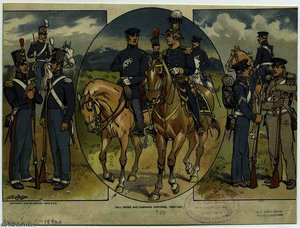
Explore William Heath’s ‘Royal Staff Corps,’ a lithograph depicting British soldiers in a formal military scene. Discover its historical illustration style & muted palette.
Kunstniku elulugu
William Heath (1795-1840) was a British artist known for his satirical caricatures, political cartoons & military scenes. Discover his prolific engravings and publications like 'Paul Pry' – a key figure in 19th-century social commentary.
 Loe lähemalt
Käsitsi valmistatud õlimaalireproduktsioon
Meie kunstnike poolt tellimusel valmistatud käsitsi maalitud õli-kainaste teos teie soovitud suuruses ja raamis. ( Lülita trükkitoodetele Lülita digitaalse pildi juurde)
Lisateavet selle maali kohta
 Eelvaade
 Saada
Saada Jaga
Jaga
 Teave teose kohta
 Juhend

 Laadi alla
 Sarnased teosed
 Röntgenuuring
 Slaidietendus
 KÜSIMUSED JA VASTUSID
 Statistika
Tellige oma maali neljas lihtsas sammus
Ärge kiirustage. Saate igal hetkel vastuseid muuta; tellimuskarril kuvatav hind muutub vastavalt tehtud valikutele.
1 Esimene samm neljast
Millist suurust soovite?
Need suurused säilitavad originaalteose proportsioonid. Joonis näitab teie valikut seina küljel, kaheMeetise diivani kohal.
Või sisesta oma mõõdud
Vali meie eelmääratud suurused, mis vastavad teose algupärastele proportsioonidele.

Sisestage vajalik laius ja kõrgus, et teos sobiks teie raamile või seinale. Kuna tegu on käsipainatud teosega, siis erineva kujuga suuruse korral võib kunstnik jätta pildi ümber veidi rohkem marginaali või lõigata osa ära — valik on teie. Enne maali alustamist saadame teile kinnitamiseks digitaalse näidisprojektsiooni. Sellel lehel näidatud pilt ei kajasta tegelikku tulemust — seda näitab ainult näidisprojektsioon.
2 Teine samm neljast
Kuidas see peaks valmistatud olema: rullitud, pingutatud või raamitud?
Alljadevad hinnad kehtivad esimeses sammus valitud suuruse kohta.
Vali pingutatud kanga servade stiil
Vali oma raam

Valge serv €1

häguse servaga lõppviimistlus €1

Laiendatud €1

P118B €10

P118H €10

P118W €10

P438Z €10

P508JH €12

P508YH €12

P805H €10

P805Z €10

P919BZ €10

P919G €10

P919XJ €10

P959ZH €10

P968JZ €12

W106C €8

W218G €10

W218JH €8

W218Y €10

W307PJ €10

W316G €10

W316PJ €8

W316Y €10

W398PJ €8

W4111J €10

W500HY €15

W500JH €15

W692G €12

W849H €8

W940BG €15

W953PJ €8

H24-GOLD €30

H24-SILVER €30

H36-GOLD €45

H36-SILVER €45
Raamitud
Kujund: . Kogumõõt koos raamiga: .
3 Kolmandas sammis neljast
Kas soovite maalis midagi muuta?
Enamik inimesi vastab ei. Kuna iga maali on käsitsi valmistatud, saab meie kunstnik seda ka teie soovidega kohandada.
Pärast tellimust saadetab ArtsDot.com meeskond klientile e-posti juhised ning esitab ette tasandatud eelvaate
4 Neljas samm neljast
Mõned lõppviimistlusvõimalused
Kõik need on valimiste korral vabatahtlikud. Juba valitud vastustele ei rakendu täiendav kulu.
Kes selle maalis?
Maailmline tarne 3–4 nädala jooksul tavalise 5 nädala asemel. (9 november). Kvaliteedis kompromisse ei tehta.
Nimetelis, nagu muuseumis?
Graveeritud pronksplaadi üksikasjad
This elegant plaque features the artist's name and the title of the artwork, finely engraved for a timeless presentation.
It is made from bronze with a refined, elegant finish. The text is precisely laser-engraved for a sharp and permanent result. Measuring 9x2 cm, the plaque is compact yet easy to read. It's built to be durable and scratch-resistant, offering a professional, museum-quality look. Mounting is simple thanks to the included adhesive backing.
Läbipaistva akrüülplaadi üksikasjad
The plaque includes essential engraved details such as the artist's name, the title of the artwork, the date it was created, the type of media used-like oil on canvas or watercolor-a brief description of the piece, and a QR code that links to the complete artwork information.
It is crafted from clear acrylic, offering a sleek, modern appearance. The text is UV-engraved in black to ensure strong visual contrast. With a size of 10x15 cm, it ensures optimal readability. It comes equipped with two metal hooks for secure wall mounting. The plaque is designed to be weather-resistant, making it suitable for various environments, and it includes interactive features that work seamlessly with smartphone scanning.
Musta akrüülplaadiรายละเอียด (Note: The user provided "Musta akrüülplaadi detailid" as the current translation and asked for an improved version. Since "Musta akrüülplaadi
This elegant plaque includes engraved information such as the artist's name, the title of the artwork, the date it was created, the type of media used (like oil on canvas or watercolor), a short description of the artwork, and a QR code for quick access to more information.
The plaque itself is made from refined black acrylic with a premium finish. The text is laser-engraved in white for high contrast and readability. Its size is 10x15 cm, designed to be easy to read. It comes with two metal hooks for professional mounting. The design is sleek and fits any interior style. It is also weather-resistant and durable, with built-in digital integration for mobile compatibility.
Kaitsev lakikih?
Millal te seda vajate?
✓ Kontrolli ja telli
Teie maalid vastavalt tellimusele

Royal staff corps
Reproduktsiooni tehnika
Reproduktsiooni suurus
-

Eelistatud tippkunstnik
Rohkem detaile, peenust ja lisatootmisaega
-

Reproduktsiooni raamivalikud
-
-
Kunstiteoste või reproduktsioonide puhul, mille üks külg on üle 105 cm (umbikmolt 41 tolli), saadetakse raam kirjal asendis, la Dismantlitud komplektina. See meetod tagab ohutuse kohaletoimetamisel ja väldib transpordil tekkivaid kahjustusi.
Vajalik professionaalne kokkupanek – see ei ole isetegevusega valmistamiseks mõeldud toode.
Komplekt tuleb kokku panna ja lõvet pingutada kogemusega professionaalse raamija, kasutades puiduliim (ei kuulu komplekti), lõvetpingi ja klempe, et hoida raami kande mustad õigena liimi kuivamisaja jooksul. Vale kokkupanek või ebaühtlane lõvetping võib kunstiteost püsivalt kahjustada ning seda
 Kunstiteoste või reproduktsioonide puhul, mille üks külg on üle 105 cm (umbikmolt 41 tolli), saadetakse raam kirjal asendis, la Dismantlitud komplektina. See meetod tagab ohutuse kohaletoimetamisel ja väldib transpordil tekkivaid kahjustusi.
Kaasatud on kõik tahked puidust liistud, täpselt lõigatud vastavaks suuruseks.
Kokku panemiseks kasutatakse lisatud kruvisid ning nurkade liimamiseks vajalikku puuliima, mida ei ole komplektis ja mida peab raamivalmistaja ise hankima.
Vajalik on kasutada professionaalseid tööriistu, mis ei kuulu komplekti: lõvetelapide pingist (pingutaja) ja klambreid, et hoida raami puidu nurgas õigena liimi kuivamisaja jooksul.
Oluline:
Nurgaliimamiseks on vaja puiduliim, liimimine peab toimuma klempide all kuni liim on täielikult kuivanud ning kokku monteeritud raami kanga pingutamiseks on vajalik kanga pingutustang. Kumbki neist ei kuulu komplekti. Palun veenduge enne selle suuruse tellimist, et teil on saadaval kogenud professionaalne raamistaja.

Nimesildikiri
-
-

Kaitsevärnitsus
Läikiv lakk (muudab värvid elavamaks ning kaitseb valgust ja niiskust eest)
-

Kohanda oma teost
Näiteid muudatuste kohta: Asenda nägu kliendi fotoga; Lisa lemmikloom (nt asenda kass koeraga); Lisa taustale peidetud sõnum; Muuda tausta maastikku või elemente.
-

Kiire tarne
Ülemaailmne tarne riiki 3–4 nädalaga tavalise 5 nädala asemel. (9 november). Kvaliteedis kompromisse ei tehta.
-
Kiirsaatmine
Ülemaailmne tarne () 5 nädala jooksul. (16 november).
Sisse kuuluv
Koguhind
€ 257
Klaasivalik on saadaval ainult kuni 110 cm suuruses teostes
Säli iga tellimusega
- Tasuta ekspresssaatmine üle maailma
- Kõrgekvaliteediline lina-kangas
- Täielik transpordikindlustus
- Tollimaksude tagastamise garantii
- Värvitoime täpsuse garantii
- 100 päeva tagastusõigus (ainult valmistusdefektide korral)
- 100% raha tagasi garantii
- Hulgusoodustus


Sarnased teosed




William Heath
1795 - 1840, United Kingdom
Kunstniku elulugu
The Shadowy Voice of Victorian Satire
William Heath (1795–1840) remains one of the most compelling, yet enigmatic, figures in the landscape of nineteenth-century British art. While his contemporaries often sought immortality through the sweeping grandeur of Romantic landscapes or the dignified stillness of aristocratic portraiture, Heath found his calling in the frantic, biting energy of the caricature. An artist who once described himself with humble precision as a “portrait & military painter,” he ultimately carved out a legacy defined by the sharp edge of social commentary and the intricate detail of the engraver’s needle. His work serves as a vivid, often irreverent, window into the soul of a Britain undergoing profound transformation—a nation caught between the rigid traditions of its past and the burgeoning, chaotic pulse of an industrial empire.
Born in Northumberland, England, Heath’s early life was shaped by a lineage of intellectual and professional stability; his father served as a solicitor and his grandfather as a clergyman. This foundation likely provided the observational discipline required for his later mastery of detail. His artistic journey was significantly molded by the influence of John Opie, a celebrated Romantic painter whose ability to infuse rural scenes with deep emotion left an indelible mark on Heath’s developing style. From Opie, Heath inherited a command of realism and a sensitivity to tonal depth, qualities that were first prominently displayed in his early military watercolors. These works, such as those found in The Martial Achievements and The Wars of Wellington, showcased a fascination with the kinetic energy of battle and a technical prowess that commanded respect long before he turned his gaze toward the satirical.
The Art of the Caricature and the Paul Pry Phenomenon
As the nineteenth century progressed, Heath’s focus shifted from the battlefield to the bustling streets and drawing rooms of London. It was during this period that he transitioned from a chronicler of military maneuvers to a master of social observation. His most enduring contribution to the visual culture of his era emerged through a brilliant collaboration with the playwright John Poole. Following the 1825 debut of the stage comedy Paul Pry, Heath began producing a series of engravings centered on the titular character—a figure defined by an insatiable, often intrusive, curiosity. Through these prints, Heath transformed a theatrical archetype into a powerful tool for satire, using the character of Pry to poke fun at the various strata of London society.
This era of his work was marked by a remarkable versatility in medium and message. Whether through lithographs or intricate engravings, Heath possessed an uncanny ability to distill complex social anxieties into instantly recognizable imagery. His talent for capturing the absurdities of contemporary life led him to adopt various personas, even publishing much of his most biting work under the pseudonym “Paul Pry” between 1827 and 1829. This period of prolific output allowed him to navigate the delicate boundaries of political cartooning, offering critiques that were as clever as they were unscrupulous. His ability to blend the fine lines of a trained painter with the wit of a satirist ensured that his work resonated deeply with a public hungry for both entertainment and social reflection.
Legacy and Historical Significance
Though his life was relatively short, ending in 1840, the impact of William Heath’s oeuvre continues to resonate within the study of British printmaking. He did not merely record history; he interpreted it through a lens of skepticism and humor. His work stands as a vital bridge between the classical traditions of the late eighteenth century and the more aggressive, populist political art that would define much of the Victorian era. To look upon a Heath engraving is to witness the tension of an age: the meticulousness of the old world clashing with the irreverent spirit of the new.
The historical significance of his contributions can be summarized through several key artistic pillars:
- Social Documentation: His prints provide an unparalleled visual record of the social hierarchies, domestic labors, and public follies of early Victorian England.
- Technical Mastery: He successfully merged the disciplined techniques of military painting with the expressive, fluid requirements of caricature and lithography.
- Cultural Influence: Through his association with popular theater and the use of pseudonyms, he helped pioneer a form of mass-media satire that influenced generations of cartoonists.
- The Satirical Lens: He elevated the caricature from mere mockery to a sophisticated form of social critique, capable of addressing both political upheaval and the nuances of everyday etiquette.
Today, the works of William Heath are cherished not only as artifacts of a bygone era but as masterclasses in the power of visual storytelling. His ability to find the profound within the ridiculous ensures that his voice, though once considered shadowy, remains strikingly clear in the annals of art history.
Sarnased artiklid

The Refined Aesthetic of Victorian Illustration: A Study in Narrative & Technique
Explore the captivating world of Victorian illustration! Discover Pre-Raphaelite influences, key artists like Rossetti & Stephens, and the era's rich narrative detail. A deep dive for art enthusiasts.

Arthur Rackham: A Master of British Illustration & the Enchanted Realm of Fairy Tales
Explore the enchanting world of Arthur Rackham (1867-1939), a leading figure in British Golden Age illustration. Discover his iconic fairy tale art, classic book illustrations & lasting legacy. Learn more at ArtsDot.
Top 10 Lithographs That Revolutionized Art | ArtsDot
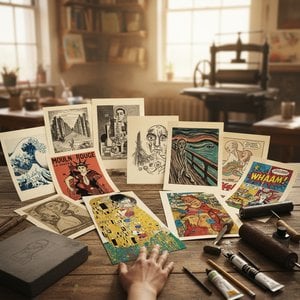
Explore 10 legendary lithographs by Toulouse-Lautrec, Munch & Picasso that redefined art! Discover the stories behind these iconic prints and find museum-quality reproductions for your home decor at ArtsDot.com. Explore the full collection online.