


 Eelvaade
 Saada
Saada Jaga
Jaga
 Teave teose kohta

 Laadi alla
 Sarnased teosed
 Röntgenuuring
 Slaidietendus
 Statistika
Distant Thoughts

 Loe lähemalt
Käsitsi valmistatud õlimaalireproduktsioon
Meie kunstnike poolt tellimusel valmistatud käsitsi maalitud õli-kainaste teos teie soovitud suuruses ja raamis. ( Lülita trükkitoodetele Ülemineks digitaalse pildiga müügi kanalisse)




P118B $10

P118H $10

P118W $10

P438Z $10

P508JH $12

P508YH $12

P805H $10

P805Z $10

P919BZ $10

P919G $10

P919XJ $10

P959ZH $10

P968JZ $12

W106C $8

W218G $10

W218JH $8

W218Y $10

W307PJ $10

W316G $10

W316PJ $8

W316Y $10

W398PJ $8

W4111J $10

W500HY $15

W500JH $15

W692G $12

W849H $8

W940BG $15

W953PJ $8




Vali meie eelmääratud suurused, mis vastavad teose algupärastele proportsioonidele.

Sa võite sisestada oma mõõtmed konkreetse raami või ruumi sobivuse tagamiseks. Kui teie valitud suurus ei vasta originaalpildi proportsioonidele, siis kärvime kunstiteost või laiendame maali täiendavate käsitsi maalitud elementidega. Enne tootmise algust saadetakse teile heakskiitmiseks digitaalne eelvaade.
Palun pidage meeles, et ekraanil kuvatav eelvaade ei kajasta tegelikku kärpimist või laiendamist. Ainult eelvaade näitab täpselt lõplikku kompositsiooni.
Kuigi on saadaval kohandatud suurused, soovitame originaalproportsioonide säilimiseks valida mõõdud eelmääratletud nimekirjast.
Pärast tellimust saadab ArtsDot.com meeskond kliendile e-posti juhised ning esitab eelvaate kavandi.
Maailmline tarne 3–4 nädala jooksul tavalise 5 nädala asemel. (10 september). Kvaliteedis kompromisse ei tehta.

Tasuta ekspresssaatmine üle maailma

Kõrgekvaliteediline linakangas

Täielik transpordikindlustus

Tollimaksude tagastamise garantii

Värvitoime täpsuse garantii

100 päeva tagastusõigus (ainult tootmisdefektide korral)

100% raha tagasi garantii

Hulgusoodustus
 Klaasivalik on saadaval ainult suuruses kuni 110 cm

Distant Thoughts
Reproduktsiooni tehnika
Reproduktsiooni suurus
-


Kogusumma
$ 263
Sarnased teosed


Kunstniku elulugu
A Cornish Voice in Victorian Realism
Walter Langley (1852–1922) stands as a pivotal figure within the Newlyn School of plein air painters, representing a significant strand of British art history at the turn of the century. Born in Birmingham, his upbringing instilled in him a deep connection to the working class—a formative influence that would permeate his artistic vision and profoundly shape his depictions of Cornish life. His father was a journeyman tailor, providing Langley with an early understanding of craftsmanship and manual labor, values he carried throughout his life and subsequently translated into his paintings. This foundational respect for the dignity of toil became the heartbeat of his creative output.
At fifteen, Langley embarked on an apprenticeship with a lithographer, honing skills crucial for capturing detail and texture—skills that would prove invaluable in his later watercolor renderings. By twenty-one, he secured a scholarship to South Kensington Art School, where he studied designing alongside fellow artists like Frederic Leighton, absorbing the stylistic conventions of academic art while simultaneously nurturing his burgeoning artistic sensibilities. This dual exposure fostered a distinctive blend of technical proficiency and imaginative exploration, allowing him to bridge the gap between formal training and raw, observational truth.
The Soul of Newlyn
Langley’s artistic breakthrough arrived in 1881 when he was awarded £500 for a year's work by Mr. Thrupp, a Birmingham photographer—a generous patronage that enabled him to relocate his family to Newlyn, Cornwall. This move cemented Langley’s commitment to documenting the daily lives of Cornish fishermen and their families, establishing him as one of the earliest artists to settle in this burgeoning artistic community. His decision to prioritize painting over photography reflects a dedication to capturing the essence of human experience through visual art rather than photographic reproduction.
As a consummate watercolorist, Langley possessed an unsurpassed ability to capture the human form and the subtle nuances of light within the medium. His work often moved beyond mere landscape, focusing instead on the intimate domesticity and the quiet struggles of the coastal inhabitants. Whether through the muted tones of In The Firelight or the poignant narratives found in The Letter, his brushwork conveyed a profound empathy for his subjects. He was not merely an observer of the Newlyn coast; he was its chronicler, weaving the social fabric of the fishing village into every wash of color.
Social Realism and Lasting Legacy
Politically aligned with socialist ideals—particularly supporting Charles Bradlaugh, a radical politician—Langley’s work consistently championed social realism. He skillfully portrayed the hardships and the quiet resilience of the working class, making his art a vehicle for social observation. This commitment to truth earned him international recognition; notably, the great writer Leo Tolstoy cited Langley's work as an exemplary instance of good, meaningful art. His paintings did not seek to embellish poverty but to honor the humanity within it.
The historical significance of Walter Langley lies in his role as a founder of the artistic community at Newlyn and his ability to elevate the mundane struggles of rural life to the level of high art. His legacy is defined by several key contributions:
- Pioneering Social Realism: He brought a political and empathetic depth to the Newlyn School, moving beyond pure aesthetics to address the human condition.
- Mastery of Watercolor: He is remembered as one of the finest watercolorists the United Kingdom has ever produced, particularly for his ability to render texture and emotion in a delicate medium.
- Cultural Documentation: His oeuvre serves as a vital visual record of the Cornish fishing industry and the social structures of late Victorian and Edwardian Britain.
Through his dedication to en plein air painting and his unwavering focus on the dignity of labor, Walter Langley ensured that the voices of the Cornish fisherfolk would resonate far beyond the shores of Newlyn, leaving an indelible mark on the landscape of British Realism.

Walter Langley
1852 - 1922 , United Kingdom
Lühikesed faktid
- Artistic Movement Or Style: Newlyn School, Plein Air Painting
- Artists Or Movements Influenced By This Artist: ['Tolstoy']
- Artists Who Influenced This Artist: ['Charles Kingsley']
- Date Of Birth: 1852 Birmingham UK
- Date Of Death: 1922
- Full Name: Walter Langley
- Nationality: British
- Notable Artworks:
- Men Must Work and Women Must Weep
- Between the Tides
- Place Of Birth: Birmingham UK
Seotud artiklid

James Abbott McNeill Whistler: 25 meistriteost kunstikollektsioonis | ArtsDot.com
Avastage James Abbott McNeill Whistler'i 25 võrratut meistriteost! Sukelduge esteetilisse kunstimaailma, õppige tema maalitehnikatest ja leidke täiuslik seina kaunistus ArtsDot.com-ist. Kunstikollektsioonid & reprodutsioonid.
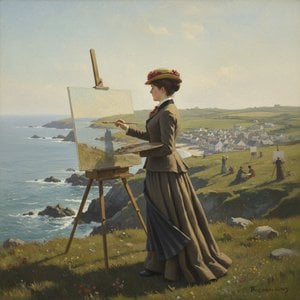
Elizabeth Adela Forbes: A Pioneering Impressionist of the Newlyn School
Explore the life & art of Elizabeth Adela Forbes, a pioneering Impressionist of the Newlyn School. Discover her captivating paintings, unique style, and lasting legacy with ArtsDot.
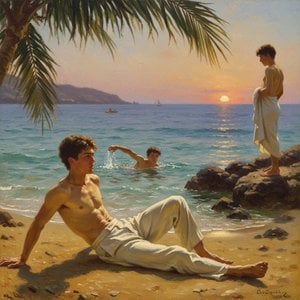
Henry Scott Tuke: Sunlit Masculinity & the Pastoral Ideal in Victorian Painting
Explore the captivating world of Henry Scott Tuke's paintings – a master of British Impressionism renowned for his intimate depictions of youth and sunlit maritime scenes. Discover his legacy & aesthetic influence.
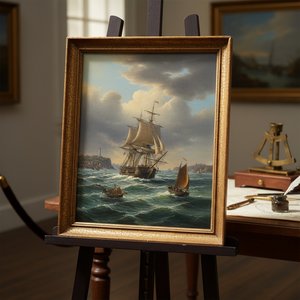
Samuel Walters: Capturing Victorian Maritime Life with Precision & Artistry
Explore the exquisite maritime paintings of Samuel Walters (1811-1882). Discover his mastery of detail, historical scenes & influence on Victorian art. Learn about collecting his works and find high-quality reproductions at ArtsDot.

Walter Greaves: A Study in Victorian Realism & the Social Landscape of British Art
Explore the life & work of Walter Greaves, a key Victorian realist painter influenced by Whistler. Discover his London streetscapes, portraits, and enduring legacy. Learn about art appraisal & reproduction options at ArtsDot.