

 Eelvaade
 Saada
Saada Jaga
Jaga
 Teave teose kohta
 Juhend

 Laadi alla
 Sarnased teosed
 Röntgenuuring
 Slaidietendus
 KÜSIMUSED JA VASTUSID
 Statistika
Suzanne

- 47.0 x 62.0 cm

 Loe lähemalt
Sellel lehel kuvatav kunstiteos on kaitstud autoriõigusega, mis tähendab, et meil ei ole seaduslikku õigust luua või müüa identset reproduktsiooni. Seda kaitset rakendatakse rahvusvaheliste kokkulepete alusel, nagu näiteks Berne konventsioon ning riiklike seadustega, sealhulgas nendega, mida on sätestatud USA autoriõiguse seadus – 17. peatükk.
See meetod järgib täielikult autoriõiguse reegleid, kuna see ei põhine kaitstud kunstiteose kopeerimisel või dupliteerimisel. Selle asemel on tegu loova reinterpreetatsiooniga – uue maaldisega, mis on algteosest inspireeritud, kuid ei ole sellest identiline.
Giclée / Kunstiprint
Muuseumikvaliteediga giclée- või kangasprint kiire tootmisega ja paindlikud viimistlusvõimalused. ( Osta käsitsi maalatud teos Lülita digitaalse pildi juurde)




P118B €10

P118H €10

P118W €10

P438Z €10

P508JH €12

P508YH €12

P805H €10

P805Z €10

P919BZ €10

P919G €10

P919XJ €10

P959ZH €10

P968JZ €12

W106C €8

W218G €10

W218JH €8

W218Y €10

W307PJ €10

W316G €10

W316PJ €8

W316Y €10

W398PJ €8

W4111J €10

W500HY €15

W500JH €15

W692G €12

W849H €8

W940BG €15

W953PJ €8




Vali meie eelmääratud suurused, mis vastavad teose algupärastele proportsioonidele.

Sisestage vajalik laius ja kõrgus, et see sobiks teie raamile või seinale. Trükki saab ainult lõigata, seda ei saa kunagi pildist suuremaks teha, seega ka erineva mustega suurus kaotab osa pildist. Enne trükkimist saadame teile kinnitamiseks digitaalse näidisprojektsiooni. Sellel lehel näidatud pilt ei kujuta reaalset lõiget — seda näitab ainult näidisprojektsioon.
Ülemaailmne tarne () 2 nädala jooksul, tavalise 4/5 nädala asemel. (12 november)

Tasuta ekspresssaatmine üle maailma

Kõrgekvaliteediline lina-kangas

Täielik transpordikindlustus

Tollimaksude tagastamise garantii

Värvitoime täpsuse garantii

100 päeva tagastusõigus (ainult valmistusdefektide korral)

100% raha tagasi garantii

Hulgusoodustus
 Klaasivalik on saadaval ainult kuni 110 cm suuruses teostes

Suzanne
Giclée / Kunstiprint
Reproduktsiooni suurus
-


Koguhind
€ 56
Sarnased teosed


Kunstniku elulugu
Vytautas Kasiulis: A Painter of Parisian Dreams
Born in the small Lithuanian village of Simnas in 1918, Vytautas Kasiulis’s life was irrevocably shaped by both his artistic talent and the tumultuous events of the 20th century. His early years were steeped in the traditions of his family – his father, Matas Kasiulis, was a renowned painter and designer – fostering within him an innate appreciation for visual expression. He began his formal artistic education at the Kaunas School of Art in 1939, laying the groundwork for a career that would ultimately lead him to the vibrant heart of Paris and establish him as a significant figure in the School of Paris.
Kasiulis’s early artistic journey was marked by consistent participation in group exhibitions throughout Lithuania. A pivotal moment arrived in 1943 with a solo exhibition at the Vytautas Magnus Museum of Culture in Kaunas, showcasing his emerging style and garnering considerable attention. This period also saw him exhibiting internationally – in Kiel, Bad Siegelberg, Hamburg, and Fribourg – demonstrating an early ambition to establish himself on the European art scene. The outbreak of World War II dramatically altered his trajectory, forcing a relocation to Austria and Germany where he found work as a night watchman while secretly pursuing his artistic passions.
The Expressionist Palette: Style and Technique
Kasiulis’s artistic style is most readily defined by its powerful expressionism. He wasn't simply depicting scenes; he was conveying emotions, anxieties, and the subjective experience of the world through a distinctive visual language. His paintings are characterized by bold brushstrokes – often thick and impastoed – and a remarkably vibrant color palette, frequently employing intense reds, blues, and yellows to create a sense of heightened intensity. This approach wasn’t arbitrary; it reflected a deep engagement with the emotional core of his subjects.
Influenced by the works of masters like Edvard Munch (particularly *The Scream*) and Vincent van Gogh, Kasiulis skillfully blended these influences with elements of early Renaissance art – a subtle nod to humanism, realism, and perspective. However, he deliberately pushed beyond mere imitation, injecting his own unique sensibility into every piece. His technique involved layering colors and applying paint in a manner that suggested movement and spontaneity, as if capturing fleeting moments of feeling rather than static representations.
Parisian Roots: A New Artistic Identity
In 1948, Kasiulis embarked on a transformative journey to Paris, a city renowned for its artistic ferment. His arrival marked the beginning of a new chapter in his career and allowed him to fully immerse himself within the Parisian art community. His first exhibition at Raymond Duncan’s gallery in 1949 was met with immediate success, selling all twenty-three paintings on display – a testament to the resonance of his work with a discerning audience.
Throughout the 1950s and beyond, Kasiulis continued to exhibit both in France and internationally, establishing himself as a respected voice within the School of Paris. He embraced new influences, experimenting with abstraction while retaining the core tenets of his expressionist style. His later works often focused on everyday Parisian scenes – streetscapes, café life, and portraits of ordinary people – imbued with a dreamlike quality and a subtle melancholy. He skillfully captured the atmosphere of the city, transforming mundane subjects into evocative narratives.
Legacy and Remembrance
Vytautas Kasiulis’s legacy extends far beyond his own lifetime. His work continues to be celebrated in Lithuania, where he is remembered as one of the country's most important artists. The Vytautas Kasiulis Museum of Art, established in Vilnius in 2013, serves as a vital repository for his oeuvre and a testament to his enduring influence. His paintings are held in prestigious collections worldwide, reflecting their universal appeal and artistic merit.
Kasiulis’s art offers a poignant reflection on the experience of exile – the displacement caused by political upheaval and the struggle to maintain one's identity amidst unfamiliar surroundings. Yet, despite these challenges, he remained remarkably optimistic, as evidenced in his own words: “People are worrying too much. After all, what do we really need? A room, a bed and one square meal a day. There is still plenty of sunshine around.” His paintings, filled with warmth, humor, and a touch of melancholy, continue to resonate with viewers today, inviting us to contemplate the beauty and complexity of the human condition.

Vytautas Kasiulis
1918 - 1995 , Lithuania
Lühikest infot
- Full Name: Vytautas Kasiulis
- Nationality: Lithuanian
- Date Of Birth: 1918
- Date Of Death: 1995
- Place Of Birth: Siauliai, Lithuania
- Notable Artworks:
- Suzanne
- Artist and his model
- Artistic Movement Or Style: Expressionism, School of Paris
- Artists Who Influenced This Artist:
- Munch
- Van Gogh
- Artists Or Movements Influenced By This Artist: ['Renaissance art']
Sarnased artiklid

The Enduring Power of Painting: A Historical & Contemporary Exploration of Form and Emotion
Explore the rich history & enduring techniques of oil painting with ArtsDot. Discover masterpieces, learn about art collecting, and find authentic handmade reproductions crafted by skilled artists.
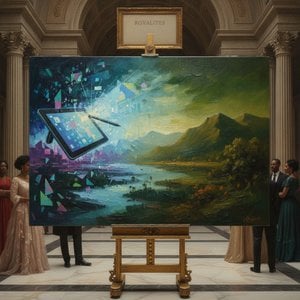
Käsitsi maalitud digipilt – unikaalne õlimaal, mis tõstab teie NFT-kogumise väärtust ja loob püsiva pärandi
Avastage ArtsDot'i käsitsi maalitud digipiltide maailm – premium kvaliteet, autentne kunsti kogemus ja usaldusväärne teenus. Tõstke NFT-kogumist väärtust ning looge püsiv pärand meie ekspertide juhendamisel.

The Enduring Legacy of Oil on Canvas: Technique, History & Aesthetic Impact
Explore the rich history & techniques of oil painting – from Renaissance masters to Impressionism. Discover pigments, layering methods, and why this timeless medium endures. Expert insights for artists & art enthusiasts.

Lõuendi püsivus ja väljendusvõime: Tehnika, ajalugu ja kaasaegne praktika
Avastage lõuendi püsivuse ja väljendusvõime saladused! Ajaloolised tehnikad, kaasaegsed lähenemised ja ekspertide nõuanded maalikunsti austajatele. Lugege nüüd!

Oil on Canvas: A Historical & Technical Exploration of a Timeless Artistic Medium
Explore the rich history & enduring techniques of oil painting on canvas. Discover the science behind its longevity, conservation practices, and contemporary relevance. Expert insights for art enthusiasts.