

 Eelvaade
 Saada
Saada Jaga
Jaga
 Teave teose kohta

 Laadi alla
 Sarnased teosed
 Röntgenuuring
 Slaidietendus
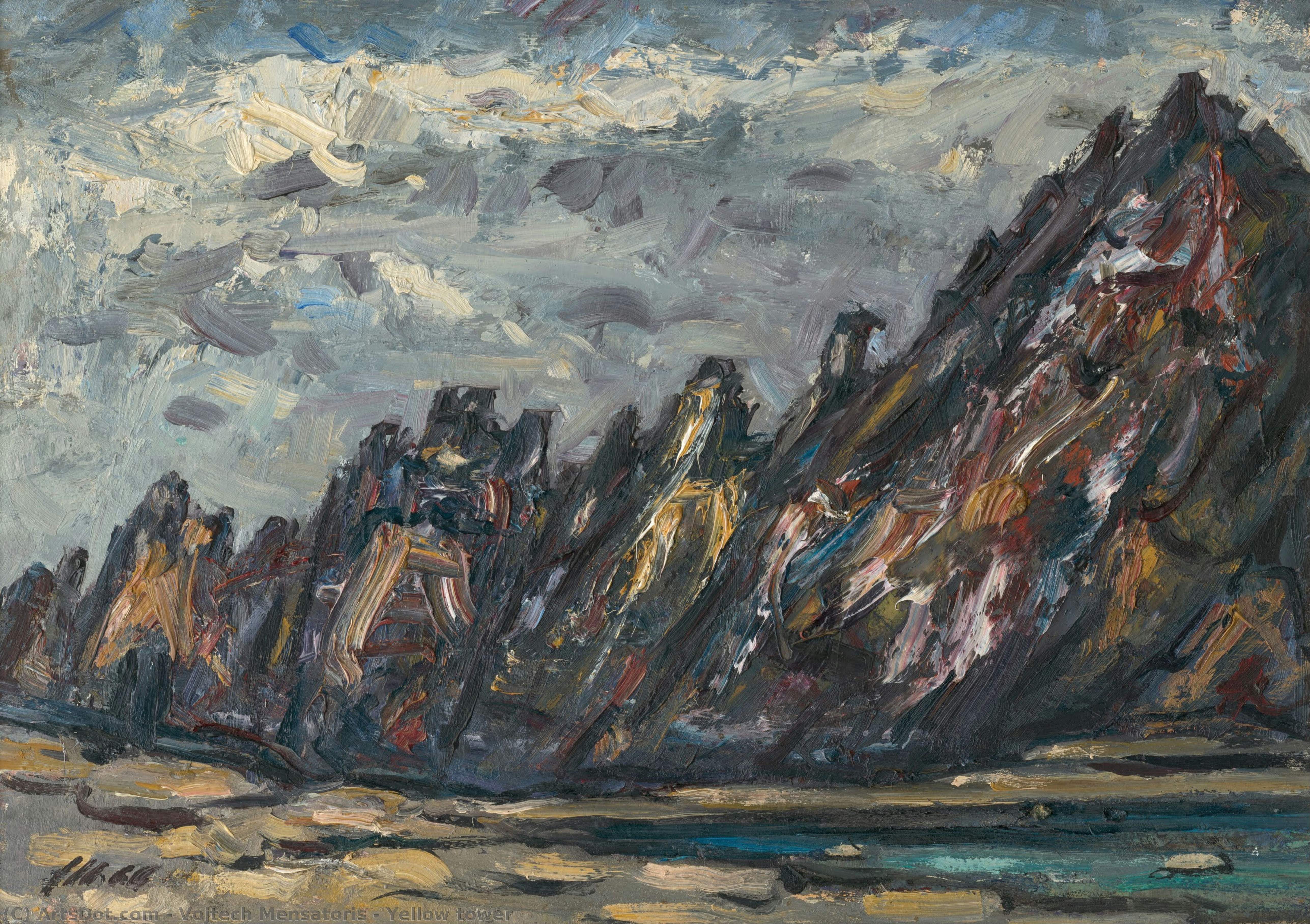
Yellow tower
 52.0 x 37.0 cm
 Tatra Gallery
 Loe lähemalt
Ostke kõrglahutusel ja täiustatud digitaalne pilt, mis on oluliselt parem kui veebilehel näidatud eelvaade.
Iga fail on meie spetsialistide poolt hoolikalt ette valmistatud, kasutades kaasaegseid tööriistu ja professionaalset käsitsi retušeerimist. Tagame, et igal pildil on erakordne selgus, täpne värvitäpsus ja peen detail.
Lõplik fail saadetakse e-posti teel 72 tunni jooksul, olles optimeeritud koheseks kasutamiseks professionaalsetes, toimetuslikes ja trüki keskkondades. See on sama kvaliteet, mida usaldavad tipptasemel disainistuudiod, kirjastused ja galeriid.
Digitaalne kunstiteos
Laadi alla kõrge resolutsiooniga fail isiklikuks vaatamiseks, trükkimiseks ja loomingulisteks projektideks. ( Lülita trükile Lülita käsitsi maalatud版本le)
Sisse kuulub iga digitaalse pildi tellimusega
Eksperdi digitaalne kohaletoimetamine, garanteeritud
Valides ArtsDot.com, ei saa sa lihtsalt pilti – saad professionaalselt parandatud digitaalse teose, mida on valmistatud täpsusega ja mis on toetatud rahuldamatusgarantiiga. Siin on kõik, mis sinu tellimusega automaatselt kaasneb:

Kiire digitaalne saatmine
Teie kõrge resolutsiooniga digitaalne pildifail saadetakse teile e-posti 72 tunni jooksul pärast tellimist – kohe kasutamiseks valmis.

Tehisintellektiga täiustatud digitaalne fail
Teie teos on professionaalselt optimeeritud arenenud tehisintellekti tööriistade ja käsitsi redigeerimise abil, tagades maksimaalse detailitaseme, selguse ja värvitäpsuse.

Tasuta eluaegne uuesti saatmine
Kas kustutasid faili kogukalu unustamisel või kustutamisel? Puudub mure – saad selle uuesti igal ajal ilma lisatasuta.

Puuduvad importimaksed – alati
Nautige oma teoseid koheselt ilma tolli-, maksude või tarnimaskuludeta – digiletchargused on alati maksuvabadud.

Värvitäpsuse garantii
Me tagame, et teie digitaalne pilt kajastaks originaali värve professionaalsete tööriistade ja värvihalduse abil võimalikult täpselt.

60-päevane rahulolu garantii
Kui te ei ole oma digipildiga rahul, parandame seda või tagastame 100% summast 60 päeva jooksul – küsimusi ei esita.

100% raha tagastamise garantii
Ei ole rahul? Saate täielise tagastaja 60 päeva jooksul pärast digitaalse faili kättesaamist – küsimata.

Suurema tellimuse soodustused
Osta 3 pilti, säästa 10% - Osta 5, säästa 15% - Osta 10+, säästa 20%. Sobib suurepäraselt loomingulisteks projektideks, galeriideks ja agentuurideks.
Sarnased teosed


Kunstniku biograafia
Odilon Redon: A World of Dreams and Shadows
Born Bertrand Redon in Bordeaux, France, in 1840, Odilon Redon’s life was a journey into the depths of his own imagination. Initially pursuing architecture, he found himself drawn to the evocative power of drawing and printmaking, techniques that would become the foundation for a uniquely unsettling and profoundly beautiful artistic vision. His early work, characterized by charcoal sketches and lithographs – often referred to as “noirs” – established a somber, almost nocturnal aesthetic, reflecting a fascination with darkness, memory, and the hidden realms of the subconscious. These early pieces weren’t merely depictions of reality; they were explorations of inner landscapes, hinting at the symbolic world that would soon dominate his oeuvre.
Redon's artistic trajectory took a dramatic turn in the 1880s, fueled by encounters with the burgeoning Symbolist movement and the influence of writers like Joris-Karl Huysmans. He began experimenting with pastel and oil paints, abandoning his previous monochrome style to embrace vibrant colors and dreamlike imagery. This shift coincided with a growing interest in Japanese art – its flattened perspectives, symbolic motifs, and emphasis on suggestion rather than detailed representation – which profoundly impacted his approach to composition and subject matter. Redon’s work began to incorporate elements of fantasy, mythology, and folklore, creating a world populated by strange creatures, solitary figures, and haunting landscapes.
The late 1890s witnessed the flowering of Redon's most iconic works. He developed a distinctive style characterized by elongated forms, distorted perspectives, and an unsettling blend of realism and abstraction. His paintings often depicted solitary figures – frequently women or children – immersed in introspective contemplation within shadowy interiors. These scenes were imbued with a sense of melancholy, mystery, and psychological depth. Redon’s use of color was particularly striking: he favored muted tones—deep blues, purples, and greens—contrasted with bursts of vibrant reds and yellows, creating a dramatic interplay of light and shadow that heightened the emotional intensity of his compositions. His work anticipated the Surrealist movement by exploring the realm of dreams and the power of the unconscious mind.
Throughout his career, Redon remained largely outside the mainstream art world, often exhibiting in smaller galleries and private collections. Despite this relative obscurity during his lifetime, his influence on subsequent generations of artists—including Picasso, Matisse, and Miró—is undeniable. His exploration of symbolism, his mastery of printmaking techniques, and his willingness to delve into the darkest corners of the human psyche cemented his place as a pivotal figure in the history of modern art. Odilon Redon’s legacy lies not just in his individual works but also in the enduring power of his vision—a testament to the transformative potential of imagination and the beauty that can be found within shadows.
Thomas Eakins: Capturing the Essence of American Life
Born in Philadelphia, Pennsylvania, in 1844, Thomas Eakins was a remarkably unconventional artist who defied the conventions of his time. Initially enrolled at the Pennsylvania Academy of the Fine Arts, he quickly grew disillusioned with the rigid academic approach and sought out alternative learning experiences, including anatomy lectures at Jefferson Medical College and independent study of classical sculpture. This diverse education—combining artistic training with scientific observation—shaped Eakins’ unique style and subject matter.
Eakins's career was marked by a relentless pursuit of realism, but not in the traditional sense. He wasn’t interested in idealized representations or picturesque landscapes; instead, he focused on capturing the raw energy and immediacy of everyday life—particularly the world of athletes, laborers, and urban dwellers. His paintings often depicted scenes of rowing competitions, boxing matches, and street scenes, rendered with a remarkable level of detail and psychological insight. Eakins’s approach was revolutionary for its time, as it shifted the focus of American art from grand historical narratives to the depiction of ordinary people engaged in their daily activities.
Eakins's technical skill was exceptional, but his true genius lay in his ability to capture the essence of his subjects—their physicality, their emotions, and their relationships. He employed a direct approach, often working directly from life and eschewing preparatory sketches. His compositions were dynamic and asymmetrical, creating a sense of movement and spontaneity. His use of light and shadow was particularly masterful, contributing to the dramatic intensity of his scenes. Notably, Eakins’s work challenged prevailing notions about acceptable subjects for art, as he frequently depicted women in unconventional roles—as spectators at sporting events or as participants in everyday activities.
Despite achieving recognition during his lifetime, Eakins faced considerable opposition from the Philadelphia art establishment, who criticized his unorthodox methods and his depictions of ordinary people. His career was tragically cut short in 1916 when he was struck by a streetcar, leaving behind a body of work that continues to be celebrated for its realism, psychological depth, and profound insight into the American experience.
Georgia O’Keeffe: Visions of the Southwest
Born Georgia Totto O’Keeffe in 1887 in Independence, Missouri, Georgia O’Keeffe's artistic journey began with a rural upbringing on a family farm. Early exposure to the natural world—the vast prairies, the rolling hills, and the unique flora and fauna of the American Southwest—would profoundly influence her later work. Despite her father’s desire for her to pursue a career in teaching, O’Keeffe moved to New York City in 1905 to study art at the Art Institute of Chicago and the Art Students League in New York.
Her early artistic explorations were marked by experimentation with various styles—Impressionism, Post-Impressionism, and even Cubism—but it was her move to Santa Fe, New Mexico, in 1940 that truly transformed her art. The stark beauty of the landscape—the towering mesas, the vast canyons, and the delicate wildflowers—provided a source of endless inspiration. O’Keeffe began to paint large-scale abstractions of these Southwestern elements, focusing on their essential forms and colors rather than their realistic details.
O'Keeffe’s paintings are renowned for their bold color palettes, simplified shapes, and evocative sense of scale. She often depicted flowers—particularly the giant blossoms of the New Mexico desert—in close-up, transforming them into monumental subjects that demanded attention. Her work was frequently interpreted as a meditation on themes of femininity, solitude, and the relationship between nature and the human spirit. O’Keeffe's unique vision challenged conventional notions of beauty and representation, establishing her as one of the most important artists of the 20th century.
Throughout her long career, O’Keeffe remained largely independent and fiercely protective of her artistic autonomy. Her work continues to resonate with viewers today, offering a glimpse into the inner world of a visionary artist who transformed the landscape of American art.

vojtech mensatoris
1916 - 1986

