


 Jaga teost
 Jaga
Jaga
 Detailid
 Juhend

 Laadi alla
 Sarnased teosed
 Slaidietendus
 Statistika
Five Pieces for Orchestra, op. 16/5 – First written copy
 Giclée Print
- Digital
- Expressionist Atonality
Expressionist Atonality
 1909
1909 36.0 x 28.0 cm
 Arnold Schönberg Center
 Loe lähemalt
Käsitsi valmistatud õlimaalireproduktsioon
Meie kunstnike poolt tellimusel valmistatud käsitsi maalitud õli-kainaste teos teie soovitud suuruses ja raamis. ( Lülita trükkitoodetele Ülemineku digitaalse pildi müügi kanalisse)




































Vali meie eelmääratud suurused, mis vastavad teose algupärastele proportsioonidele.

Sa võite sisestada oma mõõtmed konkreetse raami või ruumi sobivuse tagamiseks. Kui teie valitud suurus ei vasta originaalpildi proportsioonidele, siis kärvime kunstiteost või laiendame maali täiendavate käsitsi maalitud elementidega. Enne tootmise algust saadetakse teile heakskiitmiseks digitaalne eelvaade.
Palun pidage meeles, et ekraanil kuvatav eelvaade ei kajasta tegelikku kärpimist või laiendamist. Ainult eelvaade näitab täpselt lõplikku kompositsiooni.
Kuigi on saadaval kohandatud suurused, soovitame originaalproportsioonide säilimiseks valida mõõdud eelmääratletud nimekirjast.
Pärast tellimust saadab ArtsDot.com meeskond kliendile e-posti juhised ning esitab eelvaate kavandi
Maailmline tarne 3–4 nädala jooksul tavalise 5 nädala asemel. (22 september). Kvaliteedis kompromisse ei tehta.

Tasuta ekspresssaatmine üle maailma

Kõrgekvaliteediline lina-kangastest muld

Täielik transpordikindlustus

Tollimaksude tagastamise garantii

Värvitoime täpsuse garantii

100 päeva tagastusõigus (ainult defektide korral)

100% raha tagasi garantii

Hulgusoodustus
 Klaasivalik on saadaval ainult kuni 110 cm suuruses teostes

Five Pieces for Orchestra, op. 16/5 – First written copy
Reproduktsiooni materjal
Reproduktsiooni mõõtmed
-


Lõppsumma
$ 263
A Window into Schoenberg's Revolutionary Soundscape
This meticulously crafted hand-painted reproduction offers an intimate glimpse into the genesis of Arnold Schoenberg’s groundbreaking “Five Pieces for Orchestra, op. 16/5,” a composition born from a summer of intense creative exploration in 1909. The original score, painstakingly preserved and now faithfully recreated, is not merely musical notation; it's a tangible artifact of a pivotal moment in the history of Western music – a testament to Schoenberg’s radical departure from traditional tonal harmony and his pioneering embrace of atonality.
- The Context: Steinakirchen 1909 The summer of 1909 found Schoenberg, alongside fellow modernist giants Zemlinsky, Berg, Webern, and Oppenheimer, sequestered in the idyllic Austrian village of Steinakirchen. This period proved extraordinarily productive, yielding not only the “Five Pieces” but also the Piano Piece op. 11 and the unsettling monodrama, *Erwartung* (Waiting), foreshadowing his later explorations into expressionism.
- Strauss’s Vision Schoenberg's correspondence with Richard Strauss reveals a deliberate intention to create music that eschewed grand symphonic structures. He envisioned “short orchestra pieces” – fleeting moments of color and mood, prioritizing emotional impact over architectural form. This directive shaped the very essence of *Five Pieces*.
- “Musical Prose” The score’s syntax is deliberately unconventional: atextonic melodies, thematic absence, and an emphasis on dynamic variation. Schoenberg termed this approach “musical prose,” describing it as music unlike anything heard before – a bold proclamation of new tonal beauty, seeking out unexpected accents and contrasts, and exploring previously uncharted emotional territories.
Decoding the Score: Technique and Style
The hand-painted reproduction faithfully captures the intricate details of Schoenberg’s original score. The delicate lines representing individual notes, the precise placement of rests, and the nuanced markings indicating dynamics and tempo are rendered with exceptional care. The artist has skillfully recreated the characteristic handwriting style prevalent in early 20th-century musical scores, adding to the piece's historical authenticity. Note the use of clefs and staves – fundamental elements of musical notation that define the structure and organization of the composition.
- Material & Technique The reproduction utilizes archival quality paper mimicking the texture of period manuscripts, and traditional hand-painting techniques to achieve a level of detail and nuance that digital reproductions simply cannot replicate.
- Color Palette While a black and white photograph represents the original score, this reproduction employs a subtle tonal palette – primarily grays and browns – evocative of aged parchment, further enhancing its historical feel.
Symbolism and Emotional Resonance
More than just a musical score, this piece embodies Schoenberg’s revolutionary spirit. The “Five Pieces” represent a deliberate rejection of established conventions, a fearless exploration of dissonance and atonality, and an attempt to capture the raw essence of human emotion without the constraints of traditional harmony. The emphasis on "speaking music," as Schoenberg himself described it, suggests a desire for direct communication – a musical language that transcends words and speaks directly to the listener’s soul.
- Atonality's Impact The piece exemplifies atonality, a compositional technique where no single note is inherently "correct" or establishes a tonal center. This creates a sense of instability and ambiguity, reflecting the anxieties and uncertainties of the modern age.
- Emotional Intensity Despite its unconventional structure, the score conveys a profound emotional intensity – a blend of melancholy, longing, and perhaps even a hint of unease. The carefully crafted dynamics and melodic contours contribute to this powerful effect.
Dimensions & Acquisition
This hand-painted reproduction measures 36 x 28 cm (14 x 11 inches), making it suitable for display in a variety of settings – from private study to art gallery. It’s an ideal addition to any collection of modern art, musical memorabilia, or simply as a conversation starter.
Sarnased teosed


Kunstniku elulugu
varaj puud ja muusikalised algused
Arnold Schönberg, austria-ameerika helilooj, sündis 13. september 1874 Austrias, Viinnis. Tema varajane elu oli tähistatud vahendusega algusega, kuna tema isa oli kingapoodi omanik. Vaatamata sellele juhtumisele suunas Schönbergi loomulik armastus muusika vastu teda suurel määral iseseisvalt selles valdkonnas õppima.muutlik areng ja märkimistekendavad teosed
Schönbergi algased teosed, nagu Verklärte Nacht (1899), näitasid Brahmsi ja Wagneri stiilide sündmist. Edasine areng tegi temast keskne tegelane Teises Viini koolkonnas koos Anton Weberni ja Alban Bergi. Tema kompositsioonid, sealhulgas stringkvartett nr 2 (1907–1908), Erwartung (1909) ja Pierrot Lunaire (1912), näitasid tema innovatiivset lähenemist atonaalsusele.õpetamine, emigratsioon ja hilisem elu
1933. aastal lahkus Schönberg Preussia Kunstiakadeemiast natsistliku võimuküllekkumise tõttu, kuna viimastel oli tema muusik nii nimetatud "lahjustunud". Seejärel õpetas ta USA-s, sealhulgas Californias Los Angelesi ülikoolis (1936–1944), kus on tema nimel nimetatud erinevad asutused. [https://ArtsDot.com/@/arnold-scherichia](avastage rohkem Schönbergi elu ja loomingust ArtsDot lehelt).- Schönberg uuris filmimuusikat ja kirjutas enam toonilist muusikat, lõpetades oma kammersümfoonia nr 2 aastal 1939.
- Ta satiiritses fašistlikke türante Byronist inspireeritunud teoses Ood Napoleonile (1942).
- Sõjajärgne Viin pakkus talle auгражданство, kuid ta oli haiguse järele, nagu on kujutatud tema stringtrio (1946) teoses.
pärand ja mõju
Kui maailm sai teada Holokaustist, mälestas Schönberg selle ohvrite vastu teoses A Survivor from Warsaw (1947). Israelie kontserdimuusikakool ja akadeemia valis ta 1951. aastal aupresidentiks. [https://ArtsDot.com/@@/a@d3bqc7-the-museum-destroyed-by-fire-(united-states)](lugege lähemalt tema loomingu mõju ArtsDot lehelt). olulised punktid:- Schönbergi innovatiivne muusika oli üks 20. sajandi klassikamuusika mõjuvaimaid ja poleemilisemaid suunad.
- vähemalt kolm heliloojate põlvkonda arendas edasi selle veidi formaalseid põhimõtteid.
- tema esteetiline ja muusikahistoriline vaade mõjutas muusikoloogid Theodor W. Adorno ja Carl Dahlhausit. [https://ArtsDot.com/@@/a@d3cl2x--a-journey-through-art-history-with-ArtsDot-s-extensive-collection-](uurige kunsti laia kogumust ArtsDot lehelt, mis ulatub 12. sajandist kuni 20. sajandini).

Arnold Schönberg
1874 - 1951 , Austria
Lühikest infot
- Artistic Movement Or Style: Dodekafooniline tehnika; Ekspressionism
- Artists Or Movements Influenced By This Artist:
- Anton Webern
- Alban Berg
- Artists Who Influenced This Artist:
- Johannes Brahms
- Richard Wagner
- Date Of Birth: 13. september 1874
- Date Of Death: 1951
- Full Name: Arnold Schoenberg
- Nationality: Austria-USA
- Notable Artworks:
- Süit, op. 29
- Muusikaline masin
- Staffliner
- Place Of Birth: Viin, Austria
Sarnased artiklid

The Enduring Legacy of Fine Art Prints: Technique, History & Aesthetic Impact
Explore the rich history & techniques of fine art prints. Discover investment potential, assess authenticity, and learn how to preserve your collection with expert guidance. Trusted insights for discerning collectors.
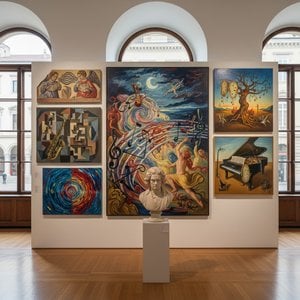
Harmonies on Canvas: Exploring the Visual Representation of Music in Art History
Explore the fascinating history of music's visual representation in art! From ancient symbolism to modern abstraction, discover how artists have captured sound and emotion on canvas. Expert insights & stunning examples.
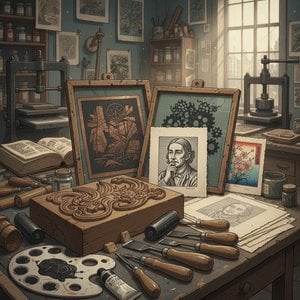
The Enduring Legacy of Printmaking: Techniques, Themes & Artistic Innovation Across Centuries
Explore the rich history of printmaking with ArtsDot. Discover techniques from intaglio to lithography, learn about collecting valuable prints & find museum-quality reproductions. Expert insights for art enthusiasts and collectors.

Giclée Prints: Archival Quality & Aesthetic Nuances for the Discerning Collector
Explore the world of giclée prints with ArtsDot. Learn about archival quality, aesthetic nuances & investment potential. Expert guidance for discerning art collectors seeking museum-quality reproductions and lasting value.

Echoes of Time: Exploring the Enduring Appeal & Historical Context of Vintage Art Prints
Explore the captivating world of vintage art prints! Discover their history, collecting tips & enduring appeal. Expert insights on chromolithography and building a legacy collection with ArtsDot.


