


The picture follows your choices: , .
Kogumisobjekti kirjeldus
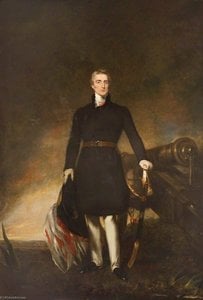
A formal portrait of Arthur Wellesley, Duke of Wellington by Robert Home. Explore this neoclassical masterpiece featuring chiaroscuro lighting & military regalia. #Wellington #PortraitArt
Kunstniku elulugu
Discover Robert Home (1826-1869), a British artist renowned for his evocative portraits of Indian life & figures. Explore his detailed works capturing 18th/19th century India.
 Loe lähemalt
Käsitsi valmistatud õlimaalireproduktsioon
Meie kunstnike poolt tellimusel valmistatud käsitsi maalitud õli-kainaste teos teie soovitud suuruses ja raamis. ( Lülita trükkitoodetele Lülita digitaalse pildi juurde)
More about this painting
 Eelvaade
 Saada
Saada Jaga
Jaga
 Teave teose kohta
 Juhend

 Laadi alla
 Sarnased teosed
 Röntgenuuring
 Slaidietendus
 Q&A
Q&A Statistika
Order your painting in four simple steps
Take your time. You can change any answer; the price in your order card follows each choice.
1 Step one of four
Which size would you like?
These sizes keep the proportions of the original painting. The drawing shows your choice on a wall, above a two-metre sofa.
Or give your own measurements
Vali meie eelmääratud suurused, mis vastavad teose algupärastele proportsioonidele.

Sisestage vajalik laius ja kõrgus, et teos sobiks teie raamile või seinale. Kuna tegu on käsipainatud teosega, siis erineva kujuga suuruse korral võib kunstnik jätta pildi ümber veidi rohkem marginaali või lõigata osa ära — valik on teie. Enne maali alustamist saadame teile kinnitamiseks digitaalse näidisprojektsiooni. Sellel lehel näidatud pilt ei kajasta tegelikku tulemust — seda näitab ainult näidisprojektsioon.
2 Step two of four
How should it be prepared: rolled, stretched or framed?
The prices below are for the size you chose in step one.
Choose the edges of the stretched canvas
Choose your frame

White €1

Blurside €1

Extended €1

P118B €10

P118H €10

P118W €10

P438Z €10

P508JH €12

P508YH €12

P805H €10

P805Z €10

P919BZ €10

P919G €10

P919XJ €10

P959ZH €10

P968JZ €12

W106C €8

W218G €10

W218JH €8

W218Y €10

W307PJ €10

W316G €10

W316PJ €8

W316Y €10

W398PJ €8

W4111J €10

W500HY €15

W500JH €15

W692G €12

W849H €8

W940BG €15

W953PJ €8

H24-GOLD €30

H24-SILVER €30

H36-GOLD €45

H36-SILVER €45
Raamitud
Moulding: . Overall size with the frame: .
3 Step three of four
Would you like anything changed in the painting?
Most people answer no. Because each painting is made by hand, our artist can also adapt it for you.
After order, ArtsDot.com team will email client for instructions and provide a mockup preview
4 Step four of four
A few finishing options
All of them are optional. The answers already selected cost nothing extra.
Who paints it?
Maailmline tarne 3–4 nädala jooksul tavalise 5 nädala asemel. (31 oktoober). Kvaliteedis kompromisse ei tehta.
A nameplate, as in a museum?
Graveeritud pronksplaadi üksikasjad
This elegant plaque features the artist's name and the title of the artwork, finely engraved for a timeless presentation.
It is made from bronze with a refined, elegant finish. The text is precisely laser-engraved for a sharp and permanent result. Measuring 9x2 cm, the plaque is compact yet easy to read. It's built to be durable and scratch-resistant, offering a professional, museum-quality look. Mounting is simple thanks to the included adhesive backing.
Läbipaistva akrüülplaadi üksikasjad
The plaque includes essential engraved details such as the artist's name, the title of the artwork, the date it was created, the type of media used-like oil on canvas or watercolor-a brief description of the piece, and a QR code that links to the complete artwork information.
It is crafted from clear acrylic, offering a sleek, modern appearance. The text is UV-engraved in black to ensure strong visual contrast. With a size of 10x15 cm, it ensures optimal readability. It comes equipped with two metal hooks for secure wall mounting. The plaque is designed to be weather-resistant, making it suitable for various environments, and it includes interactive features that work seamlessly with smartphone scanning.
Musta akrüülplaadiรายละเอียด (Note: The user provided "Musta akrüülplaadi detailid" as the current translation and asked for an improved version. Since "Musta akrüülplaadi
This elegant plaque includes engraved information such as the artist's name, the title of the artwork, the date it was created, the type of media used (like oil on canvas or watercolor), a short description of the artwork, and a QR code for quick access to more information.
The plaque itself is made from refined black acrylic with a premium finish. The text is laser-engraved in white for high contrast and readability. Its size is 10x15 cm, designed to be easy to read. It comes with two metal hooks for professional mounting. The design is sleek and fits any interior style. It is also weather-resistant and durable, with built-in digital integration for mobile compatibility.
A protective varnish?
When do you need it?
✓ Check and order
Your painting, as you ordered it

Arthur Wellesley
Reproduktsiooni tehnika
Reproduktsiooni suurus
-

Eelistatud tippkunstnik
Rohkem detaile, peenust ja lisatootmisaega
-

Reproduktsiooni raamivalikud
-
-
Kunstiteoste või reproduktsioonide puhul, mille üks külg on üle 105 cm (umbikmolt 41 tolli), saadetakse raam kirjal asendis, la Dismantlitud komplektina. See meetod tagab ohutuse kohaletoimetamisel ja väldib transpordil tekkivaid kahjustusi.
Vajalik professionaalne kokkupanek – see ei ole isetegevusega valmistamiseks mõeldud toode.
Komplekt tuleb kokku panna ja lõvet pingutada kogemusega professionaalse raamija, kasutades puiduliim (ei kuulu komplekti), lõvetpingi ja klempe, et hoida raami kande mustad õigena liimi kuivamisaja jooksul. Vale kokkupanek või ebaühtlane lõvetping võib kunstiteost püsivalt kahjustada ning seda
 Kunstiteoste või reproduktsioonide puhul, mille üks külg on üle 105 cm (umbikmolt 41 tolli), saadetakse raam kirjal asendis, la Dismantlitud komplektina. See meetod tagab ohutuse kohaletoimetamisel ja väldib transpordil tekkivaid kahjustusi.
Kaasatud on kõik tahked puidust liistud, täpselt lõigatud vastavaks suuruseks.
Kokku panemiseks kasutatakse lisatud kruvisid ning nurkade liimamiseks vajalikku puuliima, mida ei ole komplektis ja mida peab raamivalmistaja ise hankima.
Vajalik on kasutada professionaalseid tööriistu, mis ei kuulu komplekti: lõvetelapide pingist (pingutaja) ja klambreid, et hoida raami puidu nurgas õigena liimi kuivamisaja jooksul.
Oluline:
Nurgaliimamiseks on vaja puiduliim, liimimine peab toimuma klempide all kuni liim on täielikult kuivanud ning kokku monteeritud raami kanga pingutamiseks on vajalik kanga pingutustang. Kumbki neist ei kuulu komplekti. Palun veenduge enne selle suuruse tellimist, et teil on saadaval kogenud professionaalne raamistaja.

Nimesildikiri
-
-

Kaitsevärnitsus
Läikiv lakk (muudab värvid elavamaks ning kaitseb valgust ja niiskust eest)
-

Kohanda oma teost
Näiteid muudatuste kohta: Asenda nägu kliendi fotoga; Lisa lemmikloom (nt asenda kass koeraga); Lisa taustale peidetud sõnum; Muuda tausta maastikku või elemente.
-

Kiire tarne
Ülemaailmne tarne riiki 3–4 nädalaga tavalise 5 nädala asemel. (31 oktoober). Kvaliteedis kompromisse ei tehta.
-
Kiirsaatmine
Ülemaailmne tarne () 5 nädala jooksul. (7 november).
Sisse kuuluv
Koguhind
€ 234
Klaasivalik on saadaval ainult kuni 110 cm suuruses teostes
Included with every order
- Tasuta ekspresssaatmine üle maailma
- Kõrgekvaliteediline lina-kangas
- Täielik transpordikindlustus
- Tollimaksude tagastamise garantii
- Värvitoime täpsuse garantii
- 100 päeva tagastusõigus (ainult valmistusdefektide korral)
- 100% raha tagasi garantii
- Hulgusoodustus


Sarnased teosed




Robert Home
1826 - 1869, United Kingdom
Kunstniku elulugu
The Visionary Brush of Robert Home
In the grand tapestry of British art history, few threads are as vibrant or as culturally significant as those woven by Robert Home. A master of oil portraiture and a keen observer of the human condition, Home’s life was defined by a profound connection to the Indian subcontinent. While his roots were firmly planted in the traditions of London, his artistic soul found its true expression amidst the sweeping landscapes and diverse faces of India. His journey, which saw him traveling to the subcontinent as early as 1791, allowed him to transcend the boundaries of typical European portraiture, moving beyond mere likeness to capture the very essence of a colonial era in transition.
Home’s work serves as a luminous window into the late eighteenth and early nineteenth centuries. He was not merely a painter of people, but a chronicler of history. Through his meticulous use of oil on canvas, he documented everything from the dignified presence of high-ranking officials to the intimate, everyday moments of Indian life. His ability to blend the formal requirements of British portraiture with the exotic, breathtaking reality of the Indian landscape created a unique aesthetic language—one that combined the structured elegance of Neoclassicism with a burgeoning Romantic fascination for the distant and the unknown.
A Journey Through Light and Landscape
The development of Home’s style was inextricably linked to his travels. As he moved through the Indian subcontinent, his palette expanded to accommodate the intense light and rich textures of the region. His technique often involved a sophisticated command of glazing, applying translucent layers of pigment to achieve a depth of color that seemed to glow from within. This method was particularly effective in his depictions of flora and fauna, where he could render the subtle sheen of a leaf or the powerful musculature of an animal with startling anatomical accuracy.
Beyond the formal portraits of notable figures, Home’s oeuvre is celebrated for its historical and topographical significance. He possessed a rare talent for capturing "historic scenes," painting moments that felt both monumental and deeply personal. His landscapes were never mere backdrops; they were living, breathing entities that provided context to his subjects. Whether depicting the architectural grandeur of a courthouse in Kolkata or the serene beauty of a garden in Bhowanipore, Home’s brushwork conveyed a sense of atmosphere that invited the viewer to step directly into the scene.
Legacy and Artistic Significance
The enduring legacy of Robert Home lies in his ability to bridge two worlds. At a time when much of European art focused inward on the domestic and the classical, Home looked outward, bringing the sights, sounds, and spirits of India to the forefront of the British consciousness. His works are more than just beautiful objects; they are vital historical documents that offer insights into the social hierarchies, cultural intersections, and natural wonders of the period.
Today, collectors and historians look to Home’s paintings to understand the complexities of the era. His contributions can be summarized through several key artistic pillars:
- Cultural Documentation: His portraits provide an unparalleled visual record of the diverse individuals inhabiting the Indian subcontinent during the height of British influence.
- Technical Mastery: The use of light, texture, and glazing in his oil paintings set a standard for topographical and portrait art of his time.
- Narrative Depth: His ability to weave historical events into landscape and portraiture created a narrative power that remains captivating centuries later.
Though the era he depicted has long since passed, the vitality of Robert Home’s vision remains undiminished. Each stroke of his brush continues to pulse with the energy of a world caught in the beautiful, turbulent dance of history.
Sarnased artiklid

Édouard Manet: 25 meistriteost, mis muutis kunsti – ArtsDot.com kollektsioon
Avastage Édouard Maneti 25 ikoonilist maali! Impressionismi ja modernse kunsti meistriteosed – Le Déjeuner sur l'herbe, Olympia ja palju muud. Kvaliteetsed reproduktsioonid kodukaunistuseks ArtsDot.com-is. Vaadake kollektsiooni!

Iconic Art of the 18th & 19th Centuries: Masterpieces for Your Home | ArtsDot
Journey through 18th & 19th century art! Explore iconic masterpieces by Monet, Van Gogh & more. Discover the stories behind these timeless paintings and find museum-quality reproductions for your home at ArtsDot.com.

19th Century Masterpieces: 10 Paintings That Defined an Era | ArtsDot
Journey through 19th century art with ArtsDot! Explore 10 iconic paintings – from Monet & Renoir to Courbet – and discover the stories behind Romanticism, Realism & Impressionism. Find museum-quality reproductions for your home decor. Explore the full collection online!