


 Vaata sisu
 Jaga teost
 Jaga
Jaga
 Detailid
 Õppekate juhend

 Laadi alla
 Sarnased teosed
 Röntgenuuring
 Slaidietendus
 Statistika
Ümmargune sõjalaev
 Õlimaal kangaruumil
- Seinakunst
- Surrealist Minimalism
 1953
1953- Modernism
 38.0 x 46.0 cm
 Loe lähemalt
Sellel lehel kuvatav kunstiteos on kaitstud autoriõigusega, mis tähendab, et meil ei ole seaduslikku õigust luua või müüa identset reproduktsiooni. Seda kaitset rakendatakse rahvusvaheliste kokkulepete alusel, nagu näiteks Berne konventsioon ning riiklike seadustega, sealhulgas nendega, mida on sätestatud USA autoriõiguse seadus – 17. peatükk.
See meetod järgib täielikult autoriõiguse reegleid, kuna see ei põhine kaitstud kunstiteose kopeerimisel või dupliteerimisel. Selle asemel on tegu loova reinterpreetatsiooniga – uue maaldisega, mis on algteosest inspireeritud, kuid ei ole sellest identiline.
Giclée / Kunstiprint
Muuseumikvaliteediga giclée- või kangasprint kiire tootmisega ja paindlikud viimistlusvõimalused. ( Telli käsitsi maalitud reproduktsioon Ülemineku digitaalse pildi müügi kanalisse)




P118B €10

P118H €10

P118W €10

P438Z €10

P508JH €12

P508YH €12

P805H €10

P805Z €10

P919BZ €10

P919G €10

P919XJ €10

P959ZH €10

P968JZ €12

W106C €8

W218G €10

W218JH €8

W218Y €10

W307PJ €10

W316G €10

W316PJ €8

W316Y €10

W398PJ €8

W4111J €10

W500HY €15

W500JH €15

W692G €12

W849H €8

W940BG €15

W953PJ €8




Vali meie eelmääratud suurused, mis vastavad teose algupärastele proportsioonidele.

Saate sisestada oma mõõdud, et need sobiks konkreetse raami või ruumi sisse. Kui valitud suurus ei vasta originaalteose proportsioonidele, lõigame teose ära või laiendame pilti peegeldatud või ühtlase servaga. Enne tootmisprotsessi algust saadetakse Teie kinnitamiseks digitaalne näidis.
Palun märka, et ekraanil kuvatav eelvaade ei kajasta tegelikku lõigamist või laiendamist. Ainult näidis kujutab täpselt lõplikku kompositsiooni.
Kuigi erimõõdu on saadaval, soovitame originaaproportsioonide säilitamiseks valida mõõt ette määratud nimekirjast.
Ülemaailmne tarne () 2 nädala jooksul, tavalise 4/5 nädala asemel. (11 oktoober)

Tasuta ekspresssaatmine üle maailma

Kõrgekvaliteediline lina-kangastest muld

Täielik transpordikindlustus

Tollimaksude tagastamise garantii

Värvitoime täpsuse garantii

100 päeva tagastusõigus (ainult defektide korral)

100% raha tagasi garantii

Hulgusoodustus
 Klaasivalik on saadaval ainult kuni 110 cm suuruses teostes

Ümmargune sõjalaev
Giclée / Kunstiprint
Reproduktsiooni mõõtmed
-


Lõppsumma
€ 53
René Magritte’s “The Seduced” – A Symphony of Blue and Silent Mystery
René Magritte’s 1953 painting, “The Seduced,” isn't merely a seascape; it’s an invitation into the realm of subconscious thought. Situated against a turbulent expanse of azure sky and ocean, the artwork depicts a solitary three-masted sailing ship rendered almost entirely in shades of blue – indigo mingling with cerulean – creating an atmosphere thick with melancholy and contemplation.
- Style & Technique: Magritte deftly blends Surrealism with elements of naive art. The stylized depiction prioritizes emotional resonance over meticulous realism, utilizing bold outlines and simplified geometric forms to convey a dreamlike quality. Thick impasto paint application emphasizes texture, particularly in the depiction of crashing waves, contrasting subtly with smoother areas of the sky.
- Historical Context: Created in the wake of World War II, “The Seduced” reflects the anxieties of its time – a preoccupation with alienation and uncertainty. Magritte tackled these concerns through his characteristic visual puzzles, prompting viewers to question accepted notions of reality and perception.
- Symbolism & Emotional Impact: The lone ship symbolizes humanity’s vulnerability amidst an overwhelming universe, mirroring Magritte's own exploration of existential themes. Its muted palette contributes to the painting’s contemplative mood, inviting introspection and fostering a sense of quiet wonder.
Magritte’s masterful manipulation of color is paramount. The dominant blue hue isn’t simply aesthetically pleasing; it embodies stillness and depth. It speaks to the vastness of the ocean and the solitude experienced by those who venture forth into uncharted waters. This chromatic choice underscores the painting's core message – a subtle suggestion that true understanding lies beyond superficial observation.
- Material & Texture: Acrylic or oil paints were employed on canvas, resulting in a surface imbued with palpable energy. Visible brushstrokes contribute to this textural richness, enhancing the visual experience and grounding the artwork in tangible materiality.
“The Seduced” transcends its formal elements to become a profound meditation on human existence. It’s a piece that lingers in the mind long after viewing, prompting viewers to confront their own assumptions about how we perceive and interpret the world around us—a timeless masterpiece destined to inspire generations of artists and collectors alike.
Küsimused ja vastused
Millest on teos "Ümmargune sõjalaev" valmistatud?
Teose „Ümmargune sõjalaev“, autor René Magritte materjal on Õlimaal kangaruumil. Reproduktsioonide eesmärk on jälitada selle tehnika välimust.
Kui palju oli René Magritte aastane, kui teos "Ümmargune sõjalaev" loodi?
René Magritte oli 55 aastane, kui ta lõi teose "Ümmargune sõjalaev" aastal 1953. Empiiriline vanus on arvutatud kunstniku sünnaaasta põhjal, 1898.
Kes on teose "Ümmargune sõjalaev" kunstnik?
Teose "Ümmargune sõjalaev" autoriks on mõeldud René Magritte.
Mis on teose „Ümmargune sõjalaev“, autor René Magritte tehnika ja mõõdud?
Teose „Ümmargune sõjalaev“, autor René Magritte tehnika on Õlimaal kangaruumil ning selle mõõdud on 38 x 46 cm.
Mis aastal loodi teos „Ümmargune sõjalaev“, autor René Magritte?
Teos "Ümmargune sõjalaev" on pärit aastast 1953. See ajastu aitab mõistust seda teost René Magritte karjääri ja selle ajastu kontekstis.
Is "Ümmargune sõjalaev" free of copyright?
Teos „Ümmargune sõjalaev“, autor René Magritte kuulub lubaõigusliku staatuse on endiselt kaitstud autoriõigusega alla. See staatus reguleerib teose pildi reprodüseerimise võimalusi.
Millist meeleolu ja emotsiooni „Ümmargune sõjalaev“, autor René Magritte väljendab?
Teose „Ümmargune sõjalaev“, autor René Magritte edastatud meeleolu on Müstiline ning selle emotsionaalne toon on Melanhooline.
Sarnased teosed


Kunstniku elulugu
René Magritte (1898–1967): Exploring the Surrealist Landscape
René Magritte, born René François Ghislain Magritte on November 21, 1898, in Lessines, Belgium, emerged from a childhood profoundly shaped by tragedy – the untimely death of his mother when he was merely thirteen. This formative experience instilled within him an unwavering fascination with mystery, loss, and the unsettling power of what remains unseen; it would subtly permeate his artistic vision throughout his prolific career.
Early Artistic Explorations: Impressionism and Beyond
Despite initial inclinations toward Impressionism, Magritte swiftly recognized its limitations in conveying the complexities he wished to explore. He enrolled at the Académie Royale des Beaux-Arts in Brussels, seeking a more rigorous training but ultimately rejecting its formal conventions. Recognizing the influence of Giorgio de Chirico’s *The Song of Love* (1922), Magritte discovered a new aesthetic path—one where familiar landscapes could transform into dreamlike realms and commonplace objects could provoke unsettling questions about reality.
The Surrealist Breakthrough: Challenging Perception
Magritte's commitment to Surrealism solidified in 1926 with *Le Jockey Perdu*, marking his decisive departure from traditional artistic styles. Embracing the principles of automatism championed by André Breton, he sought to liberate creativity from conscious control, mirroring the broader intellectual currents of the era. His distinctive approach distinguished him from many fellow Surrealists; Magritte wasn’t interested in delving into subconscious anxieties through free association but rather in meticulously crafting visual paradoxes that disrupted viewers' perceptions.
Iconic Works and Recurring Themes: Paradoxical Imagery
Magritte’s oeuvre is characterized by a masterful manipulation of illusion and representation. *The Treachery of Images (This is not a pipe)* (1929) exemplifies his genius—a deceptively simple depiction that compels us to reconsider the relationship between image and object, mirroring the core tenets of Surrealist thought. Similarly, *Les Amants* (1927-1928), featuring shrouded figures, echoes the trauma of his mother’s death while simultaneously exploring themes of concealment and intimacy. Masterpieces like *Time Transfixed* (1938) and *The Human Condition* (1933) further demonstrate Magritte's ability to unsettle viewers with unsettling juxtapositions and visual puzzles.
Legacy and Influence: A Surrealist Pioneer
René Magritte’s artistic legacy extends far beyond the confines of Belgian art history. His pioneering exploration of Surrealism profoundly impacted subsequent generations of artists—from Pop Art luminaries like Andy Warhol to Minimalist sculptors such as Donald Judd—establishing him as a cornerstone of 20th-century visual culture. Today, his paintings reside in prestigious museum collections worldwide, including the Musées royaux des beaux-arts de Belgique and the Magritte Museum, ensuring that his visionary aesthetic continues to inspire awe and provoke contemplation for decades to come.

René Magritte
1898 - 1967 , Belgia
Lühikest infot
- Artistic Movement Or Style: Surrealism
- Artists Who Influenced This Artist: ['Giorgio de Chirico']
- Date Of Birth: November 21, 1898
- Date Of Death: August 15, 1967
- Full Name: René François Ghislain Magritte
- Nationality: Belgian
- Notable Artworks:
- Les Amants
- The Treachery of Images
- Time Transfixed
- Place Of Birth: Lessines, Belgium
Sarnased artiklid

Tarne ja tagastused
APS pakub eksperdilist ülemaailmset kunstiteoste transporti muuseumitaseme hooldusega, täieliku jälgimise ja 100-päevase raha tagasi garantiiga. Alates tollitoe abistusest kuni Priority Productionini, usaldage läbipaistvat teenust, turvalist pakendamist ja usaldusväärset kohaletoimetamist kollektsionääridele, disaineritele ja galeriidele.

Surrealist Painting Masterpieces: 10 Artworks That Redefined Reality | ArtsDot
Journey into the dreamlike world of Surrealism! Explore 10 masterpieces by Dali, Magritte & Miró that redefined art. Discover their stories & find museum-quality reproductions to elevate your home decor on ArtsDot.com.

Slate Blue Masterpieces: 10 Iconic Paintings & Timeless Home Decor Ideas
Immerse yourself in the captivating world of slate blue! Explore 10 iconic paintings by Monet, Van Gogh & Renoir. Discover their stories, techniques & find museum-quality art reproductions for your home at .
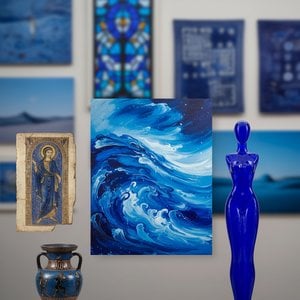
The Allure of Azure: Exploring the Symbolic & Aesthetic Depths of Blue in Art History
Explore the rich history of blue in art! Discover its symbolism, from ancient pigments to modern masterpieces by Kandinsky & Seurat. Uncover the psychological impact and cultural meanings behind this captivating hue.

The Allure of the Horizon: A Comprehensive Exploration of Seascape Art Through History & Emotion
Explore the captivating world of seascape art! Discover its history, key artists & movements – from Dutch Masters to Impressionism. Expert insights for collectors and enthusiasts at ArtsDot.


