
 Eelvaade
 Saada
Saada Jaga
Jaga
 Teave teose kohta
 Juhend

 Laadi alla
 Sarnased teosed
 Röntgenuuring
 Slaidietendus
 KÜSIMUSED JA VASTUSID
 Statistika
The guide


 Loe lähemalt
Sellel lehel kuvatav kunstiteos on kaitstud autoriõigusega, mis tähendab, et meil ei ole seaduslikku õigust luua või müüa identset reproduktsiooni. Seda kaitset rakendatakse rahvusvaheliste kokkulepete alusel, nagu näiteks Berne konventsioon ning riiklike seadustega, sealhulgas nendega, mida on sätestatud USA autoriõiguse seadus – 17. peatükk.
See meetod järgib täielikult autoriõiguse reegleid, kuna see ei põhine kaitstud kunstiteose kopeerimisel või dupliteerimisel. Selle asemel on tegu loova reinterpreetatsiooniga – uue maaldisega, mis on algteosest inspireeritud, kuid ei ole sellest identiline.
Giclée / Kunstiprint
Muuseumikvaliteediga giclée- või kangasprint kiire tootmisega ja paindlikud viimistlusvõimalused. ( Osta käsitsi maalatud teos Lülita digitaalse pildi juurde)




P118B €10

P118H €10

P118W €10

P438Z €10

P508JH €12

P508YH €12

P805H €10

P805Z €10

P919BZ €10

P919G €10

P919XJ €10

P959ZH €10

P968JZ €12

W106C €8

W218G €10

W218JH €8

W218Y €10

W307PJ €10

W316G €10

W316PJ €8

W316Y €10

W398PJ €8

W4111J €10

W500HY €15

W500JH €15

W692G €12

W849H €8

W940BG €15

W953PJ €8




Vali meie eelmääratud suurused, mis vastavad teose algupärastele proportsioonidele.

Sisestage vajalik laius ja kõrgus, et see sobiks teie raamile või seinale. Trükki saab ainult lõigata, seda ei saa kunagi pildist suuremaks teha, seega ka erineva mustega suurus kaotab osa pildist. Enne trükkimist saadame teile kinnitamiseks digitaalse näidisprojektsiooni. Sellel lehel näidatud pilt ei kujuta reaalset lõiget — seda näitab ainult näidisprojektsioon.
Ülemaailmne tarne () 2 nädala jooksul, tavalise 4/5 nädala asemel. (15 november)

Tasuta ekspresssaatmine üle maailma

Kõrgekvaliteediline lina-kangas

Täielik transpordikindlustus

Tollimaksude tagastamise garantii

Värvitoime täpsuse garantii

100 päeva tagastusõigus (ainult valmistusdefektide korral)

100% raha tagasi garantii

Hulgusoodustus
 Klaasivalik on saadaval ainult kuni 110 cm suuruses teostes

The guide
Giclée / Kunstiprint
Reproduktsiooni suurus
-


Koguhind
€ 56
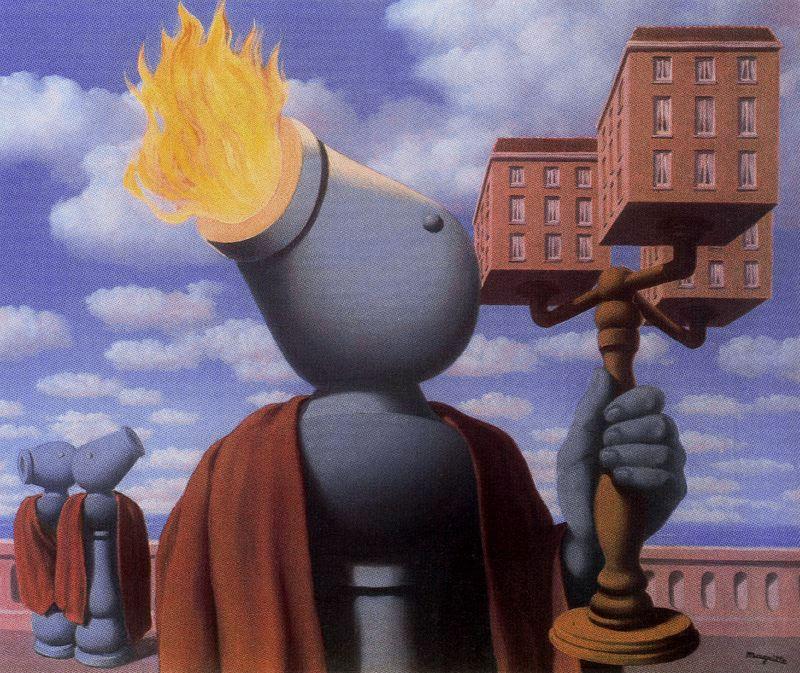
A Surrealist Riddle: Decoding René Magritte’s “The Guide”
To gaze upon René Magritte's 1962 masterpiece, “The Guide,” is to step directly into a dreamscape where the logic of the waking world dissolves into a profound, unsettling mystery. This evocative Surrealist work does not merely present a scene; it poses a question that lingers in the mind long after one has turned away. At its heart, the painting presents a startling juxtaposition: a humanoid robot, rendered with a meticulous, almost clinical precision, stands before a nondescript building, clutching a bright red fire hydrant firmly within its mouth. This central, bizarre image is flanked by two additional robotic figures, creating an atmosphere of eerie stillness and silent observation. The composition is further animated by the presence of three birds—one perched in the upper left, another drifting through the center-right, and a third nestled at the bottom left—elements that introduce a fragile, natural grace to an otherwise mechanical and stark landscape.
Magritte’s technique is a masterclass in the art of deception. Eschewing the expressive brushwork of the Impressionists, he employed a smooth, controlled application of oil paint on canvas to achieve a deliberate flatness. This precision serves a higher purpose: by rendering these impossible objects with such clarity and realistic detail, Magritte forces the viewer to confront the "reality" of the absurd. His style aligns perfectly with the Surrealist movement's mission to bypass rational thought and tap into the subconscious. There is no heavy texture to distract the eye; instead, the seamless blending of colors creates an illusionistic surface that makes the impossible feel tangibly present, inviting collectors and enthusiasts to inhabit this beautifully rendered, dreamlike dimension.
Symbolism and the Architecture of the Subconscious
Every element within “The Guide” acts as a piece in a larger, enigmatic puzzle. The robot, a symbol of the man-made and the artificial, holding a fire hydrant—a vessel for the most fundamental element of life, water—creates a powerful tension between technology and nature. This juxtaposition serves to challenge our assumptions about identity and utility. Is the robot a servant, or is it a distorted mirror of human existence? The presence of the birds adds a layer of organic unpredictability to the scene, their flight paths suggesting a freedom that contrasts sharply with the rigid, metallic forms of the robots. Magritte often used such motifs to explore the boundaries between what is seen and what is hidden, a theme deeply rooted in his own life experiences and the broader intellectual climate of post-war Europe.
For the discerning interior designer or art collector, this piece offers more than just visual intrigue; it provides a profound emotional resonance. The painting evokes a sense of quiet contemplation, a stillness that can transform a modern living space into a sanctuary for thought. It is a work that demands engagement, making it an ideal centerpiece for those who appreciate art that provokes conversation and stimulates the intellect. Whether viewed as a study in Surrealist history or as a striking contemporary statement, “The Guide” remains a timeless exploration of the elusive boundaries between reality and illusion, making it a truly captivating addition to any curated collection.
Korduvad küsimused
Kuidas kunstiliikumine ja ajastu kohtuvad teoses „The guide“, autor René Magritte?
Teos "The guide" kuulub Surrealist Dreamscape suunale ning selle looja tegutses Modernism ajastul.
Kuidas leida teoseid, mis on stiilis sarnased teosele „The guide“, autor René Magritte?
Teosed, mis sarnanevad teosega „The guide“, autor René Magritte, on koondatud selle teose lehel Sarnased teosed.
Kuidas teose „The guide“, autor René Magritte värvikompositsioon on üles ehitatud?
Teose „The guide“, autor René Magritte väruanalüüs on tuvastatud Bold kontrast ja Softly Mixed Palette harmoonia.
Sarnased teosed


Kunstniku elulugu
René Magritte'i varajad aastad
Kunstnik René François Ghislain Magritte sündis 21. novembri 1898 aastal Belgias, Lessines'is, maailmas, mida määrkas tema pere vaikne ja siakamõduv töö.
Tema isa, Léopold Magritte, töötas rätseja ja tekstiilikaupmehena, pakkudes talle stabiilset, kuigi tavapäraset kasvatuskeskkonda. Veidi enne kümneastast läbi, oli René Magritte alganud juba otsida ametlikke joonistustunde, avastades varajase kalduse visuaalsel väljendil, mis määrkas lõpuks tema elu teosid.
1912. aastal langis tema noore und sügav põlgus, kui tema ema, Régina Bertinchamps, tegi eneseelmu suicid. See kadu jäi tema psühhikale püsivaks märgiks, tuletades kaasa saladuse ja varjamise tunde, mis ilmus hiljem tema maalidest läbi veedud figuuride ja varjatud nägude. Selline isiklik trauma on sageli olnud algupärsena tema hilisemate kompositsioonide vaigust tensionile, kus nähtav ja nähtamatu eksisteerivad pidevas kokkupõrgel.
Tema ametlik kunstiline harjutus algas tõsiselt Brüsseli Académie Royale des Beaux-Arts koolis, kus ta õppis aastatel 1916 kuni 1918. Need aastad viisid ta noorepärasest lihtsustast disiplinadlikumale vormi mõistmise suunas. See akadeemiline õppeperiood pakkus tehnilist vundamenti, mis oli vajalik järgnõudvate konseptiliste muutuste jaoks, kui ta liikus edasi XX sajandi alguse avantgardsetesse liikumistesse.
Kunstiline areng ja varajased mõjutused
René Magritte’i algusajad maali kunstis umbes 1915. aastal olid iseloomulikud impressionistlikule tundlikkusele. Need esialgsed katsed olid kaugelt möödunud neist intellektuaalsetest mühakelastest, mis hiljem tema nime määrkas. Esimese maailmasõja ajal pöördugi tema tee militaarseks, teenides Belgia armees kartograafina. See teenistusperiood pakkus struktureeritud ja tehnilist vastukaal tema kasvavatele loovatele impulssidele. Pärast õppimise jätkamist hakkas ta liikuma eemale impressionismist, eksperimenteerides selle asemel kubismi murdudud tasapindide ja futurismi dünaamilise energiaga. Need suunad pakkusid talle visuaalse maailma dekonstruktsiooniks uue viisi, kuigi lõpuks leidis ta nende vormilised piirangud oma täpselt suunatud visiooni jaoks liialgselt krestrictiivseteks.
Sügav muutus toimus siis, kui ta kohtus Giorgio de Chirico teostega. 1914. aasta maal The Song of Love jäi temasse igavesti, taevaslik ja unenäoline pinge, mis resonantsis tema sügavalt. See kohtumine suunas teda stiili poole, mis eelistas tuttavade asjade ebatavalist ja rahutamat kogemist. Ta kogas inspiratsiooni ka William Degouve de Nuncques maalidest, mille mõju aitas kaasa tema unikaalse esteetika väljakujunemisele. Need varajased aastad olid otsinguperiood – aeg, mil ta liikus läbi mitmete avantgardsete stiilide, püüdes leida keele, mis oleks võimeline väljendama alajaduse kummalist loogikat.
Pariisi aastad ja sürrealism
Kuni 1927. aastani oli tema Belgia siduv ja vaikne elu kukkunud ees, mille asendas Pariisi rahutu energia. See liigumine märkis olulist pöördet tema eluteel, kuna ta sisenes sügavalt sürrealistliku liikumisse. Linna kohvikutes ja ateljeedes leidis ta üles mõtteleid, kes jagasid tema maailmapilti, tehes sõprad nagu André Breton, Paul Éluard ja Salvador Dalí. Need sidemed ei olnud pelgalt sotsiaalsed; need olid intellektuaalsed liidud, mis alevitas tema kohta selles kunstiliikumises. Ta läbis seda perioodi selge eesmärgiga, püüdes tõlkida irratsionaalne visuaalseks keeleks, mis pani kaunistatud ülevaade ja äratunuse maailma loogika algupäraselt küsimustet esetama.
Tema üleminek sellesse uude väljendusviisi oli alanud juba 1926. aastal teose Le Jockey Perdu (Kadunud ratsas) loomisega, mida peetakse laialt tema esimeseks tõeliselt sürrealistlikuks maalideks. See varane avamine ootamatute maailma oli eelnenud tema täielikule sukeldumisele Pariisi kunstielule. Pariisis viibitud aja jooksul karedas tema professionaalne elu, olles samal ajal ebakindel. 1929. aastal sõlgis ta leping Pariisi Goemans'i galeriis koos Jean Arp ja Yves Tanguy-ga. See ametlik koostöö pakkus lühiajalist stabiilsust enne seda, kui aastakümne keerulised sünded viisid ta lõpuks koju tagasi.
Pöördu minek Brüsselisse ja reklaamitöö
Pariisist lahkumine aastal 1930 märkis Magritte'i jaoks pragmatistlikku uue suuna otsimist. Pöörates tagasi Brüsselisse, püüdis ta leida stabiilsust oma visuaalsete oskuste rakendamisel kaubanduslikus maailmas. Koos oma venna Pauliga asetas ta reklaamienbüroo – ettevõtte, mis nõudis ranget ja disiplinseeritud lähenemist piltidele ja tipograafiale. See professionaalne tegevus ei olnud tema loovast instinktist lahkumine, vaid pigem selle täiendamine ja lihvimine, ajal kui ta liikus kunstilise ja kaubandusliku ristumiskohas.
Tema toimetamine palus sagasti siduda eluviisi tööstiliste ja igapäevaste asjadega. Ta töötas joonistajana tapeetitehases ning tema ekspertiisi kasutas disainerina tehas Usines Peters-Lacroix (U.P.L.). Need kommersiaalsed tööd pakkusid talle kindlat tulu ning andsid sügava tutvuse igapäevaste esemete tekstuuride ja mustritega. See tehniline täpsus andis hiljem uue tähenduse tema sügavamatele, filosoofilistele teostele. Lisaks leidis ta tööd filmitööstus, kus ta kujundas plakette saksa helifilmide distribüutorile Tobis Klangfilm. Nende ülesannete täitmiseks võttis ta pseudonüümi 'Emair' – maski, mis võimaldas tal tegutseda kaubanduslikus sfääris, säilitades samal ajal professionaalset distantsi oma kunstilise isikuandmete vahel.
Renoir'i periood ja päikeselise sürrealismiga täis kunst
1940. aastate keskel läbis Magritte'i esteetika märkimisväärse muudatuse. Umbes aastate 1943 ja 1947 vahel ta liikus bort eemale tumedatest ja melankoolisest toonidest, mis olid domineerivad tema varasemas sürrealistlikus loomingus. Seda faasi, mida kutsutakse sageli tema Renoir'i perioodiks, iseloomustas valgus ja optimistlikum kompositsioon, mis leidis kasutust erevärvilisest palettist. See oli täielik nurgaotsas käitumine tema varasemate aastate raskaatest psühholoogilistest pingetest, eelistades selle asemel selgust ja valgust.
See stiililine evolutsioon ei olnud pelgalt juhuslik lühiajaline meeleolu, vaid oli sügavalt seotud selleaegse intellektuaalse õhustiga. Tema tööd sel perioodil said mõjutuseks manifest Surrealism päikeselise valguses. Nimelt lahkudes inspiratsiooni maaliartist Pierre-Auguste Renoir'ist, omastas Magritte oma teemade esitamisel luminöösemat ja valguslikemat lähenemist. Pimedad varjud, mis varem tema figuure varjasid, asendati avatuma ja päikeseloojulise kvaliteediga. Kuigi sürrealistliku liikumuse tema kaaslased vaatasid seda stiilimuudatust skeptilise silma, kujendas see tema pikast kunstikarjäärist olulist isiklikku eksperimentaalset hetke.
Tehnika ja signatuurne visuaalne stiil
Magritte’i lähenemine linatele oli iseloomulik oma täpsluse poolest, olles peaaegu kliiniline ja metsilline. Ta vältis paljude oma kaasajate eelistust ekspressiivsele ja segisele pintlaosule, eelistades selle asemel stiili, mis esitas võimetud asjad hämmastavalt selgelt. Kasutades realistilisi tehnikaid ilglutavate stsenaariumide kirjeldamiseks, eemaldas ta vaatajalt tuttavuse turvatunnet. See selgus oli vältimatu tema meetodil luua visuaalseid paradokse, kus täpne täitmisviis tegi teema kummalisuse veelgi rahutavamaks.
Tema pildikeel tugus tugevalt tavalistele esemetele, mis olid asetatud ootamatutes kontekstes. Ta pöörduks korduvalt teatud motiivide täpsese sõnavara juurde: kaabukukk, õun ja naise torso. Need esemed, eemaldatuna oma igapäevasest kasutusottekstist, muutusid sügava, peidetud reaalsuse sümboliteks. Ta manipuleeris sageli suhet esemega ja selle esitlusviisiga, kõige selgemalt läbi oma maaliduses kasutatud tekstide, et väljakutuda vaataja tajupõhja keele ja pildi vahel. Seda intellektuaalset hõõrgust lõimed täiendasid veelditud näod ja õhus levivad esemed, mis rikkusid gravitatsiooni ja identiteedi loomulikke seadusi.
- The Treachery of Images (1929)
- The Son of Man (1964)
- The Lovers (päevasolemata)
- The Castle of the Pyrenees (1959)
- Time Transfixed (1938)
Olulised meistriteosed ja ikoonilised teosed
Magritte'i lamedad pinda funktsioneerisid sageli visuaalsete harjutuste käigus, mis olid loodud vaataja kindlust segaduseks ajama. aastal 1929 loi ta teose Piltide reetlus, kus üles toodud on hoolikalt detailide kogumusega kirjeldatud piipt, mille kõrgel on deklaratsioon "See ei ole piipp". See paradoks sunnib vaatajat seisma silmitsi tühimikuga, mis on oleva objekti ja tema esituse vahel. Tema uuring varjatud ja peidetud teemade alla jõudis emotsionaalselt võimsama peakõrva 1928. aasta sarjas Armastajad. Need neli variatsiooni kirjeldavad inimesi, kes püüavad läbi valgete kangaste eesriidete üksteist suudutada – motiiv, mis muudab intiimsuse sügava pettumuse ja ebakindluse tundeks.
Kunstnikil oli ka eriline talent koduse ja füüsilise ruumi loogika segadusse ajamisel. aastal 1938 esines teos Aeg kinni püüdud, kus massiivne lokomootiv purustab telliseid müürid, luues stseeni, mis eitab arhitektuuri stabiilsust. See võime asetada igapäevased esemed võimatutes keskkondades sai tema küpsuse perioodi üks iseloomulikud tähised. aastal 1953 täidis Golconda taevas naiskonnas sadade täis peaaegu identilisi mehi, kes kandid tumeid overkoote ja buldukaid. Need figuurid ilmavad kolmiühdimelises võrgus, rippudes õhus, kui oleksid nad jäänud kinni langemise või tõusmise hetkes.
Isegi tema järelpõhistel aastatel püsid teatud sümbolid muutumatumatena. aastal 1964 loodud teos Mees buldukaiga kujutab inimest, kelle nägu on osaliselt varjatud. Bourgeoisie "väike mees" ja tema bulduka on korduva visuaalne keeles, mis on korrelatsioonilt lihtne, kuid sügavalt murettav. Tema kunst on jäänud püsivaks uuringuks pinge kohta, mis sünnib nähtava ja teada oleva vahel.
Kus tema teoseid täna näha saab
Tema visuaalsete mõistatuside säilitamine on jagatud mitme suure institutsiooni vahele, tagades tema vaimu kohalolu Euroopas ja Ameerikas. Brüsselis pakub Jette'is asuv Magritte'i muuseum oma pühendatud ruumi tema loomingule, paikunedes täpselt selles majas, kus ta viis läbi oma elu ja töötas ka kakskümmendneist aastat. See asukoht on sügavalt seotud tema isikliku ajalooga, kuna korter, kus ta koos oma naise Georgette'iga elas, pakkus palju inspiratsiooni tema kompositsioonidele. Lähedal asub Musées Royaux des Beaux-Arts, mis hoiab käes olulist osa tema maalidest, säilitades nii Belgia sideme tema surrealistlikule uurimistööle.
Tema mõju ulatub üle Atlanti, kus Ameerika kollektsioonid majutavad mitmeid tema olulisi linate. New Yorki Museum of Modern Art hoiab oma kogumuses valiku tema teoseid, samas kui Houstonis, Texasas, asuv the Menil Collection on kodipaik 1953. aastal loodud maalile Golconda. Need asukohad võimaldavad jätkata uuringut selle kohta, kuidas ta manipuleeris tuttavusega, et luua ootamatut.
- The Lovers (päevas oleva)
- The Son of Man (1964)
- Time Transfixed (1938)
- The Treachery of Images (1929)

René Magritte
1898 - 1967 , Belgia
Lühikest infot
- Artistic Movement Or Style: Sürrealism
- Artists Or Movements Influenced By This Artist:
- Pop-kunst
- Minimaalkunst
- Konseptuaalkunst
- Artists Who Influenced This Artist:
- Giorgio de Chirico
- Claude Monet
- Vincent van Gogh
- Paul Cézanne
- Georges Seurat
- Pablo Picasso
- Date Of Birth: 1898
- Date Of Death: 1967
- Full Name: René François Ghislain Magritte
- Nationality: Belgia
- Notable Artworks:
- Pildide reetlus
- Aistid
- Aja peetuse alla jääv hetk
- Inimeslik olukord
- Mees ja tema kukk
- Pireneeide loss
- Golconda
- Place Of Birth: Lessines, Belgia
Sarnased artiklid

Mystical Masterpieces: 10 Artworks That Transcends Reality |
Journey into the ethereal with our Top 10 mystical artworks! Explore iconic paintings by Klimt, Dali & more. Discover symbolic art, dreamlike landscapes, and evocative colors – find museum-quality reproductions to transform your home on .

Surrealismi 10 Meisterteost: Kunsti, Mis Muudab Reaalsuse
Sukeldu sürreaalsete meistriteoste maailma! Salvador Dalí, René Magritte jt legendid. Avasta 10 teost, mis defineerisid sürrealismi. Kunstiajalugu ja inspiratsioon interjöördisainiks – ArtsDot.com

The Ethereal Realm on Canvas: Exploring Dreamlike Qualities in Art History & Contemporary Practice
Explore the captivating world of surrealism & dreamlike art! Discover key artists like Dalí & Magritte, symbolism's history, and how color evokes emotion. Find high-quality reproductions at ArtsDot.

Unveiling the Mystery: The Top 25 Surrealist Masterpieces by René Magritte
Explore 25 iconic René Magritte masterpieces and the secrets of Surrealism. Discover the full collection online at ArtsDot.com.

Beyond the Pipe: Unlocking the Surrealist Mystery of René Magritte
Explore the enigmatic world of René Magritte. From decoding 'The Treachery of Images' to understanding his surrealist mastery, discover how this Belgian icon challenges reality through profound, hand-painted art and timeless mystery.


