
 Eelvaade
 Saada
Saada Jaga
Jaga
 Teave teose kohta
 Juhend

 Laadi alla
 Sarnased teosed
 Röntgenuuring
 Slaidietendus
 KÜSIMUSED JA VASTUSID
 Statistika
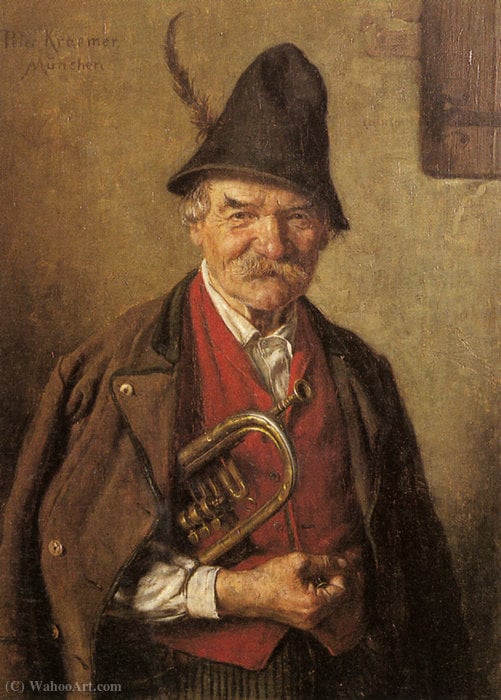
Tyrolean musicians

 Loe lähemalt
Hankige trükiivaldatav fail, mis on kvaliteedilt palju parem kui veebilehel näidatud eelvaade. Kõik meie müüdavad digitaalsed pildid pärinevad meie arhiivist kõrge resolutsiooniga originaalfailidest — tavaliselt 5000 kuni 15 000 pikslit laiust — nii et saate julgelt trükida suurematsat, lüüdist teha või detailset sisu reproduktsiooni teha.
Meie stuudiost ei lahtu ükski fail puutumatuna. Digiekpert võrdleb värve algsest maalistimusega ja vajadusel korrigeerib neid, seejärel parandab selgust ja detaile professionaalsete retušimisvahendite abil — püüdes alati jääda truudeks kunstniku pintoonile ja stiilile. Tulemuseks on pilt, mis näeb välja nagu maali, mitte nagu filtreeritud skann.
Teet kinnituse enne lõplikku valmimist: meie ekspert saadab pildi 72 tunni jooksul e-posti ülevaatamiseks. Ei ole rahul? Paluge parandusi või korrektsioone ning kui kvaliteet ei vasta ootustele, võite paluda tagastamist.
See on kvaliteet, millele tuguvad väljaandjad, disainistuudiod, galeriid ja trükikojad.
Digitaalne kunstiteos
Laadi alla kõrge resolutsiooniga fail isiklikuks vaatamiseks, trükkimiseks ja loomingulisteks projektideks. ( Lülita trükkitoodetele Osta käsitsi maalatud teos)
Sisse kuulub iga digitaalse pildi tellimusega
Eksperdi digitaalne kohaletoimetamine, garanteeritud
Valides ArtsDot.com, ei saa sa lihtsalt pilti – saad professionaalselt parandatud digitaalse teose, mida on valmistatud täpsusega ja mis on toetatud rahuldamatusgarantiiga. Siin on kõik, mis sinu tellimusega automaatselt kaasneb:

Kiire digitaalne edastus
Teie kõrge resolutsiooniga digitaalne pildifail saadetakse teile e-posti 72 tunni jooksul pärast tellimist – kohe kasutamiseks valmis.

Tehisintellektiga täiustatud digitaalne fail
Teie teos on professionaalselt optimeeritud arenenud tehisintellekti tööriistade ja käsitsi redigeerimise abil, tagades maksimaalse detailitaseme, selguse ja värvitäpsuse.

Tasuta eluaegne uuesti saatmine
Kas kustutasid faili kogukalu unustamisel või kustutamisel? Puudub mure – saad selle uuesti igal ajal ilma lisatasuta.

Puuduvad importimaksud – alati
Nautige oma teoseid koheselt ilma tolli-, maksude või tarnimaskuludeta – digiletchargused on alati maksuvabadud.

Värvitäpsuse garantii
Me tagame, et teie digitaalne pilt kajastaks originaali värve professionaalsete tööriistade ja värvihalduse abil võimalikult täpselt.

100 päeva rahuldamatuse garantii
Kui te ei ole oma digitaalse pildi eest rahul, siis me parandame seda või tagastame 100% summast 100 päeva jooksul – küsimusteta.

100% raha tagastamise garantii
Ei ole rahul? Saate täielise tagastaja 100 päeva jooksul pärast digitaalse faili kättesaamist – ilma küsimusteta.

Suurema tellimuse soodustused
Osta 3 pilti, säästa 10% - Osta 5, säästa 15% - Osta 10+, säästa 20%. Sobib suurepäraselt loomingulisteks projektideks, galeriideks ja agentuurideks.
Sarnased teosed


Kunstniku elulugu
Early Years and Artistic Foundations
Born in Zweibrücken, Germany, in 1857, Peter Kraemer II emerged from a lineage deeply rooted in the artistic traditions of Bavaria. His family’s history was interwoven with creativity; his father, Peter Krämer I, distinguished himself as an artist, notably for his depictions of the American Liberation War, and had studied under Julius Schnorr von Carolsfeld – a renowned figure in German Romanticism. This familial connection to art provided Kraemer II with an invaluable foundation, immersing him from a young age in the techniques and sensibilities of painting. While details about his early formal training remain somewhat sparse, it’s clear that he absorbed a profound appreciation for visual storytelling and the expressive potential of color and form.
Kraemer's artistic journey began during a period of significant social and cultural change in Germany. The late 19th century witnessed a resurgence of interest in regional identity and folklore, fueled by nationalist sentiments and a desire to preserve traditional crafts and customs. This context profoundly shaped Kraemer’s subject matter – he chose to capture the essence of Bavarian life, particularly its rural landscapes and the lives of its people.
A Specialist in Genre Painting: Portraits of Rural Life
Kraemer II quickly established himself as a master of genre painting, specializing in scenes that offered intimate glimpses into the everyday routines and customs of rural Bavaria. Unlike grand historical or mythological subjects favored by many artists of his time, Kraemer focused on the humble realities of peasant life – hunters pausing for rest, musicians gathering in village squares, farmers tending their fields, and elderly men engaged in quiet pursuits. His paintings are not merely depictions; they’re imbued with a palpable sense of authenticity, capturing the weathered faces, worn clothing, and simple joys of his subjects.
- Detailed Observation: Kraemer's remarkable skill lay in his meticulous observation of detail. He paid particular attention to the textures of fabrics, the expressions on faces, and the nuances of light and shadow, creating a sense of immediacy and realism that drew viewers into the scenes he depicted.
- Costumes as Narrative: The costumes worn by Kraemer’s figures were not simply decorative elements; they served as powerful indicators of social status, occupation, and regional identity. He meticulously researched traditional Bavarian attire, ensuring that each garment reflected its historical context and cultural significance.
- The Essence of Character: Kraemer sought to capture the character of his subjects – their dignity, resilience, and connection to the land. His portraits are not idealized representations; they’re honest portrayals of individuals who had lived full lives rooted in tradition.
Technique and Style
Kraemer II's artistic style is characterized by a remarkable blend of realism and sentimentality. He employed a technique that combined meticulous detail with a loose, expressive brushstroke, creating paintings that are both technically proficient and emotionally resonant. His palette was typically muted, dominated by earthy tones – browns, greens, and ochres – reflecting the colors of the Bavarian landscape. He favored watercolor as his primary medium, allowing for delicate washes of color and a sense of atmospheric depth.
Influenced by the Realist movement, Kraemer’s work shares a commitment to depicting everyday life with honesty and sincerity. However, he also incorporated elements of Romanticism – particularly in his use of light and shadow – to evoke a sense of nostalgia and longing for a bygone era. His paintings are not simply records of the past; they're meditations on memory, tradition, and the enduring spirit of the Bavarian people.
Legacy and Recognition
Peter Kraemer II enjoyed considerable success during his lifetime, exhibiting his work in galleries throughout Germany and Bavaria. He was particularly well-regarded for his depictions of elderly men, capturing their wisdom, experience, and connection to the land with remarkable sensitivity. His paintings are now held in several collections, including those of the Auktionshaus Stahl in Hamburg, where they continue to be appreciated for their artistic merit and historical significance.
Kraemer’s work offers a valuable window into the cultural landscape of 19th-century Bavaria. Through his paintings, he preserved the traditions, customs, and values of a region that was undergoing rapid social and economic change. His legacy as a master of genre painting endures, reminding us of the beauty and dignity found in the everyday lives of ordinary people.

Peter Kraemer
1857 - 1936
Lühikesed faktid
- Artistic Movement Or Style: Genre painting
- Artists Or Movements Influenced By This Artist: ['Bavarian authenticity']
- Artists Who Influenced This Artist: ['Julius Schnorr von Carolsfeld']
- Date Of Birth: 1857
- Date Of Death: 1936
- Full Name: Peter Kraemer II
- Nationality: German-American
- Notable Artworks:
- Hunter and Lumberman
- Bayesian Dice-Player
- Place Of Birth: Philadelphia, USA