

 Eelvaade
 Saada
Saada Jaga
Jaga
 Teave teose kohta
 Juhend

 Laadi alla
 Sarnased teosed
 Röntgenuuring
 Slaidietendus
 KÜSIMUSED JA VASTUSID
 Statistika
Untitled


 Loe lähemalt
Sellel lehel kuvatav kunstiteos on kaitstud autoriõigusega, mis tähendab, et meil ei ole seaduslikku õigust luua või müüa identset reproduktsiooni. Seda kaitset rakendatakse rahvusvaheliste kokkulepete alusel, nagu näiteks Berne konventsioon ning riiklike seadustega, sealhulgas nendega, mida on sätestatud USA autoriõiguse seadus – 17. peatükk.
See meetod järgib täielikult autoriõiguse reegleid, kuna see ei põhine kaitstud kunstiteose kopeerimisel või dupliteerimisel. Selle asemel on tegu loova reinterpreetatsiooniga – uue maaldisega, mis on algteosest inspireeritud, kuid ei ole sellest identiline.
Giclée / Kunstiprint
Muuseumikvaliteediga giclée- või kangasprint kiire tootmisega ja paindlikud viimistlusvõimalused. ( Osta käsitsi maalatud teos Lülita digitaalse pildi juurde)




































Vali meie eelmääratud suurused, mis vastavad teose algupärastele proportsioonidele.

Sisestage vajalik laius ja kõrgus, et see sobiks teie raamile või seinale. Trükki saab ainult lõigata, seda ei saa kunagi pildist suuremaks teha, seega ka erineva mustega suurus kaotab osa pildist. Enne trükkimist saadame teile kinnitamiseks digitaalse näidisprojektsiooni. Sellel lehel näidatud pilt ei kujuta reaalset lõiget — seda näitab ainult näidisprojektsioon.
Ülemaailmne tarne () 2 nädala jooksul, tavalise 4/5 nädala asemel. (14 november)

Tasuta ekspresssaatmine üle maailma

Kõrgekvaliteediline lina-kangas

Täielik transpordikindlustus

Tollimaksude tagastamise garantii

Värvitoime täpsuse garantii

100 päeva tagastusõigus (ainult valmistusdefektide korral)

100% raha tagasi garantii

Hulgusoodustus
 Klaasivalik on saadaval ainult kuni 110 cm suuruses teostes

Untitled
Giclée / Kunstiprint
Reproduktsiooni suurus
-


Koguhind
€ 56
Sarnased teosed


Kunstniku elulugu
Naiem Ismail: Weaver of Syrian Identity
Naiem Ismail (1930-1979) stands as a pivotal figure in the development of modern art within Syria, a pioneer who masterfully blended traditional Islamic aesthetics with the burgeoning currents of abstract expressionism. Born in Antakya, a city steeped in cultural crossroads between Turkey and Syria, his early life undoubtedly shaped his artistic vision – a synthesis of Eastern and Western influences that would become the hallmark of his distinctive style. Ismail’s journey from the rural landscapes of his birth to the vibrant, politically charged atmosphere of Damascus reflects not only his personal evolution but also the broader transformation occurring within Syrian art during the mid-20th century.
His formal artistic training began in Istanbul, a city renowned for its rich artistic heritage and diverse cultural influences. This initial exposure to European techniques provided a crucial foundation before he returned to Syria in the late 1950s. It was here that he truly began to forge his own unique voice, one deeply rooted in Syrian culture yet informed by global trends. Ismail’s early career saw him working as an artistic director for several prominent magazines, including “Jaish al-Shaab,” a publication dedicated to socialist ideals and national consciousness – a context profoundly impacting the themes and imagery of his work.
Geometric Abstraction and Islamic Roots
Ismail's artistic style is immediately recognizable by its striking geometric abstraction. He didn’t simply abandon representation; instead, he meticulously deconstructed everyday scenes—village life, domestic interiors, bustling marketplaces—and rebuilt them using a complex vocabulary of lines, shapes, and patterns. These motifs weren’t arbitrary choices; they were deeply informed by Islamic art traditions – the intricate geometries of mosaics, the rhythmic repetition of calligraphy, and the symbolic weight of geometric forms. He drew heavily on traditional Syrian textiles, particularly their vibrant colors, bold patterns, and layered textures, translating these visual elements onto canvas with remarkable skill.
His use of color was equally deliberate. He favored rich, saturated hues—deep blues, earthy reds, warm ochres—creating a sense of depth and spatial complexity that defied the limitations of two-dimensional space. This illusionistic quality – the suggestion of multiple planes and receding perspectives – is a key characteristic of his work, lending an almost theatrical quality to his compositions. It’s as if he were capturing not just a scene but also the very essence of Syrian life, its energy, its rhythms, and its inherent beauty.
A Reflection of National Identity
Ismail's art played a significant role in the burgeoning movement to cultivate a sense of national consciousness within Syria following independence from French mandate in 1944. His depictions of everyday life—a man resting on his doorstep, a veiled woman entering a scene—were not merely picturesque; they were imbued with symbolic meaning, reflecting Syrian values, traditions, and social dynamics. His brother, Adham Ismail, who tragically died young, was equally instrumental in this movement, pioneering the integration of calligraphy and abstraction into Syrian art.
His appointment as Director of Fine Arts within the Ministry of Culture in the 1970s further solidified his position as a leading figure in promoting artistic expression. During this period, he oversaw numerous public art projects, including the façade of the trade union building in Damascus and the front of the Euphrates Dam, demonstrating his commitment to using art as a tool for social engagement and national development.
Legacy and Recognition
Naiem Ismail’s influence on Syrian art is undeniable. His innovative approach to abstraction, combined with his deep respect for traditional Islamic aesthetics, paved the way for subsequent generations of artists. His work has been exhibited both domestically and internationally, including at prestigious venues such as the World Hall of Modern Art in Damascus and the Louvre-Lens in France. He received the State Prize of the Supreme Council of Arts in 1968, a testament to his artistic merit and contribution to Syrian culture.
Despite his untimely death in 1979, Ismail’s legacy continues to resonate within Syria and beyond. His paintings are now held in prominent collections, including those of the Barjeel Art Foundation and the Syrian National Museum, ensuring that his unique artistic vision will be remembered for years to come. He remains a crucial figure in understanding the evolution of modern art in the Middle East – an artist who skillfully blended tradition and innovation, creating works of enduring beauty and profound cultural significance.

Naiem Ismail
1930 - 1979 , Syrian Arab Republic
Lühikest infot
- Full Name: Naiem Ismail
- Nationality: Syrian
- Date Of Birth: 1930
- Date Of Death: 1979
- Place Of Birth: Antakya, Syrian Arab Republic
- Notable Artworks:
- Village scene
- Untitled painting
- Artistic Movement Or Style: Abstract, Geometric
- Artists Who Influenced This Artist: ['Adham Ismail']
- Artists Or Movements Influenced By This Artist: ['Islamic geometric art']
Sarnased artiklid

Värviliste varjundite kunst: Akvarellimaali ajalugu, tehnikad ja kaasaegne praktika
Avastage akvarellimaali rikkalik ajalugu ja tehnikad! Lugege meie juhendit kuulsatest kunstnikutest, kaasaegsetest trendidest ja praktilistest nõuannetest. Alustage oma maalimisreisi juba täna!

Ephemeral Visions: Exploring the History & Emotional Resonance of Watercolor Painting
Explore the captivating history of watercolor painting, from ancient techniques to modern masters like Kandinsky & Blake. Discover essential artists, collecting tips & the emotional power of this luminous medium. Expert insights for art enthusiasts.

Watercolor Wonders: 10 Masterpieces That Redefined Art History | ArtsDot
Journey through 10 legendary watercolor masterpieces by Sargent, Turner & Homer! Explore iconic landscapes, portraits & floral art that redefined history. Find museum-quality reproductions and curated decor ideas at ArtsDot.com.
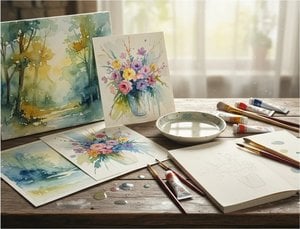
Ephemeral Visions: Exploring the Artistic Legacy & Nuances of Watercolor Painting
Explore the captivating world of watercolor painting! Discover its rich history, essential techniques, influential artists & collecting tips from art experts. A comprehensive guide for enthusiasts.

Ephemeral Visions: Exploring the Artistic Legacy & Contemporary Practice of Watercolor Painting
Explore the captivating world of watercolor painting! Discover its rich history, essential techniques, influential artists & collecting tips. A comprehensive guide for art enthusiasts from ArtsDot.