


 Vaata sisu
 Jaga teost
 Jaga
Jaga
 Detailid
 Õppekate juhend

 Laadi alla
 Sarnased teosed
 Röntgenuuring
 Slaidietendus
 Statistika
Thomas Jefferson
 Acrylic On Canvas
- WallArt
- Neoclassicism
 1786
1786 90.0 x 72.0 cm
 Rahvusgalerii
 Loe lähemalt
Käsitsi valmistatud õlimaalireproduktsioon
Meie kunstnike poolt tellimusel valmistatud käsitsi maalitud õli-kainaste teos teie soovitud suuruses ja raamis. ( Lülita trükkitoodetele Ülemineku digitaalse pildi müügi kanalisse)




P118B €10

P118H €10

P118W €10

P438Z €10

P508JH €12

P508YH €12

P805H €10

P805Z €10

P919BZ €10

P919G €10

P919XJ €10

P959ZH €10

P968JZ €12

W106C €8

W218G €10

W218JH €8

W218Y €10

W307PJ €10

W316G €10

W316PJ €8

W316Y €10

W398PJ €8

W4111J €10

W500HY €15

W500JH €15

W692G €12

W849H €8

W940BG €15

W953PJ €8




Vali meie eelmääratud suurused, mis vastavad teose algupärastele proportsioonidele.

Sisestage vajalik laius ja kõrgus, et teos sobiks teie raamile või seinale. Kuna tegu on käsipainatud teosega, siis erineva kujuga suuruse korral võib kunstnik jätta pildi ümber veidi rohkem marginaali või lõigata osa ära — valik on teie. Enne maali alustamist saadame teile kinnitamiseks digitaalse näidisprojektsiooni. Sellel lehel näidatud pilt ei kajasta tegelikku tulemust — seda näitab ainult näidisprojekttsioon.
Pärast tellimust saadab ArtsDot.com meeskond kliendile e-posti juhised ning esitab eelvaate kavandi
Maailmline tarne 3–4 nädala jooksul tavalise 5 nädala asemel. (21 oktoober). Kvaliteedis kompromisse ei tehta.

Tasuta ekspresssaatmine üle maailma

Kõrgekvaliteediline lina-kangastest muld

Täielik transpordikindlustus

Tollimaksude tagastamise garantii

Värvitoime täpsuse garantii

100 päeva tagastusõigus (ainult defektide korral)

100% raha tagasi garantii

Hulgusoodustus
 Klaasivalik on saadaval ainult kuni 110 cm suuruses teostes

Thomas Jefferson
Reproduktsiooni materjal
Reproduktsiooni mõõtmed
-


Lõppsumma
€ 230
A Portrait of Enlightenment: Mather Brown’s Likeness of Thomas Jefferson
The portrait of Thomas Jefferson by Mather Brown, completed in 1786, stands as an arresting emblem of the burgeoning neoclassical aesthetic within Britain during the late Enlightenment. More than simply a likeness—though remarkably accurate for its time—it embodies the intellectual currents that shaped America’s founding ideals and continues to resonate with collectors and art historians alike. Painted on canvas using oil paints, Brown's masterful technique captures Jefferson’s dignified countenance against a backdrop of rich crimson, skillfully employing linear perspective and textural brushstrokes to convey both physical presence and psychological depth.The Artist & His Context
Mather Brown (1761-1831), born in Boston, Massachusetts, represents a pivotal figure bridging the stylistic divide between Neoclassicism and Romanticism. Trained under John Singleton Copley—Boston’s foremost artist—Brown absorbed the meticulous precision of classical artistic principles, prioritizing order and balance as hallmarks of his oeuvre. His decision to relocate to London in 1790 solidified his position within the British art landscape, where he gained membership to the Royal Academy, securing a prominent role in shaping artistic discourse and production. The portrait reflects Brown’s engagement with European intellectual traditions—particularly the influence of Greek sculpture—demonstrating an awareness of the broader philosophical debates concerning reason versus emotion that characterized the era.Style & Technique: Neoclassical Precision
Brown's approach to Jefferson’s depiction exemplifies neoclassical ideals. Linear perspective dominates, creating a convincing illusion of three-dimensionality and anchoring Jefferson’s figure within a carefully constructed space. Geometric shapes—squares and rectangles defining Jefferson’s attire—underscore the compositional stability characteristic of the style. Texture is achieved through deliberate brushstrokes that imbue the fabric of Jefferson's coat and wig with palpable volume, mirroring the monumental grandeur favored by neoclassical painters. The dramatic lighting—originating from an unseen source above—casts strong shadows across Jefferson’s face, highlighting his features and conveying a subtle sense of introspection. These meticulous details underscore Brown’s commitment to capturing not merely appearance but also character—a testament to the artist's skill in translating philosophical concepts into visual form.Symbolism & Emotional Resonance
Beyond its technical brilliance, the portrait is laden with symbolic significance. The inclusion of a classical statue in the background serves as an explicit reference to reason and knowledge—values central to Enlightenment thought. Jefferson’s attire—reflecting his connection to European intellectual traditions—further reinforces this thematic dimension. However, Brown's portrayal transcends mere stylistic convention; it conveys a palpable emotional resonance. The gaze of Jefferson—direct yet contemplative—suggests a profound engagement with internal reflection, hinting at the complexities inherent in reconciling philosophical convictions with personal realities. This subtle melancholy contributes to the portrait’s enduring appeal, inviting viewers to contemplate themes of intellectuality, morality, and the burdens of leadership.A Legacy Enduring Through Reproduction
Today, reproductions of Brown's Jefferson offer art lovers and interior designers alike a captivating glimpse into a pivotal moment in American history and artistic innovation. The painting’s masterful technique—characterized by its luminous color palette and nuanced textural rendering—continues to inspire artists and collectors globally. Its enduring emotional impact—rooted in the portrayal of an intellectual titan wrestling with moral dilemmas—remains profoundly relevant, prompting contemplation on the intersection of reason and emotion within the human experience.Küsimused ja vastused
Kes lõi teose "Thomas Jefferson" ja millises stiilis see on?
Teose "Thomas Jefferson" taga on Mather Brown ja Neoclassicism suunad.
Kust teose „Thomas Jefferson“, autor Mather Brown külastajad pärit on?
Statistika teose „Thomas Jefferson“, autor Mather Brown kohta on saadaval teose Statistika lehel: teose kuukaudsed külastused, kunstniku teoste külastused ning viimaste külastajate riikide ja keelte jaotus.
Kuidas kontrast ja harmonii "Thomas Jefferson" teoses ühes tuttuvad?
Teose „Thomas Jefferson“, autor Mather Brown väruanalüüs on tuvastatud Balanced kontrast ja Balanced Harmony harmoonia.
Sarnased teosed


Kunstniku elulugu
Mather Browni transatlantiline pärand
Mather Brown seisab kui lummav sild kahe ajastu vahel – maalidena, kelle elu ja loomingu sündmused peegeldasid 18. sajandi lõpu ja 19. sajandi alguse muutuvaid voolu. Olles sündinud Bostonis aastal 1761, kujunes tema kunstiline identiteet koloniaalne Amerika intellektuaalses sulatusahjus, enne kui leidis see oma lõpliku väljendusvormi Londoni suurepärades stuudiotes. Tema teekond on olnud palju rohkem kui lihtsalt isiklik karjäär; see peegeldab kunstiliste ideaalide liikumist rangete ja struktureeritud neoklassitsimi printsiipidest suunates emotsionaalsema ja dramatiseeritumema romantismi vaimu poole. See üleminek võimaldas Brownil muutuda mitmekülgseks looastajaks, kes suutas vangistada nii iseloomuliku portree vaikset väärikust kui ka ajalooliste konfliktide kaoslikku hiilguslikkust.
Browni meistripalat on ulatuma tema varajase õpetuse juurde legendaarse John Singleton Copley juures. Copleyi hoolival silma all õppis Brown täpsuse olulisust ja klassikalise vormi sügavat mõistmist. See ettevalmistus andis talle tehnilise distsipliini, mis oli vajalik konkurentsitihedal Euroopa kunstimaailmal navigeerimiseks. Kui ta 1790. aastal Londoni asustas, ei saabunud ta sinna pelgalt väljatõuditud, vaid valmis professionaalina, saades kiiresti osa prestiižsest Kunstiakadeemiast. See liikmeskus oli tema elu määrav saavutus, mis tähistas tema vastuvõtmist Briti kunstimaailma kõrgeimatesse tippkihtidesse ning pakkus talle platvormi suhelda oma ajastu mõjuimatega inimestega.
Portreetide ja ajaloolise narratiivi meistar
Browni laia loomuloomu iseloomustab eriline võime kohandada oma tehnikat teema vajadustega. Portreetide looma maalis ta omandanud imetlusväärse oskuse kujundada isikupära ja sotsiaalset staatust peenete nüanssidega. Tema portreed sellistest suurvendidest nagu Thomas Jefferson ja Benjamin West näitavad teravat pilku ajastu poliitilistele ja sotsiaalsetele vooludele, andes oma kujutistele püsivuse ja autoriteedi tunnet. Olgu siis tegemist peenelt elegantsiga teoses Naine koega või väärikas olemusega tema portreetil Thomas Lowtonist, kasutas Brown valgust ja tekstuuri, et luua liaisad, hingavad kujundid kangisele.
Lisaks portreetide intiimsele skaalale püüdis Brown tabada ka eepilist. Ta oli suure ambitsiooniga maalari, kes suunas oma tähelepanu sageli ajaloolistele maalidestile, mis nõudsid keeruliste kompositsioonide ja dramatiseeritud liikumise valdust. Tema teos Niili lahing on selle lähenemisi tipppunkt, kus ta lahutas end staatilisest klassikalisest vormist, et omakatsuda meresõja keerutavat energiat ja viskeraalset intensiivsust. Nendes suuremates teostes on nähtav romantilise tundlikkuse teke – fookus sublimeeritud, võimsale ja ajalooliste sündmuste transformatiivsele olemusele.
Kunstiline tähenduslilik ja igav püüdmine
Mather Browni kunstiline väärtus peitub tema rollis kultuurina kandaajana. Segades oma Ameerika-stiilis täpsuse Londoni kunstimaailma stiilsete uuendustega, aitas ta kujundada ajastut, mida isutasid revolutsioon ja üleminekud. Tema võime navigeerida tellimusportreedi vormiliste nõuete ja ajaloolise maali narratiivsete vajaduste vahel võimaldas tal jätta püsiva jälje nii Briti kui ka Ameerika kunstiteadvusele.
Tänapäeval on tema teosed endiselt olulised sildid Lääne kunsti arengu mõistmiseks. Tema maalidest saab olla jälgi järgmistel aladel:
- Stiilide ristumine: Neoklassikalise struktuuri ja romantilise emotsiooni sujuv ühinemine.
- Ajalooline dokumenteerimine: Valgustusvalgustuse kõige olulisemate isikute sarnasuude ja pärandi säilitamine.
- Tehniline meistriklassis: Kanga, valguse ja inimlikud väljendused, mille püsiv suurepärasus jätkab tänapäevaste vaatajate võlustamist.

Mather Brown
1761 - 1831 , Ameerika Ühendkultuur
Lühikest infot
- Artistic Movement Or Style: Neoklassikaline/Romantiline
- Artists Or Movements Influenced By This Artist: ['Royal Academy']
- Artists Who Influenced This Artist: ['Benjamin West']
- Date Of Birth: 1761
- Full Name: Mather Brown
- Nationality: Ameerika
- Notable Artworks:
- Romeo ja Julia
- Revindent Alban Thomas Gwynne
- Place Of Birth: Boston, United States of America
Sarnased artiklid

American Realism's Defining Works: 10 Masterpieces for Your Home
Explore 10 defining American Realism masterpieces – Hopper, Homer & more. Discover the stories behind these iconic paintings and bring timeless art to your home with ArtsDot's museum-quality reproductions. Explore the full collection online.

American Regionalism: A Crucible of Identity – Exploring Themes of Place, Labor & Social Commentary
Explore American Regionalism's powerful depiction of the American heartland during the Great Depression. Discover Grant Wood, Thomas Hart Benton & more. Expert analysis & high-quality art reproductions at ArtsDot.

Asher Brown Durand: Luminism, Landscape & the American Ideal – A Comprehensive Exploration
Explore the life & art of Asher Brown Durand, a founding member of the Hudson River School. Discover his masterful landscapes, Luminist techniques, and lasting impact on American painting. Learn about key works like 'Kindred Spirits' & collecting Durand today.

Grant Wood & American Regionalism: Identity, Myth & the Rural Landscape
Explore the world of Grant Wood & American Regionalism with ArtsDot. Discover the symbolism behind 'American Gothic', recurring themes, and the movement's lasting impact on art history. High-quality reproductions available.
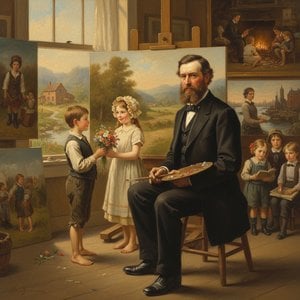
John George Brown: Capturing American Life & Sentiment in 19th-Century Genre Painting
Explore the captivating genre paintings of John George Brown, celebrated for his realistic depictions of 19th-century American life. Discover his legacy & find museum-quality reproductions at ArtsDot.