


 Vaata sisu
 Jaga teost
 Jaga
Jaga
 Detailid
 Õppekate juhend

 Laadi alla
 Sarnased teosed
 Röntgenuuring
 Slaidietendus
 Statistika
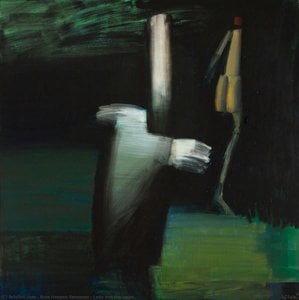
Marine Element
 1962
1962 81.0 x 65.0 cm
 Boschi Di Stefano House Museum
 Loe lähemalt
Ostke kõrglahutusel ja täiustatud digitaalne pilt, mis on oluliselt parem kui veebilehel näidatud eelvaade.
Iga fail on meie spetsialistide poolt hoolikalt ette valmistatud, kasutades kaasaegseid tööriistu ja professionaalset käsitsi retušeerimist. Tagame, et igal pildil on erakordne selgus, täpne värvitäpsus ja peen detail.
Lõplik fail saadetakse e-posti teel 72 tunni jooksul ning on optimeeritud koheseks kasutamiseks professionaalsetes, toimetuslikes ja trüki keskkondades. See on sama kvaliteet, mida usaldavad tipptasemel disainistuudiod, kirjastused ja galeriid.
Digitaalne pilt
Laadi alla kõrge resolutsiooniga fail isiklikuks vaatamiseks, trükkimiseks ja loomingulisteks projektideks. ( Lülita trükkitoodetele Telli käsitsi maalitud reproduktsioon)
Sisse kuulub iga digitaalse pildi tellimusega
Professionaalne digitaalne kohaletoimetamine, garanteeritud
Valides ArtsDot.com, ei saa sa lihtsalt pilti – saad professionaalselt parandatud digitaalse teose, mida on valmistatud täpsusega ja mis on toetatud rahuldamatusgarantiiga. Siin on kõik, mis sinu tellimusega automaatselt kaasneb:

Kiire e-posti edastus
Teie kõrge resolutsiooniga digitaalne pildifail saadetakse teile e-posti 72 tunni jooksul pärast tellimist – kohe kasutamiseks valmis.

Tehisintellektiga täiustatud digitaalne fail
Teie teos on professionaalselt optimeeritud arenenud tehisintellekti tööriistade ja käsitsi redigeerimise abil, tagades maksimaalse detailitaseme, selguse ja värvitäpsuse.

Tasuta eluaegne uuesti saatmine
Kas kustutasid faili kogukalu unustamisel või kustutamisel? Puudub mure – saad selle uuesti igal ajal ilma lisatasuta.

Puuduvad importimaksud – alati
Nautige oma teoseid koheselt ilma tolli-, maksude või tarnimaskuludeta – digiletchargused on alati maksuvabadud.

Värvitäpsuse garantii
Me tagame, et teie digitaalne pilt kajastaks originaali värve professionaalsete tööriistade ja värvihalduse abil võimalikult täpselt.

100 päeva rahuldamatuse garantii
Kui te ei ole oma digitaalse pildi eest rahul, siis me parandame seda või tagastame 100% summast 100 päeva jooksul – küsimusteta.

100% raha tagastamise garantii
Ei ole rahul? Saate täielise tagastaja 100 päeva jooksul pärast digitaalse faili kättesaamist – ilma küsimusteta.

Suurema tellimuse soodustused
Osta 3 pilti, säästa 10% - Osta 5, säästa 15% - Osta 10+, säästa 20%. Sobib suurepäraselt loomingulisteks projektideks, galeriideks ja agentuurideks.
Sarnased teosed




Kunstniku biograafia
Early Life and Artistic Foundations in Turin
Mario Bionda, born in the vibrant city of Turin, Italy on July 25th, 1913, emerged as an artist deeply rooted in the traditions of his region yet destined to forge a unique path within the evolving landscape of twentieth-century art. His formative years coincided with a period of significant social and political change, a backdrop that subtly informed his artistic sensibility. The young Bionda demonstrated an early aptitude for visual expression, leading him to seek tutelage under the esteemed Felice Casorati from 1927 to 1933. This mentorship proved pivotal; Casorati’s rigorous academic approach and emphasis on precise draftsmanship instilled in Bionda a foundational technical skill that would remain a hallmark of his work throughout his career. Casorati's studio wasn't merely a place for learning technique, but an immersive environment where the principles of composition, form, and light were meticulously explored. Bionda actively participated in group exhibitions organized by Casorati during this period, gaining early exposure to the art world and establishing himself within a network of fellow artists. These initial experiences fostered a collaborative spirit and provided valuable opportunities for critical feedback and artistic growth.Developing a Unique Vision: From Figurative Studies to Mixed Media Exploration
While deeply influenced by Casorati’s classical training, Bionda didn't remain confined within its boundaries. He embarked on a journey of artistic exploration that gradually led him away from purely figurative representation and towards more abstract modes of expression. This transition wasn’t abrupt but rather a slow unfolding, marked by experimentation with different materials and techniques. The post-war era witnessed a surge in artistic innovation, and Bionda responded to this climate by embracing new possibilities. He began incorporating diverse elements into his work – fragments of found objects, textured surfaces, and unconventional color palettes – ultimately leading him to develop a distinctive style characterized by mixed media compositions. This period reflects a broader shift within the Italian art scene, as artists sought to break free from traditional constraints and explore the psychological and emotional depths of human experience.The Evocative Power of ‘Marine Element’
Among Bionda's most recognized achievements is his mixed media artwork, *‘Marine Element’*, created in 1962. This piece encapsulates the artist’s evolving aesthetic and serves as a powerful example of his ability to synthesize diverse influences into a cohesive and emotionally resonant whole. The work isn’t simply a depiction of the sea; it's an evocation of its essence – its vastness, its power, its mystery. Through layers of texture, color, and form, Bionda captures not just the visual appearance of the marine world but also its underlying energy and emotional weight. The use of mixed media allows for a richness and complexity that would be difficult to achieve with traditional painting techniques alone. *‘Marine Element’* demonstrates Bionda's mastery of composition and his ability to create a sense of depth and movement within a two-dimensional space. It is a testament to his skill as a colorist, employing subtle gradations and unexpected juxtapositions to convey the shifting moods of the ocean.Historical Significance and Lasting Legacy
Mario Bionda’s contribution to Italian art lies in his ability to bridge the gap between tradition and innovation. He wasn't a revolutionary who sought to dismantle established norms, but rather an artist who skillfully adapted them to express his own unique vision. His early training under Felice Casorati provided him with a solid foundation in technique, while his later experimentation with mixed media allowed him to explore new avenues of artistic expression. Bionda’s work reflects the broader trends within twentieth-century art – the move towards abstraction, the exploration of psychological themes, and the embrace of diverse materials and techniques. While not as widely celebrated as some of his contemporaries, Bionda's *‘Marine Element’* and other works continue to resonate with viewers today, offering a glimpse into the mind of an artist deeply connected to both his historical roots and the evolving world around him. His influence can be seen in the work of subsequent generations of Italian artists who have sought to blend tradition with innovation and explore the emotional depths of human experience through mixed media compositions.Further Exploration
- Key Influences: Felice Casorati, Italian Futurism, Abstract Expressionism.
- Recurring Themes: Coastal landscapes, the sea, emotional abstraction, texture and form.
- Notable Works: ‘Marine Element’ (1962), various mixed media compositions from the 1950s-1970s.
- Artistic Style: Mixed Media, Abstract Expressionism with Figurative Roots

Mario Bionda
1913 - , Italy
Kiired faktid
- Full Name: Mario Bionda
- Nationality: Italian
- Date Of Birth: 1913
- Place Of Birth: Turin, Italy
- Notable Artworks: ['Marine Element']
- Artistic Movement Or Style: Informel
- Artists Who Influenced This Artist: ['Felice Casorati']
- Artists Or Movements Influenced By This Artist: ['Abstract Expressionism']