


 Vaata sisu
 Jaga teost
 Jaga
Jaga
 Detailid
 Õppekate juhend

 Laadi alla
 Sarnased teosed
 Röntgenuuring
 Slaidietendus
 Statistika
Three Graces Blue
 Abstract Expressionism
 1966
1966 168.0 x 178.0 cm
 Loe lähemalt
Sellel lehel kuvatav kunstiteos on kaitstud autoriõigusega, mis tähendab, et meil ei ole seaduslikku õigust luua või müüa identset reproduktsiooni. Seda kaitset rakendatakse rahvusvaheliste kokkulepete alusel, nagu näiteks Berne konventsioon ning riiklike seadustega, sealhulgas nendega, mida on sätestatud USA autoriõiguse seadus – 17. peatükk.
See meetod järgib täielikult autoriõiguse reegleid, kuna see ei põhine kaitstud kunstiteose kopeerimisel või dupliteerimisel. Selle asemel on tegu loova reinterpreetatsiooniga – uue maaldisega, mis on algteosest inspireeritud, kuid ei ole sellest identiline.
Giclée / Kunstiprint
Muuseumikvaliteediga giclée- või kangasprint kiire tootmisega ja paindlikud viimistlusvõimalused. ( Telli käsitsi maalitud reproduktsioon Ülemineku digitaalse pildi müügi kanalisse)




































Vali meie eelmääratud suurused, mis vastavad teose algupärastele proportsioonidele.

Sisestage vajalik laius ja kõrgus, et see sobiks teie raamile või seinale. Trükki saab ainult lõigata, seda ei saa kunagi pildist suuremaks teha, seega ka differentse vormiga suurus kaotab osa pildist. Enne trükkimist saadame teile kinnitamiseks digitaalse näidisprojektsiooni. Sellel lehel näidatud pilt ei kujuta reaalset lõiget — seda näitab ainult näidisprojekttsioon.
Ülemaailmne tarne () 2 nädala jooksul, tavalise 4/5 nädala asemel. (23 oktoober)

Tasuta ekspresssaatmine üle maailma

Kõrgekvaliteediline lina-kangastest muld

Täielik transpordikindlustus

Tollimaksude tagastamise garantii

Värvitoime täpsuse garantii

100 päeva tagastusõigus (ainult defektide korral)

100% raha tagasi garantii

Hulgusoodustus
 Klaasivalik on saadaval ainult kuni 110 cm suuruses teostes

Three Graces Blue
Giclée / Kunstiprint
Reproduktsiooni mõõtmed
-


Lõppsumma
€ 54
Sarnased teosed


Kunstniku elulugu
Lester F. Johnson: A Figure in the Urban Landscape
Lester Frederick Johnson (1919-2010) wasn’t a name immediately recognized by the public, yet his work quietly held a significant place within the pantheon of New York School painters. He was an American figurative expressionist who dedicated his career to capturing the essence of the human figure amidst the vibrant, often gritty, backdrop of New York City. More than simply depicting individuals, Johnson sought to distill the spirit and energy of urban life—the anonymous faces in crowded streets, the fleeting moments of connection, and the underlying currents of a rapidly changing metropolis. His legacy lies not just in his paintings but also in his unwavering commitment to his craft, spanning nearly seven decades and witnessing profound shifts in artistic styles and cultural landscapes. Johnson’s early years provided a grounding for his future artistic pursuits. Born in Minneapolis, Minnesota, in 1919, the youngest of seven children within a Swedish homesteading family, he developed an appreciation for both the natural world and the complexities of human relationships. This formative experience instilled a deep sense of observation and empathy—qualities that would later inform his approach to painting. After studying at the Minneapolis School of Art and the St. Paul Art School, Johnson arrived in New York City in 1947, a pivotal moment that irrevocably shaped his artistic trajectory. His initial studio was nestled next door to Wolf Kahn on 6th Street and Avenue A, a location that immediately immersed him within the burgeoning art scene of Greenwich Village. This proximity fostered collaboration and exchange with other emerging artists, including Larry Rivers and Jim Fosberg, who shared a loft space with Johnson in St. Mark’s Place – a hub for creative experimentation during those formative years. Johnson's artistic development was deeply intertwined with the evolving currents of post-war American art. Initially influenced by Abstract Expressionism, particularly the gestural painting championed by artists like Jackson Pollock and Willem de Kooning, he gradually moved toward a more focused representation of the human figure. This shift wasn’t merely stylistic; it reflected a growing interest in exploring the psychological and social dimensions of urban experience. His early works often featured stark profiles and frontal depictions of anonymous figures, rendered in monochrome palettes that emphasized their integration into the city's landscape—as if they were integral components of its very fabric. The 1954 Provincetown summer proved to be a crucial period of artistic exploration, where Johnson joined a collective of artists including Kahn, Jan Müller, and Bob Thompson, absorbing the vibrant energy of the coastal arts community. This experience broadened his perspective and solidified his commitment to capturing the dynamism of urban life. Throughout the 1960s and beyond, Johnson’s style continued to evolve, incorporating richer colors and more detailed depictions of individuals within crowded street scenes. He moved away from purely abstract forms, imbuing his figures with a sense of personality and narrative—capturing not just their physical appearance but also their emotional states. His paintings became increasingly layered, reflecting the complexities of urban life and the diverse experiences of its inhabitants. Johnson’s work was exhibited at prestigious galleries across New York City – including the Martha Jackson Gallery, Zabriskie Gallery, Gimpel & Weitzenhoffer, and James Goodman Gallery – as well as in major museum group shows at institutions like the Guggenheim, Whitney Museum of American Art, and Metropolitan Museum of Art. Notably, he was elected a member to both the American Academy of Arts & Letters and National Academy of Design, recognizing his significant contribution to the art world. In 2010, his work was showcased in the Armory Show and Art Chicago, demonstrating his continued relevance and influence within contemporary art discourse. Johnson’s artistic journey wasn't confined solely to New York City; he also found inspiration in the quieter landscapes of Long Island, establishing a summer home in Springs, Long Island, beginning in 1955. This retreat provided him with respite from the intensity of urban life and allowed him to reconnect with nature—a recurring theme in his work. He also spent time teaching at Yale University (1969-1974), sharing his knowledge and experience with a new generation of artists. His dedication to art education underscored his belief in the transformative power of creative expression. Johnson’s life, marked by both artistic achievement and personal connection, culminated in 2010, leaving behind a rich legacy of paintings that continue to resonate with viewers today. Key achievements include: membership in prestigious artistic organizations, consistent exhibition at leading galleries, and the enduring impact of his unique vision within the New York School movement.The Figure as Urban Echo
Johnson’s approach to painting was deeply rooted in observation and empathy. He wasn't interested in creating idealized representations of individuals; instead, he sought to capture the essence of their humanity—their vulnerability, resilience, and connection to the urban environment. His figures are often rendered with a sense of immediacy and spontaneity, reflecting the fleeting moments of interaction that occur within crowded city streets. The use of monochrome palettes in his early works served to emphasize the anonymity of these individuals, highlighting their integration into the city’s landscape—as if they were simply another element within its complex tapestry. As he evolved his style, Johnson incorporated richer colors and more detailed depictions of figures, imbuing them with a sense of personality and narrative. His paintings became increasingly layered, reflecting the complexities of urban life and the diverse experiences of its inhabitants.- Early Influences: Abstract Expressionism (Pollock, de Kooning) provided a foundation for his exploration of gesture and emotion.
- Key Themes: The human figure in the context of urban life; anonymity versus individuality; the energy and dynamism of New York City.
- Technique: Characterized by bold brushstrokes, layered compositions, and a skillful use of color to convey mood and atmosphere.

Lester F. Johnson
1919 - 2010
Lühikest infot
- Artistic Movement Or Style: Figurative Expressionism
- Artists Or Movements Influenced By This Artist: ['New York School']
- Artists Who Influenced This Artist: ['Hofmann']
- Date Of Birth: 1919
- Date Of Death: 2010
- Full Name: Lester F Johnson
- Nationality: American
- Notable Artworks:
- Various NYC scenes
- Human figure studies
- Place Of Birth: Minneapolis, Minnesota
Sarnased artiklid

Abstract Ekspressionismi 10 Meisterteost: Kunsti ja Sisustamise Klassikat
Sukeldu abstraktse ekspressionismi maailma! Avasta 10 legendaarset kunstiteost – Pollock, Rothko jt. – ja nende loo. Leia inspiratsiooni interjööriks ning kaunista kodu ArtsDot.com kvaliteetsete reproduktsioonidega. Uuri kollektsiooni!

Geomeetrilise Abstraktsiooni 10 Meisterteost: Kunst ja Kodukaunistus ArtsDot.com-is
Avastage geomeetrilise abstraktsiooni 10 suurteost – Kandinsky, Mondrian ja teised. Lugege kunstiteoste lugusid ning leidke inspiratsiooni kodukaunistuseks ArtsDot.com-is! Kunstikollektsioon ja reprodutsioonid.

Slate Blue Masterpieces: 10 Iconic Paintings & Timeless Home Decor Ideas
Immerse yourself in the captivating world of slate blue! Explore 10 iconic paintings by Monet, Van Gogh & Renoir. Discover their stories, techniques & find museum-quality art reproductions for your home at .
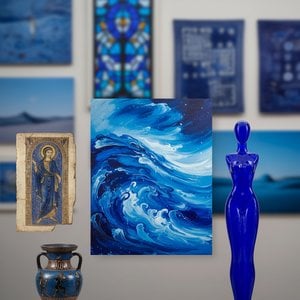
The Allure of Azure: Exploring the Symbolic & Aesthetic Depths of Blue in Art History
Explore the rich history of blue in art! Discover its symbolism, from ancient pigments to modern masterpieces by Kandinsky & Seurat. Uncover the psychological impact and cultural meanings behind this captivating hue.

Kandinsky's Masterpieces: 25 Paintings That Define Abstract Art | ArtsDot
Journey through Wassily Kandinsky's 25 most iconic abstract paintings. Explore his revolutionary use of color, form & spiritual expressionism. Find museum-quality Kandinsky reproductions and elevate your home decor with ArtsDot.com. Discover all masterpieces on ArtsDot.com!