

- 229.0 x 204.0 cm

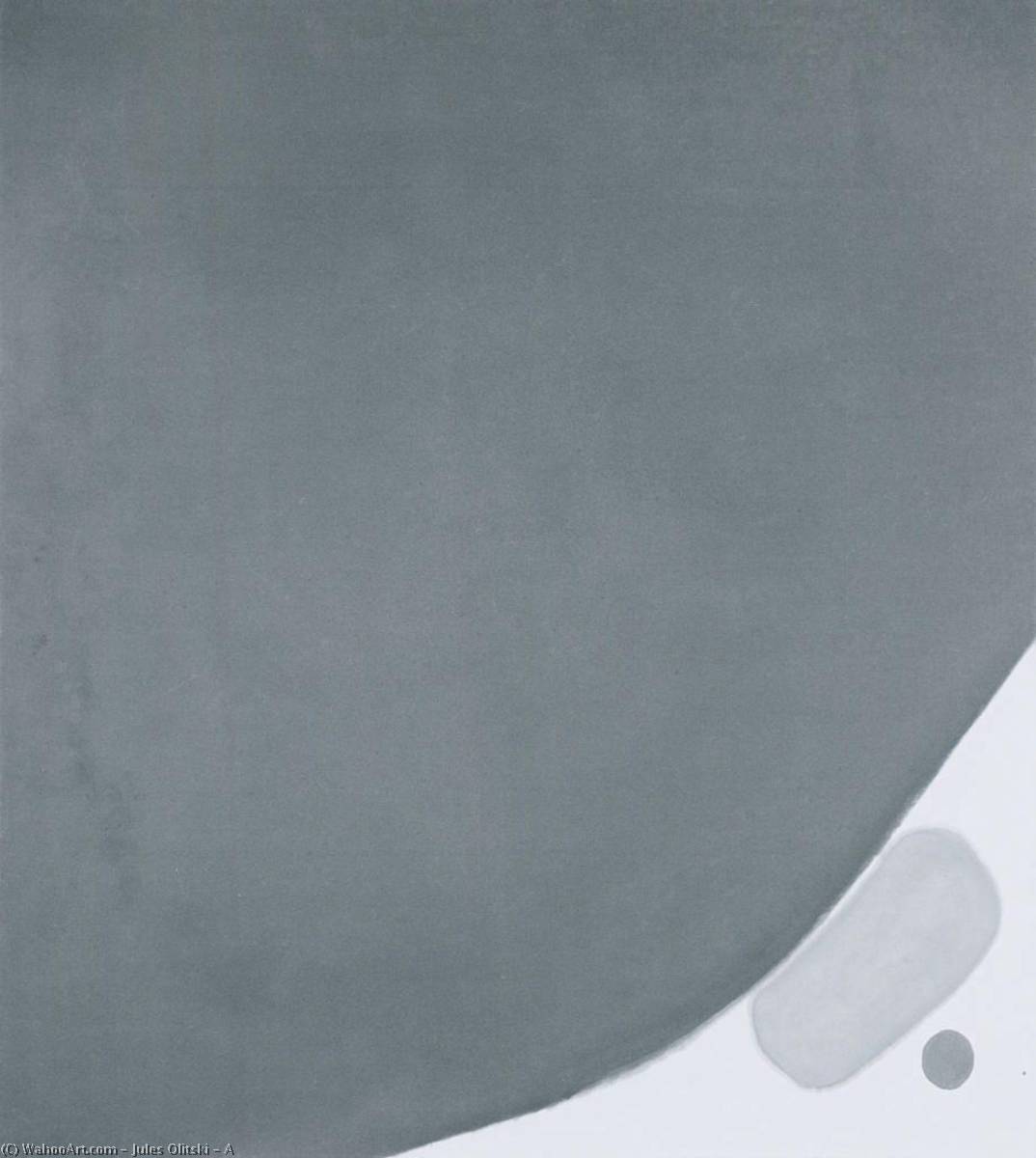
Teos järgib teie valikuid: , .
Kunstniku elulugu
Explore the vibrant abstract world of Jules Olitski (1922-2007), a key figure in Color Field painting & Lyrical Abstraction. Discover his innovative spray paint techniques, atmospheric canvases, and influence on modern art.
 Loe lähemalt
Käsitsi valmistatud õlimaalireproduktsioon
Meie kunstnike poolt tellimusel valmistatud käsitsi maalitud õli-kainaste teos teie soovitud suuruses ja raamis. ( Lülita trükkitoodetele Lülita digitaalse pildi juurde)
See teos on autoriõigusega kaitstud
Sellel lehel kuvatav kunstiteos on kaitstud autoriõigusega, mis tähendab, et meil ei ole seaduslikku õigust luua või müüa identset reproduktsiooni. Seda kaitset rakendatakse rahvusvaheliste kokkulepete alusel, nagu näiteks Berne konventsioon ning riiklike seadustega, sealhulgas nendega, mida on sätestatud USA autoriõiguse seadus – 17. peatükk.
Austasena ja seaduslikuna alternatiivina pakume originaalist inspireeritud, käsitsi maalitud isikupärastatud teoseid. Meie osutavad ja professionalsed kunstnikud uurivad hoolikalt originaali stiili, meelemoi ja kunstilist olemust, et luua uus, ainulaadne teos, mis tekitab sama tunnet – olles samal ajal omaette originaalne looming.
See meetod järgib täielikult autoriõiguse reegleid, kuna see ei põhine kaitstud kunstiteose kopeerimisel või dupliteerimisel. Selle asemel on tegu loova reinterpreetatsiooniga – uue maaldisega, mis on algteosest inspireeritud, kuid ei ole sellest identiline.
Lisateavet selle maali kohta
 Eelvaade
 Saada
Saada Jaga
Jaga
 Teave teose kohta
 Juhend

 Laadi alla
 Sarnased teosed
 Röntgenuuring
 Slaidietendus
 KÜSIMUSED JA VASTUSID
 Statistika
Tellige oma maali neljas lihtsas sammus
Ärge kiirustage. Saate igal hetkel vastuseid muuta; tellimuskarril kuvatav hind muutub vastavalt tehtud valikutele.
1 Esimene samm neljast
Millist suurust soovite?
Need suurused säilitavad originaalteose proportsioonid. Joonis näitab teie valikut seina küljel, kaheMeetise diivani kohal.
Või sisesta oma mõõdud
Vali meie eelmääratud suurused, mis vastavad teose algupärastele proportsioonidele.

Sisestage vajalik laius ja kõrgus, et teos sobiks teie raamile või seinale. Kuna tegu on käsipainatud teosega, siis erineva kujuga suuruse korral võib kunstnik jätta pildi ümber veidi rohkem marginaali või lõigata osa ära — valik on teie. Enne maali alustamist saadame teile kinnitamiseks digitaalse näidisprojektsiooni. Sellel lehel näidatud pilt ei kajasta tegelikku tulemust — seda näitab ainult näidisprojektsioon.
2 Teine samm neljast
Kuidas see peaks valmistatud olema: rullitud, pingutatud või raamitud?
Alljadevad hinnad kehtivad esimeses sammus valitud suuruse kohta.
Vali pingutatud kanga servade stiil
Vali oma raam

Valge serv €1

häguse servaga lõppviimistlus €1

Laiendatud €1

P118B €10

P118H €10

P118W €10

P438Z €10

P508JH €12

P508YH €12

P805H €10

P805Z €10

P919BZ €10

P919G €10

P919XJ €10

P959ZH €10

P968JZ €12

W106C €8

W218G €10

W218JH €8

W218Y €10

W307PJ €10

W316G €10

W316PJ €8

W316Y €10

W398PJ €8

W4111J €10

W500HY €15

W500JH €15

W692G €12

W849H €8

W940BG €15

W953PJ €8

H24-GOLD €30

H24-SILVER €30

H36-GOLD €45

H36-SILVER €45
Raamitud
Kujund: . Kogumõõt koos raamiga: .
3 Kolmandas sammis neljast
Kas soovite maalis midagi muuta?
Enamik inimesi vastab ei. Kuna iga maali on käsitsi valmistatud, saab meie kunstnik seda ka teie soovidega kohandada.
Pärast tellimust saadetab ArtsDot.com meeskond klientile e-posti juhised ning esitab ette tasandatud eelvaate
4 Neljas samm neljast
Mõned lõppviimistlusvõimalused
Kõik need on valimiste korral vabatahtlikud. Juba valitud vastustele ei rakendu täiendav kulu.
Kes selle maalis?
Maailmline tarne 3–4 nädala jooksul tavalise 5 nädala asemel. (7 november). Kvaliteedis kompromisse ei tehta.
Nimetelis, nagu muuseumis?
Graveeritud pronksplaadi üksikasjad
This elegant plaque features the artist's name and the title of the artwork, finely engraved for a timeless presentation.
It is made from bronze with a refined, elegant finish. The text is precisely laser-engraved for a sharp and permanent result. Measuring 9x2 cm, the plaque is compact yet easy to read. It's built to be durable and scratch-resistant, offering a professional, museum-quality look. Mounting is simple thanks to the included adhesive backing.
Läbipaistva akrüülplaadi üksikasjad
The plaque includes essential engraved details such as the artist's name, the title of the artwork, the date it was created, the type of media used-like oil on canvas or watercolor-a brief description of the piece, and a QR code that links to the complete artwork information.
It is crafted from clear acrylic, offering a sleek, modern appearance. The text is UV-engraved in black to ensure strong visual contrast. With a size of 10x15 cm, it ensures optimal readability. It comes equipped with two metal hooks for secure wall mounting. The plaque is designed to be weather-resistant, making it suitable for various environments, and it includes interactive features that work seamlessly with smartphone scanning.
Musta akrüülplaadiรายละเอียด (Note: The user provided "Musta akrüülplaadi detailid" as the current translation and asked for an improved version. Since "Musta akrüülplaadi
This elegant plaque includes engraved information such as the artist's name, the title of the artwork, the date it was created, the type of media used (like oil on canvas or watercolor), a short description of the artwork, and a QR code for quick access to more information.
The plaque itself is made from refined black acrylic with a premium finish. The text is laser-engraved in white for high contrast and readability. Its size is 10x15 cm, designed to be easy to read. It comes with two metal hooks for professional mounting. The design is sleek and fits any interior style. It is also weather-resistant and durable, with built-in digital integration for mobile compatibility.
Kaitsev lakikih?
Millal te seda vajate?
✓ Kontrolli ja telli
Teie maalid vastavalt tellimusele

A
Reproduktsiooni tehnika
Reproduktsiooni suurus
-

Eelistatud tippkunstnik
Rohkem detaile, peenust ja lisatootmisaega
-

Reproduktsiooni raamivalikud
-
-
Kunstiteoste või reproduktsioonide puhul, mille üks külg on üle 105 cm (umbikmolt 41 tolli), saadetakse raam kirjal asendis, la Dismantlitud komplektina. See meetod tagab ohutuse kohaletoimetamisel ja väldib transpordil tekkivaid kahjustusi.
Vajalik professionaalne kokkupanek – see ei ole isetegevusega valmistamiseks mõeldud toode.
Komplekt tuleb kokku panna ja lõvet pingutada kogemusega professionaalse raamija, kasutades puiduliim (ei kuulu komplekti), lõvetpingi ja klempe, et hoida raami kande mustad õigena liimi kuivamisaja jooksul. Vale kokkupanek või ebaühtlane lõvetping võib kunstiteost püsivalt kahjustada ning seda
 Kunstiteoste või reproduktsioonide puhul, mille üks külg on üle 105 cm (umbikmolt 41 tolli), saadetakse raam kirjal asendis, la Dismantlitud komplektina. See meetod tagab ohutuse kohaletoimetamisel ja väldib transpordil tekkivaid kahjustusi.
Kaasatud on kõik tahked puidust liistud, täpselt lõigatud vastavaks suuruseks.
Kokku panemiseks kasutatakse lisatud kruvisid ning nurkade liimamiseks vajalikku puuliima, mida ei ole komplektis ja mida peab raamivalmistaja ise hankima.
Vajalik on kasutada professionaalseid tööriistu, mis ei kuulu komplekti: lõvetelapide pingist (pingutaja) ja klambreid, et hoida raami puidu nurgas õigena liimi kuivamisaja jooksul.
Oluline:
Nurgaliimamiseks on vaja puiduliim, liimimine peab toimuma klempide all kuni liim on täielikult kuivanud ning kokku monteeritud raami kanga pingutamiseks on vajalik kanga pingutustang. Kumbki neist ei kuulu komplekti. Palun veenduge enne selle suuruse tellimist, et teil on saadaval kogenud professionaalne raamistaja.

Nimesildikiri
-
-

Kaitsevärnitsus
Läikiv lakk (muudab värvid elavamaks ning kaitseb valgust ja niiskust eest)
-

Kohanda oma teost
Näiteid muudatuste kohta: Asenda nägu kliendi fotoga; Lisa lemmikloom (nt asenda kass koeraga); Lisa taustale peidetud sõnum; Muuda tausta maastikku või elemente.
-

Kiire tarne
Ülemaailmne tarne riiki 3–4 nädalaga tavalise 5 nädala asemel. (7 november). Kvaliteedis kompromisse ei tehta.
-
Kiirsaatmine
Ülemaailmne tarne () 5 nädala jooksul. (14 november).
Sisse kuuluv
Koguhind
€ 235
Klaasivalik on saadaval ainult kuni 110 cm suuruses teostes
Säli iga tellimusega
- Tasuta ekspresssaatmine üle maailma
- Kõrgekvaliteediline lina-kangas
- Täielik transpordikindlustus
- Tollimaksude tagastamise garantii
- Värvitoime täpsuse garantii
- 100 päeva tagastusõigus (ainult valmistusdefektide korral)
- 100% raha tagasi garantii
- Hulgusoodustus


Sarnased teosed


Jules Olitski
1922 - 2007, Ukraine
Kunstniku elulugu
The Luminous Legacy of Jules Olitski
The story of Jules Olitski is one of profound transformation, a journey that began in the turbulent shadows of Soviet Ukraine and culminated in the radiant, weightless expanses of American abstraction. Born Jevel Demikovsky in 1922 within the Snizhne region, his early life was marked by the heavy hand of political upheaval. The execution of his father during the era of Stalinist repression left an indelible mark on the young artist, instilling a resilience that would later define his creative spirit. Emigrating to the United States as a child with his mother and grandmother, Olitski found a new home in Brooklyn, where the vibrant, pulsing energy of postwar New York City began to shape his burgeoning artistic sensibilities.
His path toward mastery was paved through rigorous academic pursuit and an insatiable curiosity for the mechanics of light and shadow. After studying at the Pratt Institute and the National Academy of Design, the G.I. Bill provided him with a transformative opportunity to study in Paris during the late 1940s. It was in the studios of Europe—specifically at the Ossip Zadkine School and the Académie de la Grande Chaumiére—that Olitski began a deliberate process of artistic stripping. He sought to shed the heavy, gestural habits of traditional painting, looking instead toward the psychological depth found in the tonal subtleties of Rembrandt. This period of self-assessment was crucial; he was not merely learning new techniques but was actively deconstructing his own perception to find a more pure form of expression.
A Revolution of Color and Atmosphere
Olitski’s true artistic breakthrough arrived in 1951 with his debut at Galerie huit in Paris, marking the beginning of a trajectory that would redefine the boundaries of the canvas. While many of his contemporaries were immersed in the frantic, muscular energy of Abstract Expressionism, Olitski moved in a different direction. He began to reject chromatic excess in favor of monochromatic explorations and expansive, atmospheric voids. His work became a meditation on the essence of color itself, rather than a vehicle for narrative or figure.
To achieve this, he pioneered a revolutionary technique that bridged the gap between painting and atmosphere. By utilizing spray guns to apply thin, delicate layers of acrylic paint, he was able to create surfaces that appeared almost weightless, as if the color were not sitting upon the canvas but emanating from within it. This method allowed for:
- Atmospheric Luminosity: The creation of surfaces that seem to glow with an internal light, capturing fleeting moments of brilliance.
- Textural Innovation: A departure from heavy impasto toward a smooth, ethereal texture that invites the viewer into a state of contemplation.
- Chromatic Vibration: The ability to layer colors so finely that they appear to vibrate against the retina, creating a sense of depth without physical mass.
Works such as Kristina Type 3 exemplify this mastery, where sun-drenched yellows and stark whites interact to create a window into a pure dimension of light. In these canvases, Olitski achieved what many thought impossible: the depiction of the intangible.
Historical Significance and the Color Field Movement
As a central figure in the development of Color Field painting and Lyrical Abstraction, Olitski’s influence on 20th-century art cannot be overstated. He helped shift the focus of the art world from the "action" of the painter to the "experience" of the viewer. His canvases do not demand to be read like a story; they demand to be felt as environments. By removing the trace of the brushstroke, he removed the ego of the artist, leaving only the pure, unadulterated presence of color.
His legacy is found in the way modern abstraction approaches the concept of space and perception. Through his innovative use of spray paint and his commitment to exploring the limits of monochromatic depth, Olitski transformed the canvas from a flat surface into a profound, immersive landscape. He remains a titan of mid-century abstraction, an artist who took the trauma of his early life and transmuted it into a legacy of light, air, and infinite color.