


The picture follows your choices: , .
Kogumisobjekti kirjeldus
Admire Josse de Corte’s neoclassical marble bust of Medusa – a stunning example of Baroque sculpture. Explore intricate detail & timeless beauty in this captivating artwork.
Kunstniku elulugu
Discover Josse de Corte (1627-1679), a Flemish Baroque sculptor renowned for dramatic religious scenes & intricate marble carvings like the Altar of the Crucifixion.
 Loe lähemalt
Käsitsi valmistatud õlimaalireproduktsioon
Meie kunstnike poolt tellimusel valmistatud käsitsi maalitud õli-kainaste teos teie soovitud suuruses ja raamis. ( Lülita trükkitoodetele Lülita digitaalse pildi juurde)
More about this painting
 Eelvaade
 Saada
Saada Jaga
Jaga
 Teave teose kohta
 Juhend

 Laadi alla
 Sarnased teosed
 Röntgenuuring
 Slaidietendus
 Q&A
Q&A Statistika
Order your painting in four simple steps
Take your time. You can change any answer; the price in your order card follows each choice.
1 Step one of four
Which size would you like?
These sizes keep the proportions of the original painting. The drawing shows your choice on a wall, above a two-metre sofa.
Or give your own measurements
Vali meie eelmääratud suurused, mis vastavad teose algupärastele proportsioonidele.

Sisestage vajalik laius ja kõrgus, et teos sobiks teie raamile või seinale. Kuna tegu on käsipainatud teosega, siis erineva kujuga suuruse korral võib kunstnik jätta pildi ümber veidi rohkem marginaali või lõigata osa ära — valik on teie. Enne maali alustamist saadame teile kinnitamiseks digitaalse näidisprojektsiooni. Sellel lehel näidatud pilt ei kajasta tegelikku tulemust — seda näitab ainult näidisprojektsioon.
2 Step two of four
How should it be prepared: rolled, stretched or framed?
The prices below are for the size you chose in step one.
Choose the edges of the stretched canvas
Choose your frame

White €1

Blurside €1

Extended €1

P118B €10

P118H €10

P118W €10

P438Z €10

P508JH €12

P508YH €12

P805H €10

P805Z €10

P919BZ €10

P919G €10

P919XJ €10

P959ZH €10

P968JZ €12

W106C €8

W218G €10

W218JH €8

W218Y €10

W307PJ €10

W316G €10

W316PJ €8

W316Y €10

W398PJ €8

W4111J €10

W500HY €15

W500JH €15

W692G €12

W849H €8

W940BG €15

W953PJ €8

H24-GOLD €30

H24-SILVER €30

H36-GOLD €45

H36-SILVER €45
Raamitud
Moulding: . Overall size with the frame: .
3 Step three of four
Would you like anything changed in the painting?
Most people answer no. Because each painting is made by hand, our artist can also adapt it for you.
After order, ArtsDot.com team will email client for instructions and provide a mockup preview
4 Step four of four
A few finishing options
All of them are optional. The answers already selected cost nothing extra.
Who paints it?
Maailmline tarne 3–4 nädala jooksul tavalise 5 nädala asemel. (2 november). Kvaliteedis kompromisse ei tehta.
A nameplate, as in a museum?
Graveeritud pronksplaadi üksikasjad
This elegant plaque features the artist's name and the title of the artwork, finely engraved for a timeless presentation.
It is made from bronze with a refined, elegant finish. The text is precisely laser-engraved for a sharp and permanent result. Measuring 9x2 cm, the plaque is compact yet easy to read. It's built to be durable and scratch-resistant, offering a professional, museum-quality look. Mounting is simple thanks to the included adhesive backing.
Läbipaistva akrüülplaadi üksikasjad
The plaque includes essential engraved details such as the artist's name, the title of the artwork, the date it was created, the type of media used-like oil on canvas or watercolor-a brief description of the piece, and a QR code that links to the complete artwork information.
It is crafted from clear acrylic, offering a sleek, modern appearance. The text is UV-engraved in black to ensure strong visual contrast. With a size of 10x15 cm, it ensures optimal readability. It comes equipped with two metal hooks for secure wall mounting. The plaque is designed to be weather-resistant, making it suitable for various environments, and it includes interactive features that work seamlessly with smartphone scanning.
Musta akrüülplaadiรายละเอียด (Note: The user provided "Musta akrüülplaadi detailid" as the current translation and asked for an improved version. Since "Musta akrüülplaadi
This elegant plaque includes engraved information such as the artist's name, the title of the artwork, the date it was created, the type of media used (like oil on canvas or watercolor), a short description of the artwork, and a QR code for quick access to more information.
The plaque itself is made from refined black acrylic with a premium finish. The text is laser-engraved in white for high contrast and readability. Its size is 10x15 cm, designed to be easy to read. It comes with two metal hooks for professional mounting. The design is sleek and fits any interior style. It is also weather-resistant and durable, with built-in digital integration for mobile compatibility.
A protective varnish?
When do you need it?
✓ Check and order
Your painting, as you ordered it

Envy
Reproduktsiooni tehnika
Reproduktsiooni suurus
-

Eelistatud tippkunstnik
Rohkem detaile, peenust ja lisatootmisaega
-

Reproduktsiooni raamivalikud
-
-
Kunstiteoste või reproduktsioonide puhul, mille üks külg on üle 105 cm (umbikmolt 41 tolli), saadetakse raam kirjal asendis, la Dismantlitud komplektina. See meetod tagab ohutuse kohaletoimetamisel ja väldib transpordil tekkivaid kahjustusi.
Vajalik professionaalne kokkupanek – see ei ole isetegevusega valmistamiseks mõeldud toode.
Komplekt tuleb kokku panna ja lõvet pingutada kogemusega professionaalse raamija, kasutades puiduliim (ei kuulu komplekti), lõvetpingi ja klempe, et hoida raami kande mustad õigena liimi kuivamisaja jooksul. Vale kokkupanek või ebaühtlane lõvetping võib kunstiteost püsivalt kahjustada ning seda
 Kunstiteoste või reproduktsioonide puhul, mille üks külg on üle 105 cm (umbikmolt 41 tolli), saadetakse raam kirjal asendis, la Dismantlitud komplektina. See meetod tagab ohutuse kohaletoimetamisel ja väldib transpordil tekkivaid kahjustusi.
Kaasatud on kõik tahked puidust liistud, täpselt lõigatud vastavaks suuruseks.
Kokku panemiseks kasutatakse lisatud kruvisid ning nurkade liimamiseks vajalikku puuliima, mida ei ole komplektis ja mida peab raamivalmistaja ise hankima.
Vajalik on kasutada professionaalseid tööriistu, mis ei kuulu komplekti: lõvetelapide pingist (pingutaja) ja klambreid, et hoida raami puidu nurgas õigena liimi kuivamisaja jooksul.
Oluline:
Nurgaliimamiseks on vaja puiduliim, liimimine peab toimuma klempide all kuni liim on täielikult kuivanud ning kokku monteeritud raami kanga pingutamiseks on vajalik kanga pingutustang. Kumbki neist ei kuulu komplekti. Palun veenduge enne selle suuruse tellimist, et teil on saadaval kogenud professionaalne raamistaja.

Nimesildikiri
-
-

Kaitsevärnitsus
Läikiv lakk (muudab värvid elavamaks ning kaitseb valgust ja niiskust eest)
-

Kohanda oma teost
Näiteid muudatuste kohta: Asenda nägu kliendi fotoga; Lisa lemmikloom (nt asenda kass koeraga); Lisa taustale peidetud sõnum; Muuda tausta maastikku või elemente.
-

Kiire tarne
Ülemaailmne tarne riiki 3–4 nädalaga tavalise 5 nädala asemel. (2 november). Kvaliteedis kompromisse ei tehta.
-
Kiirsaatmine
Ülemaailmne tarne () 5 nädala jooksul. (9 november).
Sisse kuuluv
Koguhind
€ 234
Klaasivalik on saadaval ainult kuni 110 cm suuruses teostes
Included with every order
- Tasuta ekspresssaatmine üle maailma
- Kõrgekvaliteediline lina-kangas
- Täielik transpordikindlustus
- Tollimaksude tagastamise garantii
- Värvitoime täpsuse garantii
- 100 päeva tagastusõigus (ainult valmistusdefektide korral)
- 100% raha tagasi garantii
- Hulgusoodustus


Sarnased teosed


Josse De Corte
1627 - 1679, Belgium
Kunstniku elulugu
Josse de Corte: A Master of Baroque Drama
Josse de Corte (1627-1679) stands as a pivotal figure in the vibrant artistic landscape of 17th-century Flanders, a period defined by dramatic religious fervor and burgeoning classical influences. Born in Ypres, a strategically important city at the heart of the Spanish Netherlands, his early life remains somewhat shrouded in mystery, though it’s believed he received foundational training in Rome under the tutelage of François Duquesnoy, a renowned sculptor known for his elegant and refined style. This Roman education proved crucial, laying the groundwork for de Corte's own distinctive approach – one that skillfully blended the dynamism of Baroque aesthetics with a growing appreciation for classical forms.
De Corte’s career truly blossomed in Venice, a city then at the epicenter of European art and commerce. He arrived around 1657 and quickly established himself as a sought-after sculptor, commanding commissions from wealthy patrons and religious institutions throughout the Venetian Republic. This move marked a significant shift; Venice offered a radically different artistic environment than his native Flanders – one characterized by intense competition, a diverse range of influences (including Italian Mannerism and Caravaggismo), and a thriving market for sculpture intended to adorn lavish churches and palazzi.
The Sculptor’s Palette: Technique and Style
De Corte's sculptures are immediately recognizable for their dramatic intensity and meticulous detail. He possessed an extraordinary ability to convey emotion through gesture, expression, and the manipulation of light and shadow. Unlike some of his contemporaries who favored a more restrained approach, de Corte embraced theatricality, often depicting scenes of religious ecstasy or profound suffering with startling realism. His works are characterized by a powerful sense of movement – figures seem poised on the brink of action, caught in moments of intense spiritual experience.
His mastery of marble carving was particularly noteworthy. He worked primarily with white marble, skillfully exploiting its inherent luminosity and translucence to create surfaces that shimmered with an almost ethereal quality. He employed a technique known as *schiacciato*, or “flattening,” which involved subtly manipulating the surface of the stone to create the illusion of depth and volume. This technique, combined with his precise modeling skills, allowed him to achieve remarkable anatomical accuracy while maintaining a sense of dynamism and movement.
Key Works: A Testament to His Vision
Among de Corte’s most celebrated achievements is undoubtedly the ‘Altar of the Crucifixion’ (1672), currently housed in ArtsDot's collection. This monumental work exemplifies his signature style – a dramatic depiction of Christ’s sacrifice rendered with breathtaking realism and emotional intensity. The intricate marble carvings, showcasing the agony and compassion of the figures involved, are a testament to his technical skill and artistic vision.
Another significant piece is “Envy” (1660), a neoclassical marble bust of Medusa, demonstrating his growing interest in classical forms. The sculpture captures the terrifying beauty of the Gorgon’s visage with remarkable detail, reflecting a shift towards greater restraint and elegance in his style as he matured.
Furthermore, de Corte's contribution to the High Altar for Santa Maria della Salute in Venice remains a cornerstone of Baroque art. This colossal sculptural complex, depicting the Virgin Mary expelling the plague, is considered one of his masterpieces, showcasing his ability to create monumental works that powerfully conveyed religious themes and emotions.
Legacy and Influence
Josse de Corte’s impact on 17th-century sculpture extends beyond his individual creations. He played a crucial role in shaping the artistic landscape of Venice, fostering a vibrant community of sculptors and influencing the work of subsequent generations. His dynamic style, combined with his technical mastery, helped to establish Baroque sculpture as a dominant force in Europe.
His association with the Somascan Fathers at Santa Maria della Salute further cemented his legacy, contributing significantly to the elaborate sculptural decoration of one of Venice’s most iconic churches. De Corte's work continues to be studied and admired for its dramatic intensity, technical skill, and profound emotional resonance – a testament to the enduring power of his artistic vision.
Sarnased artiklid
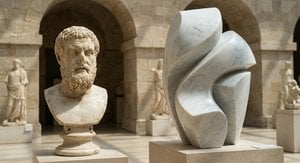
The Enduring Allure of Marble in Art History: From Classical Sculpture to Modern Abstraction
Explore the captivating history of marble sculpture from ancient Greece to modern art. Discover renowned artists like Canova & Michelangelo, carving techniques, and investment insights at ArtsDot.

Bronze Sculptures That Defined Art History | ArtsDot
Journey through art history with our Top 10 bronze sculptures! Explore masterpieces by Rodin, Michelangelo & more. Discover stories behind iconic statues and find museum-quality reproductions for your home decor at ArtsDot.com.

Francisco Goya Parimad Teosed: Hingematvad Kunstiteosed Kodudesse – ArtsDot
Avastage Francisco Goya 25 parimat teost! Sukelduge Hispaania kunsti, romantismisse ja portree maalide maailma. Leidke inspiratsiooni kodudekoriks ArtsDot.com-is – kvaliteetsed kunstireproduktsioonid ja kollektsioonid.