


 Vaata sisu
 Jaga teost
 Jaga
Jaga
 Detailid
 Õppekate juhend

 Laadi alla
 Sarnased teosed
 Röntgenuuring
 Slaidietendus
 Statistika
untitled (2616)


 Loe lähemalt
Giclée / Kunstiprint
Muuseumikvaliteediga giclée- või kangasprint kiire tootmisega ja paindlikud viimistlusvõimalused. ( Telli käsitsi maalitud reproduktsioon Ülemineku digitaalse pildi müügi kanalisse)




P118B $10

P118H $10

P118W $10

P438Z $10

P508JH $12

P508YH $12

P805H $10

P805Z $10

P919BZ $10

P919G $10

P919XJ $10

P959ZH $10

P968JZ $12

W106C $8

W218G $10

W218JH $8

W218Y $10

W307PJ $10

W316G $10

W316PJ $8

W316Y $10

W398PJ $8

W4111J $10

W500HY $15

W500JH $15

W692G $12

W849H $8

W940BG $15

W953PJ $8




Vali meie eelmääratud suurused, mis vastavad teose algupärastele proportsioonidele.

Saate sisestada oma mõõdud, et need sobiks konkreetse raami või ruumi sisse. Kui valitud suurus ei vasta originaalteose proportsioonidele, lõigame teose ära või laiendame pilti peegeldatud või ühtlase servaga. Enne tootmisprotsessi algust saadetakse Teie kinnitamiseks digitaalne näidis.
Palun märka, et ekraanil kuvatav eelvaade ei kajasta tegelikku lõigamist või laiendamist. Ainult näidis kujutab täpselt lõplikku kompositsiooni.
Kuigi erimõõdu on saadaval, soovitame originaaproportsioonide säilitamiseks valida mõõt ette määratud nimekirjast.
Ülemaailmne tarne () 2 nädala jooksul, tavalise 4/5 nädala asemel. (25 september)

Tasuta ekspresssaatmine üle maailma

Kõrgekvaliteediline lina-kangastest muld

Täielik transpordikindlustus

Tollimaksude tagastamise garantii

Värvitoime täpsuse garantii

100 päeva tagastusõigus (ainult defektide korral)

100% raha tagasi garantii

Hulgusoodustus
 Klaasivalik on saadaval ainult kuni 110 cm suuruses teostes

untitled (2616)
Giclée / Kunstiprint
Reproduktsiooni mõõtmed
-


Lõppsumma
$ 62
A Symphony of Sunlight and Serenity
In this breathtaking untitled masterpiece by the legendary Spanish Impressionist Joaquín Sorolla y Bastida, the viewer is invited to step into a sun-drenched sanctuary where time seems to stand still. The canvas unfolds as a pastoral dream, capturing a group of five women reclining amidst the lush, verdant embrace of a summer field. There is an immediate, visceral sense of peace that washes over the observer; the figures are not merely subjects in a landscape, but integral components of a larger, luminous atmosphere. As they lie scattered across the grass—some lost in the quiet contemplation of books, others simply surrendered to the warmth of the afternoon—the painting evokes a profound sense of leisure and the gentle beauty of shared solitude.
Sorolla, often celebrated as the "Master of Light," demonstrates his unparalleled ability to translate the ephemeral magic of the Mediterranean sun into permanent pigment. The scene is far more than a simple depiction of a picnic; it is an exploration of how light interacts with texture and form. One can almost feel the dappled shadows dancing across the women's clothing and the soft, rhythmic movement of the breeze through the meadow. This work serves as a poignant reminder of life's most tranquil moments, making it an evocative centerpiece for any collection that seeks to bring warmth, vitality, and a sense of restorative calm into a living space.
The Alchemy of Impressionism and Realism
Technically, this piece is a triumph of Sorolla’s signature method, blending the spontaneous energy of Impressionism with the structural integrity of Spanish Realism. To achieve such breathtaking luminosity, the artist employed a sophisticated layering of thin oil glazes, meticulously building up tonal gradations that allow light to appear as if it is emanating from within the canvas itself. His use of optical mixing—placing pure, vibrant pigments side-by-side rather than blending them into muddy tones—ensures that the greens of the grass and the highlights on the figures remain strikingly saturated and crisp.
The brushwork further enhances the emotional depth of the work. Rather than static, rigid lines, Sorolla utilizes fluid, gestural strokes that convey a palpable sense of movement and spontaneity. This technique mirrors the very nature of the subject matter: the fleeting, transient quality of sunlight. For the discerning collector or interior designer, this mastery of texture offers a multidimensional visual experience. When rendered as a high-quality reproduction, these nuances of light and shadow are preserved, allowing the painting to breathe life into a room, transforming a mere wall into a window onto a luminous, eternal summer.
A Legacy of Light for the Modern Interior
Beyond its technical brilliance, the painting carries a deep emotional resonance rooted in Sorolla’s own life. Having faced profound personal loss in his youth, the artist developed an acute sensitivity to the beauty of the present moment. This piece embodies that philosophy, acting as a visual celebration of existence and the restorative power of nature. The scattered books and relaxed postures suggest a narrative of intellectual and physical repose, making the artwork a symbol of mindfulness and grace.
For those looking to curate an environment of elegance and inspiration, this work offers unparalleled versatility. Its bright, natural palette complements a wide array of interior styles, from classical European aesthetics to contemporary minimalist settings. As a focal point, it does not merely decorate a space; it defines its mood, infusing the atmosphere with the radiant energy of the Spanish coast and the timeless, sun-soaked spirit of Joaquín Sorolla.
Sarnased teosed


Kunstniku elulugu
Joaquín Sorolla y Bastida – A Life Bathed in Light
Joaquín Sorolla y Bastida, a name synonymous with the radiant light and vibrant energy of Spain, was more than just a painter; he was a chronicler of his nation’s soul. Born in Valencia in 1863, Sorolla's early life was marked by tragedy. Orphaned at the tender age of two following a cholera epidemic that claimed both parents, young Joaquín and his sister were raised by their maternal aunt and uncle. This early experience with loss perhaps instilled within him a profound appreciation for the fleeting beauty of life – a sentiment that would permeate his art. Though hardship shadowed his beginnings, it did not dim the spark of artistic talent that quickly became apparent. He received initial instruction in Valencia, demonstrating an aptitude that led to studies under established artists like Cayetano Capuz and José Benlliure, eventually culminating in a four-year grant to study in Rome. It was there, amidst the classical grandeur of Italy, that Sorolla began to forge his unique artistic path, absorbing influences while simultaneously developing a style distinctly his own.Early Life and Artistic Beginnings
Joaquín Sorolla’s formative years were shaped by profound loss and circumstance. Born on February 27, 1863, in Valencia, Spain, he descended from a modest family of tradesmen. Tragically, just two years later, his parents succumbed to cholera—a devastating epidemic that gripped the city—leaving him orphaned alongside his sister, Concha. Their maternal aunt and uncle stepped forward to provide care, fostering an early awareness of vulnerability and resilience – themes that would subtly inform Sorolla’s artistic vision throughout his career. Recognizing his exceptional talent at a young age, he commenced formal art education in Valencia, honing his skills under the tutelage of prominent Valencian artists like Cayetano Capuz and José Benlliure. This foundational training instilled in him a disciplined approach to observation and representation—skills that would prove invaluable as he embarked on his artistic journey. At eighteen, Sorolla ventured to Madrid, immersing himself in the vibrant cultural landscape of the capital and dedicating himself to intensive study at the Museo del Prado, where he encountered the masterpieces of Velázquez and other titans of Spanish art.Rome: The Crucible of Impressionism
A pivotal moment arrived when Sorolla secured a prestigious grant enabling him to pursue his artistic ambitions in Rome—the Italian capital—between 1884 and 1888. This immersion in the artistic milieu of Italy proved transformative, exposing him to the burgeoning currents of Impressionism and fostering an enduring fascination with capturing fleeting moments of light and color. Influenced by artists such as Jules Bastien-Lepage and Adolf von Menzel—whose works he meticulously studied—Sorolla began to experiment with looser brushstrokes and brighter palettes, distancing himself from the more rigid conventions of academic painting. He established connections with José Benlliure and Emilio Sala, furthering his artistic education and solidifying his stylistic evolution. During this period, Sorolla’s gaze turned towards Paris, where he encountered the epicenter of modern art—a city pulsating with innovation and intellectual ferment. Exhibitions featuring Bastien-Lepage and Menzel profoundly impacted his artistic sensibilities, shaping his approach to composition and color harmony.The Valencian Coast: A Celebration of Light
Sorolla’s artistic focus shifted decisively upon returning to Valencia in 1890—a homecoming marked by a renewed appreciation for the luminous landscapes of his birthplace. He married Clotilde García del Castillo, forging a lifelong partnership that would inspire him creatively and provide unwavering support throughout his prolific career. Together they established a family in Madrid, where Sorolla continued to produce monumental canvases depicting scenes from Valencian life—particularly those centered around the Mediterranean coast. His fascination with capturing the effects of sunlight on water and skin reached its zenith during this period, resulting in iconic paintings like *The Return from Fishing* and *Children on the Seashore*. He adopted a technique characterized by rapid brushwork and vibrant color combinations—a deliberate departure from academic realism—reflecting his unwavering commitment to Impressionistic principles. Sorolla’s canvases are imbued with an extraordinary sense of immediacy and vitality, conveying not merely what he saw but also how he felt—a testament to his artistic empathy and profound connection to the natural world.Major Achievements & Legacy
Sorolla achieved international acclaim during his lifetime through numerous exhibitions across Europe and America. His paintings were recognized for their technical brilliance and emotional depth, establishing him as one of Spain’s foremost artists of his era. He garnered considerable honors—including the Grand Prix at the Paris Salon in 1900—and was commissioned to undertake ambitious projects such as *Vision of Spain*, a monumental mural cycle for the Hispanic Society of America—completed posthumously—that cemented his reputation as a visionary artist and a champion of Spanish culture. Sorolla’s influence extended far beyond his own lifetime, inspiring generations of painters who embraced Luminism—the art movement that sought to capture the essence of light and atmosphere—and whose works continue to resonate with audiences today. His legacy resides not only in his stunning canvases but also in his unwavering dedication to artistic innovation and his profound appreciation for the beauty of everyday life—a painter whose enduring vision continues to illuminate our understanding of Spanish art history.
Joaquín Sorolla
1863 - 1923 , Hispaania
Lühikest infot
- Artistic Movement Or Style: Лумнизм, Импрессионизм
- Artists Or Movements Influenced By This Artist: ['Импрессионизм']
- Artists Who Influenced This Artist:
- Ф. Прадилла
- Жюль Бастиен-Лепаж
- Date Of Birth: 27 февраля 1863 г.
- Date Of Death: 10 августа 1923 г.
- Full Name: Joaquín Sorolla y Bastida
- Nationality: Испанский
- Notable Artworks:
- Маргарита
- Отплытие из рыбалки
- Бедная наследница
- Place Of Birth: Валенсия, Испания
Sarnased artiklid

Evocations of Place: A Historical Journey Through Landscape Art
Explore the rich history of landscape art with ArtsDot. Discover renowned artists, movements like Impressionism & tonalism, and expert guidance for collecting timeless pieces. Find your perfect serene escape today!

Impressionistic Landscapes: 10 Masterpieces That Changed Art & Decor
Journey into the heart of Impressionism! Explore 10 masterpieces by Monet, Renoir & Degas that revolutionized landscape art. Discover their stories, techniques & find museum-quality reproductions to elevate your home decor on ArtsDot.com.

Paul Cézanne: 25 Meisterteost, mis Muutsid Maailma Kunsti | ArtsDot
Avastage Paul Cézanne 25 kõige ikoonilisemat teost! Sukeldume postimpressionismi maailma, värviliste still life'ide ja Mont Sainte-Victoire maalide lugudesse. Leidke inspiratsiooni interjööri disainiks ArtsDot.com-is. Vaadake maali reproduktsioone!

Evocations of Place: A Historical Journey Through Landscape Art
Explore the rich history of landscape art with ArtsDot. Discover renowned artists, movements like Impressionism & Romanticism, and expert guidance for collecting timeless pieces. Find your perfect serene escape today!
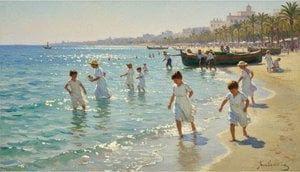
Joaquín Sorolla: Capturing Spanish Light & Life – A Legacy of Impressionism
Explore the luminous world of Joaquín Sorolla, Spanish master of Impressionism. Discover his life, techniques & legacy – a guide for art collectors and enthusiasts. Invest in timeless beauty.


