

 Eelvaade
 Saada
Saada Jaga
Jaga
 Teave teose kohta
 Juhend

 Laadi alla
 Sarnased teosed
 Röntgenuuring
 Slaidietendus
 KÜSIMUSED JA VASTUSID
 Statistika
Bacchante


 Loe lähemalt
Giclée / Kunstiprint
Muuseumikvaliteediga giclée- või kangasprint kiire tootmisega ja paindlikud viimistlusvõimalused. ( Osta käsitsi maalatud teos Lülita digitaalse pildi juurde)




P118B €10

P118H €10

P118W €10

P438Z €10

P508JH €12

P508YH €12

P805H €10

P805Z €10

P919BZ €10

P919G €10

P919XJ €10

P959ZH €10

P968JZ €12

W106C €8

W218G €10

W218JH €8

W218Y €10

W307PJ €10

W316G €10

W316PJ €8

W316Y €10

W398PJ €8

W4111J €10

W500HY €15

W500JH €15

W692G €12

W849H €8

W940BG €15

W953PJ €8




Vali meie eelmääratud suurused, mis vastavad teose algupärastele proportsioonidele.

Sisestage vajalik laius ja kõrgus, et see sobiks teie raamile või seinale. Trükki saab ainult lõigata, seda ei saa kunagi pildist suuremaks teha, seega ka erineva mustega suurus kaotab osa pildist. Enne trükkimist saadame teile kinnitamiseks digitaalse näidisprojektsiooni. Sellel lehel näidatud pilt ei kujuta reaalset lõiget — seda näitab ainult näidisprojektsioon.
Ülemaailmne tarne () 2 nädala jooksul, tavalise 4/5 nädala asemel. (6 november)

Tasuta ekspresssaatmine üle maailma

Kõrgekvaliteediline lina-kangas

Täielik transpordikindlustus

Tollimaksude tagastamise garantii

Värvitoime täpsuse garantii

100 päeva tagastusõigus (ainult valmistusdefektide korral)

100% raha tagasi garantii

Hulgusoodustus
 Klaasivalik on saadaval ainult kuni 110 cm suuruses teostes

Bacchante
Giclée / Kunstiprint
Reproduktsiooni suurus
-


Koguhind
€ 56
A Moment of Quietude: Exploring Sorolla’s ‘Bacchante’
Joaquín Sorolla y Bastida's “Bacchante” offers a captivating glimpse into the artist’s masterful command of light and his profound understanding of the human form. This evocative painting, depicting a reclining nude woman within a richly appointed interior, is a quintessential example of Sorolla’s signature style – one characterized by an almost palpable sense of warmth, luminosity, and a deeply felt connection to the Spanish landscape. The scene, seemingly simple in its composition, unfolds with a remarkable sensitivity to texture, color, and spatial depth, inviting the viewer into a private moment of repose.
- Subject Matter: The central figure, a woman lost in slumber or quiet contemplation, embodies Sorolla’s fascination with the female nude. Unlike many depictions of the classical nude, however, this is not an idealized representation; rather, it's a portrait of vulnerability and peacefulness, suggesting a deeply personal experience.
- Technical Brilliance: Sorolla’s technique is immediately recognizable – a rapid, almost impressionistic brushstroke that captures the fleeting effects of light with breathtaking accuracy. The use of *alla prima* (wet-on-wet) painting allows for an immediacy and vibrancy rarely achieved in traditional academic styles.
- Color Palette: The dominant red background isn't merely decorative; it’s a crucial element, intensifying the warmth of the scene and creating a dramatic contrast that draws attention to the figure. Sorolla expertly employs complementary colors – the reds and blues – to heighten visual impact and create a sense of dynamism within the stillness.
The Valencia School and the Influence of Rome
Sorolla’s artistic journey was profoundly shaped by his time in Valencia and, crucially, his subsequent studies in Rome. Returning from Italy in 1889, he embraced the lessons learned from masters like Raphael and Titian, incorporating elements of classical composition and color theory into his own distinctive style. However, unlike many artists who simply replicated Italian techniques, Sorolla infused them with a distinctly Spanish sensibility – a passion for light, color, and the vibrancy of everyday life. The influence of the *macchiaioli*, a group of Florentine painters known for their loose brushwork and emphasis on direct observation, is also evident in his approach to capturing fleeting moments and atmospheric effects.
- Historical Context: “Bacchante” was painted during a period of significant artistic innovation in Spain. The *macchiaioli* movement challenged the prevailing academic style, advocating for a more direct and expressive approach to painting. Sorolla’s work exemplifies this shift, demonstrating a willingness to experiment with new techniques and subject matter.
- Roman Influence: His time in Rome exposed him to the grandeur of classical sculpture and architecture, which informed his understanding of form and composition. The careful arrangement of objects within the room – the chair, vase, and other details – reflects this influence.
Symbolism and Emotional Resonance
Beyond its technical brilliance, “Bacchante” possesses a subtle yet powerful emotional resonance. The scene evokes a sense of tranquility, intimacy, and perhaps even melancholy. The reclining figure suggests a moment of vulnerability and introspection, inviting the viewer to contemplate themes of beauty, mortality, and the fleeting nature of time. The red background, often associated with passion and vitality, here serves as a counterpoint to the quietude of the scene, adding another layer of complexity to its interpretation.
- Interior as Stage: The room itself functions almost as a stage, framing the figure and contributing to the overall atmosphere. The carefully chosen objects – the chair, vase – suggest a life of comfort and refinement, further enhancing the sense of intimacy.
- Light as Emotion: Sorolla’s masterful use of light is central to the painting's emotional impact. It doesn’t simply illuminate the figure; it imbues her with warmth, vitality, and an almost ethereal quality.
A Legacy of Light
Joaquín Sorolla’s “Bacchante” stands as a testament to his extraordinary talent and vision. This painting exemplifies his ability to capture not just the appearance of things but also their essence – the warmth, light, and emotion that make them truly beautiful. A hand-painted reproduction offers an unparalleled opportunity to experience the full impact of this masterpiece, bringing its radiant beauty into your home or studio.
Korduvad küsimused
Millissele perioodile Joaquín Sorolla karjäärist kuulub teos "Bacchante"?
Teos "Bacchante" kuulub Joaquín Sorolla loomingulise karjääri perioodi Mature Period. See klassifikatsioon seostab teose kunstniku loovliku arenguga.
Milline on teose „Bacchante“, autor Joaquín Sorolla visuaalne heledus?
Üldiselt on teose "Bacchante" heledus registreeritud väärtusega bright. Perseeitud heledus kirjeldab, kui valguse või tumeda tundub teos olevat.
Milline on teose „Bacchante“, autor Joaquín Sorolla värvitoon?
Teose „Bacchante“, autor Joaquín Sorolla värvimaailm: Dark palett, mille domineerib Putty (#d5bb9f).
Sarnased teosed


Kunstniku elulugu
Joaquín Sorolla y Bastida – A Life Bathed in Light
Joaquín Sorolla y Bastida, a name synonymous with the radiant light and vibrant energy of Spain, was more than just a painter; he was a chronicler of his nation’s soul. Born in Valencia in 1863, Sorolla's early life was marked by tragedy. Orphaned at the tender age of two following a cholera epidemic that claimed both parents, young Joaquín and his sister were raised by their maternal aunt and uncle. This early experience with loss perhaps instilled within him a profound appreciation for the fleeting beauty of life – a sentiment that would permeate his art. Though hardship shadowed his beginnings, it did not dim the spark of artistic talent that quickly became apparent. He received initial instruction in Valencia, demonstrating an aptitude that led to studies under established artists like Cayetano Capuz and José Benlliure, eventually culminating in a four-year grant to study in Rome. It was there, amidst the classical grandeur of Italy, that Sorolla began to forge his unique artistic path, absorbing influences while simultaneously developing a style distinctly his own.Early Life and Artistic Beginnings
Joaquín Sorolla’s formative years were shaped by profound loss and circumstance. Born on February 27, 1863, in Valencia, Spain, he descended from a modest family of tradesmen. Tragically, just two years later, his parents succumbed to cholera—a devastating epidemic that gripped the city—leaving him orphaned alongside his sister, Concha. Their maternal aunt and uncle stepped forward to provide care, fostering an early awareness of vulnerability and resilience – themes that would subtly inform Sorolla’s artistic vision throughout his career. Recognizing his exceptional talent at a young age, he commenced formal art education in Valencia, honing his skills under the tutelage of prominent Valencian artists like Cayetano Capuz and José Benlliure. This foundational training instilled in him a disciplined approach to observation and representation—skills that would prove invaluable as he embarked on his artistic journey. At eighteen, Sorolla ventured to Madrid, immersing himself in the vibrant cultural landscape of the capital and dedicating himself to intensive study at the Museo del Prado, where he encountered the masterpieces of Velázquez and other titans of Spanish art.Rome: The Crucible of Impressionism
A pivotal moment arrived when Sorolla secured a prestigious grant enabling him to pursue his artistic ambitions in Rome—the Italian capital—between 1884 and 1888. This immersion in the artistic milieu of Italy proved transformative, exposing him to the burgeoning currents of Impressionism and fostering an enduring fascination with capturing fleeting moments of light and color. Influenced by artists such as Jules Bastien-Lepage and Adolf von Menzel—whose works he meticulously studied—Sorolla began to experiment with looser brushstrokes and brighter palettes, distancing himself from the more rigid conventions of academic painting. He established connections with José Benlliure and Emilio Sala, furthering his artistic education and solidifying his stylistic evolution. During this period, Sorolla’s gaze turned towards Paris, where he encountered the epicenter of modern art—a city pulsating with innovation and intellectual ferment. Exhibitions featuring Bastien-Lepage and Menzel profoundly impacted his artistic sensibilities, shaping his approach to composition and color harmony.The Valencian Coast: A Celebration of Light
Sorolla’s artistic focus shifted decisively upon returning to Valencia in 1890—a homecoming marked by a renewed appreciation for the luminous landscapes of his birthplace. He married Clotilde García del Castillo, forging a lifelong partnership that would inspire him creatively and provide unwavering support throughout his prolific career. Together they established a family in Madrid, where Sorolla continued to produce monumental canvases depicting scenes from Valencian life—particularly those centered around the Mediterranean coast. His fascination with capturing the effects of sunlight on water and skin reached its zenith during this period, resulting in iconic paintings like *The Return from Fishing* and *Children on the Seashore*. He adopted a technique characterized by rapid brushwork and vibrant color combinations—a deliberate departure from academic realism—reflecting his unwavering commitment to Impressionistic principles. Sorolla’s canvases are imbued with an extraordinary sense of immediacy and vitality, conveying not merely what he saw but also how he felt—a testament to his artistic empathy and profound connection to the natural world.Major Achievements & Legacy
Sorolla achieved international acclaim during his lifetime through numerous exhibitions across Europe and America. His paintings were recognized for their technical brilliance and emotional depth, establishing him as one of Spain’s foremost artists of his era. He garnered considerable honors—including the Grand Prix at the Paris Salon in 1900—and was commissioned to undertake ambitious projects such as *Vision of Spain*, a monumental mural cycle for the Hispanic Society of America—completed posthumously—that cemented his reputation as a visionary artist and a champion of Spanish culture. Sorolla’s influence extended far beyond his own lifetime, inspiring generations of painters who embraced Luminism—the art movement that sought to capture the essence of light and atmosphere—and whose works continue to resonate with audiences today. His legacy resides not only in his stunning canvases but also in his unwavering dedication to artistic innovation and his profound appreciation for the beauty of everyday life—a painter whose enduring vision continues to illuminate our understanding of Spanish art history.
Joaquín Sorolla
1863 - 1923 , Hispaania
Lühikest infot
- Artistic Movement Or Style: Лумнизм, Импрессионизм
- Artists Or Movements Influenced By This Artist: ['Импрессионизм']
- Artists Who Influenced This Artist:
- Ф. Прадилла
- Жюль Бастиен-Лепаж
- Date Of Birth: 27 февраля 1863 г.
- Date Of Death: 10 августа 1923 г.
- Full Name: Joaquín Sorolla y Bastida
- Nationality: Испанский
- Notable Artworks:
- Маргарита
- Отплытие из рыбалки
- Бедная наследница
- Place Of Birth: Валенсия, Испания
Sarnased artiklid
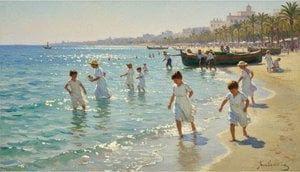
Joaquín Sorolla: Capturing Spanish Light & Life – A Legacy of Impressionism
Explore the luminous world of Joaquín Sorolla, Spanish master of Impressionism. Discover his life, techniques & legacy – a guide for art collectors and enthusiasts. Invest in timeless beauty.

Echoes of Time: Exploring the Enduring Appeal & Historical Context of Vintage Art Prints
Explore the captivating world of vintage art prints! Discover their history, collecting tips & enduring appeal. Expert insights on chromolithography and building a legacy collection with ArtsDot.

The Enduring Legacy of Fine Art Prints: Technique, History & Aesthetic Impact
Explore the rich history & techniques of fine art prints. Discover investment potential, assess authenticity, and learn how to preserve your collection with expert guidance. Trusted insights for discerning collectors.

Crimson Threads of Narrative: Exploring Symbolism & Representation in Artworks Featuring the Red Dress
Explore the rich symbolism of the red dress in art history! From ancient power displays to iconic portraits like Cézanne’s 'Madame Cezanne', discover the cultural and artistic significance behind this captivating color. Expert analysis & insights.

Giclée Prints: Archival Quality & Aesthetic Nuances for the Discerning Collector
Explore the world of giclée prints with ArtsDot. Learn about archival quality, aesthetic nuances & investment potential. Expert guidance for discerning art collectors seeking museum-quality reproductions and lasting value.


