


 Vaata sisu
 Jaga teost
 Jaga
Jaga
 Detailid
 Õppekate juhend

 Laadi alla
 Sarnased teosed
 Röntgenuuring
 Slaidietendus
 Statistika
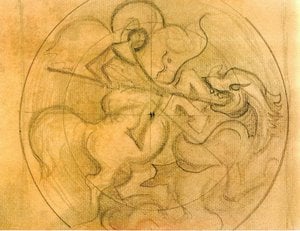
Untitled
 45.0 x 53.0 cm
 Loe lähemalt
Sellel lehel kuvatav kunstiteos on kaitstud autoriõigusega, mis tähendab, et meil ei ole seaduslikku õigust luua või müüa identset reproduktsiooni. Seda kaitset rakendatakse rahvusvaheliste kokkulepete alusel, nagu näiteks Berne konventsioon ning riiklike seadustega, sealhulgas nendega, mida on sätestatud USA autoriõiguse seadus – 17. peatükk.
Austasena ja seaduslikuna alternatiivina pakume originaalist inspireeritud, käsitsi maalitud isikupärastatud teoseid. Meie osutavad ja professionalsed kunstnikud uurivad hoolikalt originaali stiili, meelemoi ja kunstilist olemust, et luua uus, ainulaadne teos, mis tekitab sama tunnet – olles samal ajal omaette originaalne looming.
See meetod järgib täielikult autoriõiguse reegleid, kuna see ei põhine kaitstud kunstiteose kopeerimisel või dupliteerimisel. Selle asemel on tegu loova reinterpreetatsiooniga – uue maaldisega, mis on algteosest inspireeritud, kuid ei ole sellest identiline.
Käsitsi valmistatud õlimaalireproduktsioon
Meie kunstnike poolt tellimusel valmistatud käsitsi maalitud õli-kainaste teos teie soovitud suuruses ja raamis. ( Lülita trükkitoodetele Ülemineku digitaalse pildi müügi kanalisse)




































Vali meie eelmääratud suurused, mis vastavad teose algupärastele proportsioonidele.

Sisestage vajalik laius ja kõrgus, et teos sobiks teie raamile või seinale. Kuna tegu on käsipainatud teosega, siis erineva kujuga suuruse korral võib kunstnik jätta pildi ümber veidi rohkem marginaali või lõigata osa ära — valik on teie. Enne maali alustamist saadame teile kinnitamiseks digitaalse näidisprojektsiooni. Sellel lehel näidatud pilt ei kajasta tegelikku tulemust — seda näitab ainult näidisprojekttsioon.
Pärast tellimust saadab ArtsDot.com meeskond kliendile e-posti juhised ning esitab eelvaate kavandi
Maailmline tarne 3–4 nädala jooksul tavalise 5 nädala asemel. (23 oktoober). Kvaliteedis kompromisse ei tehta.

Tasuta ekspresssaatmine üle maailma

Kõrgekvaliteediline lina-kangastest muld

Täielik transpordikindlustus

Tollimaksude tagastamise garantii

Värvitoime täpsuse garantii

100 päeva tagastusõigus (ainult defektide korral)

100% raha tagasi garantii

Hulgusoodustus
 Klaasivalik on saadaval ainult kuni 110 cm suuruses teostes

Untitled
Reproduktsiooni materjal
Reproduktsiooni mõõtmed
-


Lõppsumma
€ 231
Sarnased teosed



Kunstniku elulugu
The Visionary Architect of the Avant-Garde
Jiro Yoshihara stands as a monumental figure in Japanese postwar art, recognized primarily for his leadership within the Gutai Art Group—a movement that irrevocably altered the trajectory of avant-garde painting. Born in Osaka in 1905, Yoshihara’s artistic journey began without formal training, nurtured instead by a profound, self-taught passion for the medium. Growing up in the wealthy and cosmopolitan environment of a family vegetable oil wholesaler, his early years were shaped by an intellectual curiosity that transcended local boundaries. He was deeply moved by the humanist idealism of the Shirakabaha literary movement, which introduced him to the transformative power of Post-Impressionist masters like Cézanne, Van Gogh, and Renoir. This early exposure to Western aesthetics would prove instrumental in shaping his distinctive visual language, allowing him to bridge the gap between Japanese tradition and global modernism.
As his career matured, Yoshihara’s fascination extended far beyond the canvas. He was captivated by the psychological depths of Giorgio de Chirico, the playful abstraction of Joan Miró, and the rhythmic energy of Wassily Kandinsky. These influences acted as catalysts for a stylistic evolution that saw him move through various experimental phases. During the tumultuous 1930s, his paintings embraced surrealist principles, mirroring the profound anxieties and shifting aspirations of a world in flux. He possessed a rare ability to blend diverse influences, demonstrating an intellectual rigor that refused mere imitation. Gradually, he honed his focus on geometric abstraction, recognizing its capacity to convey complex, universal ideas with uncompromising clarity and strength.
The Spirit of Gutai and the Power of Gesture
The founding of the Gutai Art Association in 1954, alongside Shōzō Shimamoto, marked a watershed moment in Yoshihara’s career and cemented his legacy as a visionary innovator. Under his guidance, Gutai became much more than a mere collective; it was a radical laboratory for experimentation. Yoshihara encouraged his followers to "do what has never been done before," pushing the boundaries of what could be considered art. This era was defined by gestural abstract impasto paintings that celebrated the raw, physical act of creation. The movement explored unprecedented territories, including:
- Performance Art: Utilizing the human body as a medium for expression.
- Interactive Works: Breaking the barrier between the spectator and the artwork.
- Outdoor Exhibitions: Moving art out of the gallery and into the public consciousness.
- Materiality: Experimenting with unconventional substances, from mud to industrial chemicals.
Yoshihara’s leadership was characterized by a global ambition. He worked tirelessly as a networker between the arts, commerce, and industry, ensuring that the Gutai movement communicated internationally. By inserting Japanese avant-garde practices into the globalizing art world, he ensured that the voices of his contemporaries were heard far beyond the borders of the Kansai region.
The Zen Circle: A Legacy of Enlightenment
In the later stages of his life, Yoshihara’s work underwent a profound spiritual and stylistic shift. Moving away from the thick, energetic impasto of his earlier years, he began to embrace a more meditative approach known as his Zen-painting inspired hard-edge circles. These iconic works, often featuring singular, bold rings of color, drew heavily from the concept of Satori—the moment of sudden enlightenment. These circles were not merely geometric shapes; they were symbols of wholeness, continuity, and the infinite. Through this minimalist mastery, Yoshihara achieved a synthesis of his Western-influenced abstraction and deeply rooted Japanese philosophical traditions.
His oeuvre remains incredibly diverse, encompassing drawings, murals, sculptures, calligraphy, ink wash paintings, ceramics, and even stage design. This breadth of practice reflects a life dedicated to the total exploration of form and spirit. Jiro Yoshihara passed away in 1972, but his impact remains indelible. He did not just lead a movement; he forged a new way of seeing, leaving behind a legacy where the act of creation is as significant as the finished masterpiece, and where the simple circle can contain the entire universe.

Jiro Yoshihara
1905 - 1972
Lühikest infot
- Full Name: Jiro Yoshihara 吉原 治良
- Nationality: Japanese
- Date Of Birth: 1905
- Date Of Death: 1972
- Place Of Birth: Osaka, Japan
- Notable Artworks:
- Untitled
- Gutai Group
- Artistic Movement Or Style: Surrealist & Abstract Expressionist
- Artists Who Influenced This Artist:
- Giorgio de Chirico
- Joan Miró
- Wassily Kandinsky
- Artists Or Movements Influenced By This Artist: ['Gutai Group']