


 Vaata sisu
 Jaga teost
 Jaga
Jaga
 Detailid
 Õppekate juhend

 Laadi alla
 Sarnased teosed
 Röntgenuuring
 Slaidietendus
 Statistika
Ale Cans


 Loe lähemalt
Sellel lehel kuvatav kunstiteos on kaitstud autoriõigusega, mis tähendab, et meil ei ole seaduslikku õigust luua või müüa identset reproduktsiooni. Seda kaitset rakendatakse rahvusvaheliste kokkulepete alusel, nagu näiteks Berne konventsioon ning riiklike seadustega, sealhulgas nendega, mida on sätestatud USA autoriõiguse seadus – 17. peatükk.
See meetod järgib täielikult autoriõiguse reegleid, kuna see ei põhine kaitstud kunstiteose kopeerimisel või dupliteerimisel. Selle asemel on tegu loova reinterpreetatsiooniga – uue maaldisega, mis on algteosest inspireeritud, kuid ei ole sellest identiline.
Giclée / Kunstiprint
Muuseumikvaliteediga giclée- või kangasprint kiire tootmisega ja paindlikud viimistlusvõimalused. ( Telli käsitsi maalitud reproduktsioon Ülemineku digitaalse pildi müügi kanalisse)




P118B €10

P118H €10

P118W €10

P438Z €10

P508JH €12

P508YH €12

P805H €10

P805Z €10

P919BZ €10

P919G €10

P919XJ €10

P959ZH €10

P968JZ €12

W106C €8

W218G €10

W218JH €8

W218Y €10

W307PJ €10

W316G €10

W316PJ €8

W316Y €10

W398PJ €8

W4111J €10

W500HY €15

W500JH €15

W692G €12

W849H €8

W940BG €15

W953PJ €8




Vali meie eelmääratud suurused, mis vastavad teose algupärastele proportsioonidele.

Sisestage vajalik laius ja kõrgus, et see sobiks teie raamile või seinale. Trükki saab ainult lõigata, seda ei saa kunagi pildist suuremaks teha, seega ka differentse vormiga suurus kaotab osa pildist. Enne trükkimist saadame teile kinnitamiseks digitaalse näidisprojektsiooni. Sellel lehel näidatud pilt ei kujuta reaalset lõiget — seda näitab ainult näidisprojekttsioon.
Ülemaailmne tarne () 2 nädala jooksul, tavalise 4/5 nädala asemel. (16 oktoober)

Tasuta ekspresssaatmine üle maailma

Kõrgekvaliteediline lina-kangastest muld

Täielik transpordikindlustus

Tollimaksude tagastamise garantii

Värvitoime täpsuse garantii

100 päeva tagastusõigus (ainult defektide korral)

100% raha tagasi garantii

Hulgusoodustus
 Klaasivalik on saadaval ainult kuni 110 cm suuruses teostes

Ale Cans
Giclée / Kunstiprint
Reproduktsiooni mõõtmed
-


Lõppsumma
€ 54
The Quiet Power of the Ordinary
Jasper Johns' Ale Cans (1964) isn’t a grand statement; it’s not a revolutionary explosion of color or form. Instead, it resides in the deceptively simple depiction of two Ballantine Ale cans stacked atop one another. Yet within this seemingly mundane subject lies a profound exploration of perception, representation, and the very nature of art itself. Johns, a pivotal figure bridging Abstract Expressionism and Pop Art, wasn’t interested in simply replicating reality; he was fascinated by how we *see* it, and how that visual experience can be translated into a lasting image.

A Dialogue with Duchamp and the Readymade
To fully appreciate Ale Cans, it’s crucial to understand its context within Johns' artistic development. He was deeply influenced by Marcel Duchamp’s concept of the “readymade”—ordinary, mass-produced objects elevated to the status of art simply through the artist’s selection and declaration. Johns didn’t transform the cans into something entirely new; he meticulously rendered them, almost obsessively, as if attempting to capture their essence. This echoes Duchamp's approach – taking the familiar and presenting it in a way that forces us to reconsider its meaning. The work is a direct response to the idea of elevating the commonplace, challenging traditional notions of artistic merit.
The lithograph itself, produced by Universal Limited Art Editions (ULAE), speaks volumes about this process. ULAE was renowned for its high-quality printing and its collaborative approach with artists like Johns, who worked closely with printers to achieve the desired effects. The careful layering of ink, the subtle variations in tone, and the deliberate inclusion of black scribbled lines all contribute to a sense of meticulousness and control – a stark contrast to the seemingly effortless nature of everyday objects.
The Illusion of Depth and the Flatness of Print
One of the most striking aspects of Ale Cans is its unsettling juxtaposition of realism and abstraction. The cans appear three-dimensional, rendered with careful attention to detail – the labels, the metallic sheen, even the subtle shadows cast by the table. However, this illusion is immediately undermined by the stark black background, which is clearly flat. This creates a tension between the perceived reality of the objects and the inherent flatness of the printed medium. Johns deliberately exploits this contradiction, forcing the viewer to confront the limitations of representation and the artificiality of the image.
Deborah Wye, in her analysis for *Artists and Prints*, notes that “An interval of several months separated the execution of the first six stones and the seventh, the delicate border in black. The importance of this broken line should not be underestimated, for it at once separates and unites the image and the flatness of the paper.” This deliberate disruption highlights Johns’s conscious engagement with the printing process – he wasn't simply copying an object; he was actively shaping its representation within the constraints of the medium.
Symbolism and the American Landscape
Beyond its formal qualities, Ale Cans carries a subtle symbolic weight. The cans themselves are instantly recognizable icons of American consumer culture – a ubiquitous symbol of leisure and refreshment. Johns’s repeated use of this image throughout his career reflects his broader interest in exploring American iconography and the ways in which everyday objects shape our understanding of national identity. The work can be seen as a meditation on the relationship between art, commerce, and the visual landscape of postwar America.
Reproductions of Ale Cans offer a unique opportunity to appreciate Johns’s masterful technique and his profound insights into the nature of representation. A hand-painted reproduction captures not only the image itself but also the artist's deliberate choices, allowing viewers to engage with the work on a deeper level.
Küsimused ja vastused
Millisesse ruumi on „Ale Cans“, autor Jasper Johns soovituslik paigutada?
Soovitatav paik „Ale Cans“, autor Jasper Johns jaoks on Living Room. See soovituse võib muidugi oma interjööri vajadust mööda kohandada.
Kuidas tehnika ja stiil teoses "Ale Cans" kokku saavad?
Teos "Ale Cans" on valmistatud tehnikas Lithograph ja kuulub Pop Art stiilile.
Mis on soovitatav trükkimõõt teosele „Ale Cans“, autor Jasper Johns?
Teose "Ale Cans" trükkimiseks on soovitatav kasutada suurust Medium. Samade proportsioonidega on saadaval ka teisi mõõtmeid.


Kunstniku elulugu
Jasper Johnsi: Sümbolite Maailm ja Kunstniku Tee
Jasper Johns, kelle nime võib täna seostada kohe Ameerika kunsti hiiglastega, sündis 1930. aastal Georgias Augustas, kuid tema elu oli juba varakult täis muutusi ja üksildust. Lapsepõlv jagunes erinevate perede vahel, mis kujundas ilmselt tema hilisemat huvi identiteedi ja kuuluvuse teemade vastu kunstis. Varased aastad olid mõjutanud tema suhtumist maailma, kuid just New Yorki linnas 1940ndate lõpus leidis ta oma kutsumise – kunstniku tee. Korea sõja ajal teenimine andis talle uue perspektiivi ja avas ukse Jaapani kultuurile ning kunstile, mis hiljem peegeldus tema loomingus. Tema lähedane koostöö Robert Rauschenbergiga oli oluline kasvupaik, kus nad koos katsetasid ja arendasid oma stiili, sageli ka vaateakna kujundamise näol.Abstraktist Popkunstini: Uue Visuaalse Keele Sünd
1950ndatel domineeris Ameerika kunstimaailmas abstraktne ekspressionism – spontaansete žestide ja sügavalt isiklike emotsioonidega maalimine. Kuigi Johns oli ka algselt selle liikumise mõjul, tundis ta vajadust liikuda kaugemale puhtalt mitte-representatsioonilisest lähenemisviisist. Ta otsis uut visuaalset keelt, mis sisaldaks äratuntavat kujundit, mitte illustratsioonina, vaid sügvama kaalumise vahendina. Marcel Duchampi radikaalsed readymades ja abstraktse ekspressionismi rõhk materiaalsete elementidele mõjutasid tema varajast loometööd. Kuid just Ameerika kultuuri igapäevased esemed – lipud, sihtmärgid, kaardid, numbrid – said kesksed elemendid tema kunstivõõtsus. Johns ei tahtnud vältida representatsiooni; ta soovis seda dekonstrukteerida, kiharistada tähendusega ja paljastada selle sisemised ambivalentsid.Ikoonilised Pildid: Lipud, Sihtmärgid ja Sümbolite Keel
Johnsi murrangulised tööd ilmusid 1950ndate keskel ning asendasid ta kohe olulise kunstniku positsioonile. Tema lipumaalid, eriti *Lipp* (1954–55), ei olnud patriootlikud avaldused, vaid uurimusi representatsiooni iseärasuste kohta. Enkaustika tehnikat kasutades – pigmenti segades kuumaga vahaga – ja kollaaži abil loodud lipud polnud lihtsalt pildid; need olid tekstuuriga pinnad, mis kandis endas sümboolset koormust. Sihtmärkide sari, alates 1958. aastast, jätkas seda seost äratuntavate kujunditega, küsides vaatajate pealt tajumist ja tähenduse olemust näiliselt lihtsa sihtmärgi kaudu. *Kaart* (1961), millel on fragmentaarne ja kihiline kujutus Ameerika Ühendriikidest, puudutas geograafia, identiteedi ja rahvusliku representatsiooni keerukusi. Tõeline oskusnäitamine oli *False Start* (1959), kus ta katsetas keele ja visuaalsete koodidega, luues keerulisi kompositsioone, mis sundisid vaatajaid nende põhiliste tähenduste dešifreerima. Isegi *Valge Lipp* (1955), näiliselt lihtne monokroomne lõuend, tekitas sügavaid küsimusi puudumise, loobumise ja ise vaatamisakti kohta.Pärand ja Jätkuv Mõjutus
Jasper Johnsi mõju kaasaegse kunsti arengule on vääramatu. Ta mängis olulist rolli abstraktse ekspressionismi üleminekul popkunstiks, väljakutsetes valitsevaid esteetilisi norme ja avades uusi võimalusi kunstiliste uurimuste jaoks. Tunnustades äratuntavaid kujundeid, rajas ta tee selliste artistidele nagu Andy Warhol ja Roy Lichtenstein, kes ähmastasid veelgi piire kõrgkunsti ja populaarkultuuri vahel. Tema lähedane koostöö Robert Rauschenbergiga oli samuti sügavalt mõjukas, soodustades katsetamist ja kunstipraktika piiride nihutamist. Johns jätkab tänapäevani inspireerimist põlvedele kunstnikke, kes küsivad eeldusi, väljakutsetes konventsioone ja uurivad sümbolite jõudu maailma mõistmise kujundamisel. Ta on endiselt aktiivne artist, pidevalt arendades oma lähenemist ja kinnistades oma positsiooni 20. ja 21. sajandi kunsti ühe olulisema tegelasena.Tunnustus ja Püsiv Mõju
Jasper Johns on oma silmapaistva karjääri jooksul pälvinud arvukaitseid tunnustusi, sealhulgas Kuldse Lõvi Veneetsia Biennaalil 1988. aastal, Rahvusliku Kunsti Medal 1990. aastal ja Presidentaalne Vabadusmedal 2011. aastal. Tema töid on säilitatud suuremates muuseumikogudes üle maailma – New Yorki Moodsa Kunsti Muuseumis, Whitney Museum of American Artis, Metropolitan Museum of Artis ning Londoni Tate Modernis, et vaid mõned mainida. Ta on olnud lugematute näituste teema, kinnistades oma staatust kui kaasaegse kunsti meister. Peale maalide on Johnsi panus skulptuurile ja trükikunstile, mis tõestab tema mitmekülgsust ja vankumatut pühendumust kunstilisele innovatsioonile. Tema püsiv pärand peitub mitte ainult ikoonilistes kujundites, mille ta lõi, vaid ka sügvates küsimustes, mille ta esitas representatsiooni olemuse, sümbolite ja ise artisti olümpia kohta pidevalt muutuvas maailmas.
Jasper Johns
1930 - , Ameerika Ühendriigid
Lühikest infot
- Artistic Movement Or Style: Pop Art, Abstrakts Expressionism
- Artists Or Movements Influenced By This Artist:
- Andy Warhol
- Roy Lichtenstein
- Artists Who Influenced This Artist: ['Marcel Duchamp']
- Date Of Birth: 15. mai 1930
- Full Name: Jasper Johns
- Nationality: Ameerika Ühendriigid
- Notable Artworks:
- Flag
- Target
- Map
- White Flag
- Place Of Birth (City And Country): Augusta, USA
Sarnased artiklid
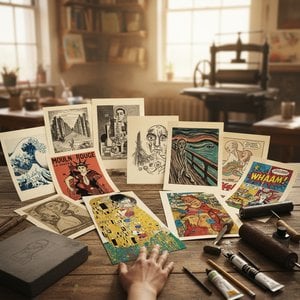
Top 10 Lithographs That Revolutionized Art | ArtsDot
Explore 10 legendary lithographs by Toulouse-Lautrec, Munch & Picasso that redefined art! Discover the stories behind these iconic prints and find museum-quality reproductions for your home decor at ArtsDot.com. Explore the full collection online.

Pop Art meistriteosed: 10 ikoonilist teost, mis muutis kunsti maailma
Avastage 10 popkunstistiili ikoonilist teost Andy Warholist Roy Lichtensteini. Lugege kunstiteoste lugusid, tehnikat ja ajaloogu. Leidke oma seina jaoks täiuslik maali ArtsDot.com-is! Vaadake kollektsiooni.

John Constable: 25 Suurimat Teost Inglise Maastikumaali Tippu
Avastage John Constable'i 25 suurimat teost! Sukeldu inglise maastikumaali romantismisse, imetlege Dedham Vale ilu ja leia inspiratsiooni kodukaunistuseks. Kvaliteetsed kunstireprodutsioonid ArtsDot.com-is. Vaata kohe!

Challenging Conventions: Pop Art's Origins, Evolution & Enduring Legacy
Explore the fascinating history of Pop Art, from its rebellious origins to its enduring influence on contemporary artists. Discover key figures like Warhol & Lichtenstein and learn about collecting this iconic movement.

John Singer Sargent's 25 Masterpieces: Portraits & Beyond | ArtsDot
Explore 25 iconic John Singer Sargent paintings – from dazzling portraits to Impressionist landscapes. Discover the stories behind Madame X, El Jaleo & more! Find museum-quality art reproductions and elevate your home decor with ArtsDot.com.


