


 Vaata sisu
 Jaga teost
 Jaga
Jaga
 Detailid
 Õppekate juhend

 Laadi alla
 Sarnased teosed
 Röntgenuuring
 Slaidietendus
 Statistika
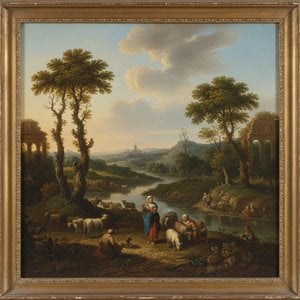
Landscape

 Loe lähemalt
Käsitsi valmistatud õlimaalireproduktsioon
Meie kunstnike poolt tellimusel valmistatud käsitsi maalitud õli-kainaste teos teie soovitud suuruses ja raamis. ( Lülita trükkitoodetele Ülemineku digitaalse pildi müügi kanalisse)




































Vali meie eelmääratud suurused, mis vastavad teose algupärastele proportsioonidele.

Sisestage vajalik laius ja kõrgus, et teos sobiks teie raamile või seinale. Kuna tegu on käsipainatud teosega, siis erineva kujuga suuruse korral võib kunstnik jätta pildi ümber veidi rohkem marginaali või lõigata osa ära — valik on teie. Enne maali alustamist saadame teile kinnitamiseks digitaalse näidisprojektsiooni. Sellel lehel näidatud pilt ei kajasta tegelikku tulemust — seda näitab ainult näidisprojekttsioon.
Pärast tellimust saadab ArtsDot.com meeskond kliendile e-posti juhised ning esitab eelvaate kavandi
Maailmline tarne 3–4 nädala jooksul tavalise 5 nädala asemel. (25 oktoober). Kvaliteedis kompromisse ei tehta.

Tasuta ekspresssaatmine üle maailma

Kõrgekvaliteediline lina-kangastest muld

Täielik transpordikindlustus

Tollimaksude tagastamise garantii

Värvitoime täpsuse garantii

100 päeva tagastusõigus (ainult defektide korral)

100% raha tagasi garantii

Hulgusoodustus
 Klaasivalik on saadaval ainult kuni 110 cm suuruses teostes

Landscape
Reproduktsiooni materjal
Reproduktsiooni mõõtmed
-


Lõppsumma
€ 340
Sarnased teosed


Kunstniku elulugu
A Life Dedicated to Floral Splendor: Jan Frans van Dael
Jan Frans van Dael, born in Antwerp in 1764 and passing away in Paris in 1840, was a Flemish painter who cultivated a remarkable career specializing in the delicate art of still life—particularly flowers and fruit. While his name may not be as instantly recognizable as some of the Old Masters, Van Dael’s work embodies a refined elegance and technical skill that secured him patronage among the highest echelons of French society during the Empire and Restoration periods. His journey reflects a fascinating intersection of Flemish tradition and Parisian sophistication.
Early Training and Parisian Embrace
Van Dael's artistic beginnings were rooted in architectural drawing at the Antwerp Academy, where he distinguished himself by winning first prizes in 1784 and 1785. However, his path took a decisive turn when he relocated to Paris in 1786. Initially residing within the artists’ quarters of the Louvre, he found himself amidst a vibrant community that included fellow painters like Piat Joseph Sauvage, Gerard van Spaendonck, and Pierre-Joseph Redouté—artists who would significantly influence his development. He initially worked as a decorator, contributing to projects at prestigious châteaux such as St. Cloud, Bellevue, and Chantilly. This early experience honed his meticulous attention to detail and appreciation for decorative arts, qualities that would later define his still lifes.
The Bloom of a Unique Style
Under the guidance of van Spaendonck, Van Dael transitioned from decoration to flower painting, discovering a true calling. He regularly exhibited at the Paris Salon between 1793 and 1833, steadily gaining recognition for his compositions. His success wasn’t merely aesthetic; it was also strategic. Van Dael skillfully blended the sober composition and precise detail characteristic of Flemish flower painting—think Roelandt Savery—with a distinctly French-inspired monumentality. This fusion appealed to the tastes of an increasingly discerning clientele, including Empress Josephine, who owned five of his works, and later, Marie-Louise Bonaparte, Louis XVIII, and Charles X.
Patronage and Artistic Legacy
Van Dael’s career flourished under imperial and royal patronage. He wasn't simply *painting* flowers; he was crafting opulent displays that reflected status and refined taste. His compositions often featured a diverse array of species, meticulously studied from life, demonstrating his botanical knowledge alongside artistic skill. He became a member of the Academies of Antwerp and Amsterdam, solidifying his position within the art world. Beyond his own creations, Van Dael was also an avid collector of works by other flower artists—both contemporaries and masters like Jan Davidsz. de Heem, Abraham Mignon, Rachel Ruysch, and Jan van Huysum—suggesting a deep engagement with the history of his chosen genre.
A Lasting Impression
Jan Frans van Dael’s influence extended beyond his own brushstrokes. He nurtured a generation of pupils, including Jean Benner-Fries, Elise Bruyère, Laurent Coste, Vicomtesse Iphigénie Decaux-Milet-Moreau, Henriëtte Geertruida Knip, Elisa-Emilie Le Mire, Auguste Piquet de Brienne, Christiaan van Pol, and Jean Ulrich Tournier. He spent his entire active career in France, dying in Paris in 1840 and finding final rest alongside his friend van Spaendonck in the Père Lachaise cemetery. Today, his works can be admired in museums like Museum Smidt Van Gelder in Antwerp, offering a glimpse into the serene beauty and technical mastery of an artist who dedicated his life to capturing the ephemeral splendor of flowers.

Jan Frans Van Dael
1764 - 1840 , Belgium
Lühikest infot
- Full Name: Jan Frans van Dael
- Nationality: Dutch
- Date Of Birth: 1764
- Date Of Death: 1840
- Place Of Birth: Antwerp, Belgium
- Notable Artworks:
- Vase de Fleurs
- Basket of Fruit
- Flower Still-Life
- Artistic Movement Or Style: Dutch Landscape Painting
- Artists Who Influenced This Artist:
- Jan van Eyck
- Simon Fokke
- John Greenwood
- Gerard van Spaendonck
- Artists Or Movements Influenced By This Artist: ['Dutch Golden Age']
Sarnased artiklid

Hollandi Kuldaja Särgas Kunstipärit: 10 Meisterteost Sinu Koduks
Sukeldu Hollandi Kuldaja kunstivorme! Avasta 10 ikoonilist meistriteost – Rembrandt, Vermeer jt. - ning nende ajatu loojatööd. Leia inspiratsiooni interjöörile ja kaunista kodu ArtsDot.com kvaliteetsete reproduktsioonidega. Uuri kollektsiooni!
Nicolaes Berchem: Dutch Golden Age Pastoralism & the Evolution of Landscape Painting
Explore the captivating world of Nicolaes Berchem, a leading Dutch Golden Age painter. Discover his idyllic landscapes, masterful technique & lasting influence on art history. Learn more at ArtsDot.

Golden Light & Dutch Skies: Bringing the Magic of Dutch Golden Age Landscapes into Your Home
Transform your home with the breathtaking light of Dutch Golden Age landscapes. Discover how hand-painted oil reproductions of masterworks like Ruisdael and Vermeer bring timeless elegance, atmosphere, and soulful texture to modern interiors. Elevate your space with museum-quality art.

Golden Age Reflections: Dutch Baroque Painting & Cultural Innovation
Explore the Dutch Golden Age of painting! Discover key artists like Vermeer & ter Borch, their innovative techniques, and the rich cultural context behind these Baroque masterpieces. Learn about collecting & appreciating this iconic art period.

Illuminating Innovation: Exploring the Dutch Golden Age of Painting
Explore the Dutch Golden Age of painting with ArtsDot. Discover Rembrandt, Vermeer & other Masters. Learn about key characteristics, iconic artworks, and lasting influence. Expert insights for collectors & enthusiasts.