


 Vaata sisu
 Jaga teost
 Jaga
Jaga
 Detailid
 Juhend

 Laadi alla
 Sarnased teosed
 Röntgenuuring
 Slaidietendus
 Statistika
Woman with Blue Shawl


 Loe lähemalt
Käsitsi valmistatud õlimaalireproduktsioon
Meie kunstnike poolt tellimusel valmistatud käsitsi maalitud õli-kainaste teos teie soovitud suuruses ja raamis. ( Lülita trükkitoodetele Ülemineku digitaalse pildi müügi kanalisse)




P118B $10

P118H $10

P118W $10

P438Z $10

P508JH $12

P508YH $12

P805H $10

P805Z $10

P919BZ $10

P919G $10

P919XJ $10

P959ZH $10

P968JZ $12

W106C $8

W218G $10

W218JH $8

W218Y $10

W307PJ $10

W316G $10

W316PJ $8

W316Y $10

W398PJ $8

W4111J $10

W500HY $15

W500JH $15

W692G $12

W849H $8

W940BG $15

W953PJ $8




Vali meie eelmääratud suurused, mis vastavad teose algupärastele proportsioonidele.

Sa võite sisestada oma mõõtmed konkreetse raami või ruumi sobivuse tagamiseks. Kui teie valitud suurus ei vasta originaalpildi proportsioonidele, siis kärvime kunstiteost või laiendame maali täiendavate käsitsi maalitud elementidega. Enne tootmise algust saadetakse teile heakskiitmiseks digitaalne eelvaade.
Palun pidage meeles, et ekraanil kuvatav eelvaade ei kajasta tegelikku kärpimist või laiendamist. Ainult eelvaade näitab täpselt lõplikku kompositsiooni.
Kuigi on saadaval kohandatud suurused, soovitame originaalproportsioonide säilimiseks valida mõõdud eelmääratletud nimekirjast.
Pärast tellimust saadab ArtsDot.com meeskond kliendile e-posti juhised ning esitab eelvaate kavandi
Maailmline tarne 3–4 nädala jooksul tavalise 5 nädala asemel. (23 september). Kvaliteedis kompromisse ei tehta.

Tasuta ekspresssaatmine üle maailma

Kõrgekvaliteediline lina-kangastest muld

Täielik transpordikindlustus

Tollimaksude tagastamise garantii

Värvitoime täpsuse garantii

100 päeva tagastusõigus (ainult defektide korral)

100% raha tagasi garantii

Hulgusoodustus
 Klaasivalik on saadaval ainult kuni 110 cm suuruses teostes

Woman with Blue Shawl
Reproduktsiooni materjal
Reproduktsiooni mõõtmed
-


Lõppsumma
$ 263
A Portrait of Unease: James Ensor’s “Woman with Blue Shawl”
James Ensor's "Woman with Blue Shawl" is not merely a portrait; it’s an immersion into a world steeped in psychological complexity and unsettling beauty. Painted around 1890, this work exemplifies the artist’s signature style – a potent blend of Symbolism, Expressionism, and a distinctly Belgian sensibility that often veers toward the macabre. The painting immediately draws the viewer in with its central figure: an older woman seated beneath a richly colored blue shawl, her gaze direct and slightly enigmatic. Yet, it's not simply a likeness; Ensor has deliberately constructed a scene brimming with symbolic weight and hinting at hidden narratives.
The composition itself is subtly disorienting. The woman’s posture suggests both repose and vulnerability, while the presence of two figures in the periphery – one peering from the upper left, the other positioned at the bottom right – creates an immediate sense of unease and implied drama. These secondary characters are deliberately obscured, their identities ambiguous, contributing to a feeling that we're witnessing a private moment, perhaps a scene from a dream or a carefully staged tableau. The background is understated, dominated by a simple chair, which serves primarily as a grounding element within the otherwise charged atmosphere.
The Language of Masks and Shadows
Ensor’s artistic journey was profoundly shaped by his upbringing in Ostend, a bustling seaside resort town known for its vibrant carnivals. His parents operated a souvenir shop filled with exotic masks, theatrical props, and curiosities – a veritable treasure trove that ignited his imagination and provided him with an unparalleled visual vocabulary. This fascination with disguise and the hidden self is central to Ensor’s oeuvre, and it manifests powerfully in “Woman with Blue Shawl.” The shawl itself becomes a potent symbol, reminiscent of the theatrical masks sold in his childhood shop, suggesting layers of concealment and perhaps even multiple identities.
The use of color further amplifies this sense of ambiguity. The dominant blue of the shawl is cool and melancholic, contrasting with the warmer tones used for the woman’s attire and the surrounding elements. This interplay of colors creates a visual tension that mirrors the emotional complexity of the scene. Ensor was deeply interested in exploring the darker aspects of human nature – anxieties, fears, and the unsettling truths beneath the surface of everyday life. His work often features skeletons, masks, and grotesque figures, all serving as reminders of mortality and the fragility of existence.
Symbolism and the Artist’s Vision
Beyond its immediate visual impact, “Woman with Blue Shawl” is rich in symbolic meaning. The crown adorning the woman's head suggests a sense of authority or perhaps even royalty – yet this elevated status feels strangely unsettling within the context of the painting. It could represent a fading dignity, a reminder of past glories, or simply an illusion designed to conceal something darker. The two figures in the background are particularly intriguing; they might be servants, attendants, or even silent witnesses to the woman’s story – their presence adding another layer of mystery and intrigue.
Ensor's technique is characterized by a bold use of color, expressive brushstrokes, and a deliberate distortion of form. He employed a technique known as “cloisonnism,” inspired by medieval enamelwork, which created areas of intense color surrounded by dark outlines – a method that heightened the painting’s dramatic effect. His work was often met with resistance during his lifetime, deemed scandalous for its unflinching portrayal of human flaws and anxieties. However, Ensor's innovative approach paved the way for Expressionism and Surrealism, cementing his place as one of the most important artists of the late 19th and early 20th centuries.
Bringing “Woman with Blue Shawl” to Your Space
ArtsDot offers meticulously crafted hand-painted reproductions of James Ensor’s "Woman with Blue Shawl," allowing you to experience the power and beauty of this iconic artwork in stunning detail. Whether for a private collection, an art gallery, or a sophisticated interior design scheme, our reproductions capture the essence of Ensor's vision while adhering to the highest standards of artistic quality. Each reproduction is created using archival-quality materials and techniques, ensuring that it will retain its vibrancy and beauty for generations to come. Explore the available sizes and options on our website to bring this captivating portrait into your world.
Sarnased teosed


Kunstniku elulugu
James Ensor: A Pioneer of Modernism
James Sidney Edouard, Baron Ensor (Ostend, 13 April 1860 – 19 November 1949) was a Flemish-Belgian painter and printmaker, an important influence on expressionism and surrealism who lived in Ostend for almost his entire life. He was associated with the artistic group Les XX.
Early Life and Artistic Training
James Ensor’s father, James Frederic Ensor, born in Brussels to English parents, was a cultivated man who studied engineering in England and Germany. Ensor's mother, Maria Catharina Haegheman, was Belgian. Ensor himself lacked interest in academic study and left school at the age of fifteen to begin his artistic training with two local painters. From 1876, he attended drawing lessons at the College of the Blessed Virgin in Ostend.
The Impressionist Influence and Initial Works
Ensor’s early paintings reflected a more traditional approach, depicting scenes of everyday life rendered in somber tones. Works like *Russian Music* (1881) and *The Drunkards* (1883) reveal a nascent talent grappling with realism, but even within these early pieces, hints of the unsettling imagery to come are present. A pivotal shift occurred as Ensor’s palette brightened and his subject matter grew increasingly bizarre. He began to populate his canvases with carnivals, skeletons, puppets, and allegorical figures—a world steeped in fantasy and often bordering on the grotesque. This wasn't merely a stylistic change; it was a deliberate exploration of the darker aspects of human existence, a rejection of societal norms, and an embrace of the irrational.
Les XX and Artistic Innovation
In 1883 Ensor, along with a few older students of the Brussels‘ academy, would take leave of the artists‘ association *L'Essor*. They established the artists‘ association* Les Vingt*. This will play an important role in the dissemination of various international *avant-garde* movements. Ensor’s father’s shop in Ostend was a main purveyor of carnival paraphernalia, and this fascination would permeate his artwork.
Major Paintings and Recurring Themes
Throughout his career, Ensor produced a series of works that continue to shock and fascinate audiences today. *The Scandalized Masks* (1883) stands as an early testament to his fascination with the power of disguise and its ability to reveal hidden emotions. Perhaps his most controversial work, *Christ’s Entry into Brussels* (1888-1889), remains a powerful satire of religious hypocrisy and societal indifference—a painting initially met with harsh criticism but now celebrated as a masterpiece. The unsettling image of Christ entering a city teeming with grotesque masked figures is a potent commentary on the disconnect between spiritual ideals and human behavior.
Legacy and Influence
James Ensor was recognized as a pivotal figure in the transition from 19th-century Symbolism to early 20th-century Expressionism and Surrealism—a true pioneer of modern art. His fearless exploration of the subconscious, his embrace of grotesque imagery, and his rejection of academic conventions paved the way for future generations of artists who dared to challenge artistic norms. He is remembered as a visionary artist whose uncompromising vision continues to inspire contemplation and debate.

James Ensor
1860 - 1949 , Belgium
Lühikest infot
- Artistic Movement Or Style: Expressionism, Surrealism
- Artists Who Influenced This Artist:
- Bruegel the Elder
- Francisco Goya
- Whistler
- Date Of Birth: April 13, 1860
- Date Of Death: November 19, 1949
- Full Name: James Sidney Edouard Ensor
- Nationality: Belgian
- Notable Artworks:
- The Scandalized Masks
- Skeletons Fighting...
- Christ's Entry into Brussels
- Place Of Birth: Ostend, Belgium
Sarnased artiklid

Sir Alfred Munnings' Masterpieces: 25 Paintings That Define Equine Art | ArtsDot
Explore 25 iconic Sir Alfred Munnings paintings! Discover the beauty of British Impressionism, equine art & rural England. Find museum-quality reproductions and elevate your home decor with ArtsDot. Explore the full collection online.

James Abbott McNeill Whistler: 25 meistriteost kunstikollektsioonis | ArtsDot.com
Avastage James Abbott McNeill Whistler'i 25 võrratut meistriteost! Sukelduge esteetilisse kunstimaailma, õppige tema maalitehnikatest ja leidke täiuslik seina kaunistus ArtsDot.com-ist. Kunstikollektsioonid & reprodutsioonid.
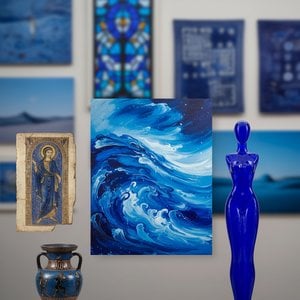
The Allure of Azure: Exploring the Symbolic & Aesthetic Depths of Blue in Art History
Explore the rich history of blue in art! Discover its symbolism, from ancient pigments to modern masterpieces by Kandinsky & Seurat. Uncover the psychological impact and cultural meanings behind this captivating hue.

Slate Blue Masterpieces: 10 Iconic Paintings & Timeless Home Decor Ideas
Immerse yourself in the captivating world of slate blue! Explore 10 iconic paintings by Monet, Van Gogh & Renoir. Discover their stories, techniques & find museum-quality art reproductions for your home at .

Serene Blue Backgrounds: Discover Soulful Art to Transform Your Space with Timeless Elegance
Transform your home with soulful blue art. From serene Monet impressions to modern textured sculptures, discover curated masterpieces designed to inspire calm. Explore expert art consultations and bespoke hand-painted reproductions to create your personal sanctuary.


