

 Eelvaade
 Saada
Saada Jaga
Jaga
 Teave teose kohta
 Juhend

 Laadi alla
 Sarnased teosed
 Röntgenuuring
 Slaidietendus
 Q&A
Q&A Statistika
The Skate

- 80.0 x 100.0 cm


 Loe lähemalt
Giclée / Kunstiprint
Muuseumikvaliteediga giclée- või kangasprint kiire tootmisega ja paindlikud viimistlusvõimalused. ( Osta käsitsi maalatud teos Lülita digitaalse pildi juurde)




P118B €10

P118H €10

P118W €10

P438Z €10

P508JH €12

P508YH €12

P805H €10

P805Z €10

P919BZ €10

P919G €10

P919XJ €10

P959ZH €10

P968JZ €12

W106C €8

W218G €10

W218JH €8

W218Y €10

W307PJ €10

W316G €10

W316PJ €8

W316Y €10

W398PJ €8

W4111J €10

W500HY €15

W500JH €15

W692G €12

W849H €8

W940BG €15

W953PJ €8




Vali meie eelmääratud suurused, mis vastavad teose algupärastele proportsioonidele.

Sisestage vajalik laius ja kõrgus, et see sobiks teie raamile või seinale. Trükki saab ainult lõigata, seda ei saa kunagi pildist suuremaks teha, seega ka erineva mustega suurus kaotab osa pildist. Enne trükkimist saadame teile kinnitamiseks digitaalse näidisprojektsiooni. Sellel lehel näidatud pilt ei kujuta reaalset lõiget — seda näitab ainult näidisprojektsioon.
Ülemaailmne tarne () 2 nädala jooksul, tavalise 4/5 nädala asemel. (2 november)

Tasuta ekspresssaatmine üle maailma

Kõrgekvaliteediline lina-kangas

Täielik transpordikindlustus

Tollimaksude tagastamise garantii

Värvitoime täpsuse garantii

100 päeva tagastusõigus (ainult valmistusdefektide korral)

100% raha tagasi garantii

Hulgusoodustus
 Klaasivalik on saadaval ainult kuni 110 cm suuruses teostes

The Skate
Giclée / Kunstiprint
Reproduktsiooni suurus
-


Koguhind
€ 55
A Portrait of Existential Dread – James Ensor's "The Skate"
James Ensor (1860-1949), a Belgian painter who irrevocably altered the course of artistic expression, remains an artist whose unsettling visions continue to fascinate and provoke contemplation. His oeuvre is characterized by a masterful blend of Symbolism and Expressionism, reflecting a profound engagement with psychological complexities and societal anxieties—themes powerfully conveyed in “The Skate,” completed in 1892. This monumental oil on canvas transcends mere visual representation; it’s an immersive experience into Ensor's distinctive worldview.Composition and Technique: A Deliberate Orchestration of Disquiet
“The Skate” presents a stark tableau dominated by a single, decaying fish lying motionless beside a weathered chair—a juxtaposition immediately laden with symbolic significance. Above this grim centerpiece floats a bird perched precariously on the chair’s armrest, its beak agape in an expression of futile desperation. Scattered throughout the canvas are additional birds, some lifeless and others seemingly struggling for survival, creating a palpable atmosphere of decay and abandonment. Ensor employs a loose brushstroke technique—a hallmark of Impressionism yet imbued with Expressionist fervor—allowing for textural richness and conveying a sense of immediacy. The muted palette – predominantly browns, greys, and ochres – reinforces the painting’s melancholic mood and contributes to its overall feeling of oppressive stillness.Historical Context: Embracing Symbolism's Dark Side
Ensor emerged during a period marked by intellectual ferment—the burgeoning Symbolist movement sought to transcend realism, prioritizing emotional resonance over literal depiction. Influenced by thinkers like Nietzsche and Freud, Ensor interrogated the human condition with unflinching honesty, confronting anxieties about mortality, faithlessness, and societal hypocrisy. “The Skate” embodies this spirit perfectly, mirroring the pervasive pessimism of the era while simultaneously rejecting academic conventions. It stands as a defiant assertion against idealized beauty, presenting instead a brutally honest portrayal of vulnerability and decay—a visual manifesto of Ensor’s artistic philosophy.Symbolism Unveiled: Fish, Birds, and the Chair – Layers of Meaning
The fish represents death and stagnation—a stark reminder of inevitable decline—while the birds symbolize fragility and struggle against overwhelming odds. Their lifeless postures underscore the futility of existence, mirroring Ensor's preoccupation with themes of suffering and despair. The chair itself serves as a focal point for contemplation, representing isolation and vulnerability. Its weathered surface speaks to time’s relentless passage and reinforces the painting’s overarching sense of melancholy. Ensor deliberately avoids offering easy answers or comforting illusions; instead, he compels viewers to confront uncomfortable truths about human experience.Emotional Impact: An Unsettling Reflection on Humanity
“The Skate” isn't merely a depiction of a scene—it’s an emotional journey into the depths of existential dread. Ensor’s masterful use of color and brushstroke creates a visceral response in the observer, eliciting feelings of unease and sorrow. The painting lingers in the mind long after viewing, prompting reflection on themes of mortality, loss, and the inescapable realities of life. It remains a testament to Ensor's genius—a profoundly disturbing yet undeniably beautiful artwork that continues to resonate with audiences today.Korduvad küsimused
Kas teos "The Skate" on tüüpiline sellele, mida James Ensor tavaliselt lõi?
James Ensor dokumenteeritud teemade — masks, symbolism, anxiety, darkness, surreal vision — seas paneb teos "The Skate" erilist tähelepanu teemadel skateboarding, birds, fish, chair, winter scene, carnival, memento mori.
Kuhu kohta „The Skate“, autor James Ensor reproduktsioon peaks rikutud?
Formaat (Landscape) ja soovitatav ruum (Living Room) on teose „The Skate“, autor James Ensor kohta kirjutatud kaks paigutusandmet.
Kas teos „The Skate“, autor James Ensor on portree-, maastiku- või ruudukompositsioon?
Teose „The Skate“, autor James Ensor vorm on Landscape. See vorm kirjeldab kompositsiooni proportsioone.
Sarnased teosed


Kunstniku elulugu
James Ensor: A Pioneer of Modernism
James Sidney Edouard, Baron Ensor (Ostend, 13 April 1860 – 19 November 1949) was a Flemish-Belgian painter and printmaker, an important influence on expressionism and surrealism who lived in Ostend for almost his entire life. He was associated with the artistic group Les XX.
Early Life and Artistic Training
James Ensor’s father, James Frederic Ensor, born in Brussels to English parents, was a cultivated man who studied engineering in England and Germany. Ensor's mother, Maria Catharina Haegheman, was Belgian. Ensor himself lacked interest in academic study and left school at the age of fifteen to begin his artistic training with two local painters. From 1876, he attended drawing lessons at the College of the Blessed Virgin in Ostend.
The Impressionist Influence and Initial Works
Ensor’s early paintings reflected a more traditional approach, depicting scenes of everyday life rendered in somber tones. Works like *Russian Music* (1881) and *The Drunkards* (1883) reveal a nascent talent grappling with realism, but even within these early pieces, hints of the unsettling imagery to come are present. A pivotal shift occurred as Ensor’s palette brightened and his subject matter grew increasingly bizarre. He began to populate his canvases with carnivals, skeletons, puppets, and allegorical figures—a world steeped in fantasy and often bordering on the grotesque. This wasn't merely a stylistic change; it was a deliberate exploration of the darker aspects of human existence, a rejection of societal norms, and an embrace of the irrational.
Les XX and Artistic Innovation
In 1883 Ensor, along with a few older students of the Brussels‘ academy, would take leave of the artists‘ association *L'Essor*. They established the artists‘ association* Les Vingt*. This will play an important role in the dissemination of various international *avant-garde* movements. Ensor’s father’s shop in Ostend was a main purveyor of carnival paraphernalia, and this fascination would permeate his artwork.
Major Paintings and Recurring Themes
Throughout his career, Ensor produced a series of works that continue to shock and fascinate audiences today. *The Scandalized Masks* (1883) stands as an early testament to his fascination with the power of disguise and its ability to reveal hidden emotions. Perhaps his most controversial work, *Christ’s Entry into Brussels* (1888-1889), remains a powerful satire of religious hypocrisy and societal indifference—a painting initially met with harsh criticism but now celebrated as a masterpiece. The unsettling image of Christ entering a city teeming with grotesque masked figures is a potent commentary on the disconnect between spiritual ideals and human behavior.
Legacy and Influence
James Ensor was recognized as a pivotal figure in the transition from 19th-century Symbolism to early 20th-century Expressionism and Surrealism—a true pioneer of modern art. His fearless exploration of the subconscious, his embrace of grotesque imagery, and his rejection of academic conventions paved the way for future generations of artists who dared to challenge artistic norms. He is remembered as a visionary artist whose uncompromising vision continues to inspire contemplation and debate.

James Ensor
1860 - 1949 , Belgium
Lühikest infot
- Artistic Movement Or Style: Expressionism, Surrealism
- Artists Who Influenced This Artist:
- Bruegel the Elder
- Francisco Goya
- Whistler
- Date Of Birth: April 13, 1860
- Date Of Death: November 19, 1949
- Full Name: James Sidney Edouard Ensor
- Nationality: Belgian
- Notable Artworks:
- The Scandalized Masks
- Skeletons Fighting...
- Christ's Entry into Brussels
- Place Of Birth: Ostend, Belgium
Sarnased artiklid

The Subdued Palette: Exploring Emotional Resonance & Aesthetic Impact in Muted Artworks
Explore the power of muted colors in art! Discover the history, psychology & techniques behind serene palettes. Find inspiration & expert advice for creating emotionally resonant spaces with ArtsDot.

The Subdued Resonance: Exploring Emotional Depth & Artistic Nuance within Muted Color Palettes
Explore the captivating world of muted colors in art & design! Discover historical context, psychological effects, techniques, and inspiration for creating serene spaces. Elevate your aesthetic with ArtsDot.
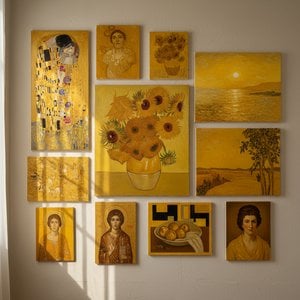
Golden Hues: Top 10 Paintings Dominated by Yellow Ochre |
Explore 10 iconic paintings bathed in golden yellow ochre! From Van Gogh's sunflowers to Monet’s haystacks, discover the stories behind these masterpieces. Find museum-quality art reproductions & elevate your home decor on .

Feathered Visions: A Historical & Artistic Exploration of Birds in Painting
Explore the rich history of birds in painting! Discover symbolism, artistic movements & master artists like Audubon. High-quality reproductions available at ArtsDot.

The Subdued Palette: Emotional Resonance & Aesthetic Impact of Muted Tones in Art
Explore the captivating world of muted tones in art! Discover Tonalism's history, Whistler’s influence & how subtle color palettes evoke emotion. Find serene landscapes and expert advice for integrating these timeless pieces into your home with ArtsDot.


