


 Eelvaade
 Saada
Saada Jaga
Jaga
 Teave teose kohta

 Laadi alla
 Sarnased teosed
 Röntgenuuring
 Slaidietendus
The Orchard


 Loe lähemalt
Giclée / Kunstiprint
Muuseumikvaliteediga giclée- või kangasprint kiire tootmisega ja paindlikud viimistlusvõimalused. ( Osta käsitsi maalitud maal Osta pilt)




P118B $10

P118H $10

P118W $10

P438Z $10

P508JH $12

P508YH $12

P805H $10

P805Z $10

P919BZ $10

P919G $10

P919XJ $10

P959ZH $10

P968JZ $12

W106C $8

W218G $10

W218JH $8

W218Y $10

W307PJ $10

W316G $10

W316PJ $8

W316Y $10

W398PJ $8

W4111J $10

W500HY $15

W500JH $15

W692G $12

W849H $8

W940BG $15

W953PJ $8




Vali meie eelmääratud suurused, mis vastavad teose algupärastele proportsioonidele.

Saate sisestada oma mõõdud, et need sobiks konkreetse raami või ruumi sisse. Kui valitud suurus ei vasta originaalteose proportsioonidele, lõigame teose ära või laiendame pilti peegeldatud või ühtlase servaga. Enne tootmisprotsessi algust saadetakse Teie kinnitamiseks digitaalne näidis.
Palun märka, et ekraanil kuvatav eelvaade ei kajasta tegelikku lõigamist või laiendamist. Ainult näidis kujutab täpselt lõplikku kompositsiooni.
Kuigi erimõõdu on saadaval, soovitame originaaproportsioonide säilitamiseks valida mõõt ette määratud nimekirjast.
Ülemaailmne tarne () 2 nädala jooksul, tavalise 4/5 nädala asemel. (19 august)

Tasuta ekspresssaatmine üle maailma

Kõrgekvaliteediline linakangas

Täielik transpordikindlustus

Tollimaksude tagastamise garantii

Värvitoime täpsuse garantii

60-päevane tagastusõig: ainult tootmisdefektide korral

100% raha tagasi garantii

Hulgusoodustus
 Klaasivalik on saadaval ainult suuruses kuni 110 cm

The Orchard
Giclée / Kunstiprint
Reproduktsiooni suurus
-


Kogusumma
$ 62
Kogumuse kirjeldus
A Silent Orchard’s Echoes: James Ensor's "The Orchard"
James Ensor’s “The Orchard,” painted in 1886, isn’t merely a depiction of a rural landscape; it’s a carefully constructed psychological portrait rendered with the unsettling precision that defined the artist’s unique vision. Born in Ostend, Belgium, amidst a vibrant carnival scene – a world of masks and theatricality – Ensor carried this fascination throughout his career, translating its inherent ambiguity into his art. “The Orchard” embodies this perfectly, presenting a seemingly tranquil vista that immediately hints at something deeper, something subtly unsettling beneath the surface. The painting’s monochrome palette—a carefully orchestrated dance of grays—immediately establishes an atmosphere of quiet contemplation and restrained emotion. It's not a celebration of nature’s beauty in its purest form, but rather a considered observation filtered through Ensor’s intensely personal lens.Composition and Technique: A Sketch from the Soul
The composition is deceptively simple, yet profoundly effective. A modest building—perhaps a farmhouse or a small dwelling—nestles within a cluster of trees that recede into a hazy distance. The arrangement isn’t one of dramatic perspective; instead, it feels like a quick sketch, an impression captured in charcoal or pencil – a deliberate choice by Ensor to convey immediacy and spontaneity. Notice the visible strokes, the delicate layering of lines that build up form and texture. This technique—a hallmark of Ensor's style—is not about meticulous detail but rather about capturing the *feeling* of the scene, the way light falls on bark and shadow plays across leaves. The use of hatching and cross-hatching creates a tactile quality, inviting the viewer to almost reach out and touch the surface of the painting. The artist’s hand is undeniably present, lending an intimate and slightly melancholic quality to the work.Symbolism and the Weight of Memory
While seemingly straightforward, “The Orchard” bristles with symbolic weight. The muted colors, the solitary building, and the dense foliage all contribute to a sense of isolation and introspection. Considering Ensor’s background—his childhood spent amidst the spectacle of carnival masks – it's not surprising that this motif reappears here, albeit subtly. The orchard itself can be interpreted as a metaphor for memory, a place where fragments of the past are preserved and revisited. The building, small and unassuming, suggests a retreat from the world, a space for quiet contemplation—or perhaps, for dwelling on unresolved emotions. The lack of vibrant color further reinforces this sense of melancholy, suggesting that even in a beautiful setting, there’s an underlying sadness.Historical Context & Influences
- Ensor's work is often associated with the Symbolist movement and foreshadows Expressionism, emphasizing emotional intensity over realistic representation.
- His use of masks and theatrical elements reflects a broader interest in exploring the darker aspects of human psychology.
- The painting’s stark monochrome palette aligns with the artistic trends of late 19th-century Europe, where artists sought to move beyond traditional academic styles.
An Emotional Resonance: A Quiet Contemplation
Ultimately, “The Orchard” is a profoundly moving work that transcends its simple subject matter. It’s not a painting about apples or trees; it's a painting about the human condition—about memory, loss, and the quiet beauty of solitude. The subdued colors and expressive brushstrokes evoke a sense of melancholy and introspection, inviting viewers to contemplate their own personal histories and emotional landscapes. Reproductions of this piece offer a remarkable opportunity to bring this evocative atmosphere into any space, providing a focal point for reflection and conversation. It’s a testament to Ensor's genius that a seemingly simple orchard can hold such profound depth and resonance.Sarnased teosed


Kunstniku elulugu
James Ensor: A Pioneer of Modernism
James Sidney Edouard, Baron Ensor (Ostend, 13 April 1860 – 19 November 1949) was a Flemish-Belgian painter and printmaker, an important influence on expressionism and surrealism who lived in Ostend for almost his entire life. He was associated with the artistic group Les XX.
Early Life and Artistic Training
James Ensor’s father, James Frederic Ensor, born in Brussels to English parents, was a cultivated man who studied engineering in England and Germany. Ensor's mother, Maria Catharina Haegheman, was Belgian. Ensor himself lacked interest in academic study and left school at the age of fifteen to begin his artistic training with two local painters. From 1876, he attended drawing lessons at the College of the Blessed Virgin in Ostend.
The Impressionist Influence and Initial Works
Ensor’s early paintings reflected a more traditional approach, depicting scenes of everyday life rendered in somber tones. Works like *Russian Music* (1881) and *The Drunkards* (1883) reveal a nascent talent grappling with realism, but even within these early pieces, hints of the unsettling imagery to come are present. A pivotal shift occurred as Ensor’s palette brightened and his subject matter grew increasingly bizarre. He began to populate his canvases with carnivals, skeletons, puppets, and allegorical figures—a world steeped in fantasy and often bordering on the grotesque. This wasn't merely a stylistic change; it was a deliberate exploration of the darker aspects of human existence, a rejection of societal norms, and an embrace of the irrational.
Les XX and Artistic Innovation
In 1883 Ensor, along with a few older students of the Brussels‘ academy, would take leave of the artists‘ association *L'Essor*. They established the artists‘ association* Les Vingt*. This will play an important role in the dissemination of various international *avant-garde* movements. Ensor’s father’s shop in Ostend was a main purveyor of carnival paraphernalia, and this fascination would permeate his artwork.
Major Paintings and Recurring Themes
Throughout his career, Ensor produced a series of works that continue to shock and fascinate audiences today. *The Scandalized Masks* (1883) stands as an early testament to his fascination with the power of disguise and its ability to reveal hidden emotions. Perhaps his most controversial work, *Christ’s Entry into Brussels* (1888-1889), remains a powerful satire of religious hypocrisy and societal indifference—a painting initially met with harsh criticism but now celebrated as a masterpiece. The unsettling image of Christ entering a city teeming with grotesque masked figures is a potent commentary on the disconnect between spiritual ideals and human behavior.
Legacy and Influence
James Ensor was recognized as a pivotal figure in the transition from 19th-century Symbolism to early 20th-century Expressionism and Surrealism—a true pioneer of modern art. His fearless exploration of the subconscious, his embrace of grotesque imagery, and his rejection of academic conventions paved the way for future generations of artists who dared to challenge artistic norms. He is remembered as a visionary artist whose uncompromising vision continues to inspire contemplation and debate.

James Ensor
1860 - 1949 , Belgium
Lühikesed faktid
- Artistic Movement Or Style: Expressionism, Surrealism
- Artists Who Influenced This Artist:
- Bruegel the Elder
- Francisco Goya
- Whistler
- Date Of Birth: April 13, 1860
- Date Of Death: November 19, 1949
- Full Name: James Sidney Edouard Ensor
- Nationality: Belgian
- Notable Artworks:
- The Scandalized Masks
- Skeletons Fighting...
- Christ's Entry into Brussels
- Place Of Birth: Ostend, Belgium
Seotud artiklid

James Abbott McNeill Whistler: 25 meistriteost kunstikollektsioonis | ArtsDot.com
Avastage James Abbott McNeill Whistler'i 25 võrratut meistriteost! Sukelduge esteetilisse kunstimaailma, õppige tema maalitehnikatest ja leidke täiuslik seina kaunistus ArtsDot.com-ist. Kunstikollektsioonid & reprodutsioonid.

Etching Masters: 10 Legendary Prints That Revolutionized Art | ArtsDot
Journey through 10 legendary etching masterpieces by Rembrandt, Dürer & Goya. Explore the history of printmaking and discover timeless art for your home. Find museum-quality reproductions at ArtsDot.com.

Etching: A Historical Survey of Technique, Aesthetic Qualities & Enduring Artistic Significance
Explore the rich history of etching, from its origins to Rembrandt's masterful innovations. Discover the technique, aesthetic qualities & enduring legacy of this captivating art form. Expert insights for collectors and enthusiasts.
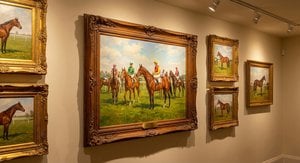
Sir Alfred Munnings' Masterpieces: 25 Paintings That Define Equine Art | ArtsDot
Explore 25 iconic Sir Alfred Munnings paintings! Discover the beauty of British Impressionism, equine art & rural England. Find museum-quality reproductions and elevate your home decor with ArtsDot. Explore the full collection online.

The Intricate World of Etching: A Historical Survey of Technique, Aesthetic Evolution, and Enduring Artistic Impact
Explore the rich history of etching, from its origins to modern practice. Discover techniques, key artists like Rembrandt, and insights for collectors. A comprehensive guide by ArtsDot.



