

 Eelvaade
 Saada
Saada Jaga
Jaga
 Teave teose kohta
 Juhend

 Laadi alla
 Sarnased teosed
 Röntgenuuring
 Slaidietendus
 KÜSIMUSED JA VASTUSID
 Statistika
Squelette regardant des chinoiseries


 Loe lähemalt
Giclée / Kunstiprint
Muuseumikvaliteediga giclée- või kangasprint kiire tootmisega ja paindlikud viimistlusvõimalused. ( Osta käsitsi maalatud teos Lülita digitaalse pildi juurde)




P118B €10

P118H €10

P118W €10

P438Z €10

P508JH €12

P508YH €12

P805H €10

P805Z €10

P919BZ €10

P919G €10

P919XJ €10

P959ZH €10

P968JZ €12

W106C €8

W218G €10

W218JH €8

W218Y €10

W307PJ €10

W316G €10

W316PJ €8

W316Y €10

W398PJ €8

W4111J €10

W500HY €15

W500JH €15

W692G €12

W849H €8

W940BG €15

W953PJ €8




Vali meie eelmääratud suurused, mis vastavad teose algupärastele proportsioonidele.

Sisestage vajalik laius ja kõrgus, et see sobiks teie raamile või seinale. Trükki saab ainult lõigata, seda ei saa kunagi pildist suuremaks teha, seega ka erineva mustega suurus kaotab osa pildist. Enne trükkimist saadame teile kinnitamiseks digitaalse näidisprojektsiooni. Sellel lehel näidatud pilt ei kujuta reaalset lõiget — seda näitab ainult näidisprojektsioon.
Ülemaailmne tarne () 2 nädala jooksul, tavalise 4/5 nädala asemel. (4 november)

Tasuta ekspresssaatmine üle maailma

Kõrgekvaliteediline lina-kangas

Täielik transpordikindlustus

Tollimaksude tagastamise garantii

Värvitoime täpsuse garantii

100 päeva tagastusõigus (ainult valmistusdefektide korral)

100% raha tagasi garantii

Hulgusoodustus
 Klaasivalik on saadaval ainult kuni 110 cm suuruses teostes

Squelette regardant des chinoiseries
Giclée / Kunstiprint
Reproduktsiooni suurus
-


Koguhind
€ 56
A Haunting Encounter with Mortality
In the quiet, monochrome depths of James Ensor’s "Squelette regardant des chinoiseries," we are invited into a space that feels simultaneously intimate and profoundly unsettling. Painted around 1908, this masterful composition transcends a mere depiction of a domestic interior to become a psychological landscape. At first glance, the viewer encounters a room furnished with the familiar comforts of a bourgeois home—a couch, a chair, and the silent companionship of two dogs. Yet, as the eye adjusts to the starkness of the scene, the presence of a skeletal figure emerges, gazing intently at decorative chinoiserie panels. This juxtaposition of the domestic and the macabre creates a tension that is quintessential to Ensor’s vision, forcing us to confront the inescapable reality of death amidst the fleeting beauty of worldly possessions.
The technique employed here is nothing short of hypnotic. Eschewing the vibrant palettes often associated with late 19th-century art, Ensor utilizes a bold black ink wash that lends the work an almost sculptural quality. The absence of color serves to amplify the emotional weight of the subject matter; without the distraction of hue, the viewer is left to navigate the textures of light and shadow. The artist’s hand is visible in the varying gradations of the wash, ranging from smooth, ghostly transitions to jagged, anxious lines that mirror the internal unrest of the scene. For the collector or designer, this piece offers a sophisticated monochromatic elegance, providing a focal point that commands attention through its depth and structural intensity rather than through overt ornamentation.
The Intersection of Tradition and Modern Anxiety
To understand the profound impact of this work, one must look toward the cultural ferment of the early 20th century. Ensor was working during an era of immense transition, where the fascination with Eastern aesthetics—specifically chinoiserie—acted as a decorative counterpoint to Western traditions. By placing a skeletal figure in contemplation of these exotic, delicate patterns, Ensor highlights a poignant dialogue between the permanent and the ephemeral. The chinoiserie represents the height of ornamental luxury and cultural curiosity, while the skeleton serves as a memento mori, a stark reminder that even the most exquisite human creations are subject to the passage of time.
This thematic duality makes the artwork an extraordinary choice for those looking to infuse a space with intellectual and emotional resonance. It is not merely a decoration but a conversation piece that explores themes of isolation, memory, and the gaze. The way the skeletal figure is positioned—centrally yet subtly off-kilter—suggests a world slightly out of balance, inviting the observer to reflect on their own relationship with the transient nature of life. Whether placed in a contemporary gallery setting or a classic study, this reproduction carries with it the heavy, beautiful shadows of Ensor’s Belgian heritage, offering a timeless window into the human condition.
Korduvad küsimused
Mis on teose „Squelette regardant des chinoiseries“, autor James Ensor valgusus?
Teose "Squelette regardant des chinoiseries" värvid näitavad Soft Shadow luminantsi.
Millissele ajalukuna kuulub teos „Squelette regardant des chinoiseries“, autor James Ensor?
Teos „Squelette regardant des chinoiseries“, autor James Ensor pärineb Modern ajast. See ajastu annab teosele ajaloolise konteksti.
Kas teosele „Squelette regardant des chinoiseries“, autor James Ensor on saadaval diapositatsioon?
Saadaval on diavorama: „Squelette regardant des chinoiseries“, autor James Ensor teose Pildikava leht.
Sarnased teosed


Kunstniku elulugu
James Ensor: A Pioneer of Modernism
James Sidney Edouard, Baron Ensor (Ostend, 13 April 1860 – 19 November 1949) was a Flemish-Belgian painter and printmaker, an important influence on expressionism and surrealism who lived in Ostend for almost his entire life. He was associated with the artistic group Les XX.
Early Life and Artistic Training
James Ensor’s father, James Frederic Ensor, born in Brussels to English parents, was a cultivated man who studied engineering in England and Germany. Ensor's mother, Maria Catharina Haegheman, was Belgian. Ensor himself lacked interest in academic study and left school at the age of fifteen to begin his artistic training with two local painters. From 1876, he attended drawing lessons at the College of the Blessed Virgin in Ostend.
The Impressionist Influence and Initial Works
Ensor’s early paintings reflected a more traditional approach, depicting scenes of everyday life rendered in somber tones. Works like *Russian Music* (1881) and *The Drunkards* (1883) reveal a nascent talent grappling with realism, but even within these early pieces, hints of the unsettling imagery to come are present. A pivotal shift occurred as Ensor’s palette brightened and his subject matter grew increasingly bizarre. He began to populate his canvases with carnivals, skeletons, puppets, and allegorical figures—a world steeped in fantasy and often bordering on the grotesque. This wasn't merely a stylistic change; it was a deliberate exploration of the darker aspects of human existence, a rejection of societal norms, and an embrace of the irrational.
Les XX and Artistic Innovation
In 1883 Ensor, along with a few older students of the Brussels‘ academy, would take leave of the artists‘ association *L'Essor*. They established the artists‘ association* Les Vingt*. This will play an important role in the dissemination of various international *avant-garde* movements. Ensor’s father’s shop in Ostend was a main purveyor of carnival paraphernalia, and this fascination would permeate his artwork.
Major Paintings and Recurring Themes
Throughout his career, Ensor produced a series of works that continue to shock and fascinate audiences today. *The Scandalized Masks* (1883) stands as an early testament to his fascination with the power of disguise and its ability to reveal hidden emotions. Perhaps his most controversial work, *Christ’s Entry into Brussels* (1888-1889), remains a powerful satire of religious hypocrisy and societal indifference—a painting initially met with harsh criticism but now celebrated as a masterpiece. The unsettling image of Christ entering a city teeming with grotesque masked figures is a potent commentary on the disconnect between spiritual ideals and human behavior.
Legacy and Influence
James Ensor was recognized as a pivotal figure in the transition from 19th-century Symbolism to early 20th-century Expressionism and Surrealism—a true pioneer of modern art. His fearless exploration of the subconscious, his embrace of grotesque imagery, and his rejection of academic conventions paved the way for future generations of artists who dared to challenge artistic norms. He is remembered as a visionary artist whose uncompromising vision continues to inspire contemplation and debate.

James Ensor
1860 - 1949 , Belgium
Lühikest infot
- Artistic Movement Or Style: Expressionism, Surrealism
- Artists Who Influenced This Artist:
- Bruegel the Elder
- Francisco Goya
- Whistler
- Date Of Birth: April 13, 1860
- Date Of Death: November 19, 1949
- Full Name: James Sidney Edouard Ensor
- Nationality: Belgian
- Notable Artworks:
- The Scandalized Masks
- Skeletons Fighting...
- Christ's Entry into Brussels
- Place Of Birth: Ostend, Belgium
Sarnased artiklid

James Ensor's Grotesque Visions: Social Commentary & Artistic Innovation
Explore the unsettling yet captivating world of James Ensor, a pioneer of Expressionism. Discover his satirical masterpieces, symbolic imagery & lasting influence on modern art. High-quality reproductions available at ArtsDot.

Unlocking Emotion: A Beginner's Guide to the Raw Power of Symbolic Expressionism Art
Discover the raw emotion of Symbolic Expressionism. Our expert guide explores how masters like Munch use color and form to convey inner feelings, offering inspiration for collectors looking to bring powerful, soulful art into their modern homes.
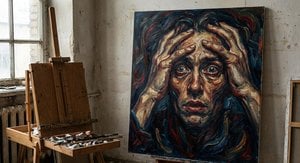
Figurative Expressionism: Emotional Intensity & Subjective Reality in 20th-Century Art
Explore the powerful world of Figurative Expressionism with ArtsDot. Discover key artists like Kirchner & Beckmann, understand its emotional depth, and learn how to collect this influential 20th-century art movement.

Masterpieces of the English Countryside: Top 25 Sir Alfred James Munnings Artworks
Explore 25 iconic Sir Alfred James Munnings masterpieces. Discover timeless equine art on ArtsDot.com.

James Abbott McNeill Whistler: 25 meistriteost kunstikollektsioonis | ArtsDot.com
Avastage James Abbott McNeill Whistler'i 25 võrratut meistriteost! Sukelduge esteetilisse kunstimaailma, õppige tema maalitehnikatest ja leidke täiuslik seina kaunistus ArtsDot.com-ist. Kunstikollektsioonid & reprodutsioonid.


