

 Eelvaade
 Saada
Saada Jaga
Jaga
 Teave teose kohta
 Juhend

 Laadi alla
 Sarnased teosed
 Röntgenuuring
 Slaidietendus
 KÜSIMUSED JA VASTUSID
 Statistika
Broken Spaces 5

- 44.0 x 51.0 cm

 Loe lähemalt
Hankige trükiivaldatav fail, mis on kvaliteedilt palju parem kui veebilehel näidatud eelvaade. Kõik meie müüdavad digitaalsed pildid pärinevad meie arhiivist kõrge resolutsiooniga originaalfailidest — tavaliselt 5000 kuni 15 000 pikslit laiust — nii et saate julgelt trükida suurematsat, lüüdist teha või detailset sisu reproduktsiooni teha.
Meie stuudiost ei lahtu ükski fail puutumatuna. Digiekpert võrdleb värve algsest maalistimusega ja vajadusel korrigeerib neid, seejärel parandab selgust ja detaile professionaalsete retušimisvahendite abil — püüdes alati jääda truudeks kunstniku pintoonile ja stiilile. Tulemuseks on pilt, mis näeb välja nagu maali, mitte nagu filtreeritud skann.
Teet kinnituse enne lõplikku valmimist: meie ekspert saadab pildi 72 tunni jooksul e-posti ülevaatamiseks. Ei ole rahul? Paluge parandusi või korrektsioone ning kui kvaliteet ei vasta ootustele, võite paluda tagastamist.
See on kvaliteet, millele tuguvad väljaandjad, disainistuudiod, galeriid ja trükikojad.
Digitaalne kunstiteos
Laadi alla kõrge resolutsiooniga fail isiklikuks vaatamiseks, trükkimiseks ja loomingulisteks projektideks. ( Lülita trükkitoodetele Osta käsitsi maalatud teos)
Sisse kuulub iga digitaalse pildi tellimusega
Eksperdi digitaalne kohaletoimetamine, garanteeritud
Valides ArtsDot.com, ei saa sa lihtsalt pilti – saad professionaalselt parandatud digitaalse teose, mida on valmistatud täpsusega ja mis on toetatud rahuldamatusgarantiiga. Siin on kõik, mis sinu tellimusega automaatselt kaasneb:

Kiire digitaalne edastus
Teie kõrge resolutsiooniga digitaalne pildifail saadetakse teile e-posti 72 tunni jooksul pärast tellimist – kohe kasutamiseks valmis.

Tehisintellektiga täiustatud digitaalne fail
Teie teos on professionaalselt optimeeritud arenenud tehisintellekti tööriistade ja käsitsi redigeerimise abil, tagades maksimaalse detailitaseme, selguse ja värvitäpsuse.

Tasuta eluaegne uuesti saatmine
Kas kustutasid faili kogukalu unustamisel või kustutamisel? Puudub mure – saad selle uuesti igal ajal ilma lisatasuta.

Puuduvad importimaksud – alati
Nautige oma teoseid koheselt ilma tolli-, maksude või tarnimaskuludeta – digiletchargused on alati maksuvabadud.

Värvitäpsuse garantii
Me tagame, et teie digitaalne pilt kajastaks originaali värve professionaalsete tööriistade ja värvihalduse abil võimalikult täpselt.

100 päeva rahuldamatuse garantii
Kui te ei ole oma digitaalse pildi eest rahul, siis me parandame seda või tagastame 100% summast 100 päeva jooksul – küsimusteta.

100% raha tagastamise garantii
Ei ole rahul? Saate täielise tagastaja 100 päeva jooksul pärast digitaalse faili kättesaamist – ilma küsimusteta.

Suurema tellimuse soodustused
Osta 3 pilti, säästa 10% - Osta 5, säästa 15% - Osta 10+, säästa 20%. Sobib suurepäraselt loomingulisteks projektideks, galeriideks ja agentuurideks.
Sarnased teosed


Kunstniku elulugu
Jack Whitten: A Revolutionary Voice in Abstract Art
Jack Whitten (1939-2018) stands as a towering figure in American abstract art, an artist whose relentless experimentation and profound engagement with history—particularly the legacy of slavery and the Civil Rights Movement—transformed conventional notions of painting and sculpture. More than simply creating visually arresting works, Whitten invented techniques that fundamentally altered the possibilities of artistic expression, earning him recognition as a true innovator and a vital voice in the latter half of the 20th century. His career spanned six decades, marked by constant evolution, a refusal to be categorized, and an unwavering commitment to exploring the complex relationship between art, culture, and social justice.
Born in Bessemer, Alabama—a city steeped in the realities of Jim Crow segregation—Whitten’s early life profoundly shaped his artistic vision. His father's death when he was eight instilled a sense of resilience and independence, while his mother’s private kindergarten provided an initial exposure to the creative process. Crucially, his inheritance from his uncle, a sign painter, furnished him with tools that would become central to his groundbreaking techniques. This early connection to visual communication—the act of creating signs, slogans, and images for public consumption—laid the groundwork for his later explorations of representation and its limitations.
Whitten’s artistic journey began at Tuskegee Institute, where he initially pursued a pre-medical degree, influenced by his brother's ambition to become an army doctor. However, witnessing the injustices of segregation firsthand ignited within him a deep commitment to social change. He joined the ROTC and used earnings from painting store tags to support himself through college, while simultaneously participating in Civil Rights demonstrations, including a pivotal march in Baton Rouge where he helped organize protest signs. This experience solidified his belief in nonviolent resistance and profoundly influenced the themes that would permeate much of his work.
Moving to New York City in 1960, Whitten enrolled at Cooper Union, immersing himself in the vibrant art scene of the burgeoning metropolis. There, he encountered a diverse range of influences—from the abstract expressionists like Willem de Kooning and Jackson Pollock to Black abstractionists such as Romare Bearden and Jacob Lawrence. These encounters sparked a period of intense experimentation, leading him to develop his signature techniques: layering acrylic paint with nylon mesh fabric to create soft, textured surfaces; utilizing a “developer”—a T-shaped tool—to drag the paint across the canvas in single, decisive strokes; and later, employing electrostatic printing methods to produce works that blurred the boundaries between painting and photography. His early work, particularly the "Heads" series (1964), demonstrated his fascination with exploring the interplay of form and perception, utilizing translucent white pigment against black to create ambiguous, almost ghostly figures.
The Black Monolith Series and a Legacy of Protest
Perhaps Whitten’s most enduring contribution to art history is the “Black Monolith” series (1970-1976), a body of work that stands as both a personal memorial and a powerful statement about the legacy of slavery in America. Inspired by the death of his brother, Whitten created a series of paintings—often monumental in scale—dedicated to those he held dear: friends, family members, and prominent figures who had shaped his life and worldview. These works are characterized by their dense layering of paint, often incorporating fragments of newspaper clippings, photographs, and other found materials, creating textured surfaces that evoke the weight of history and memory.
The “Black Monolith” series is not simply a collection of portraits; it’s an exploration of trauma, loss, and resilience. Whitten deliberately employed techniques—such as layering paint with a squeegee to create a sense of movement and disruption—to convey the emotional intensity of his subject matter. The use of black as a dominant color further amplified this effect, symbolizing both mourning and the enduring presence of the past. As he himself stated, “My paintings are designed as weapons,” aiming to “penetrate and destroy the Western aesthetic” and ultimately serve as tools for social and political change.
Technique and Innovation: A Perpetual Experiment
What distinguished Jack Whitten from many of his contemporaries was not a fixed style but an unwavering commitment to experimentation. Throughout his career, he constantly pushed the boundaries of painting technique, developing new methods and materials that defied conventional artistic practices. His early work with nylon mesh fabric created a unique textural effect, while his use of the “developer” tool—a simple T-shaped instrument—allowed him to manipulate paint in ways previously unimaginable.
Whitten’s studio became a laboratory, where he rigorously tested the properties of various materials and techniques. He famously experimented with freezing acrylic paint, heating it, smashing it with a hammer, and applying it directly to paper using electrostatic printing methods. This relentless pursuit of innovation resulted in a remarkably diverse body of work—ranging from delicate, feather-like textures to dense, layered compositions filled with fragments of text and imagery. His willingness to embrace chance and spontaneity further contributed to the unique character of his art.
Recognition and Historical Significance
Despite facing significant challenges as a Black artist in a predominantly white art world, Jack Whitten’s work gradually gained recognition throughout the 1970s and 80s. He received numerous accolades, including a solo exhibition at the Whitney Museum of American Art in 1974 and a National Medal of Arts in 2016—a testament to his profound impact on contemporary art. His work is now held by major museums around the world, including the Museum of Modern Art (MoMA) and the Metropolitan Museum of Art.
More than just an artist, Jack Whitten was a cultural commentator who used his art to address issues of race, identity, and social justice. His “Black Monolith” series remains a powerful symbol of remembrance and resilience, while his innovative techniques continue to inspire artists today. Whitten’s legacy lies not only in the beauty of his paintings but also in his unwavering commitment to challenging conventions and using art as a means of engaging with the complexities of American history.
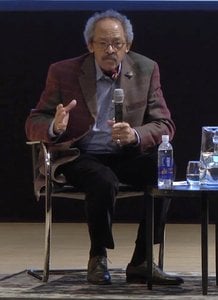
Jack Whitten
1939 - 2018 , United States
Lühikesed faktid
- Full Name: Jack Whitten
- Nationality: American
- Date Of Birth: 1939
- Date Of Death: January 20, 2018
- Place Of Birth: Bessemer, Alabama
- Notable Artworks:
- Black Monolith Series
- Heads Series
- Birmingham 1964
- Artistic Movement Or Style: Abstract painting/sculpture
- Artists Who Influenced This Artist:
- Willem de Kooning
- Robert Blackburn
- Romare Bearden
- Artists Or Movements Influenced By This Artist:
- Jacob Lawrence
- Norman Lewis