


 Vaata sisu
 Jaga teost
 Jaga
Jaga
 Detailid
 Õppekate juhend

 Laadi alla
 Sarnased teosed
 Röntgenuuring
 Slaidietendus
 Statistika
Nude Reaching


 Loe lähemalt
Sellel lehel kuvatav kunstiteos on kaitstud autoriõigusega, mis tähendab, et meil ei ole seaduslikku õigust luua või müüa identset reproduktsiooni. Seda kaitset rakendatakse rahvusvaheliste kokkulepete alusel, nagu näiteks Berne konventsioon ning riiklike seadustega, sealhulgas nendega, mida on sätestatud USA autoriõiguse seadus – 17. peatükk.
See meetod järgib täielikult autoriõiguse reegleid, kuna see ei põhine kaitstud kunstiteose kopeerimisel või dupliteerimisel. Selle asemel on tegu loova reinterpreetatsiooniga – uue maaldisega, mis on algteosest inspireeritud, kuid ei ole sellest identiline.
Giclée / Kunstiprint
Muuseumikvaliteediga giclée- või kangasprint kiire tootmisega ja paindlikud viimistlusvõimalused. ( Telli käsitsi maalitud reproduktsioon Ülemineku digitaalse pildi müügi kanalisse)




P118B €10

P118H €10

P118W €10

P438Z €10

P508JH €12

P508YH €12

P805H €10

P805Z €10

P919BZ €10

P919G €10

P919XJ €10

P959ZH €10

P968JZ €12

W106C €8

W218G €10

W218JH €8

W218Y €10

W307PJ €10

W316G €10

W316PJ €8

W316Y €10

W398PJ €8

W4111J €10

W500HY €15

W500JH €15

W692G €12

W849H €8

W940BG €15

W953PJ €8




Vali meie eelmääratud suurused, mis vastavad teose algupärastele proportsioonidele.

Sisestage vajalik laius ja kõrgus, et see sobiks teie raamile või seinale. Trükki saab ainult lõigata, seda ei saa kunagi pildist suuremaks teha, seega ka differentse vormiga suurus kaotab osa pildist. Enne trükkimist saadame teile kinnitamiseks digitaalse näidisprojektsiooni. Sellel lehel näidatud pilt ei kujuta reaalset lõiget — seda näitab ainult näidisprojekttsioon.
Ülemaailmne tarne () 2 nädala jooksul, tavalise 4/5 nädala asemel. (22 oktoober)

Tasuta ekspresssaatmine üle maailma

Kõrgekvaliteediline lina-kangastest muld

Täielik transpordikindlustus

Tollimaksude tagastamise garantii

Värvitoime täpsuse garantii

100 päeva tagastusõigus (ainult defektide korral)

100% raha tagasi garantii

Hulgusoodustus
 Klaasivalik on saadaval ainult kuni 110 cm suuruses teostes

Nude Reaching
Giclée / Kunstiprint
Reproduktsiooni mõõtmed
-


Lõppsumma
€ 54
Sarnased teosed


Kunstniku elulugu
Isabel Bishop: A Life in Urban Realism
Early Life and Education
- Born: 1902, Cincinnati, Ohio.
- Isabel Bishop came from a background of intellectual privilege; her parents descended from established East Coast mercantile families. Her father was a scholar of Greek and Latin, while her mother pursued writing and early women’s suffrage activism.
- The family relocated to Detroit, where Bishop began formal art training at age 12 with life drawing classes at the John Wicker Art School.
- She initially moved to New York City at 16 to study illustration at the New York School of Applied Design for Women, but quickly transitioned to painting.
- Bishop attended the Art Students League from 1920-1924, studying with influential artists like Guy Pène du Bois and Kenneth Hayes Miller. From Miller, she adopted techniques rooted in Baroque Flemish painting.
- She also studied with Max Weber and Robert Henri, absorbing elements of early modernism. Time spent painting in Woodstock, New York during the 1920s further shaped her artistic development.
Artistic Development and Style
- Throughout the 1920s and 30s, Bishop developed a distinctive realist style focused on depicting women in their everyday lives within the bustling streets of Manhattan.
- Her work was deeply influenced by Old Masters, particularly Peter Paul Rubens and other Dutch and Flemish painters discovered during European travels. This influence is evident in her sensitive modeling of form and atmospheric density.
- Bishop’s style is characterized by a focus on capturing “unfixity”—the sense of movement, mobility, and fleeting moments within the urban landscape.
- She explored the interaction between form and ground, creating compositions that convey a dynamic energy. Her paintings often possess what has been described as "a submarine pearliness and density of atmosphere."
Themes and Subject Matter
- Urban Life: Bishop’s primary subject matter was the vibrant life of New York City, particularly around Union Square.
- Women in Modernity: She is celebrated for her sensitive and insightful portrayals of American women navigating modern urban existence. Her work often depicts their interactions and experiences within public spaces.
- Portraits & Nudes: Bishop created both individual portraits, emphasizing the subject’s expression, and solitary nude studies.
- Multiple-Figure Compositions: She pioneered compositions featuring two or more women engaged in everyday activities.
Career and Recognition
- Bishop began exhibiting frequently in the midtown galleries of New York City in 1932, establishing a consistent presence throughout her career.
- She maintained a loft studio near Union Square at 9 West Fourteenth Street from 1934 until 1984, despite residing in Riverdale with her husband, Dr. Harold G. Wolff (a neurologist), whom she married in 1934.
- Bishop was included in the first three Whitney Biennials (1932, 1934, and 1936) and participated in ten subsequent annual exhibitions at the Whitney Museum of American Art.
- She taught at the Art Students League from 1936 to 1937.
- In 1940, she was elected an associate member of the National Academy of Design and became a full member in 1941.
- Bishop created a post office mural, Great Men Came from the Hills, for New Lexington, Ohio, in 1938 through the Section of Painting and Sculpture.
Legacy and Historical Significance
- Isabel Bishop is a significant figure within the Fourteenth Street School, a loosely affiliated group of artists working around Union Square, including Reginald Marsh and the Soyer brothers.
- Her work contributes to discussions surrounding feminism and the representation of the “new woman” emerging in urban landscapes during the 20th century.
- In the mid-1940s, she illustrated a new edition of Jane Austen’s Pride and Prejudice, with her original drawings now held at the Pierpont Morgan Library.
- Bishop's paintings offer valuable insights into American social life during the 1930s-1970s, capturing the energy and complexities of a rapidly changing urban environment.
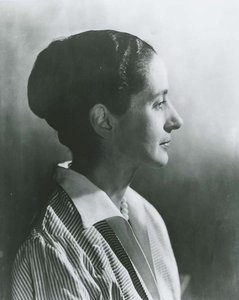
Isabel Bishop
1902 - 1988
Lühikest infot
- Name: Isabel Bishop
- Movement: Fourteenth Street School, American Realism
- Birth Date: 1902
- Death Date: 1988
- Birth Place: Cincinnati, Ohio
- Nationality: American
- Date Of Birth: 1902
- Date Of Death: 1988
- Influenced By: Guy Pène du Bois, Kenneth Hayes Miller, Peter Paul Rubens, Dutch and Flemish painters
- Notable Works: Paintings of Union Square scenes, depictions of women in urban settings
Sarnased artiklid

Concrete Visions: Exploring the Urban Landscape in Painting – From Realism to Contemporary Art
Explore the evolution of cityscape painting from Realism to contemporary art with ArtsDot. Discover key artists & invest in timeless urban visions. Expert guidance, museum-quality reproductions.

The Enduring Allure of the Nude: A Historical & Artistic Exploration of the Human Form
Explore the captivating history of nude art! Discover iconic paintings & artists from classical to modern eras. Uncover symbolism, techniques & find museum-quality reproductions at ArtsDot.

Concrete Visions: Exploring Representations of Urban Life in Modern & Contemporary Art
Explore the evolution of cityscape painting from Realism to contemporary art. Discover key artists & invest in timeless urban visions with ArtsDot's expert guidance and museum-quality reproductions.
Concrete Narratives: Exploring Urban Life in Modern & Contemporary Art
Explore the evolution of cityscape painting with ArtsDot. Discover key artists from Realism to contemporary movements & invest in timeless urban visions. Expert guidance, museum-quality reproductions.

The Eloquent Form: A Historical & Aesthetic Exploration of the Nude in Art
Explore the captivating history of the nude in art! From ancient Greece to modern masters, discover its evolving symbolism, techniques & enduring beauty. Expert insights for collectors and enthusiasts.