


 Vaata sisu
 Jaga teost
 Jaga
Jaga
 Detailid
 Juhend

 Laadi alla
 Sarnased teosed
 Röntgenuuring
 Slaidietendus
 Statistika
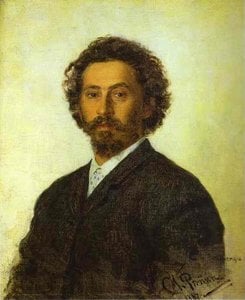
Self portrait
 Drawing
- WallArt
- Realism
 1920
1920- 19th Century
 14.0 x 9.0 cm
 Loe lähemalt
Ostke kõrglahutusel ja täiustatud digitaalne pilt, mis on oluliselt parem kui veebilehel näidatud eelvaade.
Iga fail on meie spetsialistide poolt hoolikalt ette valmistatud, kasutades kaasaegseid tööriistu ja professionaalset käsitsi retušeerimist. Tagame, et igal pildil on erakordne selgus, täpne värvitäpsus ja peen detail.
Lõplik fail saadetakse e-posti teel 72 tunni jooksul ning on optimeeritud koheseks kasutamiseks professionaalsetes, toimetuslikes ja trüki keskkondades. See on sama kvaliteet, mida usaldavad tipptasemel disainistuudiod, kirjastused ja galeriid.
Digitaalne pilt
Laadi alla kõrge resolutsiooniga fail isiklikuks vaatamiseks, trükkimiseks ja loomingulisteks projektideks. ( Lülita trükkitoodetele Telli käsitsi maalitud reproduktsioon)
Sisse kuulub iga digitaalse pildi tellimusega
Professionaalne digitaalne kohaletoimetamine, garanteeritud
Valides ArtsDot.com, ei saa sa lihtsalt pilti – saad professionaalselt parandatud digitaalse teose, mida on valmistatud täpsusega ja mis on toetatud rahuldamatusgarantiiga. Siin on kõik, mis sinu tellimusega automaatselt kaasneb:

Kiire e-posti edastus
Teie kõrge resolutsiooniga digitaalne pildifail saadetakse teile e-posti 72 tunni jooksul pärast tellimist – kohe kasutamiseks valmis.

Tehisintellektiga täiustatud digitaalne fail
Teie teos on professionaalselt optimeeritud arenenud tehisintellekti tööriistade ja käsitsi redigeerimise abil, tagades maksimaalse detailitaseme, selguse ja värvitäpsuse.

Tasuta eluaegne uuesti saatmine
Kas kustutasid faili kogukalu unustamisel või kustutamisel? Puudub mure – saad selle uuesti igal ajal ilma lisatasuta.

Puuduvad importimaksud – alati
Nautige oma teoseid koheselt ilma tolli-, maksude või tarnimaskuludeta – digiletchargused on alati maksuvabadud.

Värvitäpsuse garantii
Me tagame, et teie digitaalne pilt kajastaks originaali värve professionaalsete tööriistade ja värvihalduse abil võimalikult täpselt.

100 päeva rahuldamatuse garantii
Kui te ei ole oma digitaalse pildi eest rahul, siis me parandame seda või tagastame 100% summast 100 päeva jooksul – küsimusteta.

100% raha tagastamise garantii
Ei ole rahul? Saate täielise tagastaja 100 päeva jooksul pärast digitaalse faili kättesaamist – ilma küsimusteta.

Suurema tellimuse soodustused
Osta 3 pilti, säästa 10% - Osta 5, säästa 15% - Osta 10+, säästa 20%. Sobib suurepäraselt loomingulisteks projektideks, galeriideks ja agentuurideks.
A Glimpse into the Artist's Soul: Repin's Self-Portrait
To stand before Ilya Yefimovich Repin’s Self-Portrait is not merely to observe an image; it is to participate in a quiet, profound moment of introspection. Created in 1920, this pen drawing captures the master artist at a point of deep contemplation. The subject—Repin himself—is rendered with an unflinching honesty that defines his commitment to Realism. He sits enveloped in thought, sporting his characteristic beard and clad in a somber brown coat. His hands rest gently upon his lap, anchoring him within the frame as his gaze drifts just beyond the viewer's sightline, suggesting a dialogue with an unseen idea or memory.
The Mastery of Realism and Technique
Repin’s artistic signature is inextricably linked to the power of observation. This piece exemplifies his dedication to Realism, a style that eschews mere decoration for the truthful depiction of everyday life and the human condition. The technique employed in this drawing—a delicate pen work on paper—speaks volumes about its intimacy. While the subject matter is grand in its psychological depth, the medium keeps it grounded and immediate. Notice the subtle details: the scattering of books near the upper left corner, suggesting a lifetime spent immersed in knowledge, and the sturdy chair anchoring the lower right quadrant. These elements are not accidental; they build a carefully constructed environment for the artist's inner monologue.
Echoes of Russian Life and Artistic Journey
Repin’s life itself was a narrative woven from the fabric of Russia—a journey that began far from the gilded salons, rooted instead in the resilience of its people. His early training, though rigorous, ultimately channeled his vision toward capturing the authentic spirit of his homeland. This self-portrait serves as a visual memoir, a moment where the celebrated artist pauses to acknowledge the weight and beauty of his own experience. It invites us to consider the passage of time and the enduring power of the creative mind.
Symbolism and Emotional Resonance
The atmosphere surrounding this work is one of thoughtful solitude. The scattered books symbolize accumulated wisdom, while Repin’s steady posture suggests a man who has wrestled with his art and found a measure of peace within that struggle. For the collector or designer seeking an object imbued with intellectual weight, this piece offers more than mere decoration; it offers contemplation. It is a quiet anchor for any space, suggesting moments for pause, reflection, and deep thought amidst the bustle of modern life.
Sarnased teosed



Kunstniku biograafia
Early Life and the Seeds of Realism
Ilya Yefimovich Repin, a name that resonates with the very soul of Russian art, was born in 1844 in the humble Ukrainian town of Chuguev. His origins were far removed from the aristocratic circles often associated with artistic patronage; his father, a former soldier who traded horses, and his mother, deeply rooted in local traditions, instilled in young Ilya a profound connection to the land and its people. This early immersion into rural life – its hardships, its vibrant spirit, and its unwavering resilience – would become the bedrock of his artistic vision. Formal education began at a local school where his mother taught, but a period at a military cantonist school followed, an experience Repin later recalled with little fondness. Yet, even within the rigid confines of military discipline, his innate talent for drawing blossomed. At sixteen, he apprenticed himself to Ivan Bunakov, an icon painter, embarking on a rigorous training in religious art that honed his skills in meticulous detail and compositional precision. These formative years were not merely technical exercises; they represented a crucial immersion into the visual language of Russian culture, laying the groundwork for his later explorations of national identity and social commentary. Through restoring ancient icons and fulfilling portrait commissions, Repin began to observe and capture the essence of human character – a skill he would master throughout his illustrious career.St. Petersburg and the Embrace of Social Consciousness
Driven by an unwavering ambition, Repin journeyed to St. Petersburg in 1863, seeking admission to the prestigious Imperial Academy of Fine Arts. Initial rejection did not deter him; he audited classes, immersing himself in the city’s vibrant artistic milieu. It was here that he encountered Ivan Kramskoi, a leading figure in the Peredvizhniki movement – a collective of realist artists who boldly rejected academic conventions and sought to depict Russian life with unflinching honesty. Kramskoi became Repin's mentor, guiding him towards a more socially conscious art. The influence of critic Vladimir Stasov was also pivotal, encouraging Repin to focus on contemporary themes and the lives of ordinary people. Repin’s talent quickly flourished, earning recognition and awards, including gold medals for works like “Job and His Friends” in 1869 and "The Raising of Jairus' Daughter" in 1871. These early successes signaled the arrival of a powerful new voice in Russian art – one that would challenge established norms and capture the spirit of a changing nation. A formative experience was his journey along the Volga River in 1870, sketching the arduous lives of barge haulers; this provided the inspiration for what would become his breakthrough masterpiece, a work that would forever cement his reputation as a champion of the downtrodden.Barge Haulers on the Volga: A Landmark Achievement
Repin’s artistic journey culminated in “Barge Haulers on the Volga” (1873), arguably his most celebrated painting and a cornerstone of Russian Realism. This monumental canvas captured the grueling labor of *burlaks*, or barge haulers, transporting goods along the Volga River – a scene that resonated deeply with Repin’s own upbringing in rural Ukraine. Unlike idealized depictions of peasant life prevalent at the time, Repin presented a brutally honest portrayal of physical exertion and social hardship. He meticulously rendered every detail—the weathered faces of the men, their straining muscles, the oppressive heat—creating an immersive experience for the viewer that conveyed both the dignity and despair inherent in manual labor. The painting’s dramatic lighting and masterful composition further amplified its emotional impact, establishing Repin as a pioneer in conveying psychological depth alongside visual realism. It immediately garnered critical acclaim and propelled him to national fame, marking a decisive break from academic conventions and ushering in an era of artistic innovation.Exploring Historical Drama and Psychological Insight
Repin’s artistic vision extended beyond capturing the everyday realities of Russian society; he tackled historical subjects with remarkable sensitivity and dramatic flair. His depiction of “Ivan the Terrible and His Son Ivan” (1885) remains one of his most haunting masterpieces, portraying Tsar Ivan IV's horrific act of murdering his son—a moment of profound psychological torment captured with chilling precision. Repin’s meticulous attention to detail—the textures of clothing, the expressions on faces—created an unforgettable tableau that conveyed not only historical accuracy but also a visceral understanding of human emotion. Similarly, “Reply of the Zaporozhian Cossacks” (1880–91) celebrated the defiant spirit of Ukrainian Cossacks composing a satirical letter to Sultan Mehmed IV – a symbol of resistance and national pride. Repin’s dynamic composition and expressive figures conveyed the energy and passion of this historical episode, cementing his reputation as an artist capable of capturing both grandeur and vulnerability. ## Legacy and Enduring Influence Throughout his prolific career, Repin continued to produce portraits that captured the essence of his subjects with unparalleled insight—Leo Tolstoy, Modest Mussorgsky, Pavel Tretyakov—among others. His unwavering commitment to realism and social commentary established him as a towering figure in Russian art history, influencing generations of artists who followed him. Repin’s legacy extends far beyond his individual paintings; he helped define the aesthetic principles of Realism and Socialist Realism, inspiring countless creatives to use their work as a vehicle for social critique. His ability to convey profound emotion through meticulous observation and masterful technique ensures that Ilya Repin's artistic vision continues to resonate powerfully with audiences worldwide. He died in 1930, leaving behind an unparalleled body of work—a testament to his enduring contribution to the art of the nineteenth century.
Ilya Repin
1844 - 1930 , Россия
Kiired faktid
- Artistic Movement Or Style: Realism
- Artists Or Movements Influenced By This Artist: ['Socialist Realism']
- Artists Who Influenced This Artist:
- Ivan Kramskoi
- Vladimir Stasov
- Date Of Birth: 5 august 1844
- Date Of Death: 29 september 1930
- Full Name: Ilya Yefimovich Repin
- Nationality: Russians
- Notable Artworks:
- Barge Haulers on Volga
- Reply Zaporozhian Cossacks
- Ivan the Terrible...
- Religious Procession Kursk Province
- Place Of Birth (City And Country): Chuguev, Rússia