

 Eelvaade
 Saada
Saada Jaga
Jaga
 Teave teose kohta

 Laadi alla
 Sarnased teosed
 Röntgenuuring
 Slaidietendus
Ave Maria


 Loe lähemalt
Giclée / Kunstiprint
Muuseumikvaliteediga giclée- või kangasprint kiire tootmisega ja paindlikud viimistlusvõimalused. ( Osta käsitsi maalitud maal Osta pilt)




P118B $10

P118H $10

P118W $10

P438Z $10

P508JH $12

P508YH $12

P805H $10

P805Z $10

P919BZ $10

P919G $10

P919XJ $10

P959ZH $10

P968JZ $12

W106C $8

W218G $10

W218JH $8

W218Y $10

W307PJ $10

W316G $10

W316PJ $8

W316Y $10

W398PJ $8

W4111J $10

W500HY $15

W500JH $15

W692G $12

W849H $8

W940BG $15

W953PJ $8




Vali meie eelmääratud suurused, mis vastavad teose algupärastele proportsioonidele.

Saate sisestada oma mõõdud, et need sobiks konkreetse raami või ruumi sisse. Kui valitud suurus ei vasta originaalteose proportsioonidele, lõigame teose ära või laiendame pilti peegeldatud või ühtlase servaga. Enne tootmisprotsessi algust saadetakse Teie kinnitamiseks digitaalne näidis.
Palun märka, et ekraanil kuvatav eelvaade ei kajasta tegelikku lõigamist või laiendamist. Ainult näidis kujutab täpselt lõplikku kompositsiooni.
Kuigi erimõõdu on saadaval, soovitame originaaproportsioonide säilitamiseks valida mõõt ette määratud nimekirjast.
Ülemaailmne tarne () 2 nädala jooksul, tavalise 4/5 nädala asemel. (17 august)

Tasuta ekspresssaatmine üle maailma

Kõrgekvaliteediline linakangas

Täielik transpordikindlustus

Tollimaksude tagastamise garantii

Värvitoime täpsuse garantii

60-päevane tagastusõig: ainult tootmisdefektide korral

100% raha tagasi garantii

Hulgusoodustus
 Klaasivalik on saadaval ainult suuruses kuni 110 cm

Ave Maria
Giclée / Kunstiprint
Reproduktsiooni suurus
-


Kogusumma
$ 62
Kogumuse kirjeldus
Horatio Walker: Capturing Quebec’s Soul Through Rustic Impressionism
Horatio Walker (1858–1938) stands as a pivotal figure in Canadian art history, renowned for his unwavering devotion to portraying the serene landscapes and traditions of Quebec. Unlike many artists of his era who pursued grand narratives or idealized visions, Walker meticulously documented rural life with an honesty that resonated deeply with contemporaries and continues to inspire collectors today.
- Early Life & Artistic Foundations: Born in Listowel, Ontario, Walker’s formative years instilled a profound appreciation for the natural world. His father's involvement in timber trading exposed him to the practical realities of Quebec’s economy, shaping his artistic sensibilities and fostering an enduring fascination with rural vistas.
- The Influence of Barbizon: Walker’s artistic journey took a decisive turn upon encountering the Barbizon school—a movement championed by artists like Jean-François Millet and Gustave Courbet—who rejected academic conventions in favor of direct observation and earthy palettes. This stylistic embrace profoundly impacted his oeuvre, prioritizing textural richness and tonal subtlety over meticulous detail.
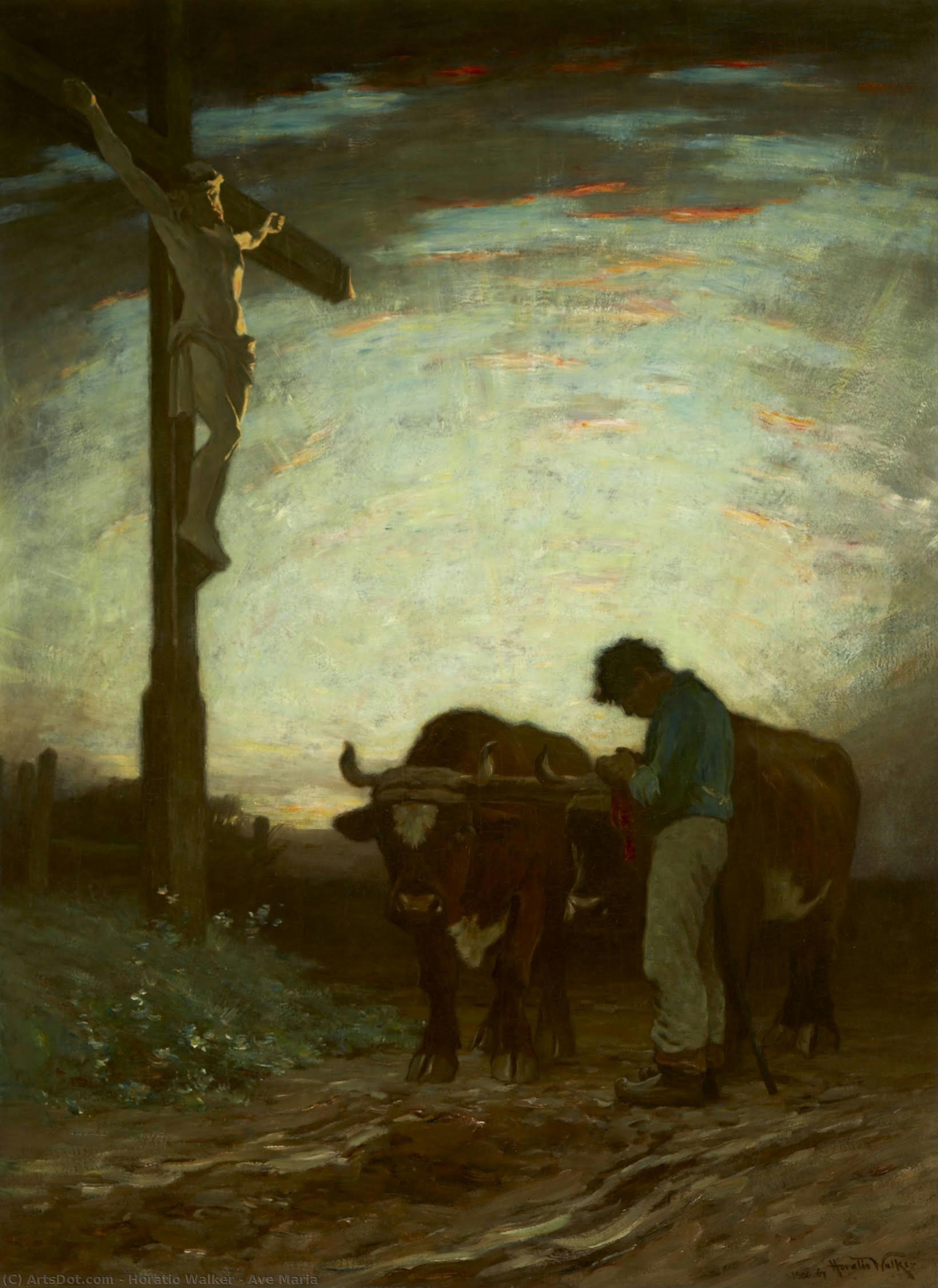
- “Ave Maria”: A Hymn to Quebec’s Essence Walker's most celebrated work, “Ave Maria,” exemplifies this artistic ethos perfectly. Executed in 1906, the painting depicts a man standing beside two cows before a cross—a scene imbued with religious symbolism and reflecting the spiritual heart of Quebec’s agricultural heritage. The composition is deliberately understated, emphasizing the muted hues of the landscape and conveying a palpable sense of tranquility.
Technique & Material Considerations
Walker's mastery lay in his ability to translate observed reality onto canvas with remarkable precision. Primarily working in oil paints on canvas—a technique favored by Barbizon artists—he achieved luminous effects through careful layering and blending. His meticulous attention to detail extended beyond mere representation; he sought to capture the very spirit of Quebec’s countryside, conveying its quiet beauty and enduring traditions.
- Palette & Texture: Walker's palette consisted predominantly of earthy tones—ochres, siennas, and umbers—harmoniously blended to evoke the colors of Quebec’s autumnal forests. He skillfully manipulated brushstrokes to create textured surfaces that mirrored the rugged terrain and weathered barns characteristic of the region.
Symbolism & Emotional Resonance
Beyond its aesthetic qualities, “Ave Maria” carries significant symbolic weight. The cross represents faith and spiritual contemplation—themes central to Quebec’s Catholic identity. The cows symbolize labor and sustenance—elements inextricably linked with Quebec’s agricultural past. Walker's deliberate choice of subject matter underscores his belief that art should serve as a conduit for conveying profound emotional truths.
- Quiet Contemplation: The painting’s subdued atmosphere invites viewers to pause and contemplate the beauty of the natural world—a sentiment deeply rooted in Quebecois culture. Walker's artistic vision transcends mere depiction; he aspires to evoke a feeling of reverence for the land and its traditions.
Legacy & Reproduction Value
Horatio Walker’s legacy extends far beyond his individual paintings. He established the Canadian Art Club, fostering a vibrant community of artists committed to preserving Quebecois artistic heritage. Today, reproductions of “Ave Maria”—particularly high-quality prints—remain highly sought after by interior designers and collectors alike who appreciate Walker's masterful technique and evocative portrayal of Quebec’s soul.
Sarnased teosed


Kunstniku elulugu
Early Life and Artistic Foundations
Horatio Walker, born in Listowel, Upper Canada, in 1858, emerged from a modest background where the seeds of artistic inclination were nonetheless carefully nurtured. His parents, Thomas and Jeanne Maurice Walker, instilled a value for education and creative expression that would profoundly shape his life’s path. Though his father pursued various trades – cabinetmaking, timber trading, and even dabbling in sculpture – he consistently encouraged young Horatio's burgeoning talent for drawing. Early trips with his father to the Quebec City region introduced him to Île d’Orléans, a landscape that would become inextricably linked with his artistic identity. This initial exposure sparked a lifelong fascination with rural life and the picturesque beauty of the Canadian countryside. In 1873, Walker moved to Toronto, beginning an apprenticeship at the renowned Notman & Fraser photographic studio. This formative experience proved invaluable, providing him not only with technical skills in composition and lighting but also exposing him to a vibrant artistic milieu. It was here he studied under Robert Ford Gagen and John Arthur Fraser, honing his abilities in watercolour and miniature portraiture.European Influences and the Shaping of a Style
Driven by an ambition to refine his skills and broaden his artistic horizons, Walker embarked on a journey to Europe in 1876. He immersed himself in the art world of France, studying the works of both the Barbizon painters and the emerging Impressionists. The Barbizon school’s emphasis on realism, their dedication to depicting rural scenes with honesty and sensitivity, resonated deeply with Walker's own artistic sensibilities. Simultaneously, he absorbed elements of Impressionist technique, particularly their innovative use of light and color, which began to subtly infuse his work. This period was crucial in solidifying his aesthetic direction, blending a commitment to realistic representation with an increasingly nuanced understanding of atmospheric effects. Upon returning to North America, Walker actively sought connection within the artistic community, joining organizations like the American Watercolor Society, fostering opportunities for exhibition and collaboration. His marriage to Jeanette Pretty in 1883 marked a period of personal stability, allowing him to further dedicate himself to his craft.Mature Period: Capturing the Essence of Rural Canada
The years following 1883 witnessed the full flowering of Walker’s distinctive style. He developed a remarkable ability to capture the beauty and tranquility of the Canadian landscape, particularly the agrarian scenes of Quebec. His paintings are characterized by meticulous attention to detail, a soft and harmonious color palette, and a profound sense of atmosphere. The influence of his early photographic training is evident in the carefully composed arrangements and sharp focus found in many of his works. However, it was his deep connection to Île d’Orléans that truly defined his artistic vision. He purchased a home there in 1888, establishing a permanent base from which to observe and document the rhythms of rural life. Walker's paintings weren’t merely depictions of scenery; they were celebrations of a way of life – the hard work, the quiet dignity, and the enduring connection between people and the land. His success grew steadily, with exhibitions throughout North America and Europe garnering critical acclaim and numerous awards. A significant milestone arrived in 1913 when he was elected a full member of the Royal Canadian Academy, solidifying his position as one of Canada’s leading artists.Legacy and Historical Significance
In 1928, Horatio Walker retired to Sainte-Pétronille, Quebec, but even in retirement, he continued to paint occasionally, remaining an active participant in the art community until his death in 1938. Though his fame waned somewhat after his passing, particularly during the shifts in artistic taste that followed the Quiet Revolution in Quebec, a renewed appreciation for his work emerged in recent decades. Walker is now recognized as a pivotal figure in Canadian art history – a master of landscape painting who captured the essence of rural Canada with unparalleled sensitivity and skill. He bridged the gap between European traditions like the Barbizon school and a uniquely Canadian artistic vision. His paintings offer not only beautiful depictions of the natural world but also valuable insights into the social and cultural life of French-Canadian communities in the late 19th and early 20th centuries. Oxen Drinking and Ploughing – The First Gleam, remain iconic representations of his artistic achievement, testaments to a talent that continues to resonate with audiences today. He is remembered as “the herald of Île d’Orléans,” an artist who dedicated his life to celebrating the beauty and dignity of rural Canada.
Horatio Walker
1858 - 1938 , Canada
Lühikesed faktid
- Artistic Movement Or Style: Barbizon School, Realism
- Artists Or Movements Influenced By This Artist: Canadian landscape painting
- Artists Who Influenced This Artist:
- Barbizon painters
- Jean-François Millet
- Gainsborough
- Constable
- Date Of Birth: May 12, 1858
- Date Of Death: September 27, 1938
- Full Name: Horatio Walker
- Nationality: Canadian
- Notable Artworks:
- Sheepyard, Moonlight
- Ave Maria
- Oxen Drinking
- Ploughing—The First Gleam
- Place Of Birth: Listowel, Canada
Seotud artiklid

George Agnew Reid: A Canadian Impressionist's Pursuit of Light, Colour, and National Identity
Explore the life & work of George Agnew Reid, a pivotal figure in Canadian Impressionism. Discover his genre paintings, mural commissions, and lasting influence on art education & national identity. A comprehensive guide for collectors & enthusiasts.

The Barbizon School: Pioneering Realism & the Pastoral Vision in 19th-Century French Painting
Explore the Barbizon School's pivotal role in 19th-century French painting. Discover how these artists revolutionized landscape art with their commitment to Realism and a profound connection to nature. Learn about key figures like Rousseau, Millet & Corot.

Arthur Lismer: A Pioneer of Canadian Modernism & the Group of Seven's Visionary Spirit
Explore the life & art of Arthur Lismer, a pivotal figure in Canadian Modernism and founding member of the Group of Seven. Discover his landscapes, teaching legacy & lasting influence on Canadian art history.

Echoes of Rural Life: Art's Enduring Representations of the Countryside
Explore the rich history of rural life in art! Discover masterpieces from Millet to Mauve & beyond. Learn about Realism, Barbizon School & find inspiration for your home with ArtsDot.

The Hague School: Realism, Atmosphere & the Dawn of Dutch Impressionism
Explore the Hague School's pivotal role in Dutch art history. Discover realism, atmospheric landscapes & its influence on Impressionism. Learn about key artists like Mauve & Maris with ArtsDot.

