


 Vaata sisu
 Jaga teost
 Jaga
Jaga
 Detailid
 Õppekate juhend

 Laadi alla
 Sarnased teosed
 Röntgenuuring
 Slaidietendus
 Statistika
Eve Disconsolate
 Neoclassicism
 1877
1877 198.0 x 57.0 cm
 Loe lähemalt
Käsitsi valmistatud õlimaalireproduktsioon
Meie kunstnike poolt tellimusel valmistatud käsitsi maalitud õli-kainaste teos teie soovitud suuruses ja raamis. ( Lülita trükkitoodetele Ülemineku digitaalse pildi müügi kanalisse)




































Vali meie eelmääratud suurused, mis vastavad teose algupärastele proportsioonidele.

Sisestage vajalik laius ja kõrgus, et teos sobiks teie raamile või seinale. Kuna tegu on käsipainatud teosega, siis erineva kujuga suuruse korral võib kunstnik jätta pildi ümber veidi rohkem marginaali või lõigata osa ära — valik on teie. Enne maali alustamist saadame teile kinnitamiseks digitaalse näidisprojektsiooni. Sellel lehel näidatud pilt ei kajasta tegelikku tulemust — seda näitab ainult näidisprojekttsioon.
Pärast tellimust saadab ArtsDot.com meeskond kliendile e-posti juhised ning esitab eelvaate kavandi
Maailmline tarne 3–4 nädala jooksul tavalise 5 nädala asemel. (22 oktoober). Kvaliteedis kompromisse ei tehta.

Tasuta ekspresssaatmine üle maailma

Kõrgekvaliteediline lina-kangastest muld

Täielik transpordikindlustus

Tollimaksude tagastamise garantii

Värvitoime täpsuse garantii

100 päeva tagastusõigus (ainult defektide korral)

100% raha tagasi garantii

Hulgusoodustus
 Klaasivalik on saadaval ainult kuni 110 cm suuruses teostes

Eve Disconsolate
Reproduktsiooni materjal
Reproduktsiooni mõõtmed
-


Lõppsumma
€ 231
Küsimused ja vastused
Millisse hegemoonias ja millises ajastus에는 „Eve Disconsolate“, autor Hiram Powers kuulub?
Teos „Eve Disconsolate“, autor Hiram Powers kuulub Neoclassicism suunasse ning on loodud autori 19th Century ajastul.
Milliseid ühiseid elemente jagab teos "Eve Disconsolate" ümbri mõeldu "Hiram Powers loominguga"?
Teos "Eve Disconsolate" jagab koos Hiram Powers teistega Neoclassicism stiili ja korduvaid teemasid: classical ideals, roman influence, neoclassical beauty, virtue", power of female form, "signature sculpture.
Millise kunstisuunaga kuulub teos „Eve Disconsolate“, autor Hiram Powers nn-väljendisse?
Teos „Eve Disconsolate“, autor Hiram Powers kuulub Neoclassicism suunasse. See suund annab teosele stilistilise konteksti.
Sarnased teosed


Kunstniku elulugu
The Sculptor Who Brought Greece to America
Hiram Powers (1805 – 1873) stands as a pivotal figure in the history of American art, marking one of the earliest instances of an artist achieving international acclaim based on sculptural prowess. Born in Woodstock, Vermont, his journey from humble beginnings to celebrated sculptor embodies the spirit of self-reliance and artistic ambition that characterized the burgeoning nation. His legacy resides not merely in individual masterpieces but also in establishing a precedent for American artists to pursue excellence beyond domestic borders.
Powers’ formative years instilled within him a profound appreciation for craftsmanship and observation—skills honed during his brief stint as a clerk in Cincinnati's general store. However, it was his encounter with Frederick Eckstein, Cincinnati’s pioneering clockmaker and sculptor, that truly ignited his artistic passion. Eckstein recognized Powers’ talent and encouraged him to immerse himself in the study of modeling and casting techniques, propelling him toward mastery of stone carving and bronze fabrication. This dedication would prove instrumental in shaping his distinctive style—characterized by idealized figures imbued with classical elegance and informed by Roman sculptural traditions.
A Journey Through Classical Idealism
A significant turning point arrived when Powers secured a position as general assistant and artist at Joseph Dorfeuille’s Western Museum, fostering connections with influential naturalist Louis Agassiz. Here, he undertook ambitious projects inspired by Dante's Inferno, producing stunning marble representations of scenes from the epic poem that captivated audiences and cemented his reputation as a visionary sculptor. Notably, Fanny Trollope championed Powers’ career by commissioning him to sculpt Dante’s “Commedia,” securing him considerable recognition within literary circles.
The zenith of his career was undoubtedly reached with the creation of The Greek Slave (1843). This breathtaking marble sculpture, depicting a captive woman with an expression of quiet dignity and sorrow, became a sensation. It did more than just showcase his technical ability to render the softness of skin in cold stone; it tapped into the contemporary American zeitgeist regarding liberty and morality. Through this work, Powers achieved what few of his contemporaries could: a truly international reputation that bridged the gap between the rugged American identity and the refined aesthetics of European Neoclassicism.
Legacy and the Florentine Years
As his fame grew, so did his geographic reach. By 1834, Powers relocated to Washington, D.C., where he quickly gained prominence through portraits of prominent figures. Eventually, seeking the heart of the classical tradition, he moved to Florence, Italy. This relocation allowed him to immerse himself in the very cradle of the Renaissance and Neoclassical ideals that informed his work. In Florence, his studio became a hub for artists and intellectuals, and he continued to produce works that blended mythological themes with profound human emotion.
His later works, such as Proserpine and Last of the Tribe, demonstrate a continuing evolution of thought:
- Proserpine: A masterful bust exploring the tragic beauty of Roman mythology through the lens of divine abduction.
- Last of the Tribe: A poignant marble work that reflects on displacement and the enduring spirit of a vanishing culture.
- Portraiture: His ability to capture the lifelike essence of contemporary figures, such as Andrew Jackson, alongside his mythological subjects.
Hiram Powers passed away in Florence in 1873, leaving behind a body of work that remains a testament to the power of Neoclassicism. He did not merely imitate the ancients; he translated their grandeur into an American idiom, proving that the language of marble and light could speak to the soul of a new world.

Hiram Powers
1805 - 1873
Lühikest infot
- Full Name: Hiram Powers
- Nationality: American
- Date Of Birth: 1805
- Date Of Death: 1873
- Place Of Birth: Woodstock, Vermont
- Notable Artworks:
- The Greek Slave
- Fisher Boy
- Proserpine
- Eve Disconsolate
- Artistic Movement Or Style: Neoclassical Sculpture
- Artists Who Influenced This Artist: ['Frederick Eckstein']
- Artists Or Movements Influenced By This Artist: ['Horatio Greenough']
Sarnased artiklid

The Enduring Form: Sculpture Across History, Technique & Emotional Resonance
Explore the rich history of sculpture with ArtsDot. Discover key techniques, influential artists & investment potential for discerning collectors. Expert insights into valuing and collecting timeless masterpieces.

The Enduring Form: Exploring Themes & Techniques in Sculpture Across Historical Periods
Explore the rich history of sculpture from ancient masterpieces to contemporary innovations. Discover key techniques, influential artists & investment potential for discerning art collectors.

Bronze Age to Modern Masters: 10 Sculptures That Redefined Art | ArtsDot
Journey through art history with 10 legendary bronze sculptures – from Michelangelo's David to Rodin’s Thinker. Explore the stories, techniques & timeless beauty of these masterpieces. Find museum-quality reproductions & elevate your home decor on ArtsDot.com.
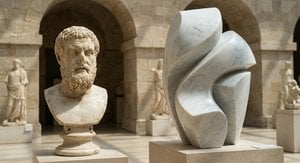
The Enduring Allure of Marble in Art History: From Classical Sculpture to Modern Abstraction
Explore the captivating history of marble sculpture from ancient Greece to modern art. Discover renowned artists like Canova & Michelangelo, carving techniques, and investment insights at ArtsDot.

Bronze Sculptures That Defined Art History | ArtsDot
Journey through art history with our Top 10 bronze sculptures! Explore masterpieces by Rodin, Michelangelo & more. Discover stories behind iconic statues and find museum-quality reproductions for your home decor at ArtsDot.com.