
 Expressionism
 1912
1912 51.0 x 42.0 cm

The picture follows your choices: , .
Kogumisobjekti kirjeldus
Henry Lyman Saÿen’s "Clouds" (1912) captures a dramatic cityscape under an expressive sky. Oil on canvas, featuring bold colors & textured impasto, exemplifies early 20th-century Expressionism.
Kunstniku elulugu
H. Lyman Saÿen (1875-1918) was a pioneering American Modernist painter & engineer. Known for vibrant landscapes, intimate portraits of children, and early abstract works, he bridged science & art, introducing modernism to Philadelphia.
 Loe lähemalt
Käsitsi valmistatud õlimaalireproduktsioon
Meie kunstnike poolt tellimusel valmistatud käsitsi maalitud õli-kainaste teos teie soovitud suuruses ja raamis. ( Lülita trükkitoodetele Lülita digitaalse pildi juurde)
More about this painting
 Eelvaade
 Saada
Saada Jaga
Jaga
 Teave teose kohta
 Juhend

 Laadi alla
 Sarnased teosed
 Röntgenuuring
 Slaidietendus
 Q&A
Q&A Statistika
Order your painting in four simple steps
Take your time. You can change any answer; the price in your order card follows each choice.
1 Step one of four
Which size would you like?
These sizes keep the proportions of the original painting. The drawing shows your choice on a wall, above a two-metre sofa.
Or give your own measurements
Vali meie eelmääratud suurused, mis vastavad teose algupärastele proportsioonidele.

Sisestage vajalik laius ja kõrgus, et teos sobiks teie raamile või seinale. Kuna tegu on käsipainatud teosega, siis erineva kujuga suuruse korral võib kunstnik jätta pildi ümber veidi rohkem marginaali või lõigata osa ära — valik on teie. Enne maali alustamist saadame teile kinnitamiseks digitaalse näidisprojektsiooni. Sellel lehel näidatud pilt ei kajasta tegelikku tulemust — seda näitab ainult näidisprojektsioon.
2 Step two of four
How should it be prepared: rolled, stretched or framed?
The prices below are for the size you chose in step one.
Choose the edges of the stretched canvas
Choose your frame

White €1

Blurside €1

Extended €1

P118B €10

P118H €10

P118W €10

P438Z €10

P508JH €12

P508YH €12

P805H €10

P805Z €10

P919BZ €10

P919G €10

P919XJ €10

P959ZH €10

P968JZ €12

W106C €8

W218G €10

W218JH €8

W218Y €10

W307PJ €10

W316G €10

W316PJ €8

W316Y €10

W398PJ €8

W4111J €10

W500HY €15

W500JH €15

W692G €12

W849H €8

W940BG €15

W953PJ €8

H24-GOLD €30

H24-SILVER €30

H36-GOLD €45

H36-SILVER €45
Raamitud
Moulding: . Overall size with the frame: .
3 Step three of four
Would you like anything changed in the painting?
Most people answer no. Because each painting is made by hand, our artist can also adapt it for you.
After order, ArtsDot.com team will email client for instructions and provide a mockup preview
4 Step four of four
A few finishing options
All of them are optional. The answers already selected cost nothing extra.
Who paints it?
Maailmline tarne 3–4 nädala jooksul tavalise 5 nädala asemel. (31 oktoober). Kvaliteedis kompromisse ei tehta.
A nameplate, as in a museum?
Graveeritud pronksplaadi üksikasjad
This elegant plaque features the artist's name and the title of the artwork, finely engraved for a timeless presentation.
It is made from bronze with a refined, elegant finish. The text is precisely laser-engraved for a sharp and permanent result. Measuring 9x2 cm, the plaque is compact yet easy to read. It's built to be durable and scratch-resistant, offering a professional, museum-quality look. Mounting is simple thanks to the included adhesive backing.
Läbipaistva akrüülplaadi üksikasjad
The plaque includes essential engraved details such as the artist's name, the title of the artwork, the date it was created, the type of media used-like oil on canvas or watercolor-a brief description of the piece, and a QR code that links to the complete artwork information.
It is crafted from clear acrylic, offering a sleek, modern appearance. The text is UV-engraved in black to ensure strong visual contrast. With a size of 10x15 cm, it ensures optimal readability. It comes equipped with two metal hooks for secure wall mounting. The plaque is designed to be weather-resistant, making it suitable for various environments, and it includes interactive features that work seamlessly with smartphone scanning.
Musta akrüülplaadiรายละเอียด (Note: The user provided "Musta akrüülplaadi detailid" as the current translation and asked for an improved version. Since "Musta akrüülplaadi
This elegant plaque includes engraved information such as the artist's name, the title of the artwork, the date it was created, the type of media used (like oil on canvas or watercolor), a short description of the artwork, and a QR code for quick access to more information.
The plaque itself is made from refined black acrylic with a premium finish. The text is laser-engraved in white for high contrast and readability. Its size is 10x15 cm, designed to be easy to read. It comes with two metal hooks for professional mounting. The design is sleek and fits any interior style. It is also weather-resistant and durable, with built-in digital integration for mobile compatibility.
A protective varnish?
When do you need it?
✓ Check and order
Your painting, as you ordered it

Clouds
Reproduktsiooni tehnika
Reproduktsiooni suurus
-

Eelistatud tippkunstnik
Rohkem detaile, peenust ja lisatootmisaega
-

Reproduktsiooni raamivalikud
-
-
Kunstiteoste või reproduktsioonide puhul, mille üks külg on üle 105 cm (umbikmolt 41 tolli), saadetakse raam kirjal asendis, la Dismantlitud komplektina. See meetod tagab ohutuse kohaletoimetamisel ja väldib transpordil tekkivaid kahjustusi.
Vajalik professionaalne kokkupanek – see ei ole isetegevusega valmistamiseks mõeldud toode.
Komplekt tuleb kokku panna ja lõvet pingutada kogemusega professionaalse raamija, kasutades puiduliim (ei kuulu komplekti), lõvetpingi ja klempe, et hoida raami kande mustad õigena liimi kuivamisaja jooksul. Vale kokkupanek või ebaühtlane lõvetping võib kunstiteost püsivalt kahjustada ning seda
 Kunstiteoste või reproduktsioonide puhul, mille üks külg on üle 105 cm (umbikmolt 41 tolli), saadetakse raam kirjal asendis, la Dismantlitud komplektina. See meetod tagab ohutuse kohaletoimetamisel ja väldib transpordil tekkivaid kahjustusi.
Kaasatud on kõik tahked puidust liistud, täpselt lõigatud vastavaks suuruseks.
Kokku panemiseks kasutatakse lisatud kruvisid ning nurkade liimamiseks vajalikku puuliima, mida ei ole komplektis ja mida peab raamivalmistaja ise hankima.
Vajalik on kasutada professionaalseid tööriistu, mis ei kuulu komplekti: lõvetelapide pingist (pingutaja) ja klambreid, et hoida raami puidu nurgas õigena liimi kuivamisaja jooksul.
Oluline:
Nurgaliimamiseks on vaja puiduliim, liimimine peab toimuma klempide all kuni liim on täielikult kuivanud ning kokku monteeritud raami kanga pingutamiseks on vajalik kanga pingutustang. Kumbki neist ei kuulu komplekti. Palun veenduge enne selle suuruse tellimist, et teil on saadaval kogenud professionaalne raamistaja.

Nimesildikiri
-
-

Kaitsevärnitsus
Läikiv lakk (muudab värvid elavamaks ning kaitseb valgust ja niiskust eest)
-

Kohanda oma teost
Näiteid muudatuste kohta: Asenda nägu kliendi fotoga; Lisa lemmikloom (nt asenda kass koeraga); Lisa taustale peidetud sõnum; Muuda tausta maastikku või elemente.
-

Kiire tarne
Ülemaailmne tarne riiki 3–4 nädalaga tavalise 5 nädala asemel. (31 oktoober). Kvaliteedis kompromisse ei tehta.
-
Kiirsaatmine
Ülemaailmne tarne () 5 nädala jooksul. (7 november).
Sisse kuuluv
Koguhind
€ 233
Klaasivalik on saadaval ainult kuni 110 cm suuruses teostes
Included with every order
- Tasuta ekspresssaatmine üle maailma
- Kõrgekvaliteediline lina-kangas
- Täielik transpordikindlustus
- Tollimaksude tagastamise garantii
- Värvitoime täpsuse garantii
- 100 päeva tagastusõigus (ainult valmistusdefektide korral)
- 100% raha tagasi garantii
- Hulgusoodustus


Sarnased teosed


Henry Lyman Saÿen
1875 - 1918
Kunstniku elulugu
The Alchemist of Light and Logic
In the vibrant intellectual landscape of late nineteenth-century Philadelphia, Henry Lyman Saÿen emerged as a figure of profound and rare duality. He was a man who inhabited two seemingly disparate worlds: the precise, empirical realm of the scientific laboratory and the emotive, fluid sanctuary of the artist’s studio. Born in 1875, Saÿen’s early education at the Central Manual Training School instilled in him a rigorous understanding of engineering and mechanics—a foundation that would later become the silent architect of his visual language. While many of his contemporaries sought only to capture the surface of the world, Saÿen possessed a unique obsession with what lay beneath. As a pioneer in the design of X-ray tubes, he mastered the technology required to peer through flesh and bone, an experience that fundamentally altered his artistic perception. To Saÿen, the ability to visualize internal structures was not merely a scientific triumph but a spiritual metaphor for art itself; he sought to use his brush to uncover the hidden geometries and essential truths residing within the natural world.
From Impressionist Radiance to Geometric Essence
The evolution of Saÿen’s style serves as a captivating chronicle of the shifting tides of American Modernism. His early works were deeply rooted in the luminous, atmospheric traditions of Impressionism, characterized by a delicate play of light and a soft, evocative palette. In masterpieces such as The Thundershower, one can witness his ability to capture the ephemeral energy of nature through fluid brushwork and a sense of movement that mirrors the fleeting qualities of light. However, as his fascination with scientific structure deepened, so too did the structural integrity of his compositions. Saÿen began to move away from the hazy boundaries of Impressionism, gravitating instead toward a more disciplined exploration of form and color. This transition saw him embracing the bold, simplified shapes of early Abstraction and Expressionism. His later works, such as Fugue and Newman’s House, demonstrate a masterful command of geometric arrangement, where color is used not just for decoration but to define space and rhythm. Through this progression, he bridged the gap between the sensory experience of the landscape and the intellectual rigor of abstract design.
A Legacy Written in Light and Form
Though his life was tragically cut short in 1918 at the age of forty-three, the impact of Henry Lyman Saÿen remains a significant chapter in the history of American art. He stood as a precursor to the modern era, anticipating the stylistic shifts that would soon define the twentieth century by proving that science and art are not opposing forces, but rather two different lenses through which we might view the same reality. His ability to synthesize the mechanical precision of an engineer with the soulful intuition of a painter allowed him to create works that were both structurally sound and emotionally resonant. Today, his legacy is preserved in the collections of institutions like the Smithsonian American Art Museum, where his contributions continue to inspire those who seek beauty in the intersection of discovery and expression. His life’s work remains a testament to the idea that true vision requires both the eye that sees the surface and the mind that understands the structure.
- Notable Artistic Achievements:
- Pioneering the integration of scientific observation into abstract composition.
- Developing a unique stylistic bridge between Impressionism and early American Modernism.
- Mastery of both landscape painting and intimate, structural portraiture.
Sarnased artiklid
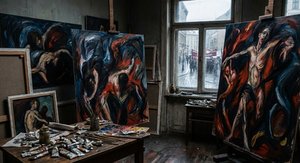
The Visceral Language of Emotion: Exploring Expressionism's Impact on 20th-Century Art
Explore the powerful world of Expressionism! Discover key artists like Kirchner & Nolde, understand its emotional impact, and learn about this revolutionary art movement's lasting legacy. Expert insights for collectors & enthusiasts.
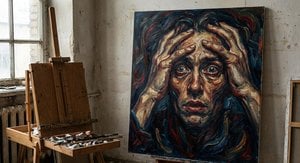
Figurative Expressionism: Emotional Intensity & Subjective Reality in 20th-Century Art
Explore the powerful world of Figurative Expressionism with ArtsDot. Discover key artists like Kirchner & Beckmann, understand its emotional depth, and learn how to collect this influential 20th-century art movement.

Väljendusismi algus: 20. sajandi kunsti revolutsioon ja emotsiooni võim
Avastage väljendismi revolutsiooniline kunstimaailm! Kunstiajalugu, emotsiooni võim ja investeerimisnõuanded kollektsionääridele ArtsDot.com-ist. Kvaliteetsed reproduktsioonid ja ekspertkonsultatsioon.