
- Avaleht

- Õlimaalireproduktsioon
- harold dearden
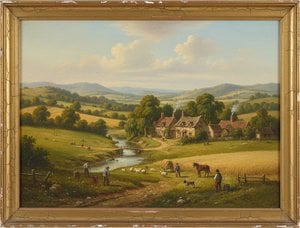
- Log Cutting

 Telli trükis Osta digipilt
 Saada
Saada
 Jaga
Jaga
 Teave teose kohta
 Lisa lemmikutesse

 Laadi alla
 Sarnased teosed
 Röntgenuuring
 Slaidietendus
Log Cutting
 Contemporary Realism
 74.0 x 66.0 cm
 Swindon Art Gallery
 Loe lähemalt
Käsitsi valmistatud õlimaalireproduktsioon
Meie kunstnike poolt tellimusel valmistatud käsitsi maalitud õli-kainaste teos teie soovitud suuruses ja raamis.




































Vali meie eelmääratud suurused, mis vastavad teose algupärastele proportsioonidele.

Sa võite sisestada oma mõõtmed konkreetse raami või ruumi sobivuse tagamiseks. Kui teie valitud suurus ei vasta originaalpildi proportsioonidele, siis kärvime kunstiteost või laiendame maali täiendavate käsitsi maalitud elementidega. Enne tootmise algust saadetakse teile heakskiitmiseks digitaalne eelvaade.
Palun pidage meeles, et ekraanil kuvatav eelvaade ei kajasta tegelikku kärpimist või laiendamist. Ainult eelvaade näitab täpselt lõplikku kompositsiooni.
Kuigi on saadaval kohandatud suurused, soovitame originaalproportsioonide säilimiseks valida mõõdud eelmääratletud nimekirjast.
Pärast tellimust saadab ArtsDot.com meeskond kliendile e-posti juhised ning esitab eelvaate kavandi.
Maailmline tarne 3–4 nädala jooksul tavalise 5 nädala asemel. (16 juuli). Kvaliteedis kompromisse ei tehta.

Tasuta ekspresssaatmine üle maailma

Kõrgekvaliteediline linakangas

Täielik transpordikindlustus

Tollimaksude tagastamise garantii

Värvitoime täpsuse garantii

60-päevane tagastusõig: ainult tootmisdefektide korral

100% raha tagasi garantii

Hulgusoodustus
 Klaasivalik on saadaval ainult suuruses kuni 110 cm

Log Cutting
Reproduktsiooni tehnika
Reproduktsiooni suurus
-


Kogusumma
-
Sarnased teosed


Kunstniku elulugu
Harold Dearden (1888–1962): A Swindon Artist Rediscovered
Harold Dearden remains a relatively obscure figure in British art history, overshadowed by contemporaries like Stanley Spencer and Graham Sutherland. Yet, his contribution to the artistic landscape of Swindon—and indeed, to Victorian illustration—deserves renewed attention. Born in Bolton, Lancashire, on December 13th, 1882, Dearden’s life unfolded against a backdrop of significant social and cultural shifts, shaping both his personal journey and his artistic output.
His formative years were spent at Rochdale School of Art under the tutelage of Henry Barret Carpenter, where he honed his observational skills and developed an early appreciation for colour theory—a discipline championed by Carpenter himself. This influence would prove crucial in informing Dearden’s subsequent work, particularly his celebrated biblical illustrations for *The Copping Bible*, a monumental undertaking that cemented his reputation as one of Britain's foremost Victorian artists.
A scholarship to the Royal College of Art in London propelled him into a wider artistic milieu. Studying under Gerald Moira between 1910 and 1915, Dearden embraced a comprehensive curriculum encompassing architecture alongside painting and sculpture—a testament to his intellectual curiosity and ambition. The RCA’s emphasis on mural design instilled in him a profound understanding of scale and narrative, concepts that would permeate his artistic endeavors.
During World War I, Dearden enlisted with the Royal Army Medical Corps and served as a medical officer for the 3rd Battalion of the Grenadier Guards. He bravely confronted the horrors of trench warfare, sustaining injuries—most notably a lost eye—that profoundly impacted his life and artistic vision. The psychological scars of combat undoubtedly fueled his exploration of themes related to trauma and resilience in his later works.
Following the war, Dearden continued his teaching career at York Art School, where he mentored aspiring artists and fostered a vibrant creative environment. He married Ann Verity Gibson Watt in 1927 and established a family life centred around Swindon—a town that would become inextricably linked to his artistic legacy. His enduring commitment to Swindon’s art scene is reflected in his role as president of Swindon Artists' Society.
Dearden’s prolific output spanned painting, illustration, and theatrical design. He achieved considerable acclaim for *The Copping Bible*, a lavish depiction of biblical narratives that showcased his masterful draughtsmanship and meticulous attention to detail. His paintings—often imbued with rich colour palettes and evocative compositions—capture the spirit of the Victorian era while simultaneously grappling with profound philosophical questions.
Beyond his artistic achievements, Dearden’s intellectual engagement extended into areas such as psychology and spiritualism. He conducted rigorous investigations into paranormal phenomena, comparing cases of witchcraft to mediums' performances—a stance rooted in a skeptical yet intellectually honest approach. His book *Devilish But True* stands as a landmark contribution to the debate surrounding psychic abilities.
Harold Dearden passed away peacefully at his home in Hay-on-Wye on July 6th, 1962, leaving behind a legacy of artistic excellence and intellectual curiosity. His work continues to inspire admiration for its beauty, craftsmanship, and enduring relevance—a testament to the transformative power of art and the importance of remembering artists whose contributions may have faded from public consciousness.

Lühikesed faktid
- Artistic Movement Or Style: Modern Art
- Artists Or Movements Influenced By This Artist: ['Gerald Moira']
- Artists Who Influenced This Artist: ['Henry Barret Carpenter']
- Date Of Birth: December 13, 1882
- Date Of Death: July 6, 1962
- Full Name: Harold Dearden
- Nationality: British
- Notable Artworks:
- Log Cutting
- The Locarno
- Salubritas
- Place Of Birth: Bolton, Lancashire
Seotud artiklid

From Imagination to Canvas: Commissioning Bespoke Fantasy Art with Traditional Oil Painting Techniques
Commission breathtaking bespoke fantasy art with skilled oil painters. Explore techniques, artist selection & preservation tips. Invest in a unique masterpiece today!

Daniel Ridgway Knight: A Study in Victorian Genre Painting & Rural Idealism
Explore the captivating world of Daniel Ridgway Knight, a master of Victorian genre painting. Discover his serene rural scenes, realistic technique & lasting influence on American Impressionism. Learn about his life, art, and collectibility.

Oil on Canvas Masters: 10 Paintings That Redefined Art History |
Journey through art history with our guide to 10 legendary oil on canvas masterpieces! Explore iconic works by Van Gogh, Monet & Rembrandt. Find museum-quality reproductions and elevate your home decor at . Discover all masterpieces online.

Echoes of Rural Life: Nostalgia, Labor & Identity in Art History
Explore the rich history of rural life in art! Discover how Realism captured labor & identity through masterpieces by Van Gogh, Millet & more. Expert analysis for collectors and enthusiasts.
Evocations of Rural Life: A Historical Journey Through Landscape Painting
Explore the rich history of rural life in painting! Discover Impressionist masterpieces, Italian Macchiaioli scenes & the enduring appeal of pastoral landscapes. Find your perfect artwork at ArtsDot.

